

In bid to reach underserved communities, Colorado tells providers not to require patients show ID for vaccine
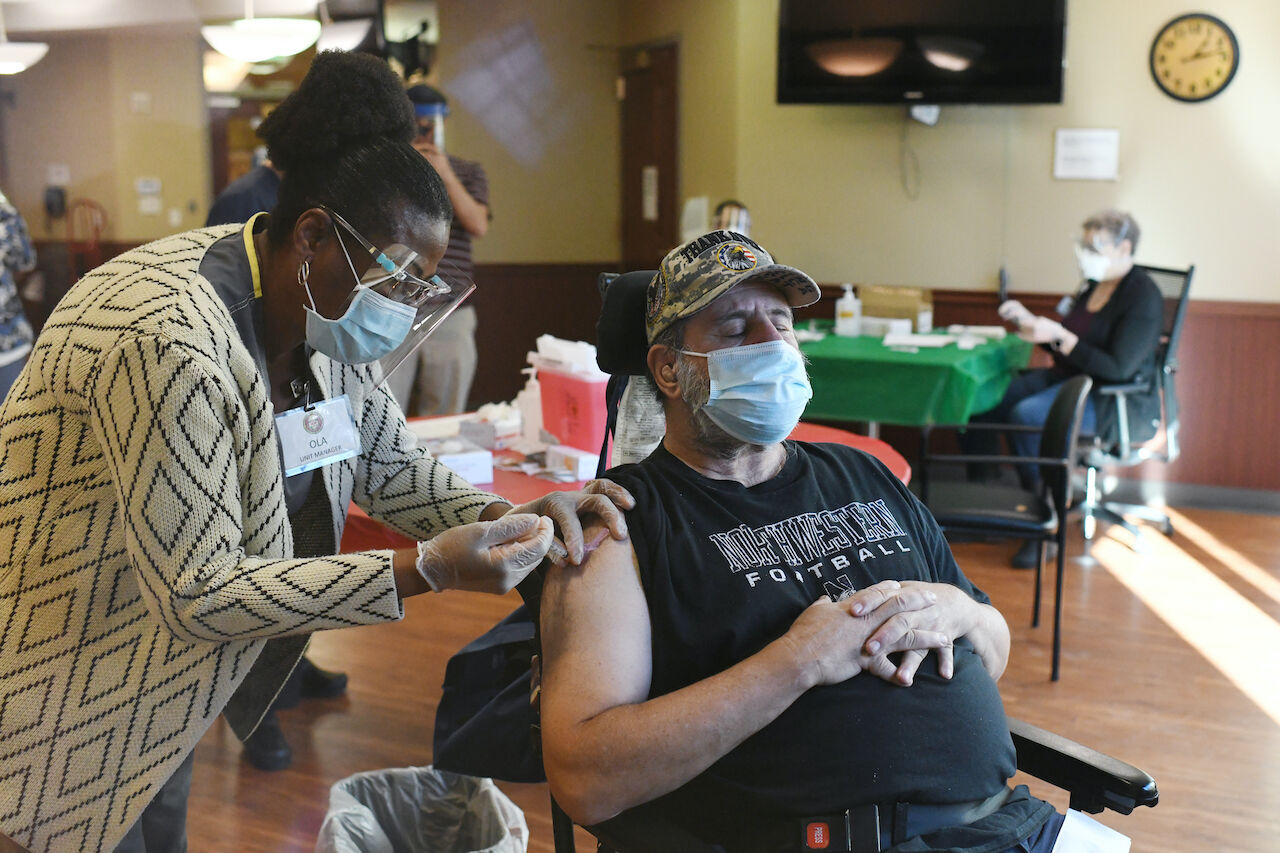
In a letter to vaccine providers Sunday, a top health official wrote that patients who qualify to receive a vaccine shouldn’t have to present official identification, a move praised by a Colorado bioethicist.
The guidance is part of a broader push by the state to reach underserved communities, who have limited access to getting IDs. In the letter, state COVID incident commander Scott Bookman told providers that requiring identification may “unintentionally create barriers to access.”
That paperwork, he added, “can exacerbate distrust and accessibility inequities for many critical groups. This requirement is a barrier for people who are unable to get identification or have trouble accessing services that issue IDs, such as those who are undocumented, experiencing homelessness, have a disability, or others on the margins of society who are unable to get an ID.”
Polling data indicates that some minority communities – particularly Latino and Black – have higher levels of vaccine hesitancy than their white peers. Similarly, research from previous fights about voter ID laws indicate Black voters were less likely to have government-issued IDs. Anywhere from 25% to 11% of voting-age Black Americans said they didn’t have photo identification, according to various research from previous years. That was significantly higher than white voters.
Identification also would prove a barrier for undocumented Coloradans. Last week, at a town hall about how to improve vaccine uptake in minority and underserved communities, providers of color specifically discussed concern among undocumented residents, who feared that coming forward to get vaccinated may put them at risk.
That forum further discussed the need for the public health and medical communities to work to build trust within minority communities.
What’s more, Black and Latino communities have been disproportionately affected by the pandemic, and their access to the vaccine is paramount to slowing the deadly impacts of the virus in Colorado.
“We must be responsive to disparities that have been so pervasive throughout the pandemic – disparities that have plagued society for years upon years but are ever more prominent during crises,” Jill Hunsaker Ryan, the director of the state Department of Public Health and Environment, said in a statement. “To achieve equity, we need to take deliberate action. To not add to that suffering, we must eliminate barriers to fair vaccine distribution. We know that our providers share in our goals to reach all communities.”
The letter also warned providers that they weren’t to give vaccine preference to their already established patients, nor were they to exclude those who couldn’t pay. Failing to abide by those rules, as well as to the identification guidance, would lead the state to bar those providers from providing vaccines.
Matt Wynia, a doctor and the head of the Center for Bioethics and Humanities at the University of Colorado’s Anschutz Medical Campus, praised the state’s ID guidance. He said that “every state should be doing this” and noted some of the state’s biggest outbreaks “have been in communities that include some people without documents.”
“We need to focus like a laser on getting people vaccinated who are (1) most likely to catch this virus, (2) people who are most likely to spread it to others if they catch it, and (3) those who are most at risk of needing hospital care if that catch it, so we save lives and avoid overwhelming our hospitals,” he wrote in an email.


Boebert challenger Eileen Laubacher joins lawsuit aimed at blocking her from Democratic assembly
Ernest Luning
ernest.luning@coloradopolitics.com
Updated 7 hours ago
A Denver District Court judge on Thursday permitted Democratic congressional candidate Eileen Laubacher to join a lawsuit filed by one of her primary opponents seeking to prevent Laubacher from participating in the party’s assembly process in a bid to qualify...
House Ethics Committee to begin hearing on Weinberg complaint
Marianne Goodland
marianne.goodland@coloradopolitics.com
Updated 13 hours ago
The House Ethics Committee on Tuesday will begin a hearing requested by Rep. Ron Weinberg, R-Loveland, tied to an ethics complaint filed against him by Rep. Brandi Bradley, R-Roxborough Park. The ethics committee had found probable cause on two issues...

Iran war enters next phase of destroying entire missile supply chain: Hegseth
Brady Knox, Washington Examiner
brady.knox.washington.examiner@gazetteedit.wpenginepowered.com
Updated 15 hours ago
Secretary of War Pete Hegseth said the war with Iran was entering a new phase, as the United States was focusing on destroying Tehran’s defense industrial base. At a Friday Pentagon briefing, Hegseth and Gen. Dan Caine, chairman of the Joint...
Jeffco Public Schools found in violation of Title IX
Sage Kelley
sage.kelley@denvergazette.com
Updated 9 hours ago
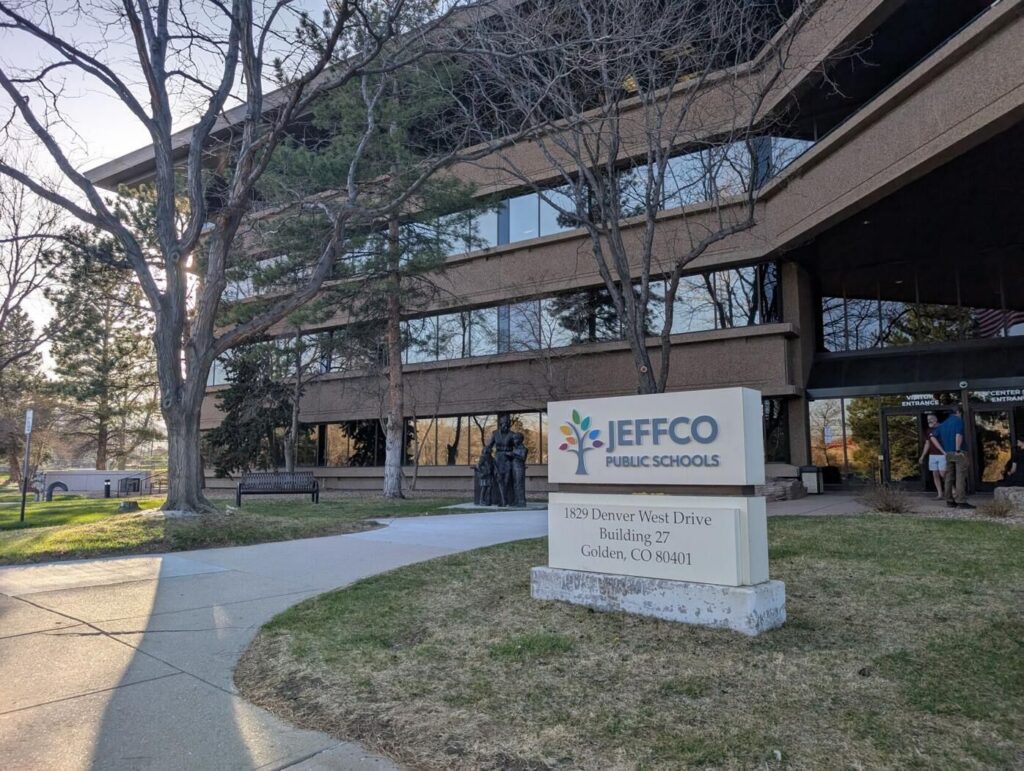
Civil rights office: Male students occupy 61 roster positions on girls’ sports teams The U.S. Department of Education announced Friday that the Jeffco Public Schools district violated Title IX by permitting male students to access female bathrooms and compete in...
Colorado plans to slash interim committee work amid budget woes
Marianne Goodland
marianne.goodland@coloradopolitics.com
Updated 6 hours ago
In a tight-budget year, the work of interim committees — those off-session groups that look at transportation, agriculture, water, healthcare, wildfires, pensions, and anything else lawmakers want to look at — is on the chopping block. And this year, no...
Xcel Energy: Power shutoff ‘likely’ Saturday in Boulder, Jefferson counties
Dan Boniface
dan.boniface@denvergazette.com
Updated 10 hours ago
Up to 43,000 residents in parts of Boulder and Jefferson counties should be prepared to have their power shut off Saturday afternoon, Xcel Energy said. The power company said it was “planning for a likely Public Safety Power Shutoff (PSPS)...

Colorado GOP chair Brita Horn says she’ll resign next month, points to ‘divide within our party’
Ernest Luning
ernest.luning@coloradopolitics.com
Updated 1 day ago
Colorado Republican Party Chair Brita Horn said Thursday that she will resign her position next month following the GOP’s state assembly, citing what she described as an “enduring divide” within the party “marked by vitriol and hostility.” Horn’s announcement came...
Colorado justices skeptical of appellate court’s limitation on prosecution’s appeal
Michael Karlik
michael.karlik@coloradopolitics.com
Updated 1 day ago
The Colorado Supreme Court seemed skeptical on Tuesday that Denver prosecutors should be barred from appealing a trial judge’s permanent dismissal of a criminal case, based upon the sequence of events after the original ruling. Prosecutors charged Quinn M. Jebe...
Senate committee moves forward with Colorado ballot measure to redirect TABOR refunds to schools
Marianne Goodland
marianne.goodland@coloradopolitics.com
Updated 9 hours ago
A Senate panel on Thursday voted along party lines to move forward with a bill that would ask voters for permission to eliminate Taxpayer’s Bill of Rights refunds and redirect those dollars to K-12 public education. The 6-3 vote in...

Federal judge: Government violated order shielding man from deportation in ‘one-off mistake’
Michael Karlik
michael.karlik@coloradopolitics.com
Updated 2 days ago
A federal judge acknowledged on Thursday that the government violated his order by deporting a man in immigration detention during his pending court case, but it “serves nobody’s interests” to require the government to return him. On Feb. 18, Tesfami...
PREV
PREVIOUS

Rep. Lauren Boebert again denies providing Capitol tours days before siege
A freshman House Republican, Rep. Lauren Boebert of Colorado, is denying an accusation that she led tours of the Capitol in the days leading up to the insurrection earlier this month. Democratic Rep. Steve Cohen of Tennessee claimed Boebert, a Republican, gave a tour to “a large group” in the days leading up the riot […]

Coronavirus in Colorado: The latest numbers
There are now 24,041,339 coronavirus cases in the U.S. and 398,588 deaths, according to Johns Hopkins University. The latest COVID-19 numbers in Colorado (Updated on Jan. 18): – 376,171 cases, including 53,460 in Denver County – 2,301,784 people tested – The number of deaths directly caused by COVID is 4,502 while the number of deaths […]