

Appeals court decision could determine parental rights on child vaccinations

The Colorado Court of Appeals has ruled that the constitutional rights of parents should have no more or less weight than other factors where a child’s safety is involved, in a case that pitted a father’s desire to vaccinate his children against his ex-wife’s religious objection.
Experts say that with the urgency to get people vaccinated against COVID-19, cases in which parents disagree about vaccinating their children could become more frequent.
At issue was the legal standard needed for William Blake Crouch’s desire to vaccinate their children to override Rebecca Greene Crouch’s religious objection.
When the couple divorced in 2017, their parenting plan included joint medical decision-making authority and said that absent a mutual agreement or court order, the children would not be vaccinated. However, William Crouch said he changed his mind about vaccination after researching the topic and after taking a business trip to Seattle during a measles outbreak there, which made him concerned about accidentally exposing his children to the disease.
William Crouch also said he did not share Rebecca Crouch’s religious beliefs, and the children did not follow restrictions based on their mother’s religion during their time with William Crouch.
The La Plata County District Court denied William Crouch’s request to modify their agreement for medical decision-making authority. The court said that while William Crouch successfully proved the children remaining unvaccinated would endanger their health, vaccination would interfere with Rebecca Crouch’s religious beliefs, so William Crouch needed to prove not vaccinating them would cause “substantial harm” to the children.
The court found William Crouch had not met that standard of proof.
According to the Court of Appeals, the district court should have focused on whether the advantage to the children of vaccination outweighs the harm caused by the change in decision-making authority. Infringement on Rebecca Crouch’s religious beliefs could factor in as harm caused, but should not have led the analysis, the court ruled.
“To the extent parents’ constitutional rights are relevant to the endangerment inquiry, they should be considered and weighed – without heightened scrutiny or deference,” Judge Neeti Pawar wrote. “In other words, the parents’ constitutional rights should be considered like any other factor that informs whether the harm likely to be caused by a reallocation of decision-making responsibility is outweighed by the advantage of the change.”
Steven Collis, the founding faculty director of the Bech-Loughlin First Amendment Center and of the Law and Religion Clinic at the University of Texas at Austin, said courts tend to avoid making value judgments about religious beliefs, but thanks to the coronavirus pandemic we likely have not seen the last of these types of cases.
“I think it’s going to be something that will have to come up with COVID-19, where you’ve got parents who have divorced … and one parent doesn’t want to vaccinate their child,” he said. “That’s going to be interesting to see how it works with all of that, and it’s not going to be just religious objectors. I mean, a lot of people are opposed to vaccines, not really for religious reasons, but for other reasons altogether.”
The imminent risks posed by COVID-19 have already come up in disputes over decision-making and parenting time, said Suzanne Griffiths, managing shareholder of the family law and civil litigation firm Griffiths Law. She used an example of one parent’s frequent travel being a factor in denying visitation rights because of an elevated risk to the children contracting COVID-19.
“This is going to be huge,” she said of the issue of vaccination disagreements between parents. “Because, boy, we are headed down the COVID litigation path.”
The district court mistakenly applied a burden of proof for when a government action limits exercise of a parent’s constitutional right, rather than the burden that should apply when giving sole decision-making power to one parent, said the Court of Appeals. Typically, when a government action interferes with a fundamental constitutional right, the government has to prove a compelling state interest for doing so.
That is not the correct standard to apply in this case, said the Court of Appeals, because the district court’s decision about William Crouch’s request to modify the parenting agreement was not a decision mandating vaccination or no vaccination. The Court of Appeals elaborated that a court’s ruling on decision-making authority between parents does not implicate religious freedom.
“To some degree, it’s a bit of a loophole,” said Christopher Griffiths, a shareholder at Griffiths Law. “The court is saying that they’re going to apply a lower legal standard, because they’re not actually the ones deciding,” but the Court of Appeals decision has cleared a path for the district court to give decision-making authority to the parent that they know favors vaccination.
The decision sends the case back to the district court with instructions to reconsider it under the balance of benefit versus harm of changing the parents’ decision-making authority.
Collis said it may be difficult for the district court, and by extension appeals courts, to completely avoid making a value judgment about Rebecca Crouch’s religious beliefs if it decides the case in favor of William Crouch. Essentially the district court would be saying that her religious objection to vaccination is wrong by saying the need for vaccination outweighs her objection, he said.
“That’s where I think you could see some long-term ramifications here, but it’s only if all of those things happen,” he said. “And the district court may find a creative way to get out of that thicket.”
Attorneys for Rebecca and William Crouch have not yet responded to a request for comment.



Latest death brings down wolves’ survival rate to 44% in Colorado
Marianne Goodland
marianne.goodland@coloradopolitics.com
Updated 32 minutes ago
The female wolf of the mating pair for the King Mountain pack has died, bringing total fatalities to 14 out of the 25 animals reintroduced in Colorado. The wolf, identified as No. 2310, was among the 10 wolves brought to...

Who has the power to declare war?
Tom Cronin Bob Loevy
tom-cronin-bob-loevy@coloradopolitics.com
Updated 17 hours ago
Our constitutional framers boldly and ambitiously granted Congress the power to declare war yet granted the executive the responsibility, after war is declared, to supervise war as the commander-in-chief. That worked well until the Cold War began. The U.S. has been...

The delicate, ever-changing dance between politics and religion | SONDERMANN
Eric Sondermann for Colorado Politics
eric_sondermann_for_colorado_politics@coloradopolitics.com
Updated 2 days ago
The dance, really a marathon that brings to mind the classic movie “They Shoot Horses, Don’t They?”, has been going on as long as there have been governments and organized religion. That is to say that this delicate tango has...
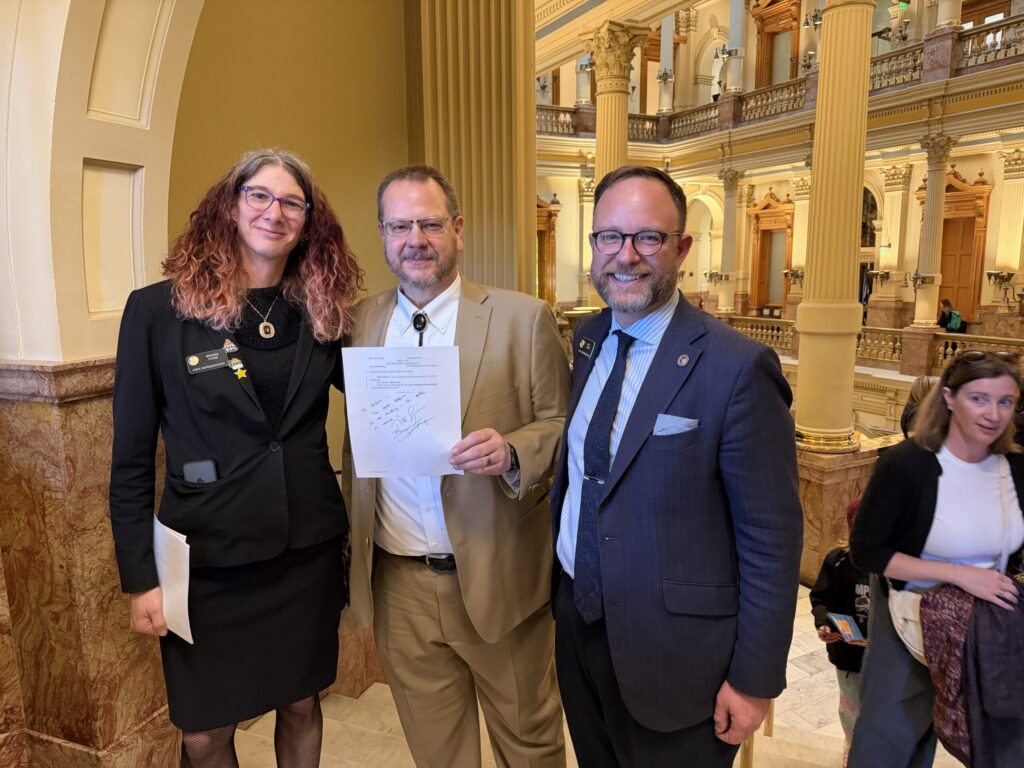
Roasts, get yer roasts, here: Capitol M | Week of March 14, 2026
Marianne Goodland
marianne.goodland@coloradopolitics.com
Updated 3 days ago
The lighter side of the Capitol, especially in the past week Apparently, the pending and eventual switch to daylight stupid time has put people in some pretty funny moods. And thank goodness! On March 4, the Senate approved the appointments...

Polly Baca elected to DNC | A LOOK BACK
Rachael Wright, Special to Colorado Politics
rachael.wright@coloradopolitics.com
Updated 3 days ago
Forty-Five Years Ago This Week: After her loss to Republican U.S. Rep. Hank Brown the previous year in the race for the 4th Congressional District, state. Sen Polly Baca-Barragan, D-Thortnon, was elected as one of the three vice-chairs of the...

Colorado Politics Calendar Mar. 16-22
Rachael Wright, Special to Colorado Politics
rachael.wright@coloradopolitics.com
Updated 3 days ago
CoPo’s weekly political calendar will help you find political and public-policy events throughout Colorado. It includes candidate and issue campaign events, public policy meetings, court hearings, state and local party conventions, assemblies, debates, rallies, parades, speaking engagements, traveling dignitary appearances,...

Boebert challenger Eileen Laubacher joins lawsuit aimed at blocking her from Democratic assembly
Ernest Luning
ernest.luning@coloradopolitics.com
Updated 16 hours ago
A Denver District Court judge on Thursday permitted Democratic congressional candidate Eileen Laubacher to join a lawsuit filed by one of her primary opponents seeking to prevent Laubacher from participating in the party’s assembly process in a bid to qualify...
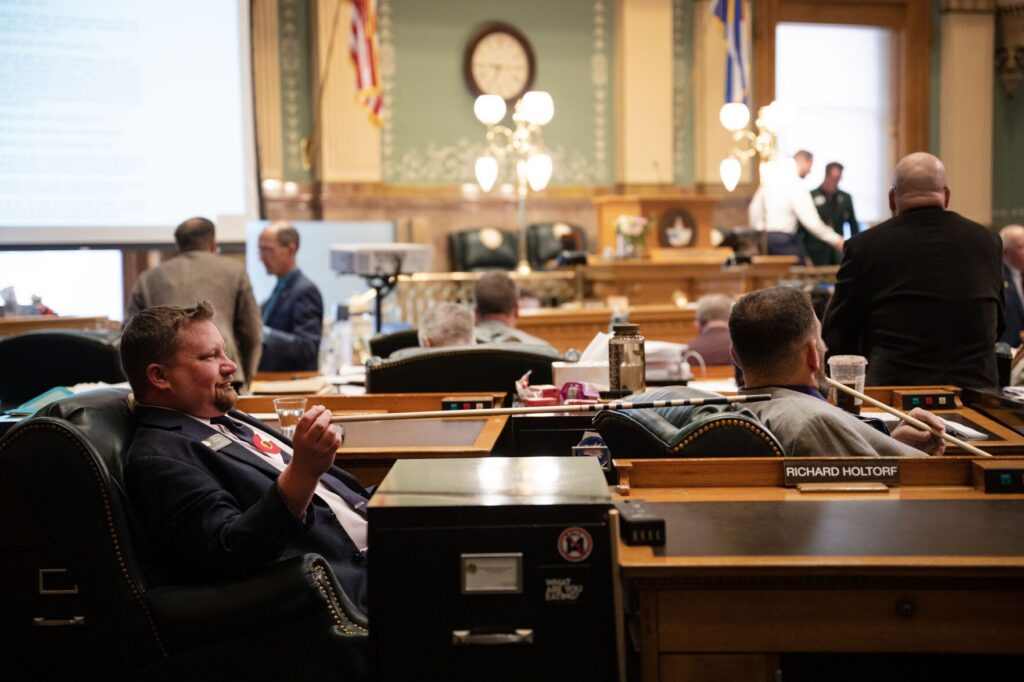
House Ethics Committee to begin hearing on Weinberg complaint
Marianne Goodland
marianne.goodland@coloradopolitics.com
Updated 22 hours ago
The House Ethics Committee on Tuesday will begin a hearing requested by Rep. Ron Weinberg, R-Loveland, tied to an ethics complaint filed against him by Rep. Brandi Bradley, R-Roxborough Park. The ethics committee had found probable cause on two issues...

Iran war enters next phase of destroying entire missile supply chain: Hegseth
Brady Knox, Washington Examiner
brady.knox.washington.examiner@gazetteedit.wpenginepowered.com
Updated 23 hours ago
Secretary of War Pete Hegseth said the war with Iran was entering a new phase, as the United States was focusing on destroying Tehran’s defense industrial base. At a Friday Pentagon briefing, Hegseth and Gen. Dan Caine, chairman of the Joint...
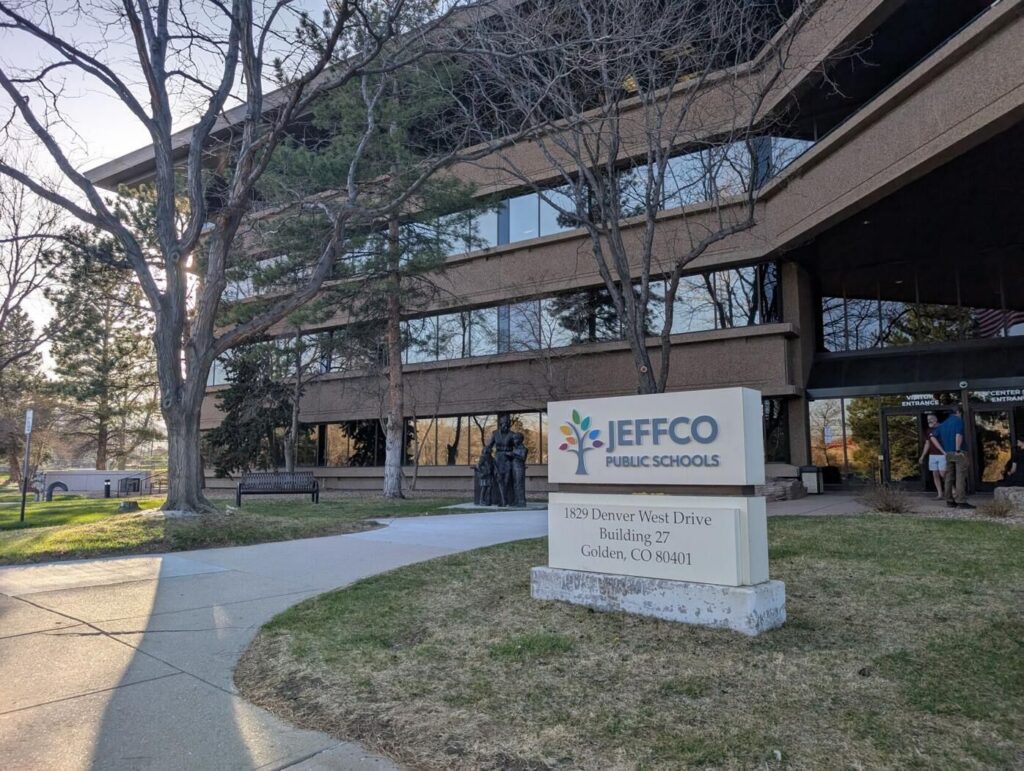
Jeffco Public Schools found in violation of Title IX
Sage Kelley
sage.kelley@denvergazette.com
Updated 18 hours ago
Civil rights office: Male students occupy 61 roster positions on girls’ sports teams The U.S. Department of Education announced Friday that the Jeffco Public Schools district violated Title IX by permitting male students to access female bathrooms and compete in...
PREV
PREVIOUS

State launches COVID vaccine education campaign to fight misinformation
The Colorado Department of Public Health and Environment launched the “Get the COVID-19 Vaccine Facts” campaign Monday, aiming to educate Coloradans about the vaccine. The campaign emphasizes the safety and effectiveness of the COVID-19 vaccine, as well as encourages people to use reliable sources like the CDPHE for information about the vaccine. “With the distribution […]

Rep. Lauren Boebert again denies providing Capitol tours days before siege
A freshman House Republican, Rep. Lauren Boebert of Colorado, is denying an accusation that she led tours of the Capitol in the days leading up to the insurrection earlier this month. Democratic Rep. Steve Cohen of Tennessee claimed Boebert, a Republican, gave a tour to “a large group” in the days leading up the riot […]