

Democratic Latino Caucus outlines agenda for 2021

Housing, immigration, health care and jobs: that’s the progressive agenda for the 13-member Colorado Democratic Latino Caucus for the 2021 session.
Whether the money will be there for some of the caucus’s bold ideas is another matter.
Seven members of the caucus spoke with reporters Monday to outline their plans for the 2021 General Assembly session, which gavels in for a few hours on Wed, Jan. 13 and then recesses for at least another five weeks after that.
State Rep. Alex Valdez of Denver, caucus co-chair, said the 2021 agenda will focus on policy issues to address the effects of the pandemic, which have disproportionately affected communities of color, including Latinos.
Topping the list: access to health care. Colorado’s an expensive place to live, Valdez said, and as a result one of the things that gets shelved is health care.
But it’s not only COVID-19 on caucus members’ minds: it’s also that Latinos die at a disproportionate rate from other causes, such as diabetes. Reproductive health care also is important, and that means much more today as a result of four years of the Trump administration’s efforts to quash that care, Valdez explained.
The second pillar of the legislative agenda: affordable housing, and that also includes keeping a watchful eye on the Jan. 31 expiration of the federal moratorium on evictions. Colorado’s moratorium, implemented through executive order, expired on Dec. 31, so all eyes are on what the federal government under the new Biden administration will do, according to Valdez.
“We’re just beginning to see the fallout [on evictions] from the pandemic,” he said. “We need to continue to work with governments to create incentives for landlords to work with tenants” so they don’t enter the eviction process.
These issues all intersect, Valdez said. “You can’t take care of your health care if you don’t have a good place to live…and you can’t pay for healthcare if you don’t have enough money to pay the rent.”
The caucus also has an interest in reversing, at least in part, the so-called Telluride decision, a 20-year-old Colorado Supreme Court ruling that banned “inclusionary zoning.” That’s when a local government requires a developer to include affordable housing units in a new development. The Court ruled it was a form of rent control, already illegal under a 1981 law, because those affordable housing units could be sold, but also rented at below-market prices. Ten local governments, including Denver and Boulder, have worked around that issue, including some that offer incentives to builders rather than ordinances.
In the 2020 session, Sens. Robert Rodriguez and Julie Gonzales, Reps. Serena Gonzales-Gutierrez and Susan Lontine, all of Denver, sponsored House Bill 20-1351, which would have said “the state prohibition on local rent control laws is not applicable to local laws that restrict rents on newly constructed or redeveloped housing so long as the local regulation provides options to the property owner or land developer, and creates alternatives to the construction of new affordable housing on the building site.” But that bill, introduced just before the 2020 session shut down for two months, was postponed once the General Assembly resumed its work in May.
It’s likely those same lawmakers will take another swing at that issue in the 2021 session, according to Gonzales.
Another aspect of healthcare, vaccinations, is also a priority. Caucus co-chair Rodriguez noted that many people of color work in grocery stores and restaurants, and they want to ensure those are priorities for vaccinations. However, restaurant workers are still in limbo; a shakeup of the immunization phasing, announced last week by Gov. Jared Polis, left restaurant workers off the list for vaccinations anytime in the near future, despite guidelines by the Centers for Disease Control and Prevention that suggest restaurant workers should be vaccinated immediately after healthcare workers and others in food production and agriculture.
Valdez said while the governor has the authority to set those vaccination phases, the caucus is looking at how they can apply a little pressure to ensure those workers get vaccinated as soon as possible.
The other priority areas for the caucus are immigration and jobs.
Rodriguez said the immigration issue deals with allowing people who are undocumented to get licenses and register for jobs, as well as handling costs of going through the legalization process, or criminal justice issues that involved the federal Immigration and Customs Enforcement (ICE).
The agenda includes a focus on military veterans who are not citizens and who are dealing with citizenship issues, as well as data privacy and personal information issues, to ensure that data is not being shared inappropriately or being used against those who provide it.
Rep. Serena Gonzales-Gutierrez of Denver said an earlier executive order dealt with information sharing with state agencies, but that there is still work to be done on that policy, especially as it pertains to ICE.
The job issue is the last pillar of the caucus agenda, which includes protection for workers’ rights, which could include the meat-packing industry or grocery stores, for example.
A related issue – a legal defense fund for immigrants – is also part of the agenda, but whether the money is there in the 2021 session is a big question. Rodriguez indicated the December revenue forecast, which showed more than $2 billion in one-time money might be available for the 2021 session, but much will depend on legislation in the works from all lawmakers.
“We’re still under the impression we’re working with very limited funds,” Valdez said, and that some of the bills that came up during the 2020 session could surface again, unless they contain large fiscal notes. And much will also depend on federal support. “Colorado’s fiscal situation is unique,” Valdez said, referring to TABOR. “It prevents the legislature from taking bold action.”
Those in the caucus call Monday were leery of critiquing the governor’s response to the pandemic. “The governor has been in a tough position,” said Valdez. “Nobody expected the pandemic to be as far reaching as it has been,” nor with the devastating impact it has had on lives, businesses and housing. “I know if you ask each of us, we could take issue with one part or another of the decision-making process,” one that the legislature wants to be a part of, he said.
While the lawmakers represent their communities and the people of Colorado, “overall, I don’t think anyone can criticize the job he’s done…we respect the position the governor is in,” Valdez said. Rodriguez agreed, saying the lift the governor has had has not been easy. “He’s trying to be as transparent as he can,” Rodriguez said.
Sen.-elect Sonya Jaquez Lewis of Longmont did opine, however, that the one issue she wants the governor’s focus on is protection from evictions.
Some of the issues the caucus will advocate for could take more than a few sessions, members added. “Like any policy, a transformational shift will take years,” Rodriguez said. “We’re not just doing these things on behalf of our constituents,” added Rep. Kerry Tipper of Lakewood. “We have Latinos across the state,” whether urban, rural, conservative or moderate parts of Colorado.



Denver Democrat Diana DeGette trails challenger Melat Kiros at assembly as both qualify for primary
Ernest Luning
ernest.luning@coloradopolitics.com
Updated 2 hours ago
U.S. Rep Diana DeGette, a Denver Democrat, qualified for Colorado’s June primary by the skin of her teeth Friday at the party’s district assembly, where the 15-term incumbent received fewer than half as many delegate votes as her challenger, 28-year-old...

Kwame Spearman warrants plenty of criticism, not cancellation | SONDERMANN
By Eric Sondermann
by-eric-sondermann@coloradopolitics.com
Updated 2 days ago
All of us are flawed humans, some more so than others. This is the tale of Kwame Spearman who burst onto Denver’s business and political scene a handful of years back. His ride has taken a downhill trajectory. Within the...

Colorado Politics Calendar Mar. 30-Apr. 5
Rachael Wright, Special to Colorado Politics
rachael.wright@coloradopolitics.com
Updated 1 day ago
CoPo’s weekly political calendar will help you find political and public-policy events throughout Colorado. It includes candidate and issue campaign events, public policy meetings, court hearings, state and local party conventions, assemblies, debates, rallies, parades, speaking engagements, traveling dignitary appearances,...
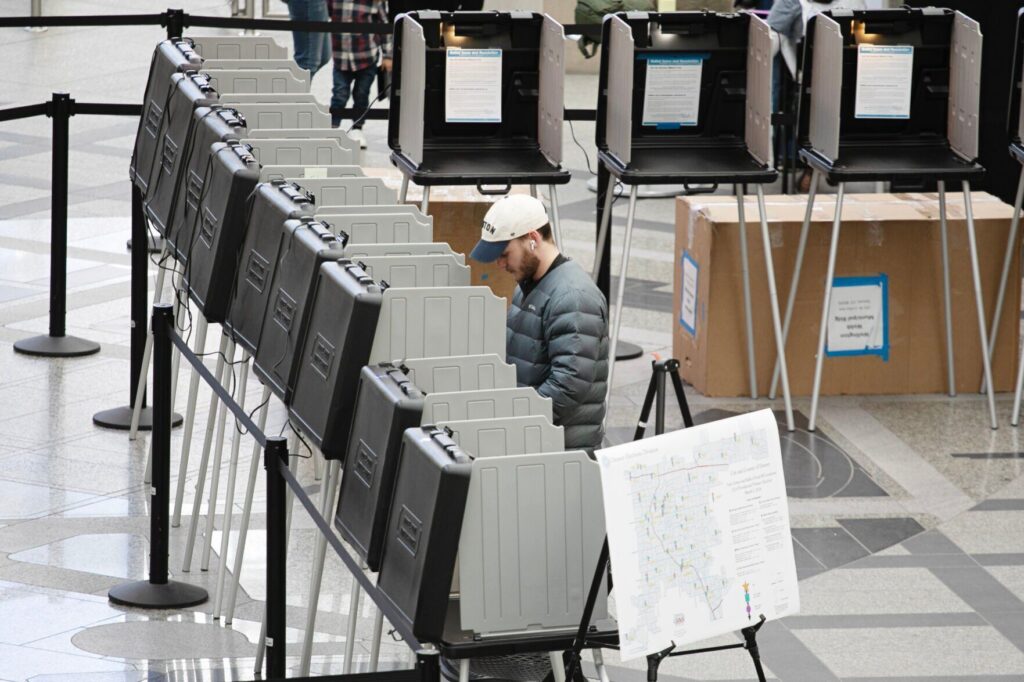
Federal judge upholds constitutionality of Colorado campaign contribution limits
Michael Karlik
michael.karlik@coloradopolitics.com
Updated 14 hours ago
A federal judge upheld Colorado’s individual campaign contribution limits as constitutional on Thursday, finding that three Republican plaintiffs failed to prove the campaign finance framework violates their First Amendment rights. U.S. District Court Senior Judge John L. Kane recognized that...

Appeals court rejects theory that existing tax revenue undermines need for new fees
Michael Karlik
michael.karlik@coloradopolitics.com
Updated 19 hours ago
Colorado’s second-highest court rejected a plaintiff’s claim on Thursday that the tax revenue generated by an existing activity should prevent local governments from imposing new fees aimed at regulating the activity. The question stemmed from Colorado’s unique constraints on taxation...
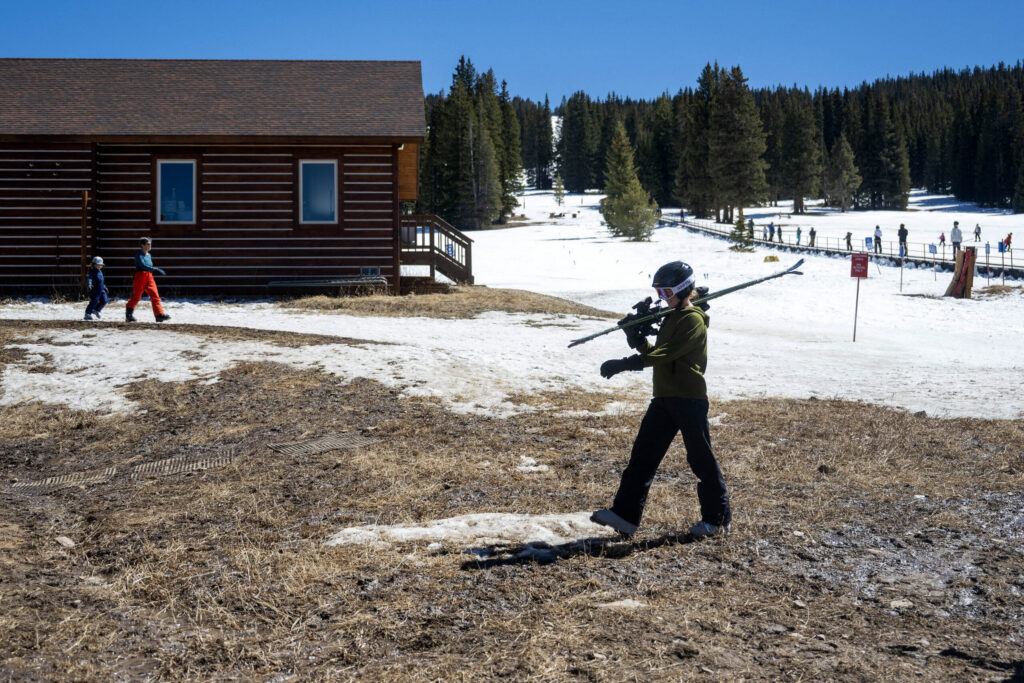
Colorado ski resorts announce early closures amid historic snowpack lows, high temperatures
Kyla Pearce
kyla.pearce@gazette.com
Updated 19 hours ago
As Colorado’s historically low snowpack year comes to a close and spring conditions take over the mountains, the state’s major ski resorts are announcing closing dates — some of which are weeks before historic closing dates. Most of Colorado’s ski...

Marco Rubio’s star power rises at CPAC 2026
Mabinty Quarshie and Samantha-Jo Roth, Washington Examiner
mabinty.quarshie.and.samantha-jo.roth.washington.examiner@gazetteedit.wpenginepowered.com
Updated 21 hours ago
GRAPEVINE, Texas — Secretary of State Marco Rubio’s popularity is growing and could possibly boost him to one of the top two spots in the 2028 GOP presidential race, if attendees at the Conservative Political Action Conference are to be believed. ...

Boulder police investigate sexual assault, ‘drugging’ at bar near CU
Matt Kyle
matt.kyle@denvergazette.com
Updated 23 hours ago
The Boulder Police Department is investigating reports of sexual assault and “suspected drugging” involving underage girls at a bar. There may be additional victims who have not yet come forward, the department said in a news release. The bar, Scrooge...

Appeals court finds no illegal sentence when defendants forfeit time-served credit
Michael Karlik
michael.karlik@coloradopolitics.com
Updated 1 day ago
Colorado’s second-highest court ruled on Thursday that criminal defendants may agree to relinquish the credits they earned while incarcerated pending trial, despite a state law guaranteeing that such time “shall be deducted” from a person’s sentence. Kerry Ellis Endsley pleaded...

Appeals court reinstates Garfield County arson charge
Michael Karlik
michael.karlik@coloradopolitics.com
Updated 2 days ago
Colorado’s second-highest court reinstated a Garfield County defendant’s arson charge on Thursday, concluding a trial judge improperly credited a witness’s claim that she alone was responsible for starting the fire. A sheriff’s deputy responded to a brush fire near Parachute...
PREV
PREVIOUS

Source of income discrimination for landlords outlawed beginning in 2021
As a result of legislation enacted in 2020, it is now prohibited for a landlord in Colorado to refuse to rent to individuals based on a person’s lawful source of income. “Colorado is home to a diverse array of industries, and a person cannot be denied housing regardless of their source of income, be it […]

COVID-19 surging in Colorado's Front Range again, if toilets are a sign
Coronavirus is again surging in Colorado’s Front Range, if toilets are a telltale, potentially signaling a post-holiday increase in cases. Wastewater in large swaths of the Denver metro area, Boulder, northern Colorado Springs and Pueblo West is showing an increase in levels of the virus, shed by infected individuals in stool, according to data released […]