

Greeley Tribune: Greeley water’s Terry Ranch Project the result of more visionary, historic thinking
The history of water in Greeley is the stuff of legends, except it’s all true.
Where else do they name libraries after oracles of irrigation? The high desert became an oasis thanks to the visionary efforts of our forefathers, who envisioned a future where thousands, tens of thousands, maybe hundreds of thousands would live and farm here and require access to the most precious of all resources.
Their foresight, generations ago, is why we live here. Period. It’s also why Weld County is a historically successful agriculture region, and it’s why the area has thrived and blossomed into what we now know as Greeley and its vibrant surrounding area. They sowed for a future they’d never see, and we’re reaping the benefits. Their legacy has been built upon and multiplied many times over by their successors, and it’s a huge part of why the Greeley area grows at the rate it does.
Now, a new generation of moisture seers is taking up the reins.
Greeley Water and Sewer Department director Sean Chambers and deputy Adam Jokerst, together their staffs and under direction from city leadership, see the future. They know more growth is coming to our region, and they are working like mad to prepare for it. It seems they may have broken ground, so to speak, on water security for the generations that lay ahead of us.
The Terry Ranch Project is that vision. It’s a plan to acquire approximately 1.2 million acre-feet of non-tributary groundwater from the northwest part of the county, then utilize the underground aquifer as a storage tank for Greeley-owned water, pumping water via a bi-directional pipeline out in lean years and back in fat ones for decades to come.
Let’s get a couple concerns we’ve seen pop up about this plan out of the way before we lavish any more praise on this prescient project.
First: Yes, the water contains traces of naturally occurring uranium, similar to groundwater throughout most of the state and larger region. However, do not fear, as these expert water engineers assure us that removing uranium from water is a common practice. Proven, simple technologies will be employed to ensure that this water is safe to drink and use. Don’t expect any three-eyed fish to pop up the lake in Promontory Park.
Second: A misconception has arisen in some corners that this water won’t be owned by the city. That is simply not true. The water will be owned exclusively by the city of Greeley. The water currently in the aquifer will be purchased in full from the current owner, a company called Wingfoot, and that will be the end of it. After that, the massive natural underground water tank will be used to store Greeley-owned water.
Any questions can be directed to Jokerst at adam.jokerst@greeleygov.com.
With that out of the way, let’s point a pleasing sort of serendipity out about how it’s even possible that this proposal is on the table.
We at the paper wondered, when we visited with the folks from the city, why, if this plan is so dang good, there was this ancient water cache just sitting there in the year 2020 waiting to be purchased? Couldn’t and wouldn’t some other thirsty municipality have pounced on the opportunity before now?
The answer is interesting, and it points back to history that got Greeley to where it stands today as a banner-carrier for the irrigation industry.
The reason nobody’s purchased this yet is twofold: location and price.
In terms of location, while plenty of other municipalities might have liked to get their hands on this water, they simply weren’t positioned in the right place to do it – that’s part luck, we suppose, but it’s part manufactured luck. That’s because it’s only possible for the city to pipe this water down to Greeley in part thanks to its existing infrastructure.
A nominal length of bi-directional pipeline will need to be built from the aquifer near Carr south, but then, near Windsor, it will join with the existing transmission pipeline that travels from the Bellvue Water Treatment Plant northwest of Fort Collins to Greeley. No other comparable municipality has that flexibility.
The price piece, though, is what really gets us excited. More than a million acre-feet of water is prohibitively expensive for almost anyone out there to acquire. In fact, Greeley wouldn’t even be paying cash for it. Instead, it’s proposing to use a portion of its massive bank of water credits – a sort of water-as-currency only redeemable by developers who want to build inside city limits – to pay for this purchase.
Here’s why that’s incredible: First, water credits, while certainly a valuable resource, only belong to the city on this scale because of its enormous existing water rights portfolio. That’s thanks to those prophetic forefathers we lauded earlier. Without their foresight, Greeley probably could have never considered this purchase if it required flat cash – at least not without substantially raising water rates in town.
Second, this move encourages future development in Greeley. These water credits are only worth anything to Wingfoot if Greeley continues to grow and developers are willing to purchase the water credits from the company. While Greeley retains a large portion of its own bank of credits, Wingfoot will only make any money off this exchange through investment in the city’s continued growth. That’s a double-whammy for the city. Win-win all around.
We’re grateful to live in this incredible place thanks to our unparalleled city fathers. And we’re similarly grateful that this critical resource is under the watchful care of appropriate successors to that great water legacy.


Colorado Supreme Court heads toward summer recess, newest justice authors first opinion | COURT CRAWL
Michael Karlik
michael.karlik@coloradopolitics.com
Updated 23 minutes ago
Welcome to Court Crawl, Colorado Politics’ roundup of news from the third branch of government. The state Supreme Court is in the process of releasing a large batch of opinions as it heads toward its summer recess in July, plus...
CPW shoots wolf linked to dozens of livestock deaths across two counties
Marianne Goodland
marianne.goodland@coloradopolitics.com
Updated 26 minutes ago
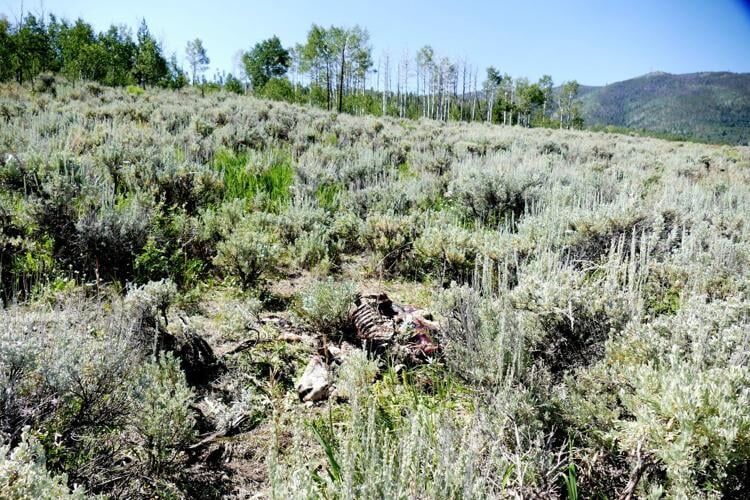
Colorado Parks and Wildlife said Sunday that officers shot and killed a wolf believed to be responsible for killing at least 22 sheep over the past year in Rio Blanco County. The wolf came from the Copper Creek pack and...

Colorado Attorney General Democratic primary: Meet the candidates
Thelma Grimes
thelma.grimes@coloradopolitics.com
Updated 25 minutes ago
One of the most closely watched contests on the June primary ballot is the four‑way Democratic race for Colorado attorney general. With Attorney General Phil Weiser term‑limited and running for governor, attention has shifted to the candidates vying to replace...

Colorado primary for governor: Meet the Democratic and Republican candidates
Thelma Grimes
thelma.grimes@coloradopolitics.com
Updated 50 minutes ago
Colorado’s race for governor is wide open this year, with Gov. Jared Polis term‑limited and unable to seek reelection. Five candidates are competing for a spot on the November ballot, setting up one of the most closely watched primaries in...

Supreme Court to hear challenge to indefinite detention of criminal immigrants
Jack Birle, Washington Examiner
jack.birle.washington.examiner@gazetteedit.wpenginepowered.com
Updated 6 minutes ago
The Supreme Court announced it would take up a case deciding whether the federal government can hold criminal immigrants in detention indefinitely pending removal, adding to the immigration cases the high court has heard in recent years. The high court...

Vance says MOU between Iran and US ‘already signed’ digitally
Mabinty Quarshie, Washington Examiner
mabinty.quarshie.washington.examiner@gazetteedit.wpenginepowered.com
Updated 10 minutes ago
Vice President JD Vance said a 60-day preliminary ceasefire extension between Iran and the United States was signed digitally ahead of in-person meetings to sign the deal in Europe later this week. “We already signed the deal digitally yesterday,” Vance...

Candidate’s disturbing anti-animal agriculture history | Rachel Gabel
Rachel Gabel
rachel-gabel@coloradopolitics.com
Updated 23 hours ago
Rep. Manny Rutinel has busted out a cowboy hat for campaign photos and has thrown it into the ring to represent Colorado’s 8th Congressional District in D.C. He is endorsed by U.S. Sen. Cory Booker, a New Jersey democrat who serves on the Committee...

Marx, Bottoms, a primary death wish for Colorado GOP | Dick Wadhams
Dick Wadhams
dick-wadhams@coloradopolitics.com
Updated 23 hours ago
Colorado Republicans stand on the brink of total irrelevance and embarrassment if they nominate one of the two nonsensical, buffoonish candidates running for governor, Victor Marx and Scott Bottoms. Republicans are already in a very defensive, tenuous position as Democrats...

Trump to meet with Middle Eastern leaders at G7 summit overshadowed by Iran and Ukraine wars
Colorado Politics
chris.brubaker+copo@gazette.com
Updated 3 hours ago
President Donald Trump will meet with Middle Eastern leaders in Evian, France, early Monday morning, where his efforts to finally end the Iran and Ukraine wars are likely to cloud all other topics of conversation at the G7 summit. In...
Remember the grassroots reason for DEI | Miller Hudson
Miller Hudson
miller-hudson@coloradopolitics.com
Updated 18 minutes ago
The Trump administration’s jihad against Diversity, Equity and Inclusion (DEI) programs has metastasized into the most unexpected corners of American life. Yet, before examining this policy “incursion,” it’s worthwhile to examine the roots of DEI which reach back more than...