

Court upholds suspension of Aurora officer for warrantless entry

The Colorado Court of Appeals has upheld an Aurora police officer’s 24-hour unpaid suspension following an administrative review in which the current chief of police acknowledged the officer “violated those people’s rights that evening.”
Then-police Chief Nicholas J. Metz imposed the punishment on Officer John Gonzales for entering a home without a warrant and violating other policies regarding reporting of incidents and releasing handcuffed persons. An Aurora Police Department directive bars officers from making an arrest, search or seizure “which they know or reasonably should know is not according to established legal precedent or statutory law.”
The discipline stemmed from an incident on June 26, 2016, in which Gonzales and Officer Darryl Huntsman responded to a welfare check on a potentially suicidal woman in Aurora. However, they unknowingly went to the wrong residence. An individual who answered the door informed Huntsman the woman in distress was not there.
At the same time, another man in the house opened the garage door and encountered Gonzales. The officer indicated he would enter the home and said he had a warrant, even though he did not. Gonzales’s body-worn camera captured a physical interaction between the two. Huntsman heard the commotion and came to handcuff the man.
Over the objections of another individual in the home, Gonzales entered. A fourth person tried to block him, but was put in handcuffs.
Only after questioning the people inside the home did Gonzales understand the woman in distress was not there. He did not report the incident, and the police department initiated an internal affairs investigation after an attorney for the occupants Gonzales encountered requested the body camera footage.
Gonzales appealed his discipline from the chief, and Aurora’s Civil Service Commission upheld the decision following a two-day hearing. During that hearing, Metz testified to the training Aurora officers receive on constitutional law and the limits on entries, searches and seizures. Vanessa Wilson, who succeeded Metz as chief, also concluded Gonzales was “lying to that citizen” about the warrant and it was “APD’s mistake 100 percent. We violated those people’s rights that evening.”
In siding against Gonzales, the commission found he knew or should have known that the circumstances made his search of the home unconstitutional.
An Arapahoe County District Court judge upheld the decision over the warrantless entry, and a three-member panel of the Court of Appeals also agreed on Thursday. The statements of Metz and Wilson to the commission were sufficient to establish a policy violation.
“Their testimony outlines the training made available to Gonzales, their familiarity with the training, and their understanding of when a home entry meets constitutional standards,” wrote Judge Terry Fox in an unpublished opinion not intended to set precedent. Given the absence of an immediate risk to the lives and safety of others, the officer lacked the pretext to enter the home.
“That Gonzales disagrees with others’ assessment of the situation at issue does not insulate him from disciplinary action,” she added.
Aurora eventually settled for $150,000 with the occupants of the home. Mari Newman, an for the occupants with Killmer, Lane & Newman, described the city as recalcitrant in responding to her open records request.
“Gonzales got off easy. He should be feeling lucky that all he got was a 24-hour suspension for violating constitutional rights he should have been aware of,” she said.
An attorney for Gonzales did not respond to a message seeking comment. Newman added that the relatively light discipline was indicative of the troubles with the department, which is under multiple investigations.
“Even when the Aurora Police Department leadership fully acknowledges that it’s a constitutional violation, that the officer was 100% at fault, that the officer lied about what happened,” she said, “the most they were willing to do was discipline in the form of a 24-hour suspension.”
The case is Gonzales v. Aurora.


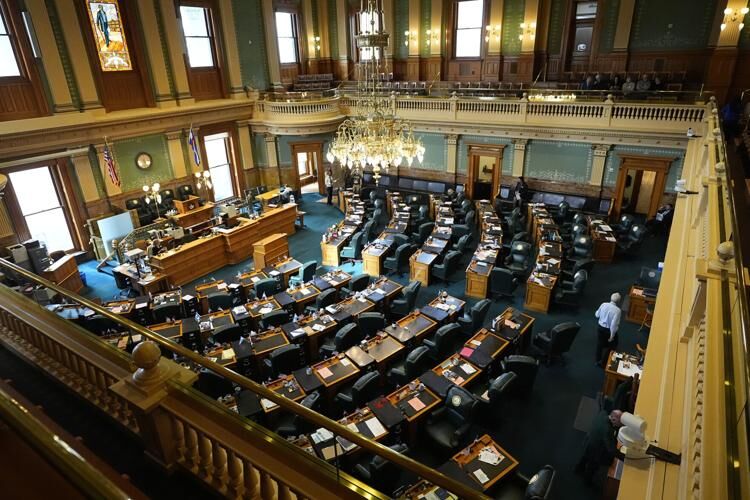
Colorado House Democrats focus on rising prison costs amid declining crime rates during budget discussion
Marissa Ventrelli
marissa.ventrelli@coloradopolitics.com
Updated 13 hours ago
Colorado’s House Democrats pressed budget writers Tuesday over a nearly $70 million increase for the Department of Corrections, questioning why the state plans to add 941 prison beds and explore new prison capacity at a time when crime rates are...
Federal judge warns of increasingly inadequate immigration bond hearings
Michael Karlik
michael.karlik@coloradopolitics.com
Updated 9 hours ago
A federal judge ordered the immediate release of a man in immigration custody last week and, seemingly for the first time in Colorado, warned that the government is increasingly conducting inadequate bond hearings for detainees. Colorado’s federal trial court is facing...
Inside the GOP caucus: Colorado legislator explains why a bigger budget still means cuts
Marianne Goodland
marianne.goodland@coloradopolitics.com
Updated 11 hours ago
Tasked with explaining a budget driven by rising caseloads, shifting federal dollars and a $1.5 billion shortfall, Joint Budget Committee member Rep. Rick Taggart spent Tuesday’s Republican caucus meeting detailing why the 2026–27 spending plan appears larger on paper, even...

10th Circuit upholds dismissal of Barry Morphew’s civil lawsuit against prosecutors, investigators
Michael Karlik
michael.karlik@coloradopolitics.com
Updated 9 hours ago
The Denver-based federal appeals court agreed on Monday that Barry Morphew, who now stands accused for a second time of murdering his wife, failed to state viable claims against the government officials involved in his first, unsuccessful prosecution. Morphew was...
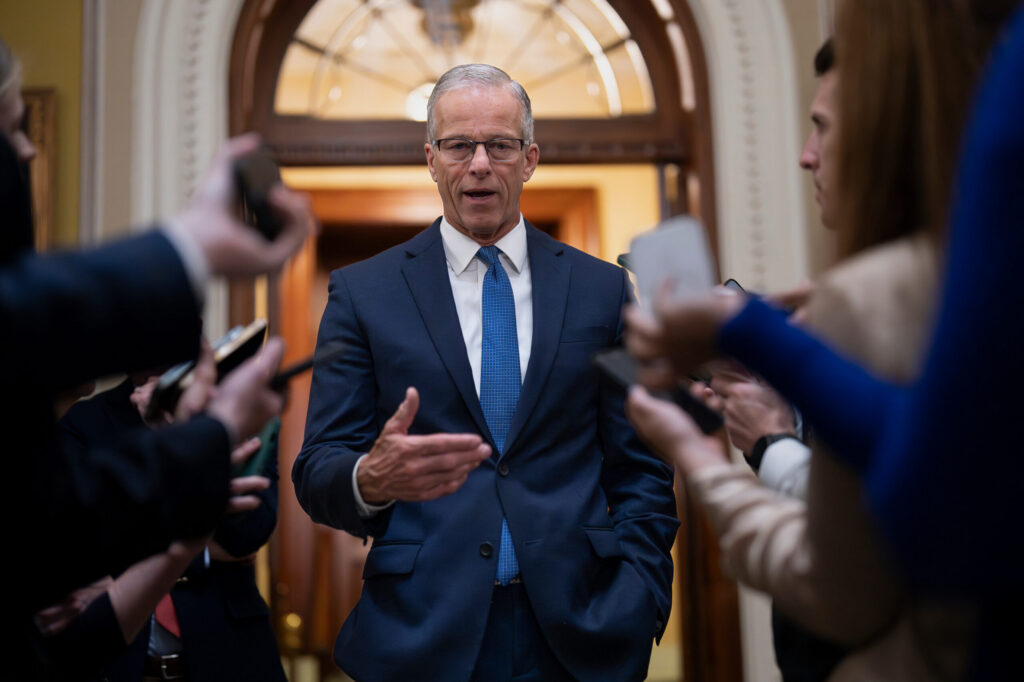
Johnson won’t reopen DHS until Thune makes good on megabill promise
Lauren Green, Washington Examiner
lauren.green.washington.examiner@gazetteedit.wpenginepowered.com
Updated 15 hours ago
Speaker Mike Johnson (R-LA) is unlikely to move legislation ending a partial shutdown of the Department of Homeland Security until Senate Majority Leader John Thune (R-SD) kickstarts the party-line budget reconciliation process to pass another megabill. A source familiar told...
Trump’s mail-in ballot executive order reveals why DOJ is pushing for state voter data
Kaelan Deese, Washington Examiner
kaelan.deese.washington.examiner@gazetteedit.wpenginepowered.com
Updated 15 hours ago
President Donald Trump’s new executive order on mail-in voting is offering the clearest explanation yet for why the Justice Department has spent months aggressively seeking access to state voter rolls, while also triggering a sweeping legal challenge from Democrat-led states....

Trump quietly drops steel and aluminum tariffs for bikes, e-bikes, and frames
Christian Datoc, Washington Examiner
christian.datoc.washington.examiner@gazetteedit.wpenginepowered.com
Updated 15 hours ago
EXCLUSIVE — The Trump administration has quietly backed off from President Donald Trump’s threat to impose 50% steel and aluminum tariffs on imported bicycles, e-bikes, and bicycle frames. In August 2025, the administration added e-bikes to the list of products covered...

Trump warns Iran’s ‘whole civilization will die tonight’ unless deal is struck with US
Hailey Bullis, Washington Examiner
hailey.bullis.washington.examiner@gazetteedit.wpenginepowered.com
Updated 15 hours ago
President Donald Trump issued a bleak warning ahead of his Tuesday night deadline for Iran to reach a peace deal with the United States, saying “a whole civilization will die” unless Iranian leadership yields. “A whole civilization will die tonight,...

Senate-passed farmworkers overtime bill easily clears Colorado House committee
Marianne Goodland
marianne.goodland@coloradopolitics.com
Updated 11 hours ago
A proposal to ease Colorado’s overtime requirements for agricultural employers cleared a key House committee Monday, setting up a broader fight over whether the state should scale back a labor policy adopted just five years ago. The House Agriculture, Water...
Federal judge blocks evidence from Aurora police’s unconstitutional search
Michael Karlik
michael.karlik@coloradopolitics.com
Updated 9 hours ago
A federal judge ruled last month that prosecutors cannot use firearm evidence against a defendant because Aurora police searched him without having any reasonable basis to believe he was armed and dangerous. In evaluating the constitutionality of the search, U.S....
PREV
PREVIOUS

Denver's second sanctioned homeless camp is now open and at full capacity
Two days ahead of schedule, Denver’s second sanctioned homeless camp quietly opened Tuesday evening in Uptown and within minutes reached full capacity. The camp is made up of 30 different red and black Eskimo QuickFish and neon yellow, gray and black Cabela’s ice fishing tents all placed in an enclosed area adjacent to the Denver […]

State health agency finalizes 5-Star Variance Program
A statewide certifications program that would allow some businesses to operate at higher capacity limits than the COVID-19 dial allows will start accepting applications Friday. The “5 Star” Certified Business Variance Program by the Colorado Department of Public Health and Environment rewards businesses that implement extensive safety measures to surpass guidelines. Certified businesses in areas […]