

10th Circuit deems memes acceptable evidence in federal enticement case

A federal judge correctly admitted as evidence six memes that a defendant posted online before he started enticing a fake, law enforcement-run account into prostitution, the U.S. Court of Appeals for the 10th Circuit ruled on Monday.
Melvin Roshard Alfred was a user of the social media platform Tagged, going by the username “King Maybach.” Alfred sent messages to several dozen users, among them an account called “G-Baby,” which was a front for law enforcement to target sex traffickers. G-Baby appeared to users as a 19-year-old Colorado woman.
The officer corresponding with Alfred in September 2018 used the pseudonym “Nikki,” telling Alfred she wanted to leave Denver. Alfred encouraged Nikki prostitute herself to come up with the money and come to Houston, where Alfred lived. After Nikki showed hesitation, Alfred continued to urge her to engage in sex for money.
Someone posing as Nikki called Alfred to tell him she was coming to Houston, and Alfred agreed to meet her at the bus station. Law enforcement arrested him there.
At issue in the appeal were eight memes – which the 10th Circuit defined as “pictures with text over them or pictures of text” – that Alfred posted on Tagged three years before he began engaging with the fake profile. One of them contained an image of movie character Ron Burgundy, and another depicted a hand holding coins. Both were captioned with a “Pimp Thoughts” web address.
“Did King Maybach repost memes from an Instagram account called Pimp Thoughts on his Tagged profile? Yes,” said Alfred’s attorney, Laura Suelau, at trial. “When he did that five years ago, did he think it was funny? Maybe. Does he think it’s funny today? Probably not.”
“The memes contained laudatory references to pimping and pimping culture and also contained graphic depictions suggesting dire consequences of engaging in prostitution without a pimp,” described Judge Carolyn B. McHugh in the appellate court’s opinion.
At trial, U.S. District Court Chief Judge Philip A. Brimmer admitted six of the memes as evidence, despite the defense’s argument that they were unrelated to the crime and did not reflect Alfred’s thinking at the time he interacted with Nikki. Prosecutors countered the online media were central to Alfred’s “brand.”
Brimmer decided that since anyone whom Alfred contacted on Tagged could see the memes, “I find that they were readily available, the nature of the website readily available. And as a result, I find that in fact they are intrinsic because they are the types of things that can be easily seen.”
He did, however, omit two memes depicting violence against women because “there is a very, very high likelihood that the jury, especially those two images in combination, would believe that Mr. Alfred’s message is that you get in line or you get beaten up.”
The jury convicted Alfred of coercion and enticement and also of facilitating prostitution, with a 21-month sentence.ed his argument that Brimmer misunderstood the nature of social media by seeing the memes as permanent fixtures, rather than “fleeting thoughts.” Suelau had told the jury that “if the government’s theory is that these pictures, these memes and photos of money, are evidence of him trying to lure people in 2018, part of this business enterprise and marketing strategy four years later, well, that’s a marketing strategy with a long game.”
That argument “ignores the integral nature of social media to Mr. Alfred’s attempts to solicit prostitution,” countered McHugh. “Mr. Alfred’s easily accessible memes and pictures were an integral part of the solicitation attempt and advancement of his business.”
She added that “[w]hile the memes provided other evidence of Mr. Alfred’s long-held interest in pimping, any prejudice arose from the fact that they tended to show Mr. Alfred was, aspired to be, or held himself out as, a pimp.”
Forbes reported in 2018 that it is legal to use social media communications as evidence. Last year, a judge in Maryland admitted “stupid,” but racist, memes into a murder trial after prosecutors alleged that the media were crucial to proving the defendant intended to stab a Black soldier.
The case is United States v. Alfred.


It’s time to let unaffiliated voters caucus | Vince Bzdek
Vince Bzdek
vince.bzdek@gazette.com
Updated 1 day ago
There’s no getting around it: Colorado’s 3,000 county caucuses, which just wrapped up recently, left half the electorate out in the cold. Since unaffiliated voters now make up 51% of all Colorado voters, a majority of Colorado electors are barred...
With new medical school set to open, Feinstein will step down as UNC president
Hap Fry, Special to The Gazette
hap-fry@gazette.com
Updated 10 hours ago
GREELEY • Dr. Andrew “Andy” Feinstein, the charismatic president of the University of Northern Colorado, has announced that he will step down from his leadership role just on the cusp of what is perhaps his signature accomplishment being realized. He’ll...
Governor warns energy development both a boon and a risk to Colorado | A LOOK BACK
Rachael Wright, Special to Colorado Politics
rachael.wright@coloradopolitics.com
Updated 4 days ago
Forty-Five Years Ago This Week: “The real opportunity and the dangers before us are both real,” said Gov. Dick Lamm in his January state of the state address before the Colorado General Assembly. Lamm argued that energy development would continue...
A Mile High, again: Capitol M | Week of March 21, 2026
Marianne Goodland
marianne.goodland@coloradopolitics.com
Updated 4 days ago
The lighter side of the Capitol, usually…. Local Journalism Day, except they forgot their very own local journalists. The state Senate on Thursday, March 19, passed a resolution recognizing Local Journalism Day. Everyone voted for it, which is good, because...

Colorado Politics Calendar Mar. 23-29
Rachael Wright, Special to Colorado Politics
rachael.wright@coloradopolitics.com
Updated 3 days ago
CoPo’s weekly political calendar will help you find political and public-policy events throughout Colorado. It includes candidate and issue campaign events, public policy meetings, court hearings, state and local party conventions, assemblies, debates, rallies, parades, speaking engagements, traveling dignitary appearances,...
The insular bubble of caucuses and assemblies | SONDERMANN
Eric Sondermann
eric-sondermann@coloradopolitics.com
Updated 3 days ago
Nearly 30 years ago, then-Federal Reserve Chairman Alan Greenspan coined the term “irrational exuberance” to describe the overheated stock market. That descriptive phrase could also apply to much of the political realm. The hype in politics often grossly exceeds the...
Lauren Boebert’s hard ‘no’ on Pentagon Iran funding request puts Mike Johnson in tough spot
Emily Hallas, Washington Examiner
emily.hallas.washington.examiner@gazetteedit.wpenginepowered.com
Updated 2 days ago
Colorado U.S. Rep. Lauren Boebert announced on Thursday that she will not support further funding for the United States’s war in Iran, marking an uphill battle for the Trump administration’s effort to secure additional financing from Congress. “I’ve already told...
Rubio gains ground in 2028 jockeying as Iran war elevates his profile
Samantha-Jo Roth, Washington Examiner
samantha-jo.roth.washington.examiner@gazetteedit.wpenginepowered.com
Updated 2 days ago
Secretary of State Marco Rubio’s high-profile role in the Trump administration’s response to the Iran war is boosting his standing in the early jockeying for the 2028 Republican presidential nomination — and positioning him as a possible rival to Vice...
Federal judge dismisses claims against medical contractor for Eagle County jail suicide
Michael Karlik
michael.karlik@coloradopolitics.com
Updated 2 days ago
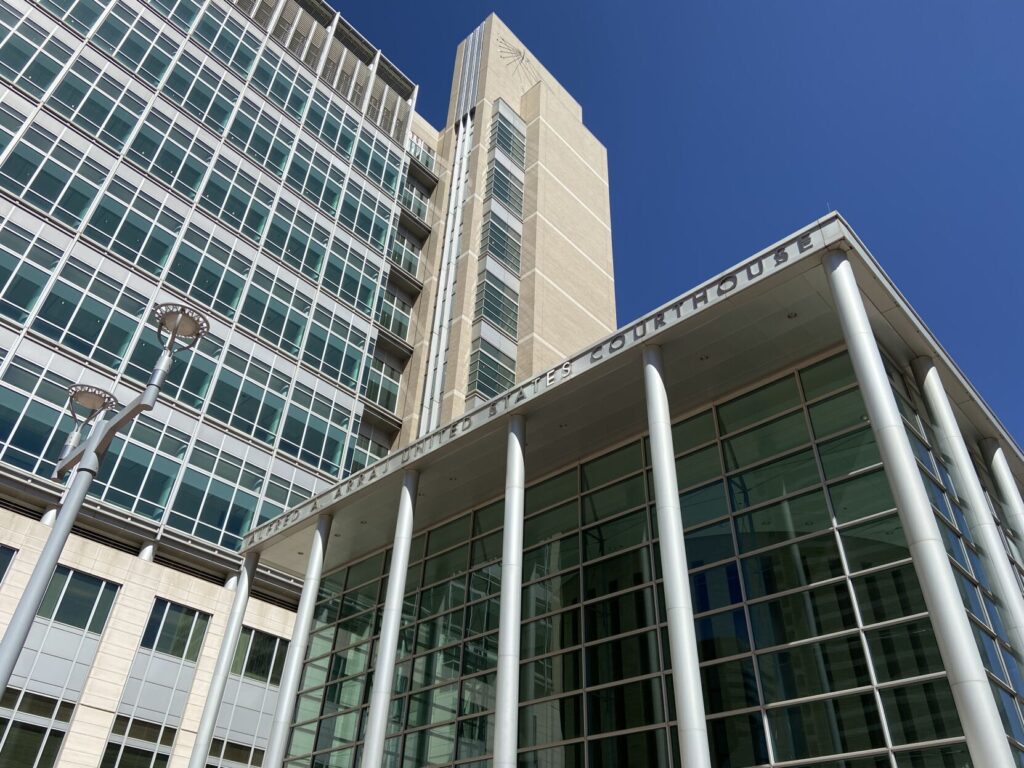
A federal judge dismissed the claims against a medical contractor for the Eagle County jail and its employees earlier this month, concluding there were insufficient allegations that they violated the constitutional rights of a man who died by suicide in...
Colorado Senate committee advances bill increasing overtime threshold for farmworkers
Marianne Goodland
marianne.goodland@coloradopolitics.com
Updated 1 day ago
The struggle to balance farmworker protections with the survival of Colorado’s family farms took center stage Thursday as senators debated two competing overtime bills. The Senate Business, Labor and Technology Committee held a rare double-bill hearing that led to a...
PREV
PREVIOUS

Officials warn of increased alcohol, substance abuse in Colorado this winter
At the end of a historically stressful year, mental health officials worry that alcohol and substance abuse among Coloradans is going to increase further this holiday season, the Center for Mental Health in Montrose said last week. The center said numerous triggers are coming together to create a perfect storm of isolation, including COVID-19 fears […]

First Coloradans receive Pfizer COVID-19 vaccine
A front-line medical worker with underlying health conditions received Colorado’s first COVID-19 vaccination shot Monday afternoon, launching a months-long inoculation campaign to inoculate people across the state against the novel coronavirus. Colorado received its first doses of the vaccine from manufacturer Pfizer earlier in the morning and more shipments will arrive over the next two […]