

Federal judge allows request for communications between General Assembly, tobacco company

A federal judge has approved the request by three out-of-state cigarette manufacturers to seek communications between cigarette maker Philip Morris and the state – including members of the General Assembly – as they seek to void a portion of the voter-approved cigarette tax increase.
Liggett Group LLC, Vector Tobacco Inc. and Xcaliber International Ltd., LLC, plus Littleton resident and cigarette user Jennifer A. Smith, filed a federal complaint following the passage of Proposition EE, which created a tax on nicotine products and raised cigarette and tobacco taxes. They argue the voter-approved measure and the 2020 legislation that enabled it violate the U.S. Constitution by placing a minimum price on cigarettes.
“Section 10 will increase the minimum retail price of a pack of 20 cigarettes to $7.00,” wrote the plaintiffs, referring to a provision of House Bill 1427. “Plaintiff Smith voted for Proposition EE because she understood from the State’s disclosures in the Bill and the 2020 Ballot Information Booklet that the Bill would only impose new cigarette taxes to generate revenue for public purposes, including education, which she favored.”
Had she known that the measure would have substantially raised the price on discount cigarettes like those the plaintiff manufacturers produce, she would have voted against it.
U.S. District Judge Raymond P. Moore will hear on Dec. 21 the plaintiffs’ request for a preliminary injunction to prevent enforcement of the provision. Moore, in a Dec. 3 order, did not grant the plaintiffs the ability to seek depositions from Gov. Jared Polis and Attorney General Phil Weiser, who are named as defendants.
Philip Morris and its parent group, Altria, supposedly negotiated the ballot measure’s language. The plaintiff manufacturers said they compete with Philip Morris “almost exclusively on price,” and any minimum price in excess of the listed tax increase would accrue to the retailers on discount cigarette purchases.
As such, the complaint alleges, Section 10 violates the Commerce Clause by favoring in-state interests at the expense of out-of-state enterprises.
“Unless enforcement of Section 10 is preliminarily enjoined, the Manufacturer Plaintiffs will lose millions of dollars of annual sales and profits of their discount cigarettes in Colorado, as well as customers, market share and good will it took them years to establish, all of which they will be unable to recover even if they ultimately prevail in this lawsuit,” the plaintiffs wrote.
Alan Chen, a constitutional law professor at the University of Denver, said that prevailing on such challenges is typically a bigger hurdle.
“The U.S. Constitution prohibits states from enacting laws that discriminate against businesses from other states or that otherwise impose a substantial burden on interstate trade. This is known as the ‘dormant’ Commerce Clause, and is a doctrine designed to stop states from engaging in protectionism,” Chen explained.
“Because Proposition EE applies to all cigarette manufacturers, wherever they are located, the plaintiffs will have to show that the burden on commerce are clearly excessive in relation to the relative social benefits of the law,” he said.
A spokesperson for Healthier Colorado, an advocacy group that favored Proposition EE’s passage, said that the organization “believes that the court system will uphold the will of the overwhelming majority of Coloradans who voted in favor of Proposition EE.”
Voters approved the measure by a margin of nearly 68% to 32%. By 2027, Proposition EE would result in a tax of $2.64 per pack of cigarettes, up from the current 84 cents. The revenue would go toward K-12 education, tobacco programs and general state spending, and then to preschool.
The Blue Book narrative mentioned to voters the new minimum price for cigarettes, which will rise to $7.50 per pack in 2024.
In accusing Colorado of price fixing, the plaintiffs claimed that if other states enacted similar laws around the country, that would destroy price competition and allow manufactures of premium cigarettes like Philip Morris to dominate the market. Further, they allege HB1427 violated the Colorado constitution after there was no explicit reference in the bill’s title – or Proposition EE’s – to the minimum price of cigarettes.
“We also want to understand why key elements of the bill have been omitted from the description that will be presented to Colorado voters in November,” said Len Feiwus, an attorney for Liggett Group, at the time.



Kentucky Gov. Andy Beshear set to headline Colorado Democrats’ annual fundraising dinner
Ernest Luning
ernest.luning@coloradopolitics.com
Updated 3 days ago
Kentucky Gov. Andy Beshear, one of the Democrats’ top 2028 presidential prospects, is scheduled to deliver the keynote address at the Colorado Democratic Party’s annual fundraising dinner in June in Denver, the party said Friday. Serving his second term as...
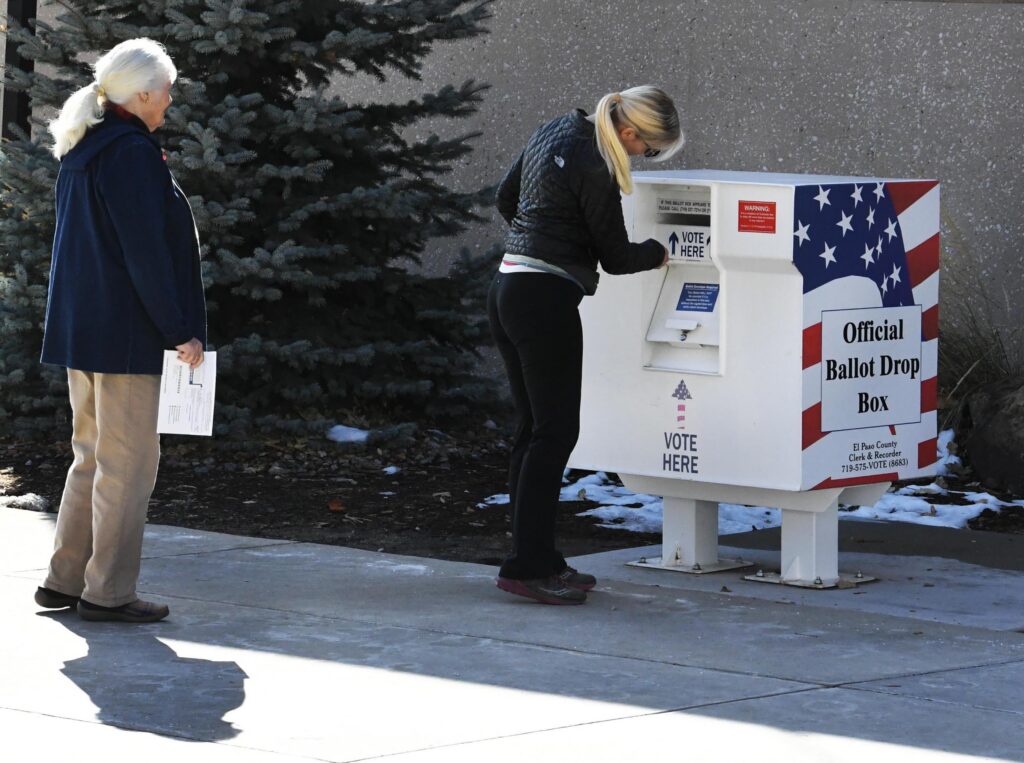
Colorado sues Trump administration over elections order
Marissa Ventrelli
marissa.ventrelli@coloradopolitics.com
Updated 8 hours ago
Colorado has joined a coalition of states in suing President Donald Trump over his new executive order on elections, arguing the directive unlawfully intrudes on their authority to run their own voting systems and threatens access to mail ballots for...
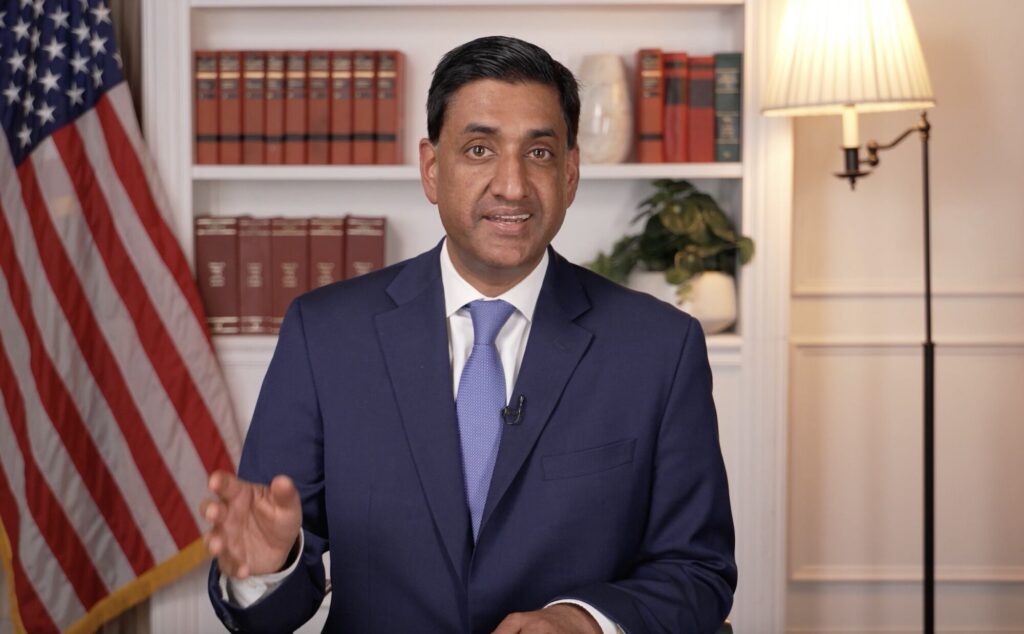
Denver Democrat Neal Walia lands endorsement from Ro Khanna in Colorado’s state House District 9
Ernest Luning
ernest.luning@coloradopolitics.com
Updated 8 hours ago
California Rep. Ro Khanna on Friday endorsed legislative candidate Neal Walia in the race for an open state House seat, praising the Denver Democrat’s commitment to public service and progressive goals. Walia, who mounted an unsuccessful challenge against U.S. Rep....

Redistricting fight escalates as Colorado Title Board clears competing ballot proposals
Marianne Goodland
marianne.goodland@coloradopolitics.com
Updated 3 days ago
Colorado’s title board on Wednesday gave final approval to multiple ballot measures related to congressional redistricting, setting up a series of proposals that could alter how the state draws its U.S. House districts for the 2028 and 2030 elections. The...
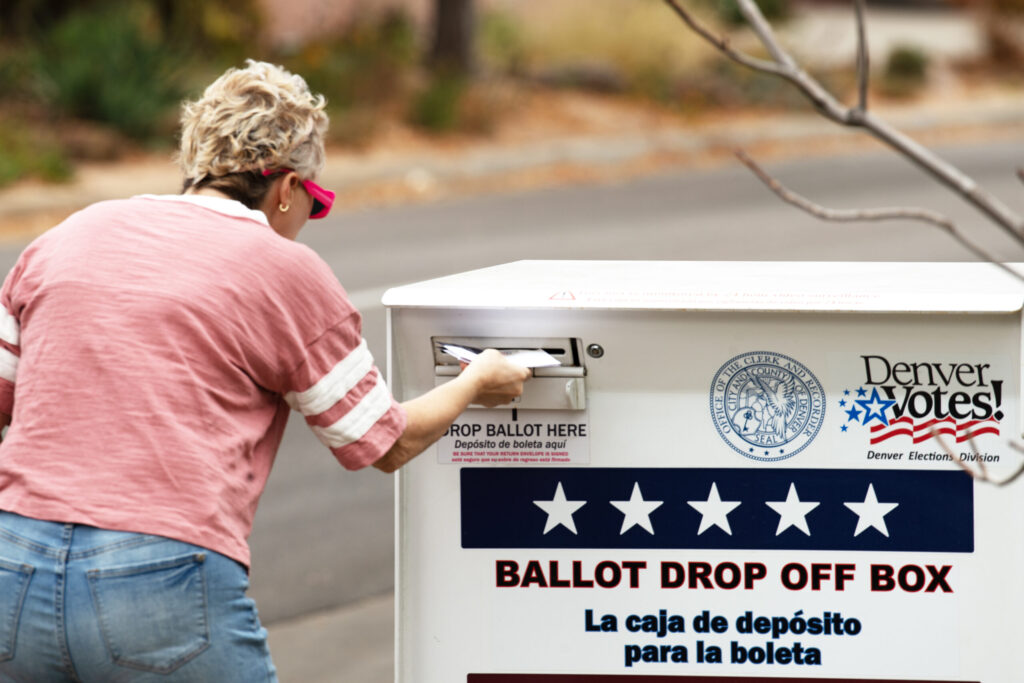
Judge rules that Colorado law makes it too hard for parties to bar unaffiliated voters from primaries
Ernest Luning
ernest.luning@coloradopolitics.com
Updated 5 days ago
A federal judge ruled in favor of the Colorado Republican Party late Tuesday, saying that a portion of the state law that allows unaffiliated voters to cast ballots in party primaries is unconstitutional because it imposes an unrealistic burden on...
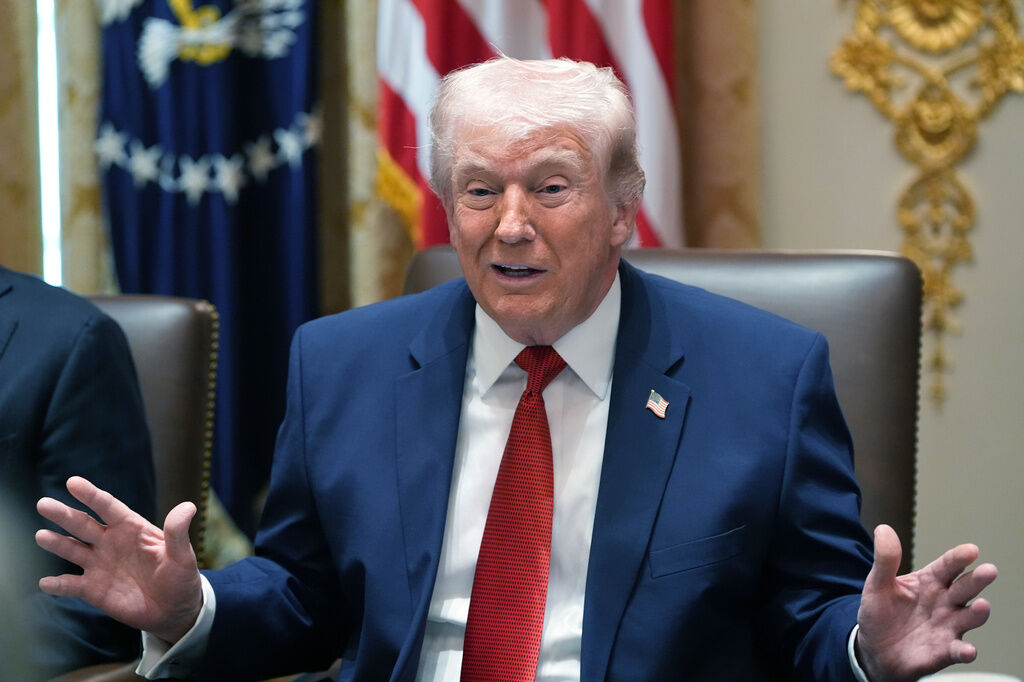
Colorado leaders say Trump’s executive order targeting mail voting violates state election authority
Marissa Ventrelli
marissa.ventrelli@coloradopolitics.com
Updated 5 days ago
Colorado leaders criticized President Donald Trump’s new executive order issued Tuesday, arguing that its creation of a national voter‑eligibility list and new limits on mail voting violate states’ constitutional authority to run their own elections. President Donald Trump has frequently...

Phil Weiser wins top spot in Colorado’s Democratic gubernatorial primary at party’s state assembly
Ernest Luning
ernest.luning@coloradopolitics.com
Updated 1 week ago
Attorney General Phil Weiser’s name will appear first on Colorado’s Democratic gubernatorial primary ballot after his overwhelming win Saturday at the party’s state assembly in Pueblo. Weiser joins U.S. Sen. Michael Bennet in the June 30 primary for the office...
Denver Democrat Diana DeGette trails challenger Melat Kiros at assembly as both qualify for primary
Ernest Luning
ernest.luning@coloradopolitics.com
Updated 7 days ago
U.S. Rep Diana DeGette, a Denver Democrat, qualified for Colorado’s June primary by the skin of her teeth Friday at the party’s district assembly, where the 15-term incumbent received fewer than half as many delegate votes as her challenger, 28-year-old...
Federal judge upholds constitutionality of Colorado campaign contribution limits
Michael Karlik
michael.karlik@coloradopolitics.com
Updated 1 week ago
A federal judge upheld Colorado’s individual campaign contribution limits as constitutional on Thursday, finding that three Republican plaintiffs failed to prove the campaign finance framework violates their First Amendment rights. U.S. District Court Senior Judge John L. Kane recognized that...
Seligman, Bridges, Gonzales lead downballot races heading into Colorado Democrats’ state assembly
Ernest Luning
ernest.luning@coloradopolitics.com
Updated 1 week ago
As Colorado Democrats prepare to designate candidates to the June primary ballot at the party’s state assembly in Pueblo on Saturday, three candidates appear poised to win top-line designation in downballot statewide races, according to data compiled by the state...
PREV
PREVIOUS

Report on police response during George Floyd protests finds flaws in keeping track of officers, actions
Denver police did not effectively track their use of less-than-lethal projectiles and often did not promptly create use-of-force reports during last spring and summer’s protests prompted by the death of George Floyd in Minneapolis, a watchdog report finds. The Denver Police Department also did not create officer rosters of those assigned to the first four […]

Colorado's election results are official: no problems with Biden, Hickenlooper wins
Colorado became the latest state to officially make Joe Biden the winner of the state’s popular vote, not that it was in doubt. Secretary of State Jena Griswold certified the results of last month’s election after receiving each county’s votes, after bipartisan canvass boards from each of the state’s 64 counties completed their review. The […]