

Court allows constitutional claims against El Paso deputy to proceed

A federal court has allowed a Colorado Springs man to sue an El Paso County Sheriff’s Office deputy over his vehicular tactics during an apprehension.
On Aug. 19, 2017, law enforcement pursued Brian Halik for running a stop sign on his motorcycle. According to Halik’s narrative, Sgt. Steven D. Brown joined the pursuit and approached Halik “head on.” Brown reportedly attempted a second time to stop Halik by driving against traffic, and eventually hit the motorcycle, ejecting him.
Deputies took Halik into custody and charged him with felony vehicular eluding. He subsequently made a series of allegations against the sheriff’s office, from lying to secure a higher bond for him, depriving him of medical care and placing him in segregation.
U.S. Magistrate Judge Kathleen M. Tafoya found that several of Halik’s claims lacked any specificity about the individuals who reportedly violated his rights, nor did he advance a sufficient legal argument. However, to his Fourth Amendment claim that Brown violated his rights by unlawfully seizing him — or preventing his freedom of movement — during the motorcycle chase, Tafoya believed Halik had stated a plausible case.
“[T]he Complaint explicitly alleges that Sergeant Brown ‘was aiming to collide with Plaintiff in a head-on collision;’ that he ‘turned his Chevrolet Tahoe to his right . . . in order to strike Plaintiff;’ and that he ‘then rammed into Plaintiff at a high rate of speed,’” wrote Tafoya in a Sept. 30 opinion. “These allegations, taken as true, show that Sergeant Brown intentionally placed his vehicle in Plaintiff’s pathway, thereby causing the crash.”
She also indicated that the force Brown used in the pursuit was conceivably unreasonable, and Halik did not appear armed or to present an immediate threat to the safety of others.
“[W]hile Plaintiff’s flight undoubtedly created a risk of harm to other individuals,” Tafoya concluded, “it is reasonable to infer that Sergeant Brown should have known, at the time of the head-on collision, that the threat posed by Plaintiff was insufficient to necessitate the use of lethal force against him.”
Pursuant to precedent that a claim alleging due process violations must show “a degree of outrageousness and a magnitude of potential or actual harm that is truly conscience-shocking,” Tafoya similarly allowed Halik’s claim on Fourteenth Amendment grounds to proceed against Brown, citing the sergeant’s attempts to collide with the motorcycle head on.
“Defendant Brown knowingly and intentionally used an unparalleled and illegal amount of force to stop Plaintiff, which was tantamount to deadly force,” Halik argued in his federal complaint.
The sheriff’s office declined to comment on pending litigation. The case is Halik v. Brown.


Can deliberation save democracy? | Vince Bzdek
Vince Bzdek
vince.bzdek@gazette.com
Updated 4 hours ago
In September 2019, 523 Americans traveled to Dallas, Texas, for an experiment called “America in One Room.” The gathering was designed to test a theory: Could representative citizens deliberate productively even in an era of intense polarization? The event took...

Colorado health equity funder’s redirection debated
DEBBIE KELLEY
debbie-kelley@coloradopolitics.com
Updated 23 hours ago
A redirection in grantmaking that began two years ago for The Colorado Trust, a 40-year-old Denver-headquartered funder, has led some employees to now voice concerns, which has reportedly put their jobs in jeopardy. The vice president of communications for the...
Redistricting scheme would give Colorado Democrats seven House members, split El Paso County
Bob Loevy
bob-loevy@coloradopolitics.com
Updated 12 hours ago
A proposed redistricting plan, which could give Colorado seven Democratic members of the U.S. House of Representatives and only one Republican, would split El Paso County into two parts and thereby weaken the county’s influence in Congress. El Paso County,...

Is Trump a builder or just a latter-day headhunter? | SONDERMANN
By Eric Sondermann
by-eric-sondermann@coloradopolitics.com
Updated 2 days ago
It was well under 100 hours after President Donald Trump’s overly long, overly theatrical State of the Union speech that he unleashed American bombers across Iran. As I write, it is now less than 100 hours since those bombers started...

LDS activist excommunicated from the church speaks out on women’s rights across Colorado | A LOOK BACK
Rachael Wright, Special to Colorado Politics
rachael.wright@coloradopolitics.com
Updated 2 days ago
Forty-Five Years Ago This Week: “Women must demand — now and if necessary at the peril of our lives — that we be granted civil rights in the same way rich white men in this country were granted them: constitutional...

Democrats eye new taxes on alcohol, marijuana to fund Colorado mental health spending
Marissa Ventrelli
marissa.ventrelli@coloradopolitics.com
Updated 2 days ago
Facing a more than $1 billion budget shortfall, Colorado lawmakers are searching for ways to fund mental health services in a state that consistently ranks among the worst in the nation for mental health outcomes. Several proposals this session aim...

Hopes and fears: Colorado Iranians speak out on widening war
Mark Samuelson Special to The Denver Gazette
mark.samuelson@denvergazette.com
Updated 9 hours ago
Group talks about young people protesting against the Islamic Republic, and Reza Pahlavi and the monarchy When Denver area real estate agent Fara Novin dined out for her birthday Friday night, Feb. 27, she blew out a candle on a...
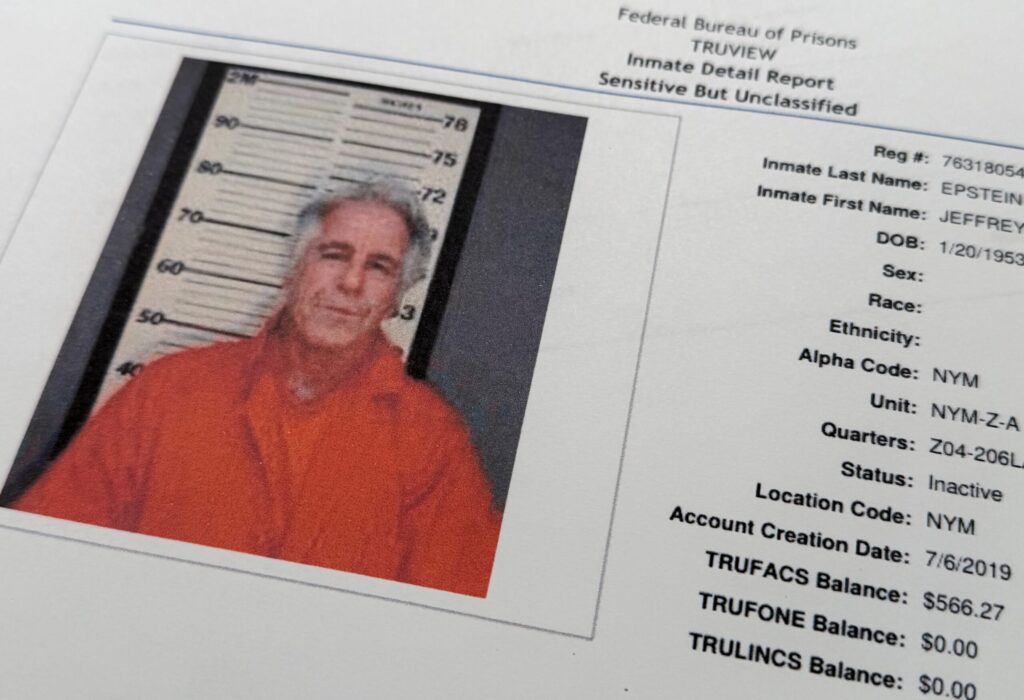
DOJ publishes more Epstein documents mentioning Trump after initial omission
Rena Rowe, Washington Examiner
rena.rowe.washington.examiner@gazetteedit.wpenginepowered.com
Updated 1 day ago
The Justice Department released additional Epstein files on Thursday, including uncorroborated accusations from a woman claiming she was sexually assaulted by President Donald Trump. Last week, Rep. Robert Garcia (D-CA), the top Democrat on the House Oversight and Government Reform...

Federal judge dismisses developer’s challenge to Denver affordable housing ordinances
Michael Karlik
michael.karlik@coloradopolitics.com
Updated 22 hours ago
A federal judge dismissed a homebuilder’s constitutional challenge on Tuesday to a pair of Denver ordinances that impose obligations on developers related to the affordable housing demands created by new construction. Two related companies, redT Homes and redT Capital Partners,...

Another TABOR fight: Democrats plan to redirect residents’ refunds to K-12 spending
Marianne Goodland
marianne.goodland@coloradopolitics.com
Updated 7 hours ago
Colorado voters could decide this fall whether billions of dollars that would otherwise be returned as refunds under the Taxpayer’s Bill of Rights should instead go to public schools under a ballot measure unveiled Thursday by Democrats. Supporters say the...
PREV
PREVIOUS

Judge allows excessive force claims against Littleton, Englewood officers to proceed
A federal judge has allowed excessive force claims against Littleton and Englewood police officers to proceed, stemming from a shootout and pursuit of carjacking suspects that left one woman dead and another paralyzed. “The Court finds that these facts, as alleged, demonstrate a degree of outrageousness and harm that could be construed as conscience-shocking depending […]

Health system report card shows Colorado doing well on coverage, poorly on some health indicators
Among all state healthcare systems, Colorado’s ranks better than average in the percentage of uninsured adults, the cost to individuals of insurance premiums as a share of their income, and for providing mental healthcare to children. Those were some of the findings of the 2020 Scorecard on State Health System Performance from the Commonwealth Fund, […]