

SENGENBERGER | Polis (not Trump) would privatize mail


For months, Democrats have shouted that President Trump wants to “destroy the Post Office” and/or privatize it. Congressional Democrats first pushed for a USPS bailout in April; as Republicans and the Trump administration resisted, the Democrats started crying more about this supposed anti-USPS agenda.
Now, as we get closer to November, they’ve ramped up these attacks. Last week, Speaker Nancy Pelosi falsely claimed Republicans, led by Trump, are “trying to undo” USPS because “they want to interfere with the election. But,” she added, “they’ve been after the post office for a while. Why? Because they want to privatize it.”
Yet, Trump has never once suggested USPS be privatized. On the contrary, in 2018, his Postal Reform Commission suggested a number of changes. Not one included privatization.
In contrast, when it comes to advocating USPS privatization, Pelosi need look no further than her former colleague, Jared Polis.
In 2001, Gov. Polis, then on the State Board of Education, published an extensive issue paper for the Independence Institute, “Privatizing and Eliminating the Monopoly of the United States Postal Service.” It is one of the strongest, most effective arguments for privatization you’ll find.
“USPS is hamstrung by a pseudo-governmental status that stifles innovation and excellence in both itself and the competition,” Polis begins. “Through inertia and intransigence, USPS remains owned by the United States government, which also grants it a monopoly in key categories, including home mailbox delivery.”
He wants to “end all monopolistic protections and special treatment enjoyed by USPS” and to “transfer the capital stock of USPS into private hands more capable of exercising meaningful diligence and improving operating efficiency, thus allowing the profits and stock appreciation to accrue to the benefit of the employees and other shareholders.”
Polis explores the historical evolution of USPS and points out that, while the Constitution gives Congress postal powers, the Framers “did not mandate that the federal government actually perform mail deliveries.”
The paper contends that, since USPS was revamped in 1970, the internet has drastically decreased the need for traditional mail delivery and requires innovation. Polis quotes Ruth Goldway, then a member of the Postal Rate Commission: “Why would a consumer advocate and liberal Democrat push to privatize the Postal Service with 900,000 government employees? Simple: Because it would be the best way to save the institution from oblivion and put government resources to their most efficient and socially responsible use.”
Polis tackles the “great dangers” that “USPS as a government-owned monopoly” poses “to itself and others.” He discusses their “preferential treatment before the law,” including exemptions from local zoning laws, vehicle registration costs and most federal, state and local taxes; its power to take private property using eminent domain, and its “damaging” ability to regulate its own competition.
There are “tradeoffs,” however, like “restrictions that place it at a disadvantage relative to its private competition.” For example, USPS must endure a multiyear bureaucratic process to raise prices or negotiate deals with private companies. In essence, USPS has harmful competitive advantages, but its hands are tied as a quasi-government agency.
Polis’s paper highlights other Western countries that partially or wholly privatized their postal services and counters the idea “that we should subsidize the postal industry to provide services any better or more cheaply than the market equilibrium would provide given the optimal allocation of resources by the market itself.”
The Democrat’s bottom line: We must “move quickly to privatize and de-monopolize USPS…(W)aiting to act would decrease the market value of USPS and result in less return to the taxpayers and employees when it is ultimately sold or liquidated; privatization should be done now, while USPS still has valuable assets.”
You might counter, “This was 19 years ago. Surely Polis has changed his mind.” Yet on April 28, 2016, while in Congress, he tweeted a Cato Institute article arguing for “Privatizing the U.S. Postal Service.”
Why would a congressman, who had published his own paper advocating for privatization 15 years earlier, share an article making that very case on Twitter?
Because he still believes it. And in reality, the state of the Post Office has only deteriorated since 2001, meaning Polis’s arguments are even more salient now than then.
So, let’s keep in mind that privatizing and de-monopolizing USPS is a bipartisan idea. Donald Trump and Nancy Pelosi don’t want it, but Jared Polis and Jimmy Sengenberger sure do.


What exactly makes you a public figure? | Hal Bidlack
Hal Bidlack
hal-bidlack@coloradopolitics.com
Updated 2 hours ago
Well, once again, this non-lawyer columnist is going to jump in the deep end of legal scholarship and will explore a recent Colorado Court of Appeals decision. Buckle up. In yet another terrific Colorado Politics Court Crawl article, we learned...

Modernizing Pinnacol is about its members, not politics | IN RESPONSE
Colorado Politics
colorado-politics@coloradopolitics.com
Updated 2 hours ago
By Akasha Absher While we share the passion for protecting Colorado’s workers expressed in a recent op-ed from the perspective of trial attorneys and union representatives, the piece paints a picture of Pinnacol Assurance that is more rooted in 1915...

Mum on his own replacement, Bennet disrespects voters | Dick Wadhams
Dick Wadhams
dick-wadhams@coloradopolitics.com
Updated 2 days ago
U.S. Sen. Michael Bennet is playing an arrogant game of hide-and-seek with Colorado voters as he seeks to abandon his Senate seat to become governor. Bennet insists that if he is elected governor in November, he will wait until he...

What kind of energy independence did we pay for? | Miller Hudson
Miller Hudson
miller-hudson@coloradopolitics.com
Updated 2 days ago
It was during the summer of 1972 AT&T published an internal solicitation for installation and repair supervisors with “inner-city” experience to transfer to Mountain Bell. The catch was an applicant’s readiness to work 10 hours a day, six days a...

Those who cannot live without wild things | Rachel Gabel
Rachel Gabel
rachel-gabel@coloradopolitics.com
Updated 2 days ago
Aldo Leopold wrote in his Sand County Almanac, “There are some who can live without wild things and some who cannot.” The collection of essays first published in 1949 was accepted by a publishing house after a steady stream of...

Thank God for Wyoming — the un-Colorado | Jon Caldara
Jon Caldara
jon-caldara@coloradopolitics.com
Updated 2 days ago
Years ago, I interviewed a Canadian health-care broker whose job was helping his countrymen escape their own failing system. When their “free” health care turned into “free to wait until you die,” he’d save his clients by routing them to...
It’s time to let unaffiliated voters caucus | Vince Bzdek
Vince Bzdek
vince.bzdek@gazette.com
Updated 16 hours ago
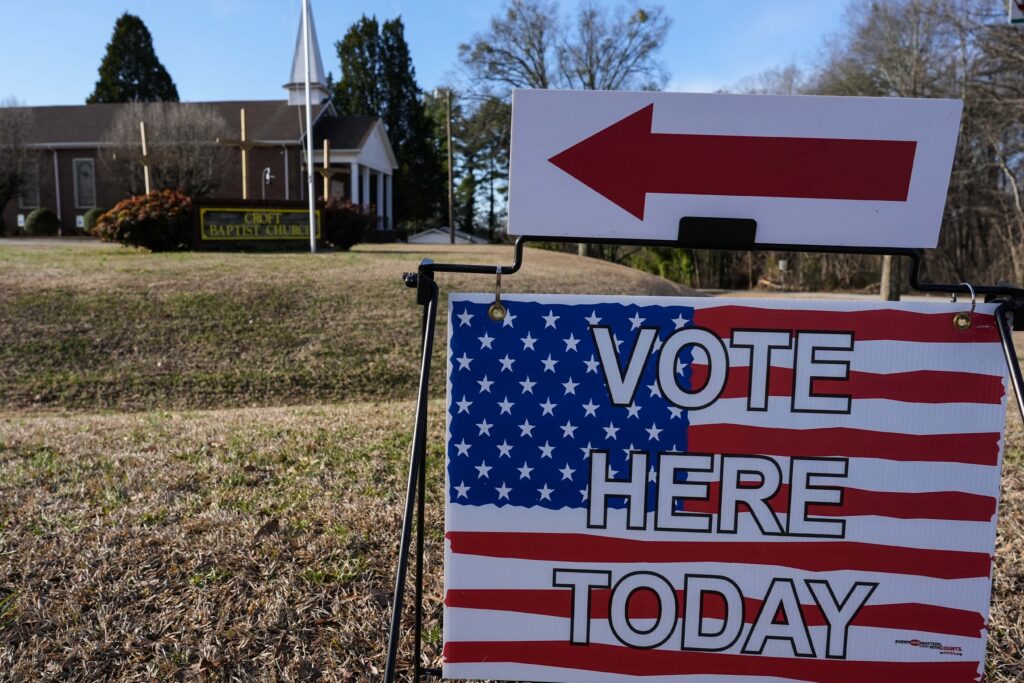
There’s no getting around it: Colorado’s 3,000 county caucuses, which just wrapped up recently, left half the electorate out in the cold. Since unaffiliated voters now make up 51% of all Colorado voters, a majority of Colorado electors are barred...
A Mile High, again: Capitol M | Week of March 21, 2026
Marianne Goodland
marianne.goodland@coloradopolitics.com
Updated 5 days ago
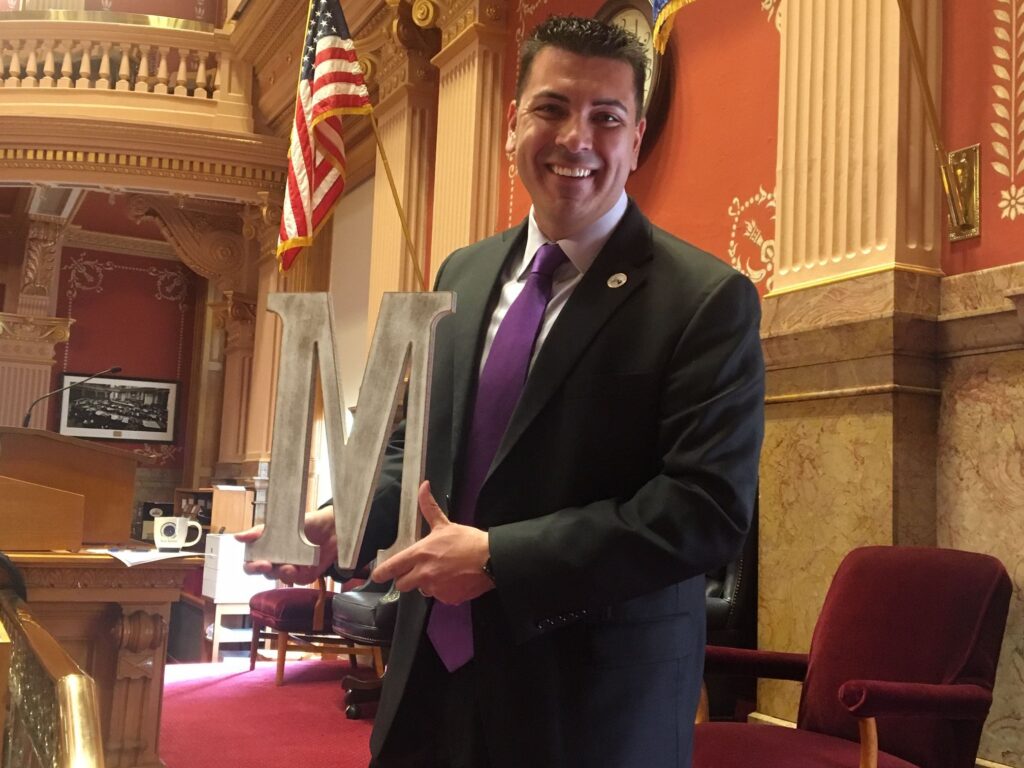
The lighter side of the Capitol, usually…. Local Journalism Day, except they forgot their very own local journalists. The state Senate on Thursday, March 19, passed a resolution recognizing Local Journalism Day. Everyone voted for it, which is good, because...

The insular bubble of caucuses and assemblies | SONDERMANN
Eric Sondermann
eric-sondermann@coloradopolitics.com
Updated 4 days ago
Nearly 30 years ago, then-Federal Reserve Chairman Alan Greenspan coined the term “irrational exuberance” to describe the overheated stock market. That descriptive phrase could also apply to much of the political realm. The hype in politics often grossly exceeds the...
Set appropriate state guidelines for critical surveillance technology | OPINION
Colorado Politics
colorado-politics@coloradopolitics.com
Updated 4 days ago
I admit it: I’m worried. I’m hearing a lot about surveillance in the public arena. I hear cameras are capturing my car’s license plate wherever I drive, my face as I go in and out of stores and health facilities,...
PREV
PREVIOUS

HUDSON | B-plus Biden at last makes the A list
Miller Hudson Joe Biden’s half-century career in American politics has been handicapped by the curse of the B-plus student. We’ve all known the conscientious strivers who labor to succeed. Yet, their confidence grows with the lessons learned from hard knocks, and they eventually outshine the noisy carnivals that envelop more charismatic stars. During the twentieth […]

Let's break Big Tech's chokehold on our economy
Wendy Howell The last few months have been nothing short of a national nightmare. We are half a year into a global pandemic that has killed more than 170,000 Americans, forced over 55 million people to file for unemployment insurance, and has put millions of small American businesses at risk of permanently closing. Considering that […]