

Voters to decide in November whether to reduce the income tax rate
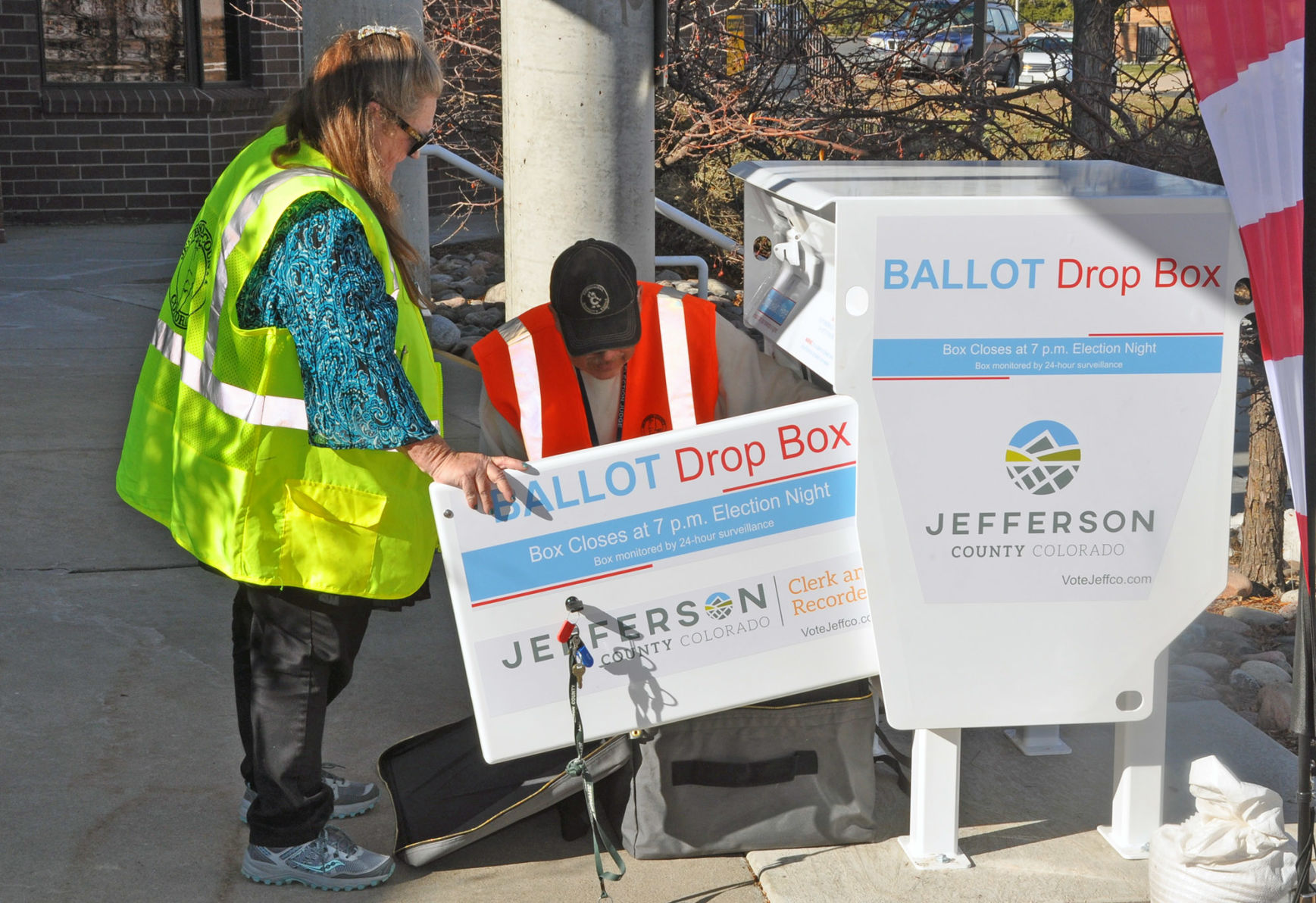
The Secretary of State’s office on Monday announced that Initiative 306, on a reduction in the state income tax rate, has qualified for the November ballot.
Initiative 306 is the brainchild of Republican state Sen. Jerry Sonnenberg, Sterling, who tried for two years to persuade the General Assembly to lower the state income tax rate from 4.63% to 4.5%.
Despite a claim by Gov. Jared Polis that he, too, wanted a reduction in the income tax rate, Democrats in the General Assembly have said no. So Sonnenberg turned to the ballot box.
The measure also is backed by the Independence Institute’s Jon Caldara.
“We’re excited,” Sonnenberg told Colorado Politics Tuesday. “Now we go to work, talking to the people of Colorado and why that money is better off in their pockets. I think it will be easy to sell; people have been out of work for months who need that money. Everybody has had to tighten their belt, and it’s only reasonable that government tightens its belt too and let taxpayers keep their own money.”
Most of the campaigning will be at the grassroots level, Sonnenberg said.
According to the secretary of state, supporters turned in 198,538 signatures. Based on the 5% random sample, the number of valid signatures turned in was set at 140,058. A total of 124.632 is required to make the ballot.
The ballot measure changes state statute, so it must win approval at 50% plus one vote.
The fiscal impact statement for initiative #306 says it will reduce state revenues by $78.1 million in fiscal year 2019-20, $158.4 million in 2020-21 and $169.8 million in 2021-22.
The fiscal statement says that the measure applies to the 2020 tax year, which is why it could have an impact in the 2019-20 fiscal year.
For an individual taxpayer who earns $50,000 per year, the amount of income taxes they will keep under initiative #306 is $40. A taxpayer earning $100,000 per year will keep an additional $80; a taxpayer earning $250,000 per year will retain $200.
Due to revenue reductions tied to the pandemic and the recession, the General Assembly cut $3.3 billion from the 2020-21 budget, slashing spending for K-12 education by $621.42 million. That increased the debt to K-12 that dates back a decade to more than $1.1 billion. Higher education lost $493.2 million. A $250 million balloon payment to the state’s pension plan, intended to help it reduce its unfunded liability, also was eliminated in the 2020-21 budget.
Initiative #306 becomes the eighth voter question that will appear on the November ballot. Five citizen initiatives, on late-term abortions (#120), re-introducing gray wolves (#107), whether to repeal SB 19-042 on National Popular Vote and on citizen voters (#76), have already qualified. In addition, the General Assembly referred three measures: to repeal the Gallagher Amendment on property tax ratios, an increase on taxes for tobacco and vaping products and to loosen the restrictions on bingo-gaming licenses.

It’s time to let unaffiliated voters caucus
Vince Bzdek
vince.bzdek@gazette.com
Updated 15 hours ago
There’s no getting around it: Colorado’s 3,000 county caucuses, which just wrapped up recently, left half the electorate out in the cold. Since unaffiliated voters now make up 51% of all Colorado voters, a majority of Colorado electors are barred...
Governor warns energy development both a boon and a risk to Colorado | A LOOK BACK
Rachael Wright, Special to Colorado Politics
rachael.wright@coloradopolitics.com
Updated 3 days ago
Forty-Five Years Ago This Week: “The real opportunity and the dangers before us are both real,” said Gov. Dick Lamm in his January state of the state address before the Colorado General Assembly. Lamm argued that energy development would continue...
A Mile High, again: Capitol M | Week of March 21, 2026
Marianne Goodland
marianne.goodland@coloradopolitics.com
Updated 3 days ago
The lighter side of the Capitol, usually…. Local Journalism Day, except they forgot their very own local journalists. The state Senate on Thursday, March 19, passed a resolution recognizing Local Journalism Day. Everyone voted for it, which is good, because...
Colorado Politics Calendar Mar. 23-29
Rachael Wright, Special to Colorado Politics
rachael.wright@coloradopolitics.com
Updated 2 days ago
CoPo’s weekly political calendar will help you find political and public-policy events throughout Colorado. It includes candidate and issue campaign events, public policy meetings, court hearings, state and local party conventions, assemblies, debates, rallies, parades, speaking engagements, traveling dignitary appearances,...

The insular bubble of caucuses and assemblies | SONDERMANN
Eric Sondermann
eric-sondermann@coloradopolitics.com
Updated 2 days ago
Nearly 30 years ago, then-Federal Reserve Chairman Alan Greenspan coined the term “irrational exuberance” to describe the overheated stock market. That descriptive phrase could also apply to much of the political realm. The hype in politics often grossly exceeds the...

Lauren Boebert’s hard ‘no’ on Pentagon Iran funding request puts Mike Johnson in tough spot
Emily Hallas, Washington Examiner
emily.hallas.washington.examiner@gazetteedit.wpenginepowered.com
Updated 17 hours ago
Colorado U.S. Rep. Lauren Boebert announced on Thursday that she will not support further funding for the United States’s war in Iran, marking an uphill battle for the Trump administration’s effort to secure additional financing from Congress. “I’ve already told...
Rubio gains ground in 2028 jockeying as Iran war elevates his profile
Samantha-Jo Roth, Washington Examiner
samantha-jo.roth.washington.examiner@gazetteedit.wpenginepowered.com
Updated 18 hours ago
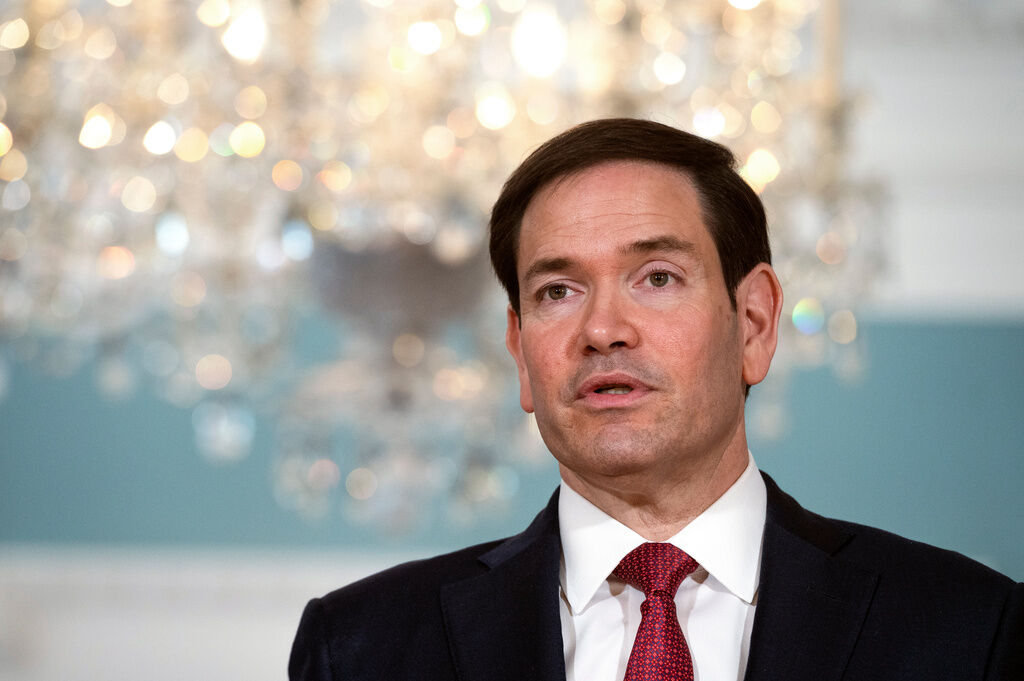
Secretary of State Marco Rubio’s high-profile role in the Trump administration’s response to the Iran war is boosting his standing in the early jockeying for the 2028 Republican presidential nomination — and positioning him as a possible rival to Vice...

Federal judge dismisses claims against medical contractor for Eagle County jail suicide
Michael Karlik
michael.karlik@coloradopolitics.com
Updated 16 hours ago
A federal judge dismissed the claims against a medical contractor for the Eagle County jail and its employees earlier this month, concluding there were insufficient allegations that they violated the constitutional rights of a man who died by suicide in...

Colorado Senate committee advances bill increasing overtime threshold for farmworkers
Marianne Goodland
marianne.goodland@coloradopolitics.com
Updated 15 hours ago
The struggle to balance farmworker protections with the survival of Colorado’s family farms took center stage Thursday as senators debated two competing overtime bills. The Senate Business, Labor and Technology Committee held a rare double-bill hearing that led to a...

Colorado bill to fund mental health care with alcohol taxes defeated in House committee
Marissa Ventrelli
marissa.ventrelli@coloradopolitics.com
Updated 17 hours ago
A second measure proposing that alcohol producers and wholesalers in Colorado help fund mental health care treatment in the state was narrowly defeated in the House Health and Human Services Committee on Wednesday. House Bill 1301, sponsored by Rep. Bob...
PREV
PREVIOUS

CDOT to unveil memorial to pedestrian fatalities
The Colorado Department of Transportation will install a memorial at Denver’s Union Station on Wednesday commemorating the lives of the 76 pedestrians who reportedly died in the state in 2019. The display will consist of 76 pairs of shoes, in keeping with the theme of CDOT’s “Left Behind” awareness campaign. The department will officially announce […]

Secretary of the Interior Bernhardt opens up more public lands for hunting and fishing
U.S. Secretary of the Interior David Bernhardt announced Tuesday the expansion of hunting and fishing opportunities on more than 2.3 million acres at 138 of the nation’s 568 national wildlife refuges and at nine national fish hatcheries, the largest expansion in history. The announcement comes one day after the Trump administration announced it would open […]