

State officials: Front Range air pollutant down due to COVID-19, hoping to continue the trend

Six months of COVID-19 may be hard on people, but it’s done wonders for lowering the level of nitrogen oxide — a dangerous air pollutant — in Denver’s air.
Monday, state officials indicated they hope to keep that momentum going with grants and other initiatives, under the banner of a “Can Do Colorado Community Challenge.”
Officials from the state health department and department of transportation said Monday that two monitoring stations in Denver, in Globeville and on north Broadway, show nitrogen dioxide levels between March 17, when Gov. Jared Polis issued a stay-at-home order, and August 10, are down between 7.5% and 15.3% as compared to the same period last year, with the greatest benefits for air quality in March and April.
Nitrogen oxide is tied to vehicle traffic, according to John Putnam of the Colorado Department of Public Health and Environment.
COVER STORY | CLEARING THE AIR: Decades after the 'brown cloud' was part of life in Denver, the stay-at-home orders may have shown a way out
Unfortunately, the Denver area still exceeds ozone and fine particulate levels, and that’s made worse by the major fires burning on the Western Slope.
Both agencies, along with the Colorado Energy Office, are hoping to stimulate more teleworking and less traffic, through expansion of the Can Do Colorado campaign, which was launched in May to spotlight businesses that are finding innovative ways to adapt to public health requirements.
The Can Do Colorado Community Challenge is taking some of the lessons from the earlier campaign and putting $5 million into two new initiatives tied to those efforts.
The first, known as Revitalizing Main Street, focuses on infrastructure projects, such as re-purposing streets for biking or walking, expanded sidewalks that allow restaurants to offer outdoor seating, more one-way streets and weekend-only use of streets for bicycle and pedestrian use. Grants are maxxed at $50,000 and must also be able to take in a 10% match.
The second initiative is tied to telework. Projects to be funded under the grant include marketing and training materials, sharing best practices and additional staff who would promote teleworking and other socially-distant transportation options, such as grocery delivers or other ways to help at-risk Coloradans who should stay home. These grants are limited to $5,000 each and must be spent by December 1.
The time to act is now, officials indicated. Some schools are reopening, so that means traffic, and the air pollution that goes with it, could increase in the coming weeks and months.
CDPHE’s air quality division issued alerts Monday, warning “sensitive” groups (aka the elderly or those with heart or lung disease) to avoid prolonged exposure or heavy outdoor exertion. For Denver and Fort Collins, both ozone and particulate matter are high enough to trigger warnings. But it wasn’t just for the Front Range. The CDPHE alert also included particulate warnings for Grand Junction and the Colorado River Valley, an area that includes most of Garfield and northeast Mesa counties.
An alert about smoke, tied to the Pine Gulch and Grizzley Creek fires, covers eight Western Slope counties, with towns as far east as Leadville and Crested Butte and as far south as Montrose. A second alert, tied to the Cameron Peak and Williams Fork fires, covers seven counties in the central mountains, and affects communities as far east as Fairplay in Park County and Central City in Gilpin County.
Both include this warning: if visibility is less than five miles from a neighborhood, the smoke has reached unhealthy levels.

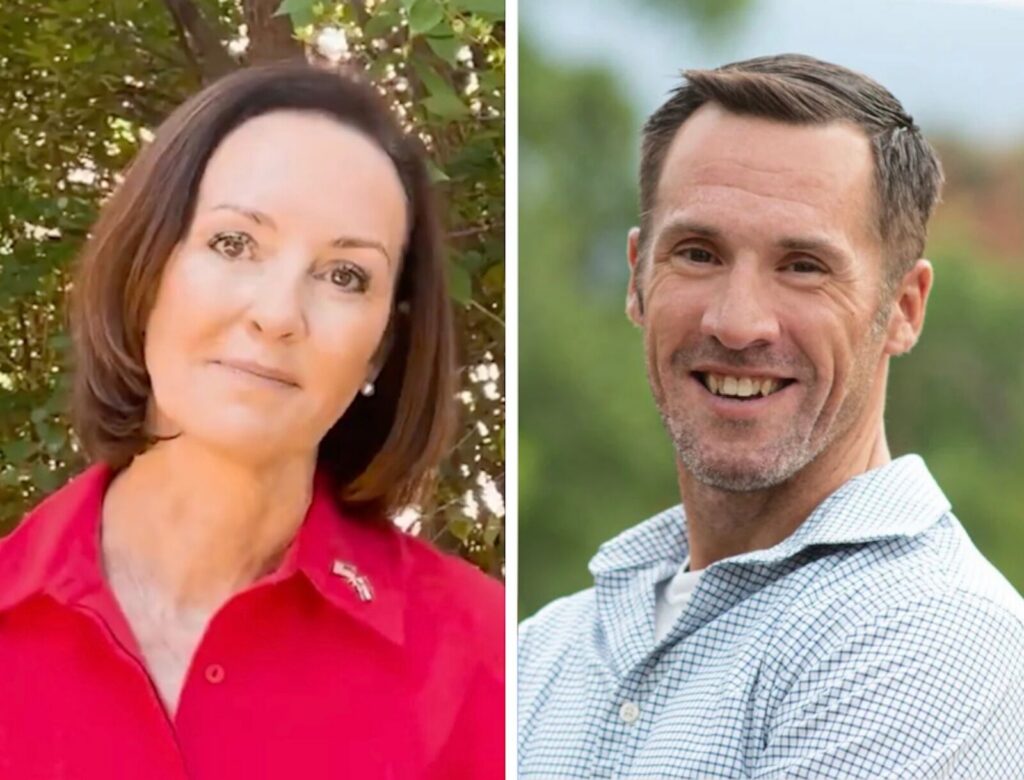
Army veterans Jessica Killin, Joe Reagan qualify for Democratic primary ballot in Colorado’s 5th CD
Ernest Luning
ernest.luning@coloradopolitics.com
Updated 12 hours ago
Democratic congressional candidates Jessica Killin and Joe Reagan secured spots Saturday in Colorado’s June primary to decide who will run against Republican U.S. Rep. Jeff Crank in a district that’s only ever sent GOP lawmakers to Congress. The two Democrats,...

Who has the power to declare war? | Cronin and Loevy
Tom Cronin Bob Loevy
tom-cronin-bob-loevy@coloradopolitics.com
Updated 15 hours ago
Our constitutional framers boldly and ambitiously granted Congress the power to declare war yet granted the executive the responsibility, after war is declared, to supervise war as the commander-in-chief. That worked well until the Cold War began. The U.S. has been...
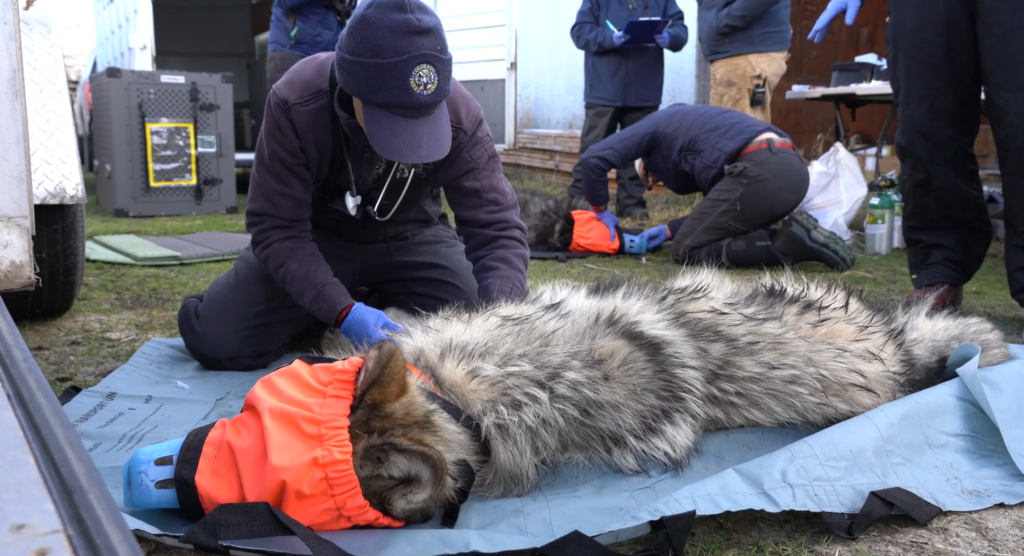
Latest death brings down wolves’ survival rate to 44% in Colorado
Marianne Goodland
marianne.goodland@coloradopolitics.com
Updated 19 hours ago
The female wolf of the mating pair for the King Mountain pack has died, bringing total fatalities to 14 out of the 25 animals reintroduced in Colorado. The wolf, identified as No. 2310, was among the 10 wolves brought to...

The delicate, ever-changing dance between politics and religion | SONDERMANN
By Eric Sondermann
by-eric-sondermann@coloradopolitics.com
Updated 17 hours ago
The dance, really a marathon that brings to mind the classic movie “They Shoot Horses, Don’t They?”, has been going on as long as there have been governments and organized religion. That is to say that this delicate tango has...
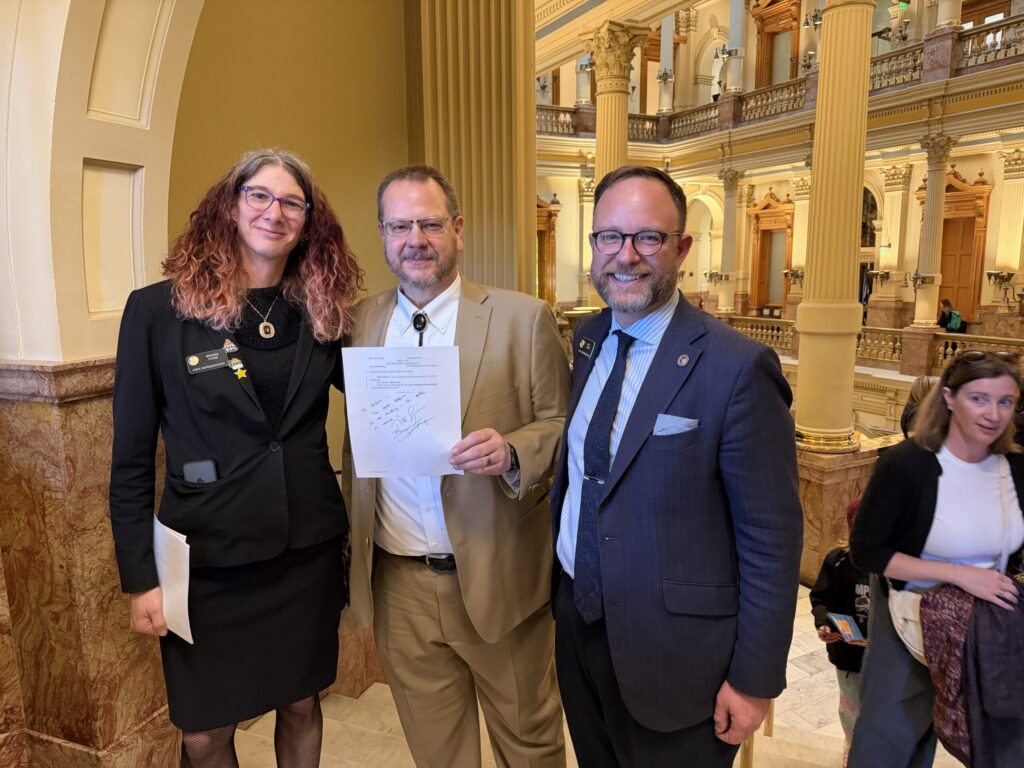
Roasts, get yer roasts, here: Capitol M | Week of March 14, 2026
Marianne Goodland
marianne.goodland@coloradopolitics.com
Updated 4 days ago
The lighter side of the Capitol, especially in the past week Apparently, the pending and eventual switch to daylight stupid time has put people in some pretty funny moods. And thank goodness! On March 4, the Senate approved the appointments...
Polly Baca elected to DNC | A LOOK BACK
Rachael Wright, Special to Colorado Politics
rachael.wright@coloradopolitics.com
Updated 4 days ago
Forty-Five Years Ago This Week: After her loss to Republican U.S. Rep. Hank Brown the previous year in the race for the 4th Congressional District, state. Sen Polly Baca-Barragan, D-Thortnon, was elected as one of the three vice-chairs of the...

Colorado Politics Calendar Mar. 16-22
Rachael Wright, Special to Colorado Politics
rachael.wright@coloradopolitics.com
Updated 4 days ago
CoPo’s weekly political calendar will help you find political and public-policy events throughout Colorado. It includes candidate and issue campaign events, public policy meetings, court hearings, state and local party conventions, assemblies, debates, rallies, parades, speaking engagements, traveling dignitary appearances,...

Boebert challenger Eileen Laubacher joins lawsuit aimed at blocking her from Democratic assembly
Ernest Luning
ernest.luning@coloradopolitics.com
Updated 1 day ago
A Denver District Court judge on Thursday permitted Democratic congressional candidate Eileen Laubacher to join a lawsuit filed by one of her primary opponents seeking to prevent Laubacher from participating in the party’s assembly process in a bid to qualify...
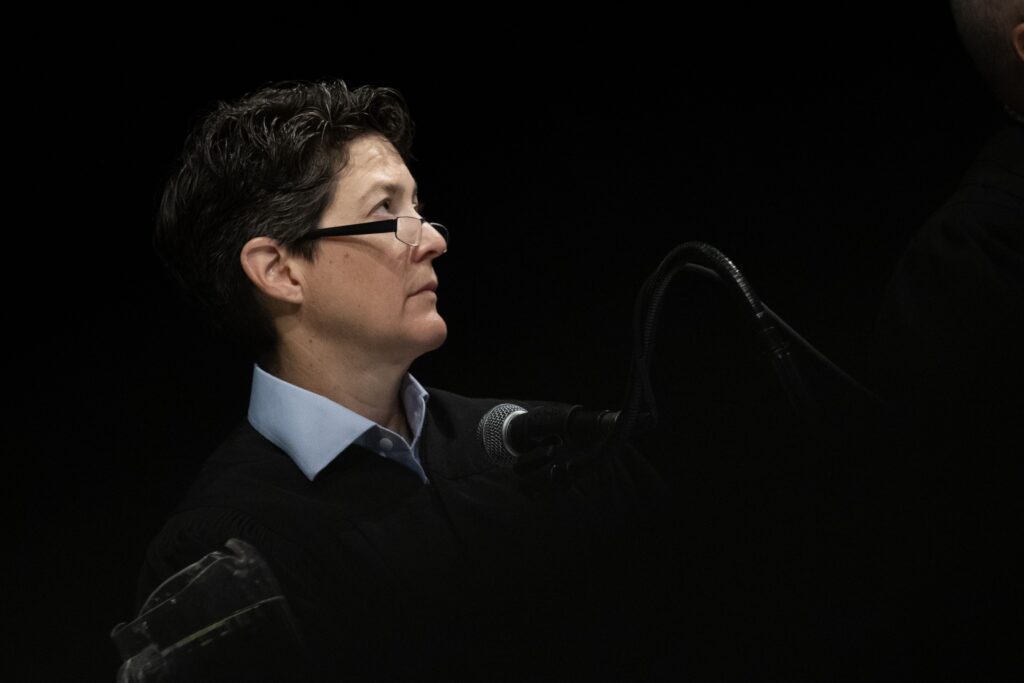
Colorado justices weigh fairness concerns after defendant prevailed despite ghosting case
Michael Karlik
michael.karlik@coloradopolitics.com
Updated 13 hours ago
Members of the Colorado Supreme Court struggled on Tuesday to balance the need for one defendant to shield itself against a plaintiff’s claim that its employee sexually assaulted her child, and the fact that the employee legally admitted the allegations...
House Ethics Committee to begin hearing on Weinberg complaint
Marianne Goodland
marianne.goodland@coloradopolitics.com
Updated 2 days ago
The House Ethics Committee on Tuesday will begin a hearing requested by Rep. Ron Weinberg, R-Loveland, tied to an ethics complaint filed against him by Rep. Brandi Bradley, R-Roxborough Park. The ethics committee had found probable cause on two issues...
PREV
PREVIOUS

Q&A with Kyle Kohli — 'war roomer' at large
Brief bio: Executive director, conservative advocacy group Compass Colorado, since July. Previously served as communications director for the Colorado Republican Party; also was on the communications staff of then-U.S. Rep. Mike Coffman. Graduate of the University of Colorado at Boulder and Duke University’s Fuqua School of Business. Colorado Politics: Your predecessor at Compass, Kelly Maher, […]

Weiser announces settlement benefiting former Art Institute students
A settlement that Attorney General Phil Weiser and Dream Center Education Holdings LLC reached has resulted in $66,000 of refunds returned to former students of the defunct Art Institute of Colorado, Weiser’s office announced on Monday. In 2017, Dream Center acquired 31 Art Institute schools. One year later, Colorado’s Art Institute lost its accreditation. But […]