

Colo. Supreme Court to take up question of race-based juror dismissal
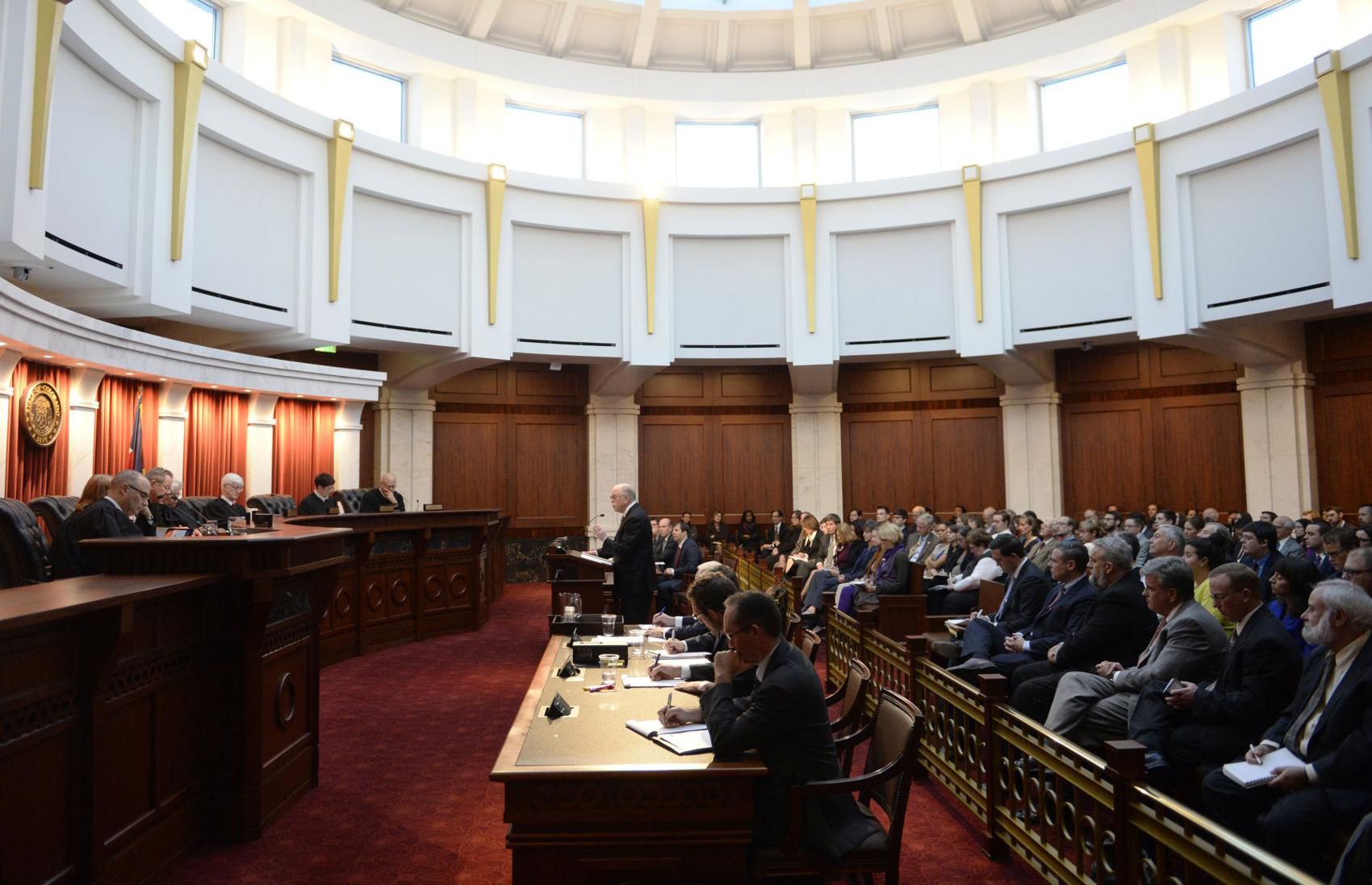
The Colorado Supreme Court will examine whether the Court of Appeals was correct to reverse a criminal conviction and order a new trial because a Hispanic man was blocked from serving on a jury seemingly because of his race.
The high court noted in its Monday announcement that it will evaluate whether the appellate panel was justified in determining the juror’s race was a “substantial motivating factor” in his dismissal from the trial, setting aside race-neutral explanations.
A Denver jury found Ray Ojeda guilty in 2015 of attempted first-degree murder, second-degree kidnapping and first-degree sexual assault. During jury selection, the prosecution attempted to excuse a juror identified as R.P. The man, who was Hispanic, appeared “biased” against the criminal justice system and, according to the prosecutor, “visibly showed hesitation” when questioned about his ability to be fair.
Elaborating on her position, the prosecutor referred to R.P.’s past work with communities of color, saying compared to “his commitment to his job, in terms of serving people of color and what he talked about in terms of the defendant being a person of color — he is himself a person of color — I thought that the totality of the record indicated that he has a distinctive leaning, that he himself said he would have trouble in listening to the evidence.”
Ojeda’s counsel objected, explaining that “I don’t know that it’s appropriate to exclude him because he’s Hispanic and may have something in common with the defendant in his heritage.”
District Judge Kenneth M. Laff denied the request to excuse R.P., saying he was “certainly entitled to believe that people of color are not well-served in our criminal justice or medical system.”
The prosecutor, who is unnamed, later tried to use a peremptory challenge to dismiss R.P., which typically is done without reason. When Ojeda’s lawyer again spoke up, the prosecutor once more referred to her perception that R.P. would be biased against the criminal justice system. Noting his well-spoken and persuasive demeanor, she added: “I think that he may then steer the jury towards a race-based reason why Mr. Ojeda, you know, was charged in the case.”
Over the defense’s continued objection that R.P.’s race was a factor in the dismissal, Laff found the prosecutor’s challenge to be sufficiently rooted in nonracial reasons and agreed to excuse R.P.
The U.S. Supreme Court in 1986 shot down race-based exclusions of jurors. In Batson v. Kentucky, a Black defendant was convicted by an all-white jury after prosecutors excused all Black potential jurors. The court, by 7-2, found it a violation of the Sixth Amendment’s right to have a jury drawn from a cross-section of the community and the Fourteenth Amendment’s guarantee of equal protection under the law.
“The harm from discriminatory jury selection extends beyond that inflicted on the defendant and the excluded juror to touch the entire community,” wrote Justice Lewis F. Powell Jr.
Ojeda appealed and, in an unusual move, all three judges on the Court of Appeals panel issued their own opinions.
Writing for the majority, Judge Terry Fox stated that “it is impossible not to conclude that the strike at issue was substantially motivated by Juror R.P.’s race.” In agreeing that R.P.’s dismissal was improper, she explained that attributing “‘a distinctive leaning’ to Juror R.P., as this prosecutor did, because of his life experiences perpetuates the race-based stereotypes Batson eschewed.”
Fox added that other jurors who shared R.P.’s concerns about the years-old charges against Ojeda did not receive the same type of challenge. She also found it “curious” that the prosecutor was worried about R.P. being too convincing, but apparently asked other jurors if they would be able to sufficiently assert their points of view.
Ultimately, eight “Hispanic-surnamed people” were excused, resulting in only one Hispanic juror.
In a concurring opinion, Judge Elizabeth L. Harris doubted that the prosecutor even advanced non-racial reasons to excuse R.P., believing that “a discriminatory intent is ‘inherent’ in the prosecutor’s explanation, and therefore it does not qualify as race-neutral.” Although the trial court judge cited other reasons, which the prosecutor agreed to, for excusing R.P., Harris believed the linkage of R.P.’s race to his worldview was improper and obvious.
Then-Judge Robert D. Hawthorne dissented, believing the proper remedy was for the trial court to review the decision to strike R.P. under the three-part Batson test. The review entails determining whether there is a racially-motivated juror excusal, examining whether race-neutral reasons exist and then making a judgment of purposeful discrimination.
“Absent adequate findings, I don’t think we should stand in the trial court’s shoes and, relying on the cold record, say whether the prosecutor struck Juror R.P. because of his race,” Hawthorne wrote.
The case is People v. Ojeda.

U.S. House probes reports of fraud, waste in Colorado’s Medicaid program
Marianne Goodland
marianne.goodland@coloradopolitics.com
Updated 2 hours ago
A congressional committee is probing reports of waste, fraud and abuse in Colorado’s Medicaid program, citing recent stories outlining over-billing in transportation spending and The U.S. House Committee on Energy and Commerce has sent a letter to Gov. Jared Polis...

Colorado’s congressional redistricting proposal could flip three Republican House seats | ANALYSIS
Michael Braithwaite
michael.braithwaite@gazette.com
Updated 1 hour ago
A Democrat-backed proposal to redraw Colorado’s congressional map for the 2028 election could flip three Republican districts. The proposal, introduced by a group called Coloradans for a Level Playing Field, is yet another development in a national redistricting debate after...

Appeals court overturns Douglas County vehicular homicide conviction due to faulty jury instructions
Michael Karlik
michael.karlik@coloradopolitics.com
Updated 6 hours ago
Colorado’s second-highest court overturned a defendant’s vehicular homicide conviction and 12-year prison sentence on Thursday after determining a Douglas County judge omitted key language from the jury instructions that could have resulted in a different outcome. James Paul McDonald was...
Colorado lawmakers’ speeches on immigration, Iran draw worries about decorum, grandstanding
Marianne Goodland
marianne.goodland@coloradopolitics.com
Updated 5 hours ago
Several speeches from Colorado legislators this week have raised new worries about decorum and grandstanding in the state House after two members talked about immigration and Iran using what’s called a “point of personal privilege.” Under the rules of the...

Trump fires Homeland Security Secretary Noem after building criticism over immigration enforcement
Michelle L. Price
michelle.l..price@associatedpress.com
Updated 7 hours ago
WASHINGTON (AP) — President Donald Trump on Thursday fired his embattled Homeland Security Secretary Kristi Noem and said he will nominate in her place Oklahoma Republican Sen. Markwayne Mullin. Trump made the announcement on social media on Thursday, two days...
Trump wants to be personally ‘involved’ in picking next Iranian leader: Report
Christian Datoc, Washington Examiner
christian.datoc.washington.examiner@gazetteedit.wpenginepowered.com
Updated 8 hours ago
President Donald Trump told Axios Thursday that he wants to be personally involved with picking Iran‘s next leader, despite multiple senior administration officials repeatedly declaring that “regime change” is not a stated objective of Operation Epic Fury. Trump conducted an...

Iran widens regional war with first strike into Azerbaijan
Brady Knox, Washington Examiner
brady.knox.washington.examiner@gazetteedit.wpenginepowered.com
Updated 8 hours ago
Iran spread the growing regional war to the Caucasus with its first drone strike into Azerbaijan, hitting an airport terminal and damaging a nearby school. A video recorded by someone at Nakhchivan International Airport showed one of the drones exploding...

Rand Paul excoriates Congress for failure to pass War Powers Resolution: ‘Should be ashamed’
Claire Carter, Washington Examiner
claire.carter.washington.examiner@gazetteedit.wpenginepowered.com
Updated 8 hours ago
Sen. Rand Paul (R-KY) blasted his colleagues for failing to pass a resolution aimed at limiting President Donald Trump’s military campaign in Iran. The Kentucky Republican made the remarks in an opinion column published on Fox News a day after...
DOJ quietly closes autopen investigation targeting Biden and aides
Kaelan Deese, Washington Examiner
kaelan.deese.washington.examiner@gazetteedit.wpenginepowered.com
Updated 8 hours ago
The Department of Justice has quietly closed an investigation into former President Joe Biden’s use of an autopen to sign official documents, according to a source familiar with the matter. DOJ pardon attorney Ed Martin, the former “weaponization” czar, opened...

Colorado legislators eye changes to credit card ‘swipe fees’
Marianne Goodland
marianne.goodland@coloradopolitics.com
Updated 6 hours ago
Colorado legislators are proposing to eliminate “swipe fees” on sales taxes, a move that proponents say would save businesses tens of thousands of dollars a year but which will likely revive counter-arguments that those fees help create a stable and...
PREV
PREVIOUS

State launches art contest to redesign Colorado driver license
For artistic Coloradans who don’t like how the Colorado driver license looks, the state has launched a new contest to change it into the “most beautiful in the world.” The Colorado Department of Revenue Division of Motor Vehicles launched the Iconic Colorado contest Monday, an artwork contest aimed to transform the current state driver license, […]

Jury trials to resume in Colorado Springs under loosened restrictions, chief judge says
El Paso County’s chief judge relaxed restrictions Monday, allowing jury trials to resume in Colorado Springs after a brief pause amid threats of a coronavirus outbreak in Colorado Springs’ downtown combined courts building. Jury trials may begin Monday, though there will still be limited entries allowed to the courthouse, according to an amended court order […]