

Audit: NCAA programs in Colorado generate more revenue, but have faster-rising costs

In the past six years, revenue from college athletics at Colorado’s institutions rose by greater than $49 million, according to a new report from the state auditor, even though costs have increased more rapidly.
In the past fiscal year, Colorado’s 11 public colleges and universities were members of the National Collegiate Athletic Association. Three were in Division I, which supports larger programs, and eight were in Division II. All have a requirement to report revenue and expenses to the NCAA.
In total, the institutions generated $133.3 million of self-supporting revenue during the last fiscal year, and required $100.1 million in institutional subsidies. This compared to $234.4 million in expenditures. Over the past six years, costs grew across all programs by a total of $75.9 million, compared to only $49.2 million in increased income.
“The institutions did not generate enough self-supporting revenue to cover all of their athletic expenses for Fiscal Years 2013, 2016, or 2019,” auditors found, noting that expenditures were growing faster than income. “Individually, the University of Colorado’s Division I football program and men’s basketball program were the only Division I or Division II programs with self-supporting revenue in excess of program expenses for Fiscal Year 2019.”
There were 8,751 students last year who participated in Colorado’s NCAA activities, and they received more than $46 million in financial aid related to their extracurricular activities.
The University of Colorado at Boulder’s programs had the largest budget, with $82.7 million in income and $98.4 million in expenses. But Colorado State University’s Fort Collins campus had the largest gap between the two, at $22 million.
Among Division I institutions, contributions and donations comprised one-quarter of income, with media rights, ticket sales and royalties each generating between one-tenth and one-fifth of revenue. The rest of the programs’ income came primarily from the direct support of the college or university, with student fees also providing financial contributions.
Of the programs’ expenses, the largest categories – coaching salaries and overhead – were a combined 35%.
“Major programs,” as defined by the institutions, were football and basketball at all three Division I organizations. CU-Boulder designated 13 programs as major, eight of which were women’s activities.
Among the eight Division II organizations, contributions and donations were a much higher percentage of budgets, at 43%. Financial aid to athletes and coaching salaries together made up 52% of expenditures. None of the programs mentioned in the auditor’s report covered its expenses.
Despite the fact that student aid was a larger percentage of costs for Division II, “The average amount of student aid awarded to each Division II student-athlete was $7,516 for Fiscal Year 2019. This amount is significantly lower than the average amount of student aid – $30,275 – awarded to each Division I student-athlete,” the audit found.


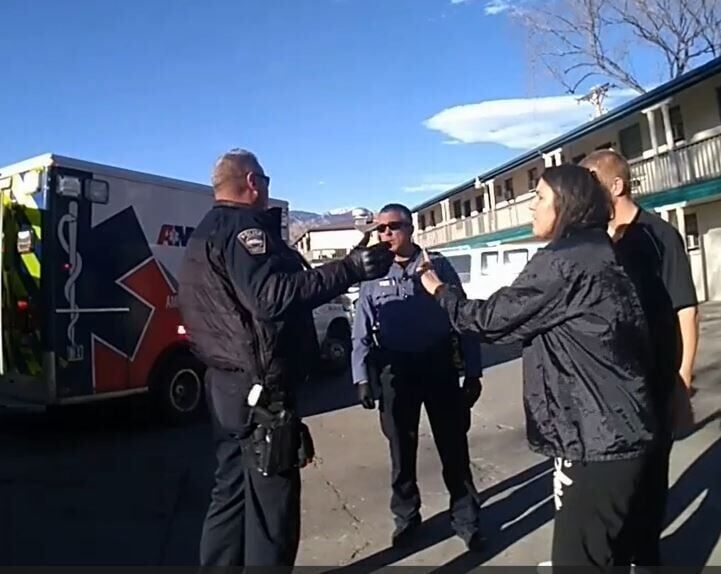
10th Circuit orders new unlawful arrest trial against Colorado Springs officers
Michael Karlik
michael.karlik@coloradopolitics.com
Updated 2 hours ago
The Denver-based federal appeals court concluded on Friday that a trial judge inappropriately allowed jurors to see several unflattering video clips of a plaintiff being belligerent toward police officers during a trial to determine whether police violated her constitutional rights....

Colorado redistricting limits measure heads to November ballot
Marissa Ventrelli
marissa.ventrelli@coloradopolitics.com
Updated 4 hours ago
A proposed constitutional amendment that would prohibit Colorado’s congressional maps from being redrawn outside of election cycles has qualified for the November ballot, according to the Secretary of State’s Office. Under Initiative No. 256, redistricting changes for the 2028 election...
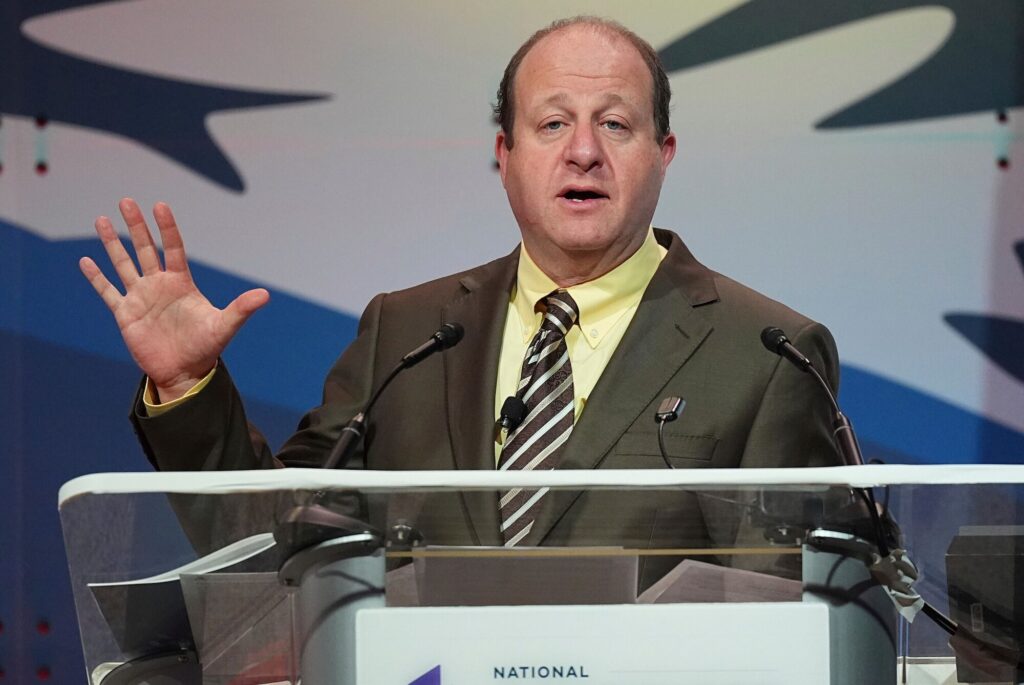
Polis announces ‘Governor for a Day’ contest for Colorado students
Marissa Ventrelli
marissa.ventrelli@coloradopolitics.com
Updated 6 hours ago
Colorado seventh and eighth graders have the chance to experience a day in the life of the governor through a new contest launched by Gov. Jared Polis. The “Governor for a Day” competition will give one student the chance to...
Federal judge to await SCOTUS decision before addressing Boulder County firearm ordinances
Michael Karlik
michael.karlik@coloradopolitics.com
Updated 2 hours ago
A federal judge agreed on Friday that she would await the U.S. Supreme Court’s decision in an upcoming Second Amendment case before she addresses the constitutionality of similar gun ordinances in multiple Boulder County jurisdictions. Rocky Mountain Gun Owners, the...

Colorado state House Democratic candidate arrested in Texas for public intoxication
Marianne Goodland
marianne.goodland@coloradopolitics.com
Updated 3 hours ago
A Democrat from Lone Tree who is running for a House seat was arrested in Texas in May on charges of public intoxication and resisting arrest. Christian Schilder, the Democrat, is challenging Rep. Brandi Bradley, the Republican incumbent, in the...
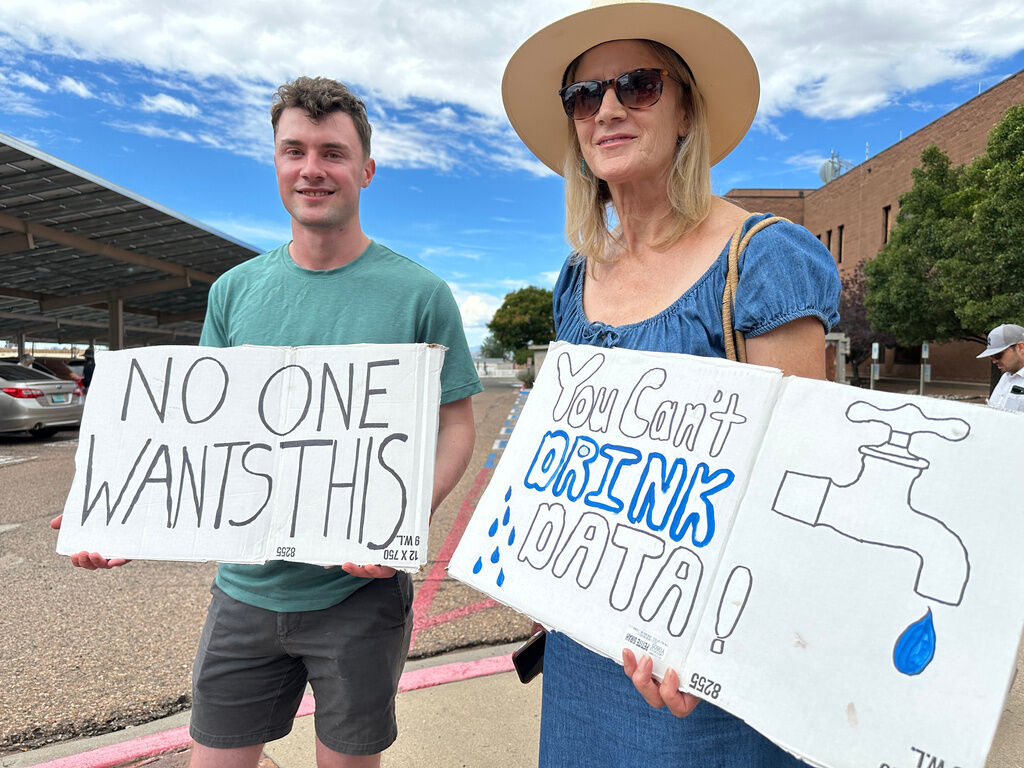
Trump says communities that don’t build data centers will be ‘backwards and poor’
Christian Datoc
christian-datoc@coloradopolitics.com
Updated 5 hours ago
President Donald Trump criticized the rising wave of anti-data center sentiment, clashing with his administration’s aggressive efforts to build out the domestic artificial intelligence sector. Trump has placed a concerted focus on making the U.S. the global leader in AI,...

What happens when robotaxis meet motorcades in DC? The mother of all traffic jams, says AI expert
Rob Crilly
rob.crilly@washingtonexaminer.com
Updated 3 hours ago
Waymo has Washington, D.C. on its list of targets for self-driving taxis. Just two problems: Can they cope with motorcades? And how would lawmakers feel if every time the vehicles grind to a halt in front of the flashing lights...

Trump promises retaliation for Iran attacks: ‘We’re going to hit them hard’
Rena Rowe
rena.rowe@washingtonexaminer.com
Updated 7 hours ago
President Donald Trump on Monday vowed to retaliate against Iran following the latest attack on a U.S. base in Jordan, marking a return to military action after weeks of relative calm. “We’re going to hit them hard. There will be...

State Supreme Court names next chief justice, 10th Circuit releases full-court decision | COURT CRAWL
Michael Karlik
michael.karlik@coloradopolitics.com
Updated 8 hours ago
Welcome to Court Crawl, Colorado Politics’ roundup of news from the third branch of government. The Colorado Supreme Court has named its next chief justice, and the Denver-based federal appeals court released a decision that overwhelmingly rejected one of its...
Initiative asks Colorado voters to approve 8th-grade reading standard for ballot measures
Marissa Ventrelli
marissa.ventrelli@coloradopolitics.com
Updated 4 hours ago
A ballot initiative that would require all ballot measures to be written at no higher than an eighth-grade reading level has qualified for the November ballot, according to the Colorado Secretary of State’s Office. The measure, backed by the group...
PREV
PREVIOUS

HHS Secretary Alex Azar to promote president's COVID-19 plan in Denver Wednesday
President Trump’s secretary for health and human services, Alex Azar, will be in Aurora on Wednesday to visit a medical supplier and talk up the administration’s response to COVID-19, Colorado Politics has learned first. The Cabinet member will tour Marathon Medical Corp., which is supplying over $27 million worth of syringes and needles for the president’s […]

Pair of campaign finance lawsuits dismissed
A Court of Appeals panel last week dismissed two campaign finance complaints, citing a lack of jurisdiction under the secretary of state’s recently-revised protocols. Campaign Integrity Watchog and its director, Matt Arnold, had filed a 2017 campaign finance complaint against Citizens for Reasonable, Rational & Responsible Governance with then-Secretary of State Wayne Williams. Subsequently a […]