

Court of Appeals overturns convictions of Black minor stopped unlawfully

Police officers in Aurora who found a firearm and drugs in the backpack of a Black minor while trying to solve area burglaries lacked a reasonable basis to detain him, the Colorado Court of Appeals determined on Thursday.
“[T]he mere description of an area as ‘high-crime’ does not create reasonable suspicion of every young person of color in that neighborhood,” wrote Judge Gilbert M. Román for the three-member appellate panel.
Aurora police officers were investigating multiple burglaries when they noticed an individual speaking with the driver of a green van. The officers followed the van for a ways but later returned to the spot. They reportedly saw the same individual as earlier, a minor identified as K.D.W., although their specific description of his appearance differed slightly from the prior observation. He had a backpack and a trash bag at the time.
An officer approached the child and asked him to put down the possessions. K.D.W. did so, but did not consent to a pat down. When police attempted to put their hands on K.D.W., he fled. After a four-block pursuit, officers apprehended K.D.W. and found ammunition on him. Once in custody, a search of the minor’s backpack uncovered bullets, a semi-automatic pistol and a substance that police believed was marijuana.
A magistrate judge found K.D.W. guilty of charges including possession of a handgun, obstruction of a peace officer and drug possession.
The defense attempted to suppress the evidence from the backpack, arguing the officer lacked reasonable suspicion that criminal activity had taken or was about to take place to make the investigatory stop.
Román, in the court’s opinion, noted that the propriety of an investigatory stop depends upon the context. In the officers’ case, they felt there might be a connection between the green van, a related white vehicle that eluded them during an attempted traffic stop, and K.D.W., who was outside of school midday when they spotted him. The boy also walked away from the officer on first approach, left his possessions behind and fled through private property.
Although an Arapahoe County District Court judge ultimately sided with the officers, the appeals court reversed the decision.
“Analyzing these factual findings, we agree with K.D.W. that the fact that there had previously been criminal activity in the area and his action of walking away from police officers were not, by themselves or in combination, sufficient to create reasonable suspicion,” Román explained.
The court called the officers’ notion of the fleeing white car being connected to K.D.W. “an inchoate hunch” and stressed that the child was in a public park during a time when no burglary had recently occurred.
The panel did, however, uphold the search of K.D.W.’s pockets after his apprehension, citing the “attenuation doctrine” in which there is an intervening event between an unconstitutional search and the recovery of evidence. In this case, the event was the youth’s decision to flee. Even though the search of the backpack happened after K.D.W.’s arrest, the backpack was connected to the investigatory stop, rather than his evasive maneuver.
“K.D.W. did not abandon the backpack when he fled,” the court concluded. “The officers ordered K.D.W. to place the backpack on the ground during the illegal stop and maintained control over it when K.D.W. fled, effectively seizing it.”
The Court of Appeals reversed K.D.W.’s convictions for weapons and drug charges, but affirmed the convictions for obstructing a peace officer and trespass.


Colorado Title Board advances competing redistricting proposals and revised Pinnacol measure as April ballot deadline nears
Marianne Goodland
marianne.goodland@coloradopolitics.com
Updated 6 hours ago
With just two meetings left before an April 15 deadline, the state’s Title Board on Wednesday pushed through a slate of ballot measures — including a revised proposal to privatize Pinnacol Assurance and dueling plans to redraw Colorado’s congressional map...
SAVE America Act showdown relished by GOP and Democrats alike
Ramsey Touchberry, Washington Examiner
ramsey.touchberry.washington.examiner@gazetteedit.wpenginepowered.com
Updated 7 hours ago
Both political parties have found rare agreement in a divided Washington, convinced that the GOP’s federal voter ID and election bill is a slam-dunk messaging opportunity. But that’s where the bipartisanship quickly ends. The two sides are diametrically opposed over...

Senate panel advances bill to tighten Colorado sports betting rules amid youth addiction concerns
Marissa Ventrelli
marissa.ventrelli@coloradopolitics.com
Updated 5 hours ago
A divided Senate Finance Committee on Tuesday narrowly advanced a bill to impose new restrictions on Colorado’s booming sports betting industry, as lawmakers cited rising concerns about youth gambling and addiction while operators warned the changes could drive bettors to...
Federal judge green-lights trial against Denver officer over race-based enforcement
Michael Karlik
michael.karlik@coloradopolitics.com
Updated 7 hours ago
A federal judge green-lit a jury trial last week on a man’s claim that a Denver police officer engaged in racially selective enforcement of the law by arresting him for video recording at a police station, while not arresting a...
Federal judge says 8 years in solitary confinement not grounds to reduce man’s sentence
Michael Karlik
michael.karlik@coloradopolitics.com
Updated 7 hours ago
A federal judge concluded earlier this month that a man’s eight years allegedly spent in solitary confinement did not justify granting his request for a sentence reduction. However, U.S. District Court Senior Judge William J. Martínez signaled his willingness to...

Democrat Matt Cavanaugh ends campaign in Colorado’s 5th CD, says petition firm came up short
Ernest Luning
ernest.luning@coloradopolitics.com
Updated 4 hours ago
Democratic congressional candidate Matt Cavanaugh said Wednesday that he was ending his bid to challenge Republican U.S. Rep. Jeff Crank in Colorado’s 5th District because the firm his campaign hired to gather petition signatures failed to deliver. Cavanaugh, an Army...
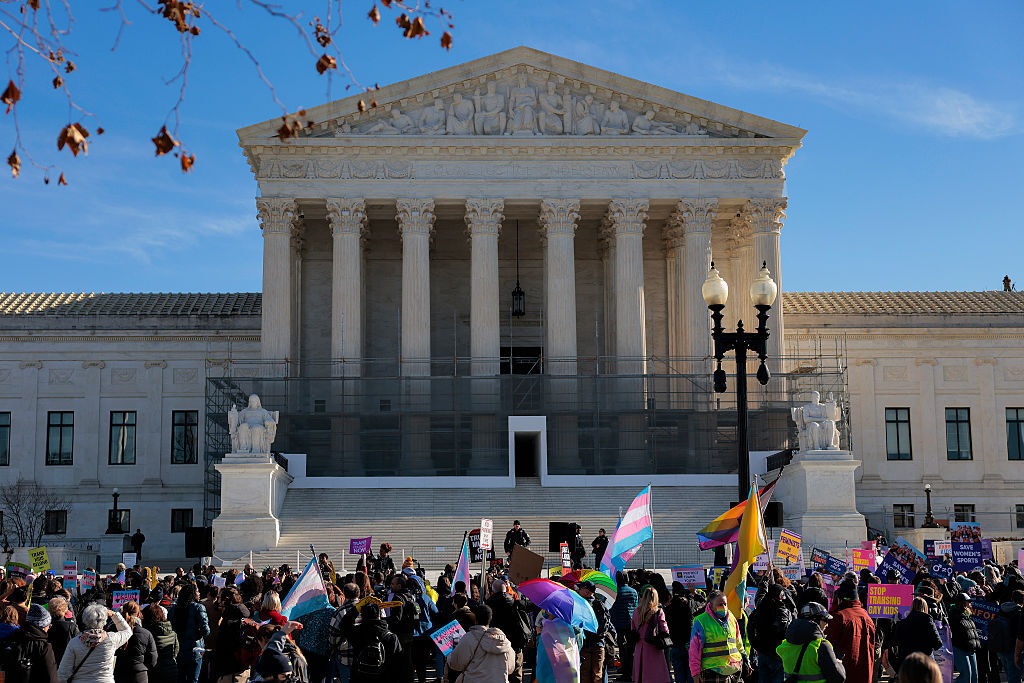
Colorado voters to decide whether to ban gender surgeries for minors
Marissa Ventrelli
marissa.ventrelli@coloradopolitics.com
Updated 3 hours ago
Colorado voters will decide this November whether to prohibit gender surgeries for minors and bar public funding or insurance coverage for procedures that alter children’s biological sex characteristics. The measure qualified for the ballot amid a push by the federal...

Democrats want to bar use of consumer data to set Colorado prices, employee wages
Marissa Ventrelli
marissa.ventrelli@coloradopolitics.com
Updated 5 hours ago
A closely divided House committee advanced a bill aimed at curbing the use of personal data to set individualized prices and wages, reviving a proposal that failed last year and setting up a broader debate over how far the state...

10th Circuit rejects ‘potential for violence’ when police arrest vehicle occupant’s romantic partner
Michael Karlik
michael.karlik@coloradopolitics.com
Updated 10 hours ago
The Denver-based federal appeals court rejected the idea on Tuesday that a vehicle occupant poses a danger to police solely because they are romantically involved with another occupant who officers are arresting. By 2-1, a three-judge panel of the U.S....

Colorado justices grill debt collector about compliance with law
Michael Karlik
michael.karlik@coloradopolitics.com
Updated 4 hours ago
The Colorado Supreme Court repeatedly pressed a debt collection company last week to explain how its lawsuit against a Boulder woman for an unpaid credit card balance complied with the specific requirements that state lawmakers have created. Portfolio Recovery Associates,...
PREV
PREVIOUS

Denver to offer low-cost child care to teachers — and if there’s room, families — during start of remote learning
Denver teachers who are parents will have access to low-cost child care for the first few weeks of school, which will be held remotely because of the coronavirus. In a letter to staff Friday, Denver Public Schools Superintendent Susana Cordova said the district’s after-school program, along with some community organizations, will provide child care for teachers, principals, […]

Q&A with Mike Foote — lawmaker, lawyer
Brief bio: Represents Boulder County’s District 17 in the Colorado Senate, since appointment by vacancy committee in December 2018. Previously represented District 12 in the Colorado House, 2012-2018. Attorney in private practice in Boulder County. Former deputy district attorney in Boulder and Durango. Holds bachelor’s degree from Indiana University, a master’s from the Josef Korbel […]