

Court of Appeals broadens definition of unlawful sexual contact
A perpetrator need not use his own body to commit unlawful sexual contact under Colorado law, the Court of Appeals ruled on Thursday, establishing for the first time that touching a victim with an inanimate object is also a criminal offense.
In January 2016, police received a report from Sharif Mubarak Abdulla’s wife, L.C., that her husband had beaten and raped her. Prosecutors charged Abdulla with sexual assault and assault, to which he pleaded not guilty. He testified that the couple had argued and things turned physical. His wife, by contrast, said that Abdulla forced her to take off her clothes, beat her with a belt, and made her choose “oral sex or regular sex.”
L.C. did not want either, but told him “regular sex.” Later that night, Abdulla woke up and began to have sex with his wife again. She similarly did not want to participate, but went along with it and raised no objection.
A jury acquitted Abdulla of the sexual assault charge, and instead convicted him for unlawful sexual contact and assault. He received a prison term of six years to life for the unlawful contact conviction, which is a lesser offense than sexual assault.
Per Colorado law, a sexual assault occurs when someone knowingly penetrates a victim and causes submission against the victim’s will. Unlawful sexual contact entails subjecting another person to nonconsensual “touching of the victim’s intimate parts,” which is a felony if there is “actual application of physical force or physical violence.”
Abdulla argued that striking his wife’s buttocks with a belt was not sexual contact.
Judge Jaclyn Casey Brown, writing for the Court of Appeals, observed that the General Assembly had not defined “touching.” A previous appellate panel in a separate case determined that a perpetrator who touched his victim through a sheet committed the offense, even though he maintained that such contact did not meet the definition. Abdulla likewise attempted to argue that contact required the perpetrator to “perceive or experience the victim’s intimate parts through the tactile senses.”
Brown explained that the three-member panel agreed with a broader definition of “touching.”
“[W]e conclude that a definition of ‘touching’ that includes use of an implement or object is consistent with the General Assembly’s intent as reflected in the plain and ordinary meaning of the statutory language,” she wrote.
The panel reasoned that the jury could infer from the proximity of events that Abdulla’s whipping of L.C. with a belt was to further his own sexual gratification, but also that Abdulla’s other actions, such as kissing her without consent, qualified as unlawful sexual contact.
“Abdulla essentially argues that L.C.’s consent was an all-or-nothing proposition: L.C. either consented to all the acts or did not consent to any of them,” noted Brown. The panel found it reasonable that even though L.C. did not object to each individual act, a jury could have found the whipping to be nonconsensual.
Abdulla’s appeal also argued that the Denver District Court improperly admitted hearsay statements that his wife made to a detective, L.C.’s sister and a nurse who collected forensic evidence. In the case of the detective, he testified that L.C. described the episode to him and added that she “didn’t tell [Abdulla] to stop for fear of further assault.”
At least 12 hours had passed between the incident and the statement, and the appellate panel recognized that the allowance for “excited utterances” as hearsay evidence was tenuous.
“Abdulla is correct that the passage of time and L.C.’s intervening conduct both cut against the likelihood that the statement to the detective was an excited utterance,” Brown wrote, clarifying that if the trial court did make a mistake by admitting the testimony, it likely did not affect the verdict.
While the court had similar reservations about the other hearsay statements, the jury, by acquitting Abdulla of the sexual assault charge, “did not believe L.C. that the sex was nonconsensual or that she communicated her lack of consent to Abdulla,” the court concluded.
“We are glad that the Court agreed with our position,” said Denver District Attorney Beth McCann in a statement after the ruling. Her office originally prosecuted the case. “This is a good result for victims.”
Zach Elsner, an attorney who represents sexual assault victims for The Sawaya Law Firm, said the court’s conclusion “seems a little like a no-brainer, that people use different devices and things in intimate situations all the time. That doesn’t change the nature of the contact – whether it’s consensual or not.”
The case is People v. Abdulla.
This story has been updated with additional comments.


Trump plans to move Forest Service headquarters to Utah, shutter research sites | OUT WEST ROUNDUP
The Associated Press
the-associated-press@coloradopolitics.com
Updated 4 days ago
UTAH Forest Service bound for Salt Lake City SALT LAKE CITY — President Donald Trump’s administration will move the U.S. Forest Service headquarters out of the nation’s capital to Salt Lake City as part of an organizational overhaul that involves...
Pastors Scott Bottoms, Victor Marx win spots in Colorado GOP’s gubernatorial primary at party assembly
Ernest Luning
ernest.luning@coloradopolitics.com
Updated 20 hours ago
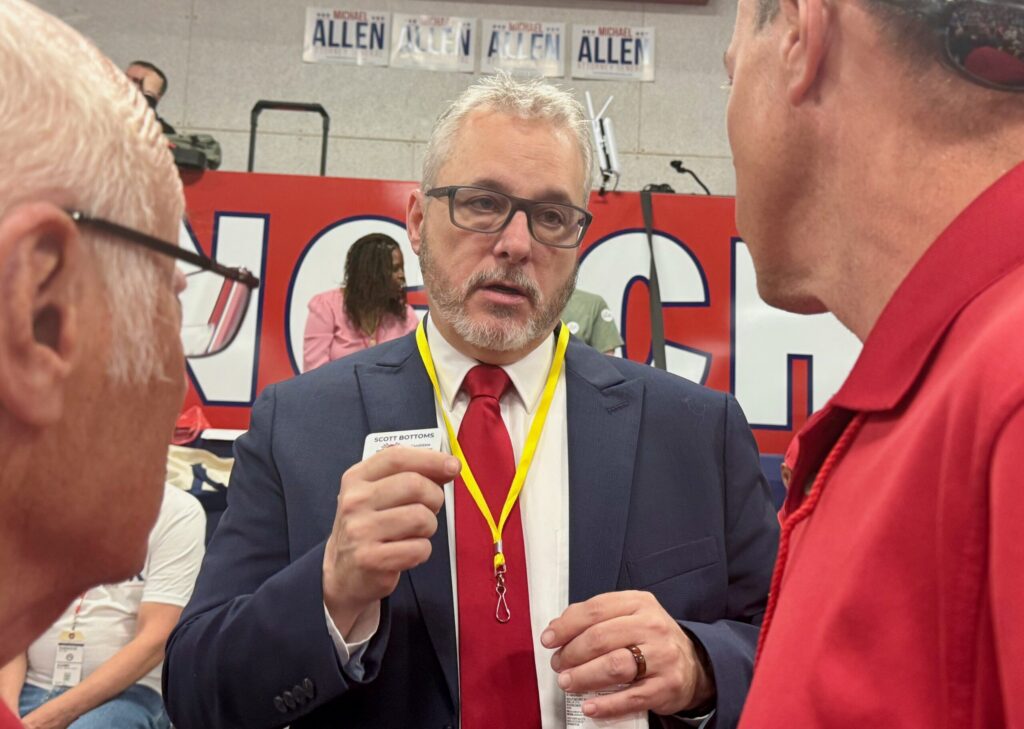
Two pastors from Colorado Springs qualified Saturday for the Republican gubernatorial primary ballot at the Colorado GOP’s state assembly in Pueblo in a party meeting that dragged late into the night. State Rep. Scott Bottoms, who is known as one...
Colorado House finishes work on 2026-27 state budget, finally
Marianne Goodland
marianne.goodland@coloradopolitics.com
Updated 2 days ago
The House on Saturday, after four days of work – it usually takes two – finished up their work and voted on the $46.8 billion 2026-27 state budget, as contained in House Bill 1410 and 64 accompanying measures designed to...
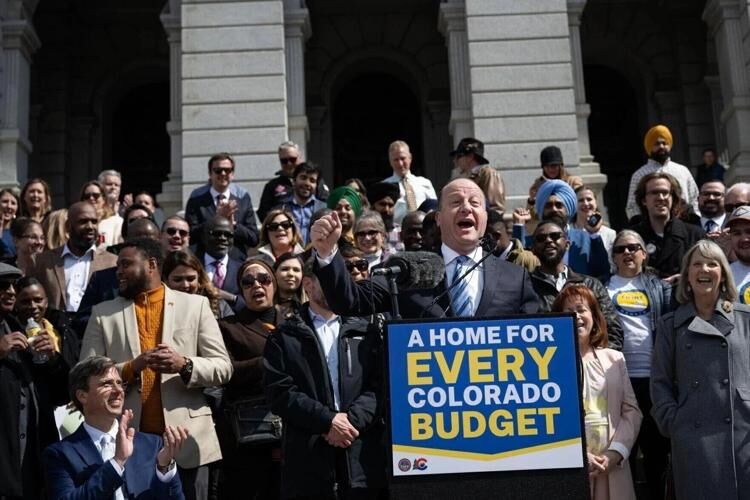
Home rule has protected Colorado cities for over 125 years | Cronin and Loevy
Tom Cronin Bob Loevy
tom-cronin-bob-loevy@coloradopolitics.com
Updated 2 days ago
Colorado is currently gripped by a political struggle between the governor plus the legislature in Denver and populous home-rule city governments, mainly on the Front Range, such as Colorado Springs. In the past few years, the legislature has been passing bills that applied to city government policies, which...
Colorado Politics calendar Apr. 13-19
Rachael Wright, Special to Colorado Politics
rachael.wright@coloradopolitics.com
Updated 5 days ago
CoPo’s weekly political calendar will help you find political and public-policy events throughout Colorado. It includes candidate and issue campaign events, public policy meetings, court hearings, state and local party conventions, assemblies, debates, rallies, parades, speaking engagements, traveling dignitary appearances,...
Minority Leader Peña argues against oil and gas bill | A LOOK BACK
Rachael Wright, Special to Colorado Politics
rachael.wright@coloradopolitics.com
Updated 5 days ago
Forty-Five Years Ago This Week: “The Colorado House of Representatives had just given its final approval to House Bill 81-1152, which created $9 million in tax relief to oil and gas companies. But this came “at the expense of local...
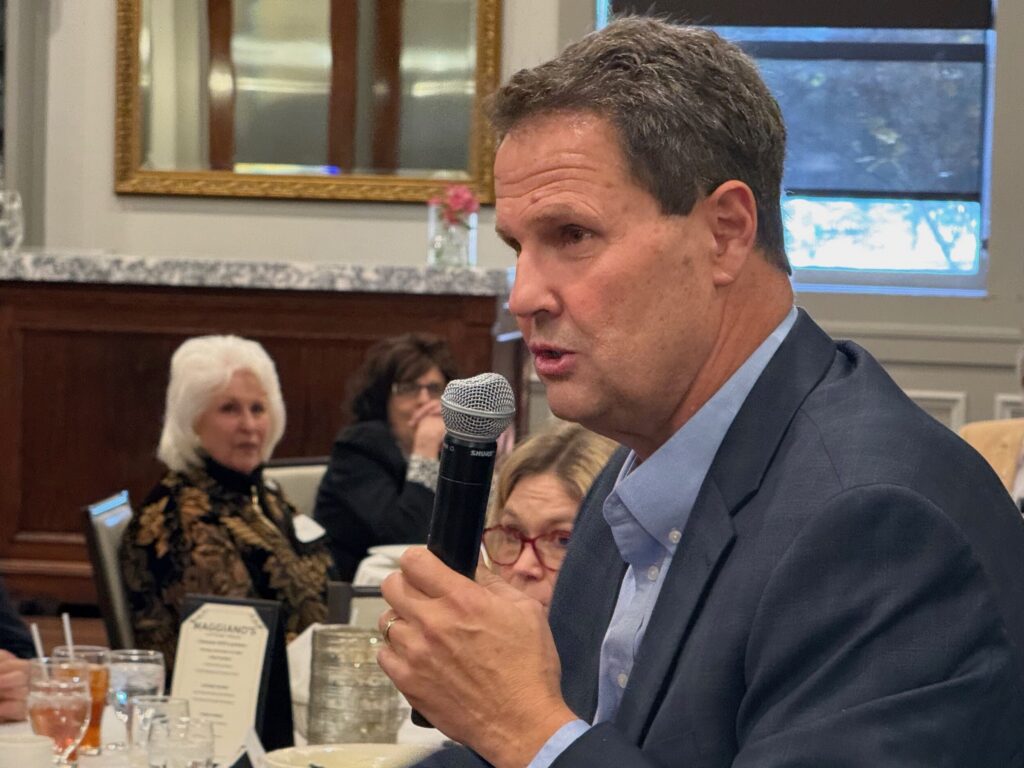
A longshot, upset bid and a few quick takes | SONDERMANN
By Eric Sondermann
by-eric-sondermann@coloradopolitics.com
Updated 4 days ago
It is hard to keep up these days. The flow of news often seems overwhelming. Let’s focus today on an unusual congressional race before moving on to a few quick, supplementary observations. Since its creation 54 years ago, Congressional District...
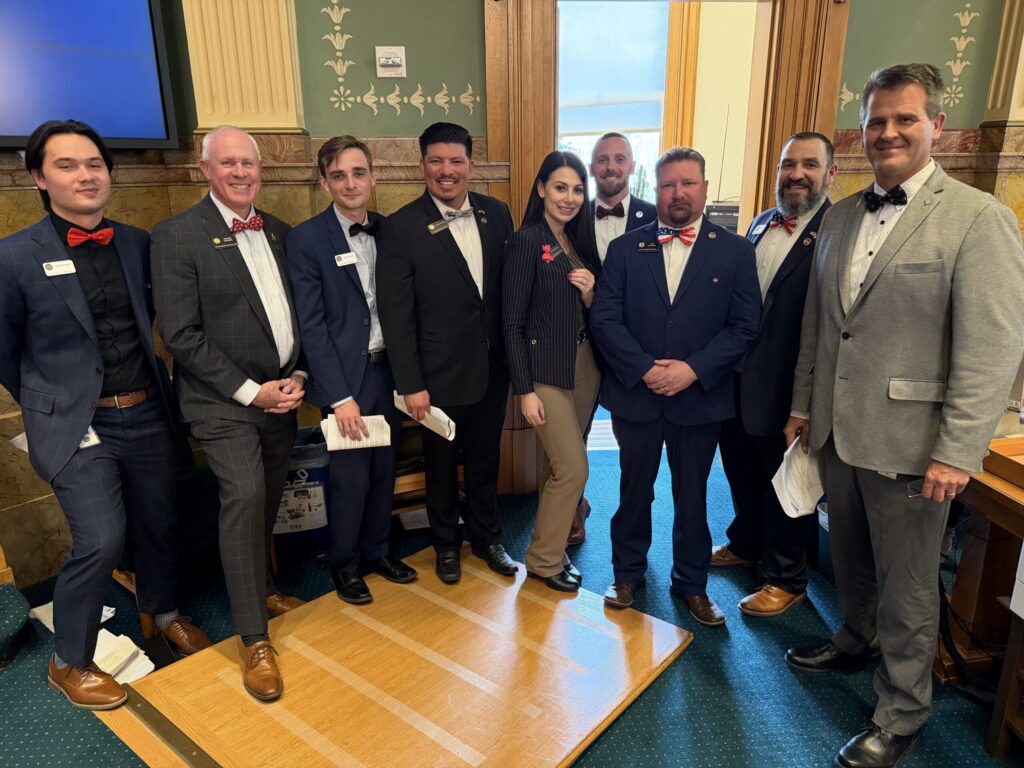
An “-“ends tribute in a week full of “odds” | Capitol M | Week of April 11, 2026
Marianne Goodland
marianne.goodland@coloradopolitics.com
Updated 4 days ago
The lighter side of the Capitol, usually… The decision to read the budget bill — the long bill, which spans 661 pages this year — put a damper on the House’s already less‑than‑festive mood. So Capitol M decided to catch...
What you need to know about the Colorado legislature reading a 661-page bill aloud
Marianne Goodland
marianne.goodland@coloradopolitics.com
Updated 2 days ago
A rarely used procedural move by a Republican legislator threw the Colorado House into an extended slowdown, after she invoked her right to have a nearly 700-page state budget bill read aloud in full. Once Rep. Brandi Bradley, R‑Roxborough Park,...
Literal reading of budget bill complicates Colorado legislators’ plans for GOP assembly
Marianne Goodland
marianne.goodland@coloradopolitics.com
Updated 2 days ago
Republican Rep. Brandi Bradley’s decision to force the full reading of the state budget — called the “long bill” for its obvious length — has not only slowed House business to a crawl but also disrupted her colleagues’ plans for...
PREV
PREVIOUS
Democratic lawmakers to U.S. Attorney: Keep federal agents out of our state
The Democratic members of the General Assembly have asked U.S. Attorney Jason R. Dunn to oppose any augmented federal law enforcement presence in Colorado, following revelations that unidentified U.S. Border Patrol officers were grabbing Portland protesters off of the street using unmarked vans. “We see both the deployment of these agents and the excessive force […]

TRAIL MIX | Political ads draw outrage for trading in trauma
It’s as predictable as campaign yard signs sprouting like dandelions on lawns across the state in an election year. Since 2010, when U.S. Supreme Court rulings opened the floodgates to virtually unlimited outside spending in federal elections, there’s a good chance at least one independent expenditure group will run an attack ad that provokes outrage, […]