

State health department issues advice for avoiding plague

Don’t handle or feed wildlife and you won’t get the plague, the state’s health department announced on Wednesday after a squirrel tested positive for the plague last week in Jefferson County.
“Plague has been present in Colorado since at least the 1940s, and cases in wild rodents in Colorado are reported most years,” said Jennifer House, the state public health veterinarian. “While we see most plague activity during the summer, the disease can be found in rodents year-round and sometimes spills over into other wildlife species as well as domestic cats and dogs.”
The Colorado Department of Public Health and Environment reported that a southwest Colorado resident received a plague diagnosis earlier in the summer after exposure to squirrels. It was the first such plague case in a human in five years. The person has since recovered.
Bites from infected fleas are the most common way to transmit the disease, but infection can occur through bacteria from animal tissue, fluids and respiratory droplets. Symptoms include fever, headache, chills, weakness, and tenderness and pain in the lymph node. Plague can cause death and there is no vaccine.
CDPHE advises against handling and feeding wildlife and to avoid allowing pets to make contact with wildlife, including dead rodents and rabbits. The department has found four plague cases in rodents this year, compared with five rodents and one flea in 2019. The highest number of recent cases dates to 2007, with 134 discovered plague infections, half of which occurred in rodents.


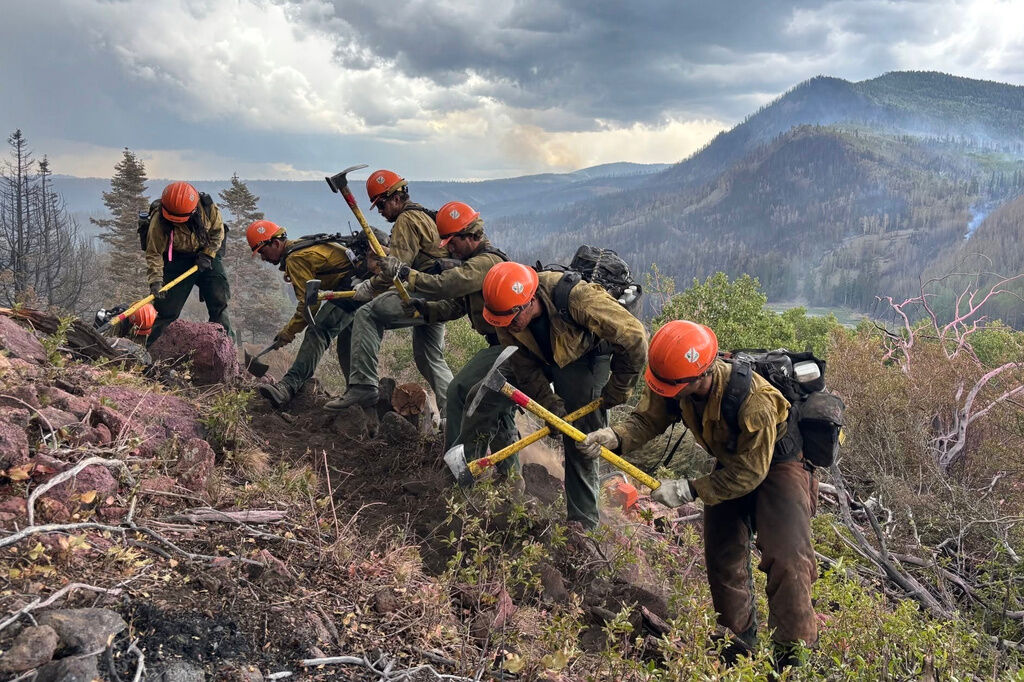
Colorado, Utah mourn after 3 firefighters killed in wildfires
Nicholas Fogleman
nicholas.fogleman@denvergazette.com
Updated 6 hours ago
Gov. Jared Polis on Sunday mourned the deaths of three firefighters killed while battling a wildfire on the Colorado-Utah border, calling the loss a tragedy for the state and the firefighting community. The firefighters died Saturday while responding to a...

Understanding Trump’s remarkable political comeback in 2024 | Cronin and Loevy
Tom Cronin Bob Loevy
tom-cronin-bob-loevy@coloradopolitics.com
Updated 4 hours ago
President Donald Trump lost the 2020 presidential election. He inspired a riot at the U.S. Capitol to try to overthrow the results of that election. He was impeached by the U.S. House of Representatives and later was indicted for several...
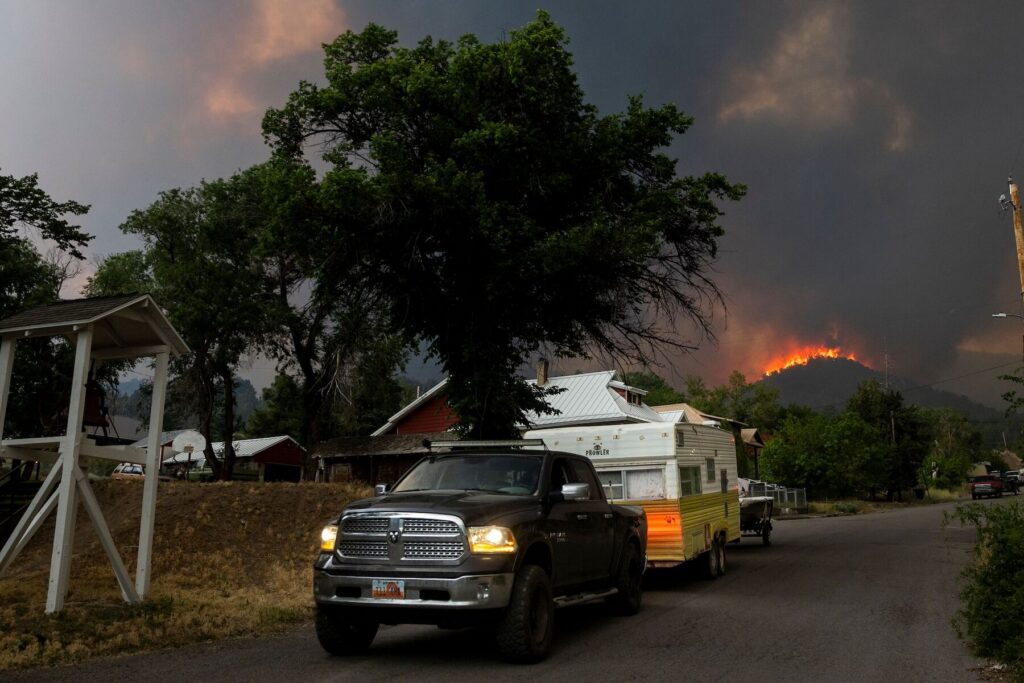
Heat, wind and drought conditions spark wildfires across US West | OUT WEST ROUNDUP
Ernest Luning
ernest.luning@coloradopolitics.com
Updated 15 hours ago
Heat, drought spark wildfires Extreme heat and dry, windy conditions fueled several wildfires in the West on June 21, including an uncontained blaze in Utah that forced the evacuation of a small town southwest of Salt Lake City. The Iron...
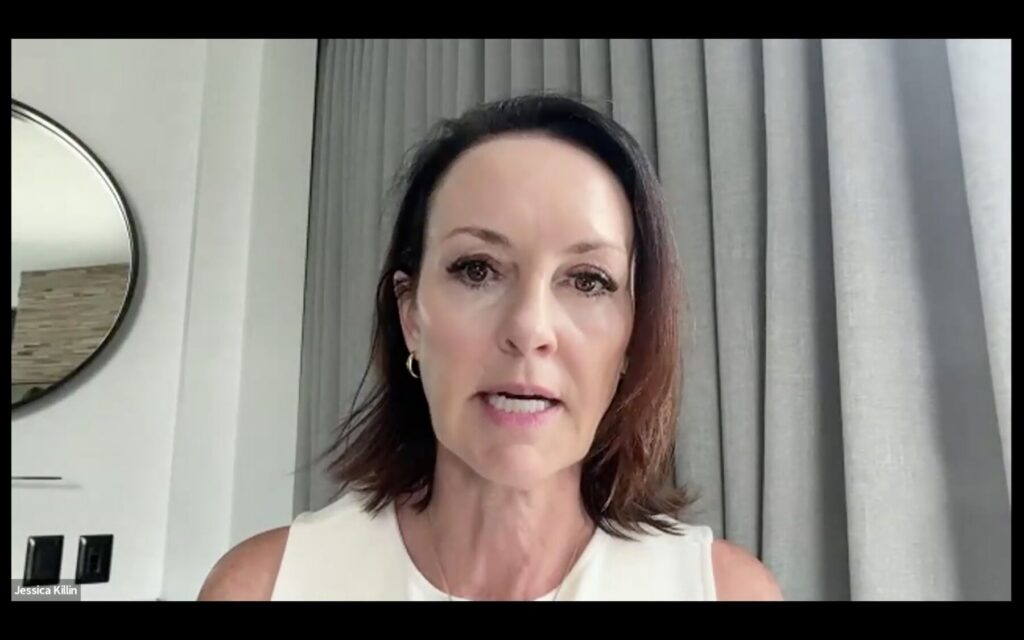
Crank challenger Jessica Killin signs on to new centrist Democratic group’s ‘Promise to America’
Ernest Luning
ernest.luning@coloradopolitics.com
Updated 13 hours ago
Jessica Killin, one of the Democrats running in Tuesday’s primary for the chance to challenge U.S. Rep. Jeff Crank in Colorado’s 5th Congressional District, joined with more than a dozen incumbent Democratic lawmakers and candidates this week signing on to...

Colorado Politics Calendar June 29-July 5
Rachael Wright, Special to Colorado Politics
rachael.wright@coloradopolitics.com
Updated 4 days ago
CoPo’s weekly political calendar will help you find political and public-policy events throughout Colorado. It includes candidate and issue campaign events, public policy meetings, court hearings, state and local party conventions, assemblies, debates, rallies, parades, speaking engagements, traveling dignitary appearances,...
Gov. Lamm’s GOP challenger gives insights into his campaign | A LOOK BACK
Rachael Wright, Special to Colorado Politics
rachael.wright@coloradopolitics.com
Updated 4 days ago
Forty-five years ago this week: “I see Gov. (Richard) Lamm is fairly popular in general,” said gubernatorial candidate and state Sen. Bill Hughes, R-Colorado Springs. “ … And he’ll be hard to beat.” Hughes was on a whirlwind campaign trail...

Giving credit to Polis where credit is due | SONDERMANN
Eric Sondermann
eric-sondermann@coloradopolitics.com
Updated 4 days ago
It is an understatement to suggest that Gov. Jared Polis has had a tough couple of months. The bloom was already off the rose and Coloradans were paying far more attention to the choice of his replacement than they were...

Bennet, Hickenlooper to vote against Trump’s 10th Circuit nominee from Colorado
Michael Karlik
michael.karlik@coloradopolitics.com
Updated 2 days ago
Colorado’s two Democratic senators will not vote to confirm President Donald Trump’s nominee to a vacancy on the Denver-based federal appeals court. Trump has selected U.S. District Court Chief Judge Daniel D. Domenico, who he appointed as a federal trial...
Who’s spending in Colorado to get your vote?
Marianne Goodland
marianne.goodland@coloradopolitics.com
Updated 2 days ago
Groups that raise unlimited amounts of money have spent about $20 million in May and June to try and influence Colorado voters’ choices in the upcoming June 30 primaries. By law, these groups cannot coordinate with the candidates they support....

U.S. government declines to oppose multiple challenges to immigration detention in Colorado
Michael Karlik
michael.karlik@coloradopolitics.com
Updated 2 days ago
Multiple federal judges in Colorado granted petitions from people challenging the lawfulness of their immigration detention this week after the government took the unusual step of declining to submit arguments in opposition. Colorado’s federal trial court is facing a flood of...
PREV
PREVIOUS

INSIGHTS | Governor orders, 'Wear a damn mask,' but some won’t listen
My nephew Josh Morgan died last weekend in Alabama. He was a 38-year-old construction worker with an Alabama Crimson Tide tattoo on his arm. He didn’t feel well one day and died in his bed at home the next. My memories race by like a flip book from the last time I saw him to […]
Black Democratic Legislative Caucus sends a message: mask up
The Black Democratic Legislative Caucus of Colorado has a message: Wear a mask. The statehouse coalition put out a video on social media asking Coloradans to look out for one another, with tips to make it easier. “Remember, it does not have to be a medical grade mask,” reminded Rep. Dominique Jackson of Denver. “You […]