

Discussion over removing statues renews debate over schools, mascots
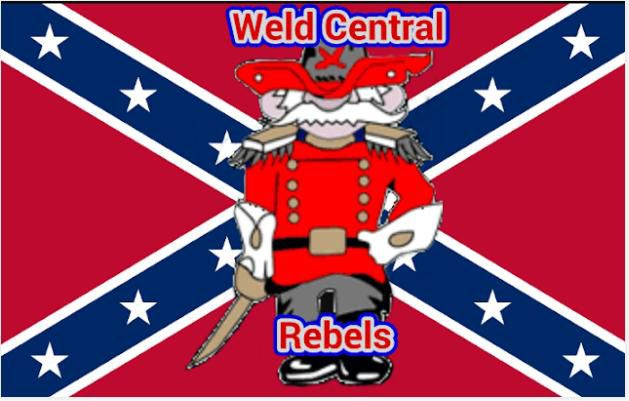
School names and mascots have been a flashpoint for years for people of color, including Democratic lawmakers.
In Weld County, Weld Central middle and high schools both use a mascot named the Weld Central Rebel, “a Civil-war-era-soldier which used to appear with depictions of Confederate flags. School teams are named Rebels,” which stands for Johnny Rebel, a nickname for a Confederate soldier.
At one point, the Confederate flag flew over the high school, but that stopped around 2007, according to the Greeley Tribune.
Rebels is also the unofficial mascot for South High. South adopted a new mascot about a decade ago — the Griffin — although Rebels is still used.
“You can change the Confederate logo, but if you’re not changing the name of the mascot you’re not doing enough to really solve the issue,” said Denver Public Schools board member Tay Anderson, adding that the school’s principal is leading that discussion.
Back in 2015, two state Democratic House lawmakers, Reps. Joe Salazar of Thornton and Jovan Melton of Aurora, began pushing for elimination of derogatory names tied to Indigenous peoples.
House Bill 15-1165 intended to set up a committee “for the consideration of the use of American Indian mascots by public schools.” Nine voting members of the 11-member panel would come from tribes, with no more than two from the same tribe. Any public school, college or university that uses an American Indian mascot would either have to get permission from the panel to use it or stop its use within two years. Those that continued to use the mascots without approval would be subject to a $25,000 per month fine.
During a March 27, 2015, hearing in the House Education Committee, Salazar told lawmakers that “this is the last remaining ethnic group in Colorado that has mascots and imagery used against it in derogatory and denigrating ways.”
As of 2015, at least 38 Colorado schools used an American Indian mascot or caricature. “Indians” and “Warriors” are used by 17 high schools. La Veta High School uses the mascot “Redskins;” Lamar High School uses the mascot “Savages.” American Indian students who testified in that hearing indicated the last two were the most offensive.
The word “savages” shows up even in the Declaration of Independence, during a reference to King George III: “He has excited domestic insurrections amongst us, and has endeavoured to bring on the inhabitants of our frontiers, the merciless Indian Savages, whose known rule of warfare, is an undistinguished destruction of all ages, sexes and conditions.”
The pair couldn’t get the bill out of the Senate. Melton said recently even those in his own caucus raised concerns about local control.
But Salazar was more blunt. “My party was a bunch of cowards,” he said. “It takes awhile for legislators to get to a point where other people are already at.” Unfortunately, in 2015, “the Democratic Party did not have the vision to understand the importance of removing that hateful, spiteful language and stereotyping against people of color. It’s taken riots, protests and a huge, worldwide movement calling for social justice to remove that pall. We’ve been saying it for a long time.”
The 2015 House Education hearing also brought up the way one school has worked with a Native American tribe on its mascot rather than being at odds over it.
Since 1993, Arapahoe High School in Centennial has had an official ongoing relationship with the Northern Arapaho tribe, a relationship renewed annually. A member of the tribe designed the school’s mascot and logo, and a tribal council approved it for “very limited use.” It can be used only in ways pre-approved by the council, according to a parent who testified at the 2015 hearing.
That relationship came into sharp focus in December 2013. In that month, a student shot another student before killing himself in the high school library. The student, Claire Davis, later died.
One of the first calls to the principal came from an elder of the Northern Arapaho tribe to offer their support. The day before the school reopened in January, 2014, a delegation of Northern Arapaho elders performed an hours-long smudging ceremony to spiritually cleanse the library.
In October 2015, then-Gov. John Hickenlooper issued an executive order creating the Commission to Study American Indian Representations in Public Schools. According to a news release, the order was “inspired by some school districts in Colorado that have found constructive and collaborative ways to migrate away from ethnic caricatures and mascots without disrupting school traditions or incurring costs that detract from student learning.”
A 2016 report said what was needed was education, that students were unaware of American Indian history and culture.
For the next three sessions, Salazar ran bills to require public schools to teach history, culture, and contributions of American Indians, Hispanic Americans, African Americans and Asian Americans as part of content standards for history and civics. He ran that bill for three years, but none ever got past the Republican-controlled Senate.

Colorado GOP chair Brita Horn says she’ll resign next month, points to ‘divide within our party’
Ernest Luning
ernest.luning@coloradopolitics.com
Updated 3 hours ago
Colorado Republican Party Chair Brita Horn said Thursday that she will resign her position next month following the GOP’s state assembly, citing what she described as an “enduring divide” within the party “marked by vitriol and hostility.” Horn’s announcement came...
Colorado justices skeptical of appellate court’s limitation on prosecution’s appeal
Michael Karlik
michael.karlik@coloradopolitics.com
Updated 7 hours ago
The Colorado Supreme Court seemed skeptical on Tuesday that Denver prosecutors should be barred from appealing a trial judge’s permanent dismissal of a criminal case, based upon the sequence of events after the original ruling. Prosecutors charged Quinn M. Jebe...
Federal judge: Government violated order shielding man from deportation in ‘one-off mistake’
Michael Karlik
michael.karlik@coloradopolitics.com
Updated 9 hours ago
A federal judge acknowledged on Thursday that the government violated his order by deporting a man in immigration detention during his pending court case, but it “serves nobody’s interests” to require the government to return him. On Feb. 18, Tesfami...
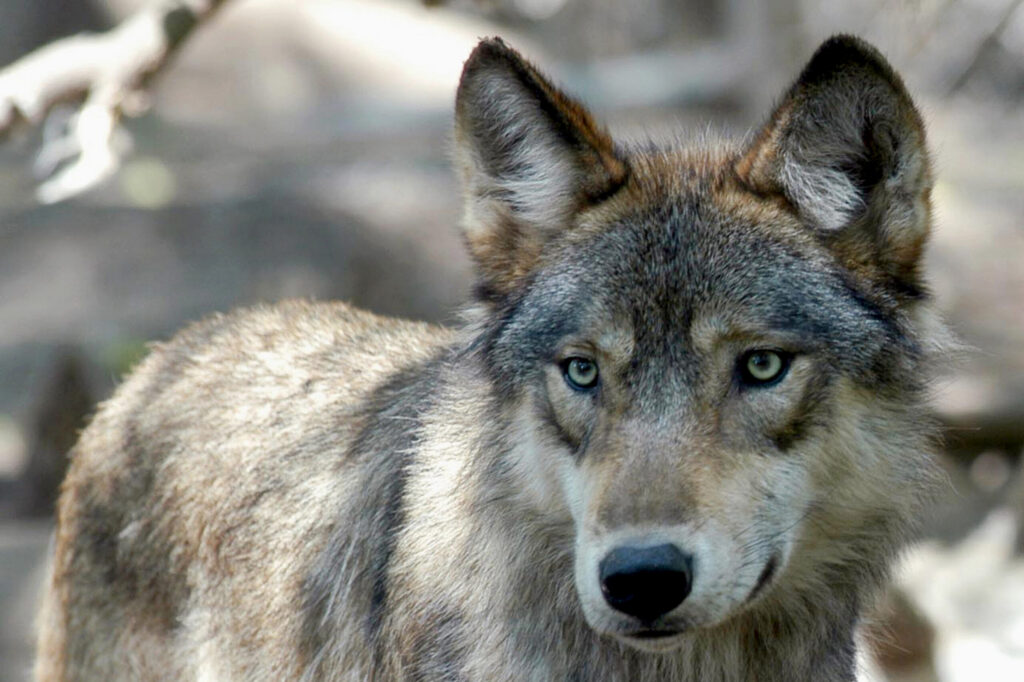
Wolf depredation payouts in Colorado top $700K for 2025, double annual funding
Marianne Goodland
marianne.goodland@coloradopolitics.com
Updated 10 hours ago
The Colorado Parks and Wildlife Commission approved more than $706,000 in wolf depredation claims for 2025 during its March meeting last week, an amount that exceeds the state’s annual wolf compensation fund by more than double. The commission also rejected...

U.S. intelligence report suggests Iranian regime is not at risk of imminent collapse
Washington Examiner Staff, Washington Examiner
washington.examiner.staff.washington.examiner@gazetteedit.wpenginepowered.com
Updated 8 hours ago
Washington Examiner Recent U.S. intelligence reports have assessed that after nearly two weeks of Operation Epic Fury, Iran’s government leadership is not in danger of imminent collapse. The evaluation comes after 12 days of regular military strikes by United States...

Colorado committee recommends rejecting alcohol, marijuana tax hike to fund mental health care
Marissa Ventrelli
marissa.ventrelli@coloradopolitics.com
Updated 12 hours ago
In a rare move, Colorado’s Capital Development Committee unanimously recommended that another legislative committee reject a bill asking voters to approve higher excise taxes on alcohol and marijuana to fund a new mental health hospital in Aurora. Sponsored by Rep....
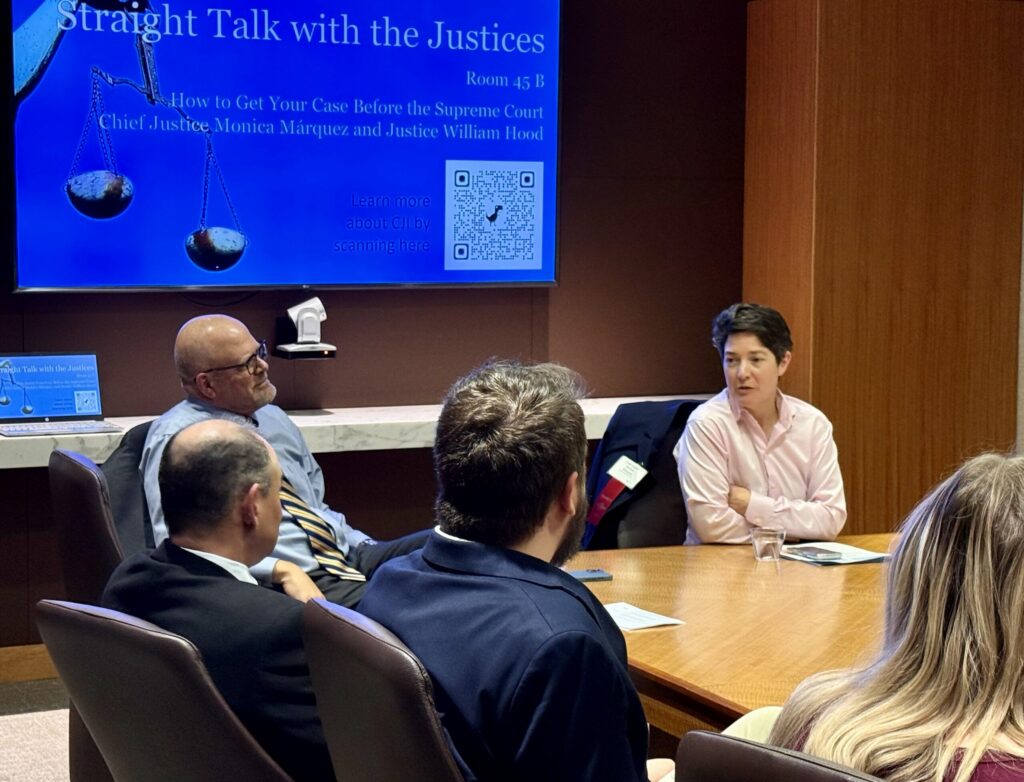
Colorado Supreme Court lifts curtain on decision-making at legal event
Michael Karlik
michael.karlik@coloradopolitics.com
Updated 12 hours ago
Members of the Colorado Supreme Court sat down with lawyers on Wednesday to answer questions about behind-the-scenes topics, including what happens immediately after an appeal is argued, why they might intervene in an ongoing case, and the consequence of a...
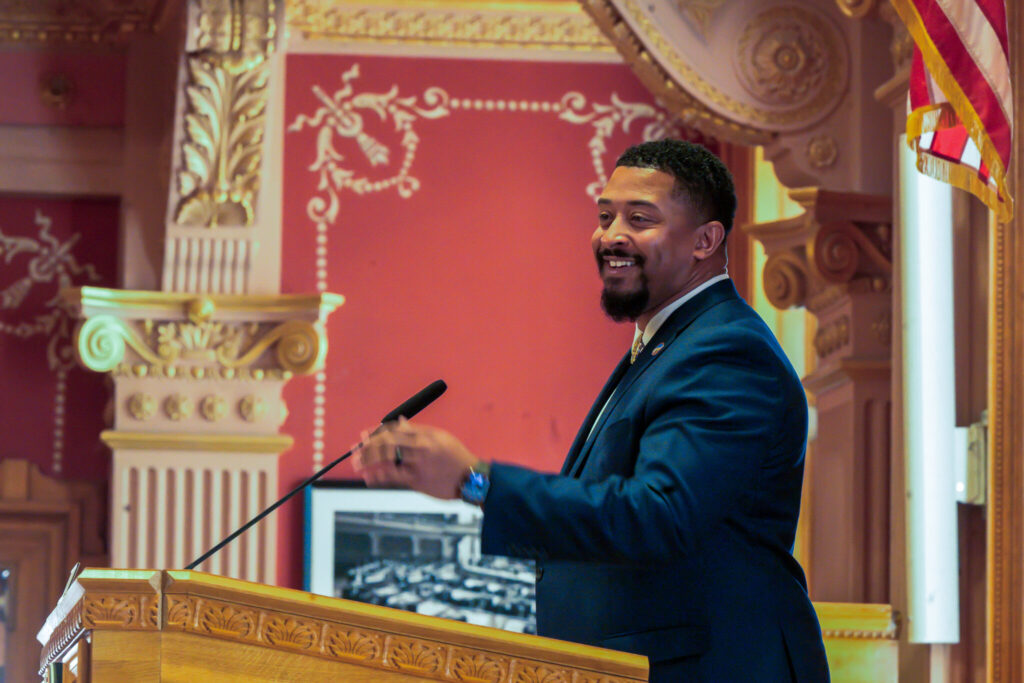
Senate, House leaders propose bill to cut outdated Colorado regulations and expand agency oversight
Marissa Ventrelli
marissa.ventrelli@coloradopolitics.com
Updated 6 hours ago
A bipartisan group of Colorado’s top legislative leaders is pushing a bill that would require periodic reviews of state regulations and expand lawmakers’ ability to scrutinize agency programs during oversight hearings. Senate Bill 137, sponsored by Senate President James Coleman,...
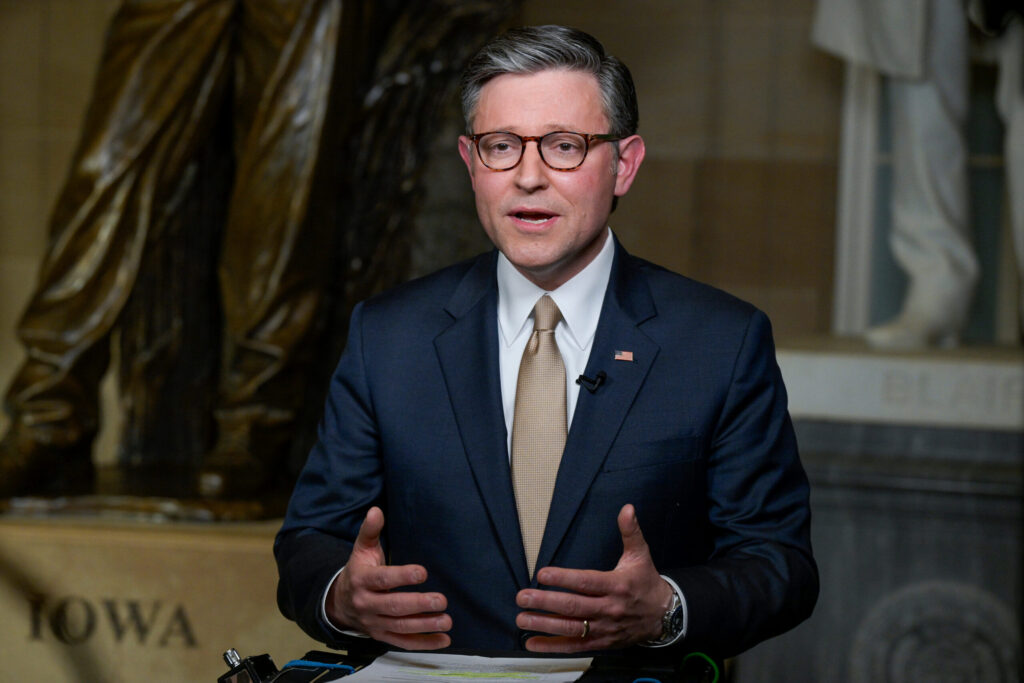
House Republicans split over SAVE America Act pressure campaign
David Sivak, Washington Examiner
david.sivak.washington.examiner@gazetteedit.wpenginepowered.com
Updated 15 hours ago
House Republicans are torn over how difficult to make life for the Senate as a band of rebels pressures Majority Leader John Thune (R-SD) to pass a national voter ID bill. Speaker Mike Johnson (R-LA) has cautioned House conservatives that...

Republican Jeff Crank, Democrat Jessica Killin qualify by petition for Colorado’s 5th CD primary
Ernest Luning
ernest.luning@coloradopolitics.com
Updated 16 hours ago
Republican U.S. Rep. Jeff Crank and Jessica Killin, one of the Democrats challenging the first-term incumbent, have both qualified for the primary ballot in Colorado’s 5th Congressional District after turning in a sufficient number of petition signatures, state election officials...
PREV
PREVIOUS

Protesters rally in Aurora, stop traffic in call for justice for Elijah McClain (PHOTOS)
Saturday’s rally for Elijah McClain started with the president of the Aurora branch of the NAACP escorting counter protesters away from the Aurora Municipal Center and ended with division, riot gear, a traffic-stopping march and tear gas. Demonstrators gathered on the green lawn outside of the Aurora Police Department Headquarters on the afternoon of June […]
A review of Colorado place names reveals a checkered past
To get to the Sand Creek Massacre National Historic Site near Eads, where 230 Native Americans were murdered, you have to drive through a town named for their murderer. In between Eads and the turnoff, you’ll go through the unincorporated town of Chivington. It’s named for Civil War-era Col. John Chivington, who led the attack […]