

State Supreme Court construes overdose immunity law narrowly in ruling

A lower court erred when it threw out a woman’s drug conviction under the state law that grants immunity to overdose victims under certain conditions, the state Supreme Court decided on Monday.
“An appellate court may not serve as a thirteenth juror and consider whether it might have reached a different conclusion than the jury,” wrote Justice Carlos A. Samour, Jr. for the court.
Brittany Page Harrison and a teenage friend ordered food at a Burger King and sat down at a booth. Employees noticed after 90 minutes that the two were slumped at the table, apparently asleep. Workers loudly tried to wake them, to no avail, and the manager called 9-1-1. She did not contemplate that this was a drug overdose, and expected that police would be able to rouse the couple and ask them to leave.
Once law enforcement arrived, Harrison woke up and, though groggy, indicated that she had not used drugs. The teenager did not wake and received transportation to the hospital. Officers did not believe Harrison’s statement, and searched her purse and a backpack to find drug paraphernalia and substances that would later test positive for heroin and methamphetamine.
Police arrested Harrison and charged her with possession. She invoked immunity under the Colorado law that governs drug overdoses. Per its provisions, both the person who suffers the overdose and the person who reports it are immune from prosecution for possession or use if they alert emergency responders or a healthcare provider in “good faith” to the overdose. They must also remain at the scene and cooperate.
The trial court did not grant Harrison’s motion to dismiss based on the immunity provisions. A jury subsequently found her guilty.
A Colorado Court of Appeals panel threw out Harrison’s conviction because there was disagreement at trial about whether the manager reported an “emergency drug or alcohol overdose event,” as the law required. The appellate judges determined that even though the manager technically did not tell the 9-1-1 dispatcher she needed assistance for an overdose, her “subjective knowledge or ignorance about the cause of the defendant’s condition is not relevant.” Regardless of what the manager actually thought, a layperson would have reasonably concluded that Harrison and the teenager had overdosed, the court decided.
Samour disagreed, writing that “the good-faith requirement renders the subjective perception of the person making the report relevant.”
The Supreme Court noted that the immunity law also requires the report of an “acute condition” arising from the drug use, which could include physical illness, coma, mania, hysteria or death. The question before the court was whether prosecutors introduced satisfactory evidence proving that the manager did not make a good faith report of an acute, drug-connected condition that would reasonably be seen as a drug overdose.
“The record answers the correct question with a resounding ‘yes’,” wrote Samour. “No one testified that Harrison was ‘unconscious.’ All of the pertinent witnesses said that Harrison was asleep….[T]here was sufficient evidence to support a conclusion by a reasonable mind that Harrison was simply asleep.”
Christopher M. Jackson, an attorney at Holland & Hart, believed that the Supreme Court was correct to make the mental state of the 9-1-1 caller a factor, but questioned whether the prosecution could prove beyond a reasonable doubt that the manager did not believe that drugs were involved.
“An appellate court has to review the evidence in the light most favorable to the prosecution, and here you had the sworn testimony of the Burger King manager,” Jackson said. “But at the same time, there was good reason not to believe the manager’s testimony. The evidence showed that the defendant and her friend were sitting in a booth for 1.5 hours, not eating. They were asleep. And even after an employee – on two separate occasions! – yelled at them, shook them, and banged on the table, the pair ‘didn’t even flinch or open their eyes.'” The manager’s statements that she never thought of an overdose “doesn’t seem like the most plausible testimony to me, but it’s what the jury found.”
Bryon Adinoff, a clinical professor of psychiatry at the University of Colorado and editor of the American Journal of Drug and Alcohol Abuse, expressed concern about the practical implications of the ruling. He worried that the decision may require too much of a Good Samaritan when reporting what they see.
“Just on the face of it, to expect somebody to make that kind of quick inference that this is an opioid overdose – and even if they did, to say it would be inappropriate. Why would you?” he said. “EMS should respond quickly. They should be thinking overdose.”
While the intent of the law seems to encourage overdose reporting and save lives, Adinoff added, “as a physician and a caring citizen, I don’t know what good comes of this….Do we now need to tell people if you see somebody unarousable, when you call it in, you should say, ‘I suspect it’s an overdose’?”
The high court upheld Harrison’s conviction. The case is People v. Harrison.


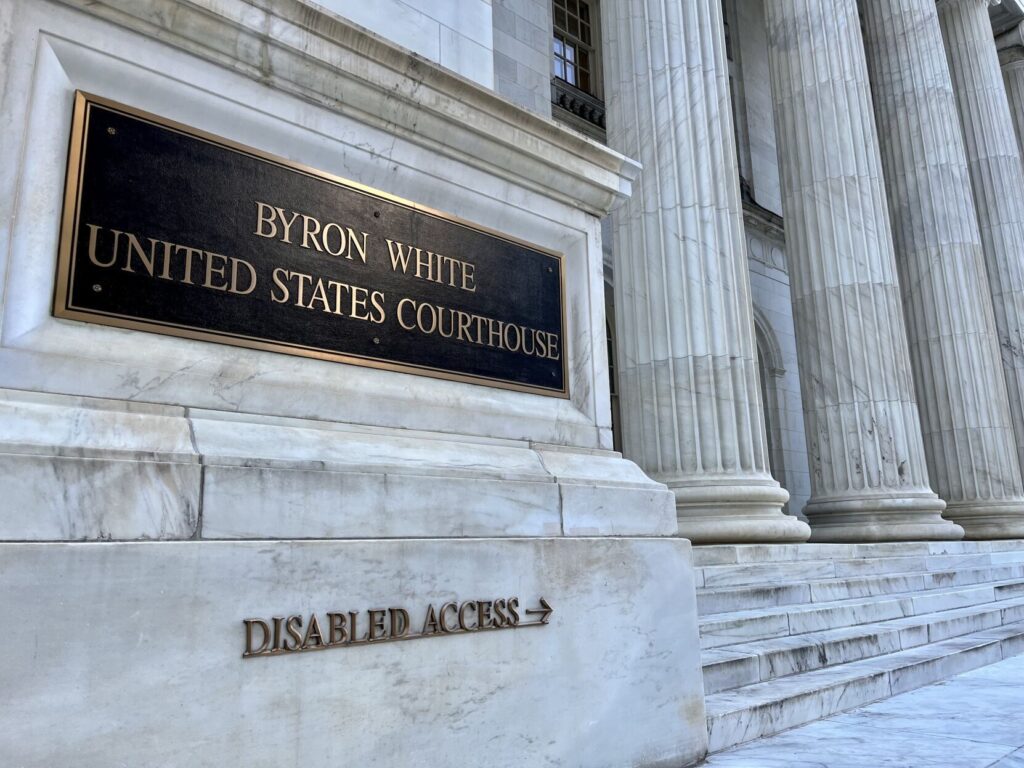
10th Circuit grants rare all-judges’ review of Colorado banking regulation
Michael Karlik
michael.karlik@coloradopolitics.com
Updated 1 hour ago
The Denver-based federal appeals court announced on Thursday that it will hold a rare all-judges review of a recent decision that permits Colorado to require out-of-state banks to abide by the state’s maximum interest rates when they lend to in-state...

Colorado appeals court orders new sentencing for Tina Peters, upholds convictions
Michael Karlik
michael.karlik@coloradopolitics.com
Updated 3 hours ago
Colorado’s second-highest court determined on Thursday that a trial judge improperly sentenced former Mesa County clerk Tina Peters based upon her exercise of protected speech, while at the same time upholding her convictions. The three-judge Court of Appeals panel also...

Denver promised every school funding from $1B bond — but campuses later closed received far less | Analysis
Nico Brambila
nico.brambila@denvergazette.com
Updated 10 minutes ago
Denver voters overwhelmingly approved the largest bond measure in Denver Public Schools history on the promise that every school — including charter campuses — would receive something. And they did. But the nearly $1 billion bond was not distributed evenly....

National conservation area growing by 4,000-plus acres in western Colorado
Seth Boster
seth-boster@coloradopolitics.com
Updated 4 hours ago
A formerly private, sweeping swath of western Colorado is growing a public, red rock wonderland. Spanning 4,000-plus acres, Escalante Ranch has been transferred to the Bureau of Land Management and incorporated into Dominguez-Escalante National Conservation Area, The Conservation Fund recently...
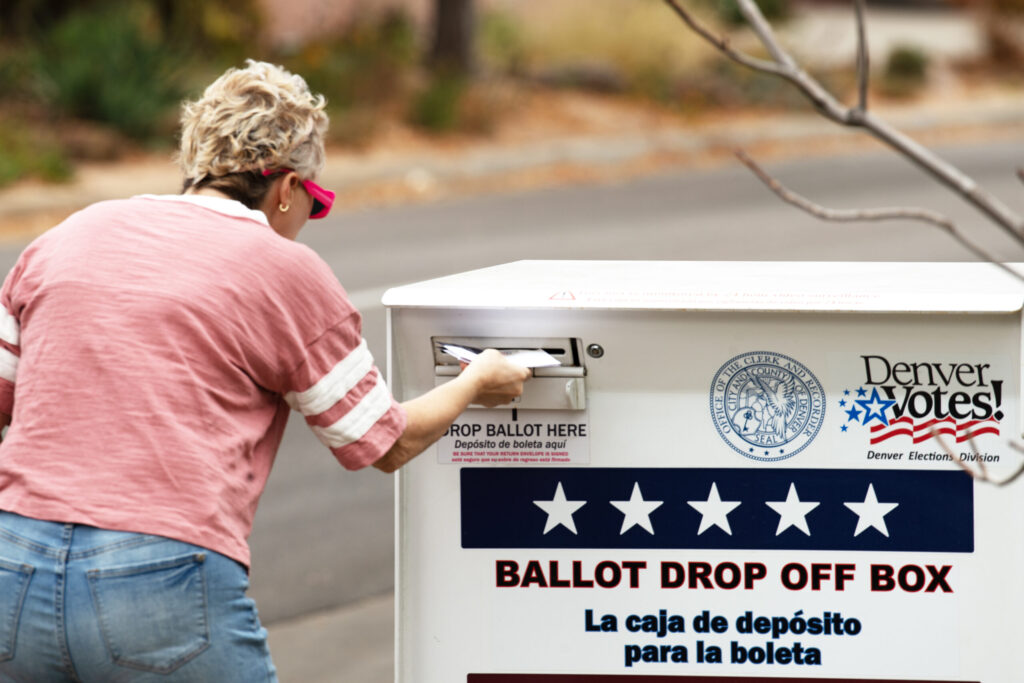
Judge rules that Colorado law makes it too hard for parties to bar unaffiliated voters from primaries
Ernest Luning
ernest.luning@coloradopolitics.com
Updated 3 hours ago
A federal judge ruled in favor of the Colorado Republican Party late Tuesday, saying that a portion of the state law that allows unaffiliated voters to cast ballots in party primaries is unconstitutional because it imposes an unrealistic burden on...
10th Circuit upholds regulator’s methodology for Tri-State exit fees
Michael Karlik
michael.karlik@coloradopolitics.com
Updated 3 hours ago
The Denver-based federal appeals court upheld a regulatory agency’s methodology for calculating the fee owed by entities seeking to withdraw from Tri-State Generation and Transmission Association last week. Tri-State is a Westminster-based cooperative that provides and transmits electricity to member...
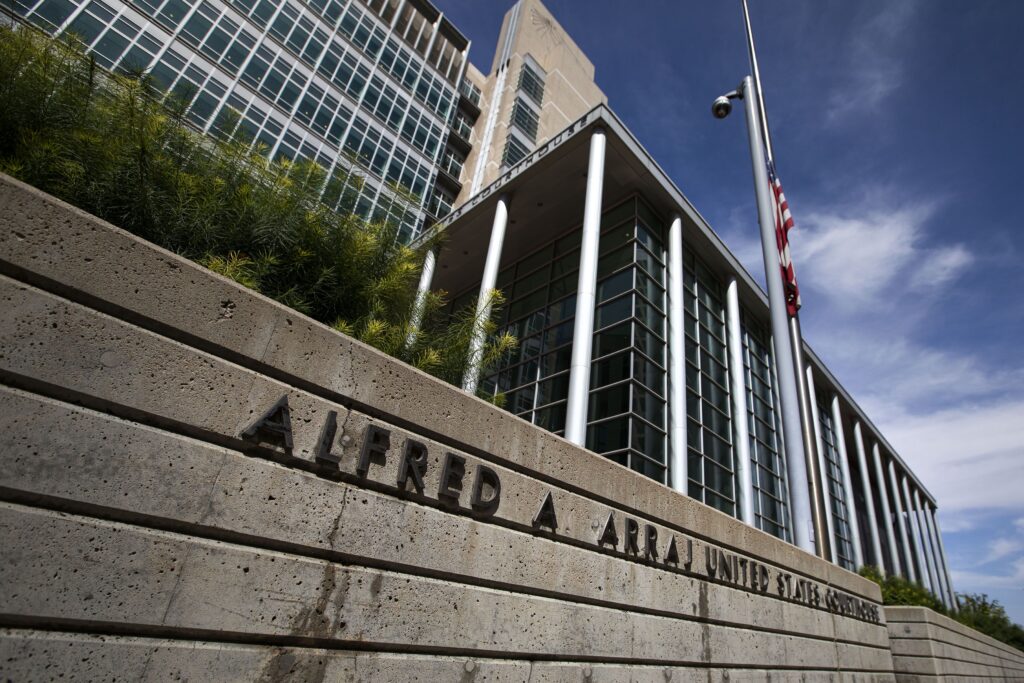
Federal judge proposes sanctions against Mike Lindell’s lawyers for continued fake citations
Michael Karlik
michael.karlik@coloradopolitics.com
Updated 22 hours ago
A federal judge is once again pursuing sanctions against lawyers for MyPillow CEO Mike Lindell for continuing to cite to court cases that do not exist, likely based on the faulty output of artificial intelligence tools. Last year, a jury...

Front Range cities oppose Democratic proposal to permit lot‑splitting
Marianne Goodland
marianne.goodland@coloradopolitics.com
Updated 2 hours ago
Colorado lawmakers are pressing ahead with a plan to let homeowners split their lots to make room for smaller, less expensive houses — a proposal that has drawn sharp opposition from Aurora, Colorado Springs, Denver and other Front Range cities...

Susan Blanco signals views on role of appellate courts in first opinion as Colorado justice
Michael Karlik
michael.karlik@coloradopolitics.com
Updated 1 day ago
Justice Susan Blanco’s first solo opinion as a new member of the Colorado Supreme Court made clear her view of the guardrails that keep the state’s highest court tethered to the issues it is asked to decide. On Monday, the...

Hegseth features Fort Carson soldiers after returning from Middle East, gives warning on Iran war
Reuters
reuters@gazette.com
Updated 1 day ago
Defense Secretary Pete Hegseth said on Tuesday the next few days in the war against Iran would be decisive and warned Tehran that the conflict would intensify if it did not make a deal. Hegseth also highlighted his trip to the Middle...
PREV
PREVIOUS

Hickenlooper offers 'deepest apologies' for remarks comparing elected officials to galley slaves
Democratic U.S. Senate candidate John Hickenlooper on Monday apologized for comparing the plight of elected officials to slaves pulling the oars in a slave ship during remarks the former governor delivered years ago at a charity event. Hickenlooper’s quip comparing the relationship between politicians and their schedulers to galley slaves and their whip-wielding slave drivers […]

Denver extends contracts for temporary homeless shelters at Coliseum, National Western Complex
The 24/7 auxiliary homeless shelters at the National Western Complex and the Denver Coliseum – set up in April to help curb the spread of the coronavirus – will stick around through at least mid-July. The Denver City Council on Monday evening approved two contract extensions, together worth about $4.4 million, to continue housing, feeding and providing […]