

Legislature’s statute of limitations extension applied in child sex abuser’s case, appeals court rules

A man convicted of sexually assaulting a child by force more than two decades ago was properly tried for the crime because the statute of limitations was on pause during his time living outside of Colorado, the state’s Court of Appeals ruled on Thursday.
“Defendant does not dispute that he was absent from Colorado for more than five years,” wrote Judge Diana Terry for the court. “Therefore, based on section 16-5-401’s 10-year limitations period, as well as its five-year tolling provision for a defendant’s absence from the state, the statute of limitations in defendant’s case did not expire until June 16, 2011, well past the July 1, 2006, deadline established by the General Assembly.”
On June 16, 1996, a strange man entered the bedroom of a four-year-old girl through the window and sexually assaulted her. The child screamed, prompting the man to exit, and the mother called police.
The case went unsolved for nearly two decades, until police discovered that the fingerprints on the child’s window matched those found at a separate burglary scene. They belonged to Joel Market, who was stationed at Fort Carson in Colorado Springs at the time, and had had moved to Texas in 1998.
Upon trial, a jury found Market guilty and he received a 24-year prison sentence.
Market appealed, arguing that the statute of limitations for his offense had expired 10 years after the crime. In 1996, two provisions in law governed the timeline for child sex abuse cases: both of them provided for a 10-year window, but one allowed that a defendant’s absence from Colorado, up to five years, would cause an extension of the statute. The process is known as tolling.
In 2006, the General Assembly eliminated the criminal statute of limitations entirely for sex abuse of children. The removal applied to any offense for which the statute of limitation had not yet expired, meaning that crimes after July 1, 1996 could be prosecuted with no timeline.
The appellate court determined that when the legislature extended the statute of limitations to 10 years in 1982, it intended for the tolling of defendants living out of state to apply to all sex offenses against children. Given the extension, Market’s crime was pushed into the category of cases whose statute of limitations had not expired when the legislature passed the elimination in 2006.
“Given that no statute of limitations ultimately applied to the crimes of which defendant was accused, we determine that he was timely prosecuted in this 2016 case for his 1996 sexual assault on a child by force,” Terry wrote.
The court also rejected Market’s argument that he had not used force against the child, pointing to the victim’s bruising and internal bleeding from the assault as sufficient evidence of force.
The case is People v. Market.



USPS ballot rule faces lawsuit from Colorado, other states
Thelma Grimes
thelma.grimes@coloradopolitics.com
Updated 48 minutes ago
Colorado, along with 25 other states, filed a lawsuit against the U.S. Postal Service to challenge a new rule that seeks to restrict the mailing of ballots to American citizens in an eligible voters list. Colorado relies heavily on the...

Trump defends pause on beef tariffs: Prices are ‘coming down very rapidly’
Naomi Lim
naomi-lim@coloradopolitics.com
Updated 1 hour ago
President Donald Trump defended his decision to pause tariffs on some beef imports, even as Republicans criticize the decision. “Prices are coming down very rapidly, and now beef is starting to come down,” Trump told The Glenn Beck Program on...
Denver murder, assault convictions reversed due to faulty jury instructions
Michael Karlik
michael.karlik@coloradopolitics.com
Updated 2 hours ago
Colorado’s second-highest court reversed a defendant’s convictions for murder and assault last week after concluding a Denver judge incorrectly omitted key jury instructions that could have affected the verdict and sentencing. Stephen C. Swainson fatally stabbed Israel Casillas in downtown...

This is how much Colorado will receive from massive Meta child safety settlement
Thelma Grimes
thelma.grimes@coloradopolitics.com
Updated 32 minutes ago
As part of a sweeping multistate agreement, Meta Platforms, Inc. — the parent company of Facebook and Instagram — has agreed to pay more than $17 billion and adopt extensive child-safety changes to its operations. Colorado Attorney General Phil Weiser...
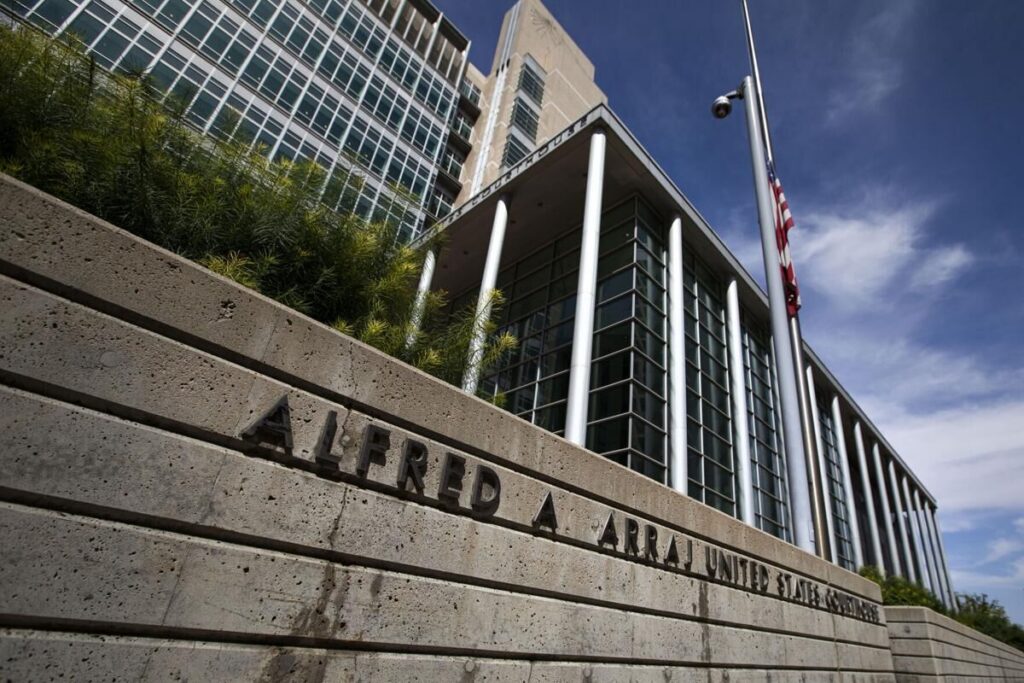
‘Understand people for who they are’: 2 federal judges talk about compassion in courtroom
Michael Karlik
michael.karlik@coloradopolitics.com
Updated 4 hours ago
Before taking the bench in 2022, U.S. District Court Judge Charlotte N. Sweeney was an employment discrimination attorney. While the cases could be emotionally charged, they were different from the criminal proceedings she is now handling. “It wasn’t necessarily affecting...

Trump lowers flags to half-staff for Dolly Parton: ‘The World loves you’
Naomi Lim
naomi-lim@coloradopolitics.com
Updated 23 hours ago
President Donald Trump is honoring the life of country music legend and philanthropist Dolly Parton by ordering federal buildings across the country to lower flags to half-staff for a week. “Very sad to report that Dolly Parton, one of the...
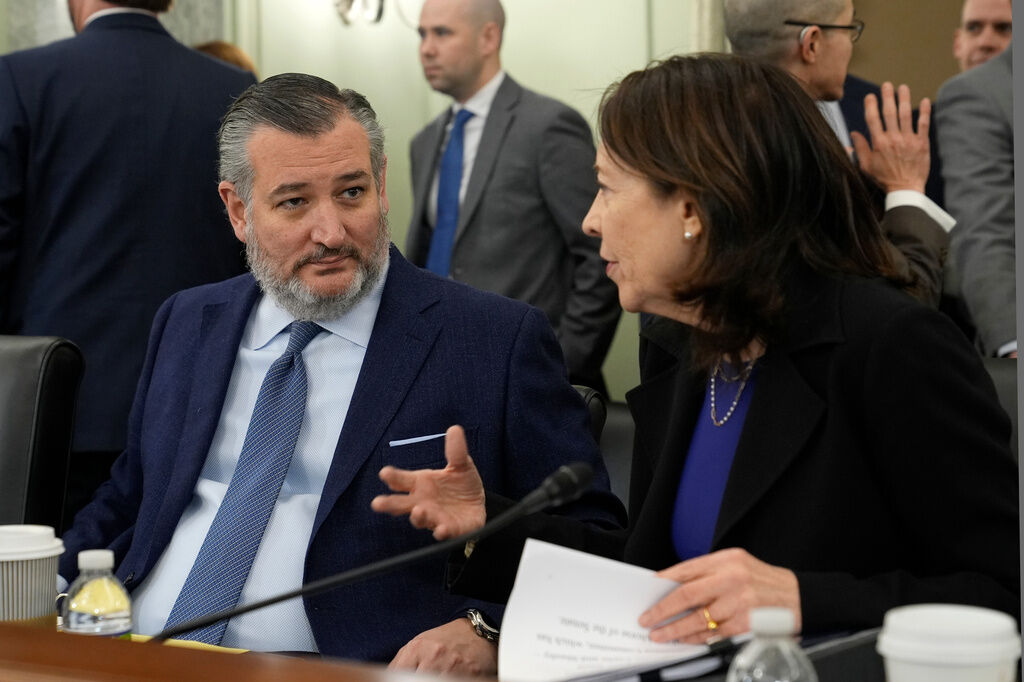
Ted Cruz suggests GOP realignment coming after Trump leaves office
Emily Hallas
emily-hallas@coloradopolitics.com
Updated 23 hours ago
Sen. Ted Cruz (R-TX) on Monday suggested the Republican Party could embrace a directional shift after President Donald Trump leaves office, a transition that promises to leave a gaping hole in the GOP. Cruz is known as a critical ally...

2 Colorado State troopers shot near Woodland Park; suspect killed
DEBBIE KELLEY
debbie-kelley@coloradopolitics.com
Updated 23 hours ago
Two Colorado State Patrol troopers were hospitalized, and a suspect is dead after a shooting during a traffic stop Tuesday. The initial incident happened at about 7:15 a.m., when a resident reported suspicious activity in the area near milepost 286...

Aurora moves forward with data center regulations
Kyla Pearce
kyla.pearce@gazette.com
Updated 23 hours ago
The Aurora City Council approved moving forward with two new regulations on data centers and directed staff to come back at the next study session with others. At a council meeting in early August, council members directed city management to...

Aurora City Council considers stricter food truck regulations
Kyla Pearce
kyla.pearce@gazette.com
Updated 23 hours ago
The Aurora City Council is considering passing laws to limit the number of food trucks on properties in the city and how and when they operate. Councilmember Angela Lawson, who sponsored the ordinance, said she understands the importance of food...
PREV
PREVIOUS

Court of Appeals affirms immunity for Colo. Springs 'make my day' killing
A man who killed a homeless intruder in his apartment building is entitled to immunity under the law that allows for deadly force in the face of perceived threats, the Colorado Court of Appeals ruled on Thursday. Colorado’s “make my day” statute permits the occupant of a dwelling to use deadly force against someone who […]

Colorado bill barring panic as a defense for attacking gay, trans people headed to Polis
On a second try this session, legislative Democrats and Republicans passed a bill that takes away “panic” as a defense against assaulting a gay or transgender person. Senate Bill 221 passed the House 63-1 Friday and now moves to Gov. Jared Polis, Colorado’s first gay governor, to become law. The bill replaced House Bill 1307, […]