

Town does not have to compensate property owners in eminent domain case, high court rules

The Colorado Supreme Court upheld a 60-year-old decision by ruling Monday that the town of Monument did not have to compensate property owners when it acquired an adjacent parcel of land through eminent domain.
“The question we must answer,” wrote Justice Melissa Hart for the majority, “is whether sound reasons exist for departing from this settled precedent. We conclude that they do not.”
In September 2016, Monument purchased a lot from private owners in a residential subdivision for the purpose of locating a water storage tank. A restrictive covenant applied to the land, known as Lot 6, requiring that it remain residential in use and that only a single-family home could be built upon it. The town believed that it needed to use its powers of eminent domain to get around the stipulation.
The following January, Monument began the legal process of acquiring the title to the property without the constraints of the covenant. In response, dozens of property owners in the subdivision joined the proceedings, claiming they were owed compensation from the decrease in their home values that would accompany a water tower on Lot 6. Their argument was that the single-family covenant benefited all properties in the subdivision, and the town effectively used eminent domain on each of their lots, necessitating reimbursement.
The El Paso County Court that considered the town’s request sided with the property owners. On appeal, the Colorado Court of Appeals considered what the state Supreme Court decided in the 64-year-old case of Smith v. Clifton Sanitation District. In that instance, landowners attempted to form restrictive covenants to prevent a sanitary disposal system as the district began eminent domain proceedings on one parcel of land. The court labeled the landowners’ “scheme” as running contrary to public policy.
Appellate Judge Jerry N. Jones wrote that the Smith decision should guide the Monument case and, based upon the determination there, “a restrictive covenant of this type isn’t a compensable property interest for eminent domain purposes.”
The Monument landowners argued to the high court that because the parties in Smith organized to thwart the sanitation district, the circumstances were irrelevant to the question of Lot 6, where restrictive covenants already existed. While the property owners indicated that the town’s action placed a burden on individual citizens so that the public could benefit, Hart countered that the level of government interference had to be “very high” to trigger fair compensation under the state constitution.
“We are sympathetic to the frustration of the intervenors, who will almost certainly see a drop in the value of their properties as a result of the Town’s decision to build a water tower on Lot 6,” she wrote. But the court’s majority concluded that the public benefit of the water tank outweighed the loss to the individual residents.
Allowing compensation for any government action that incidentally decreases the value of private property would create an “immense” burden on localities, Hart added. Voters in 2018 defeated a statewide proposal, Amendment 74, that would have codified such a right for property owners. The Colorado Municipal League echoed that fear in a brief filed to support Monument.
“With the continued development of subdivisions around the state and the popularity of private restrictive covenants, this requirement could impose the significant … burden for hundreds or thousands of homes for something as simple as widening a road to allow for better traffic flow,” the league wrote.
Justice Richard L. Gabriel dissented from the court’s decision, agreeing with what he called the majority rule in most of the United States that a restrictive covenant creates a property interest subject to compensation. The Smith decision, in Gabriel’s view, was “limited to the neighboring landowners’ ‘scheme’ and transparent attempt to ‘evade’ and ‘thwart’ (by way of hastily executed restrictive covenants) the lawful right of the district to exercise its power of eminent domain.”
He did not believe that the burden of paying property owners would be severe in this type of circumstance, as courts could require the landowners to show proof of damages in their claims.
The case is Forest View Co. v. Town of Monument.



Denver police chief on mask ban, mayor’s orders: ‘What enforcement looks like, I’m not exactly sure’
Deborah Grigsby
deborah.smith@denvergazette.com
Updated 12 hours ago
Denver bans wearing of face masks by law enforcers, use of city property to stage immigration operations As Denver takes steps to restrict federal agents conducting immigration enforcement in the Mile High City, its police chief said he is unclear...
Colorado lawmakers move to curb eminent domain powers after Xcel dispute
Marissa Ventrelli
marissa.ventrelli@coloradopolitics.com
Updated 18 hours ago
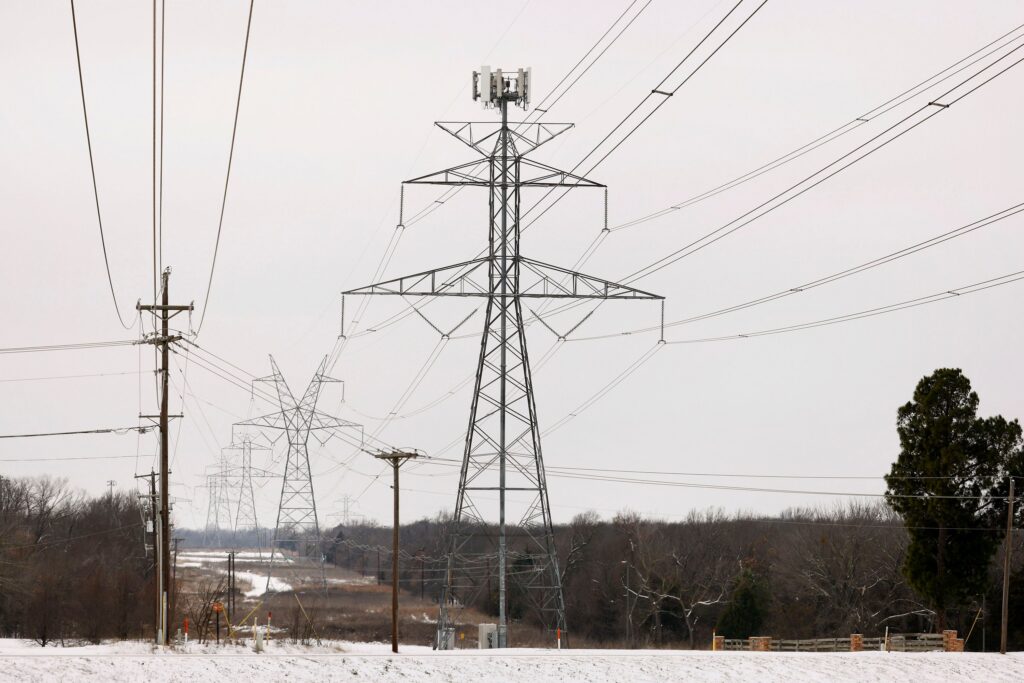
After months of backlash over Xcel Energy’s use of eminent domain in eastern Colorado, lawmakers representing Elbert and El Paso counties are advancing legislation that would bar utilities from initiating property takings until they’ve secured state approval and all required...

As parents claim some AI chatbots encourage teen suicide, Colorado legislators eye regulation
Marissa Ventrelli
marissa.ventrelli@coloradopolitics.com
Updated 15 hours ago
Juliana Peralta of Thornton was a vibrant, happy kid, said her mom, Cynthia Montoya. Then, in the final months of 2023, Cynthia began to notice a change in her 13-year-old daughter. Peralta had become more withdrawn and was on her...

Trump to attend dignified transfer of six US service members killed by Iran
Christian Datoc, Washington Examiner
christian.datoc.washington.examiner@gazetteedit.wpenginepowered.com
Updated 16 hours ago
President Donald Trump will attend the soon-to-be-held dignified transfer of six American service members killed so far by Iran in Operation Epic Fury. White House press secretary Karoline Leavitt made the announcement during her Wednesday press briefing. “These heroes represent...

Judge declines to block potential Boebert challenger from going through assembly process in Colorado’s 4th CD
Ernest Luning
ernest.luning@coloradopolitics.com
Updated 19 hours ago
Congressional candidate Eileen Laubacher, one of the Democrats seeking to challenge Republican U.S. Rep. Lauren Boebert, can participate in the party’s caucuses and assemblies pending a court hearing later this month, a Denver judge ruled Tuesday in response to a...
Sanctuary cities declined 17,864 requests to hold illegal immigrants for ICE in 2025: Noem
Anna Giaritelli Washington Examiner
anna-giaritelli-washington-examiner@coloradopolitics.com
Updated 2 hours ago
Sanctuary cities and counties declined to turn over 17,864 illegal immigrants in police custody to Immigration and Customs Enforcement in 2025, according to the Department of Homeland Security. Homeland Security Secretary Kristi Noem testified before the House Judiciary Committee on...

Federal judge dismisses malicious prosecution claim against former Denver prosecutor
Michael Karlik
michael.karlik@coloradopolitics.com
Updated 20 hours ago
A federal judge concluded on Monday that a former Denver prosecutor could not be sued for allegedly causing the arrests of two plaintiffs after they failed to appear for trial on the scheduled date, even though the trial had been...

Judicial discipline commission reports increased transparency, increased submissions
Michael Karlik
michael.karlik@coloradopolitics.com
Updated 21 hours ago
The Colorado Commission on Judicial Discipline received 473 misconduct complaints about judges in 2025, which was nearly 29% higher than in 2024 and substantially greater than any time in the past decade. However, only 31 complaints were referred to the commission...

Colorado Gov. Jared Polis ignites fierce debate after raising clemency questions in Tina Peters case
Marianne Goodland
marianne.goodland@coloradopolitics.com
Updated 14 hours ago
Gov. Jared Polis ignited a political firestorm Tuesday night after weighing in on the prison sentences of two former Colorado officials — a Democrat and a Republican — convicted of attempting to influence a public servant. The comments quickly fueled...

Colorado Supreme Court signals intervention in dispute over treatment for trans children
Michael Karlik
michael.karlik@coloradopolitics.com
Updated 2 days ago
The Colorado Supreme Court ordered Children’s Hospital Colorado on Tuesday to explain why it should not direct the organization to resume providing certain types of services to transgender children in compliance with the state’s non-discrimination law. Last month, a Denver...
PREV
PREVIOUS
Bennet cosponsors federal policing reform bill
U.S. Sen. Michael Bennet is among the Senate Democrats co-sponsoring a broad police reform proposal that would outlaw choke holds, end no-knock warrants for drug crimes and require body-worn cameras on federal officers. “We must act to dismantle centuries of systemic oppression and racism in our country – from slavery and Jim Crow, to redlining […]

Senate approves police accountability bill nearly unanimously
After more than 10 days of protests in communities large and small across Colorado, the state Senate approved by a vote of 32-1 a comprehensive set of reforms to police accountability and transparency, Senate Bill 217. “We are shouting right now,” said Sen. Kerry Donovan, D-Vail. “We have seen these masses of people gather at embassies across […]