

Senate finishes 2020-21 budget, House begins work on school finance
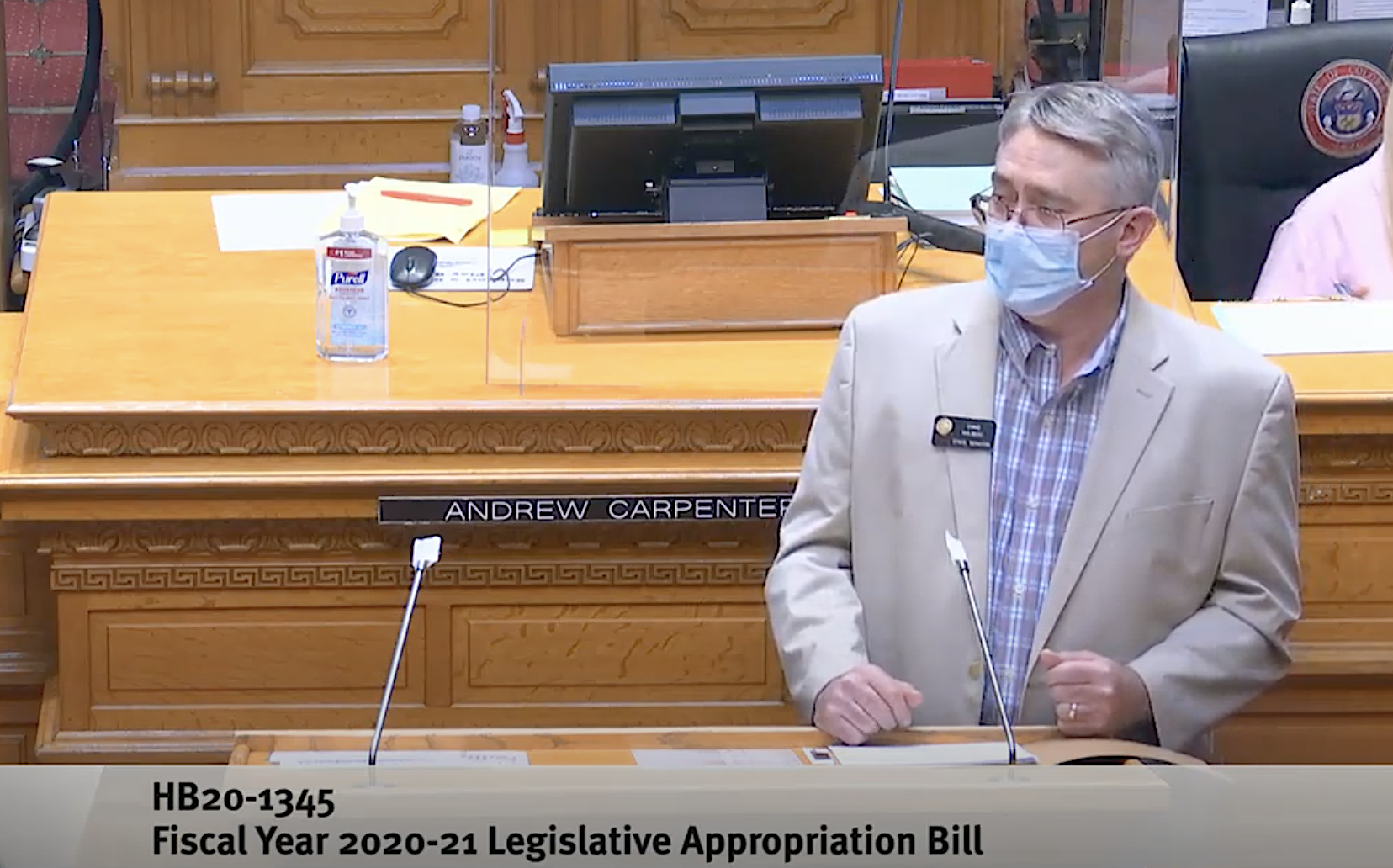
The Senate on Saturday passed the 2020-21 budget, House Bill 1360, and 29 out of the 40 “orbital” bills designed to change state law in order to balance the budget.
And with the budget out of the Senate, the House on Saturday began working on the School Finance Act, House Bill 1418.
The school finance bill comes with a heavy lift: a $612 million addition to the debt owed to K-12 schools.
During final discussion of the Long Appropriations Bill Saturday, Sen. Rachel Zenzinger, an Arvada Democrat and member of the Joint Budget Committee that crafted it, said the upcoming budget is the hardest piece of legislation she’s ever worked on.
“I don’t love this budget. It isn’t pretty. It’s difficult choices; shared sacrifice, uncomfortable reductions, persistent questions, tearful discussion, painful recommendations and you’ll find protections for the things we value most.” she said.
Zenzinger said she has received hundreds of emails, pleading with her and JBC members not to balance the budget on the backs of students, state workers, seniors or rural Colorado.
But it’s the responsibility of the Senate, the General Assembly and the JBC to produce a balanced budget, she said. “This budget has regrettable choices. We did the best we could under enormously challenging circumstances.”
The Senate debated HB 1360 on Friday after the Senate Appropriations Committee stripped off most of the amendments placed on it by the House, save for footnotes that provide directions to state agencies.
Senators had been asked during caucuses to be judicious in the number of amendments they put forward, and only 15 were proposed, the least in recent memory.
But what the appropriations committee took off, Democratic senators put right back onto the bill. That included tapping nearly $4 million in marijuana tax cash funds, which would have paid for marijuana education, to pay for substance use treatment at the University of Colorado Health Sciences Center, and adding funding for the Tony Grampsas Youth Services and CIRCLE programs within the department of Human Services.
Another amendment took $3 million in CARES Act money to pay for a domestic abuse program, also in Human Services. Senators also cut $527,000 for applications in the governor’s office of information technology and added $400,000 in general fund dollars for a diversion program in the judicial department.
That amendment, sponsored by Sen. Larry Crowder, an Alamosa Republican, did not come with an accompanying reduction anywhere else, throwing the budget out of balance.
Sen. Dominick Moreno, the JBC vice-chair and a Commerce City Democrat, called the request an important one but asked for a “no” vote. He pledged to work on it in the conference committee.
To address concerns over “orphan wells,” which lawmakers have said are likely to increase because of the downturn in oil and gas activity, senators approved moving $1.76 million from a cash fund held by the Oil and Gas Conservation Commission for that purpose.
The amendment putting CARES Act money into the domestic abuse program caused Sen. Bob Rankin, a JBC member and Carbondale Republican, to complain that Democrats had already sent out a press release announcing the allocation was a done deal. The JBC was never involved in those discussions, Rankin explained.
Sen. Rob Woodward, a Loveland Republican, said putting money toward domestic abuse will serve Coloradans well, given that people are “locked at home” under Gov. Jared Polis’ health orders. “The longer we stay under the thumb of the governor” the more domestic abuse will take place, he said.
Woodward and Rankin are the prime sponsors of a resolution that seeks to end the emergency declaration issued by Polis, although it’s unlikely to pass the Senate State, Veterans and Military Affairs Committee, where it has been assigned.
Senate Minority Leader Chris Holbert complained about the way CARES Act money is being spent by the governor without input from lawmakers.
“This branch, the legislative branch, has been treated inappropriately,” he said angrily, adding that the minority party in both the House and Senate have also been treated inappropriately. The majority gets to vote the way it wants “and we have to accept that. But what we don’t have to accept is to be silent and treated like we don’t matter” and “to come with the one option we have” – an amendment – “we’re told to pound sand.”
HB 1360 passed on a 24-9 vote Saturday, with nine Republicans voting against. However, Rankin voted for the bill, unlike the vote of Rep. Kim Ransom of Lone Tree, a Republican JBC member who voted against the measure in the House earlier in the week.
The budget bill and its orbitals now head back to the Joint Budget Committee, which will act as the conference committee to resolve differences between the House and Senate versions.
The House Education Committee Saturday got its first look at the school finance act, House Bill 1418, which is far more complicated than usual.
In addition to the per-pupil funding, which increases by $132.08 to $7,083.61, the bill also attempts to deal with a long-standing problem over unequal mill levies assessed in school districts.
The idea of mill levy equalization has been bandied about for several years, and before the pandemic hit, Democrats on the JBC had been working on a bill to set a mill levy rate of 27 mills for each school district, with some exceptions, pending voter approval. It would have required some districts to seek substantially higher mill levies.
The idea was favored by school districts that had already deBruced, but drew strong objections from the four school districts that hadn’t – including D-11 in Colorado Springs (the home of TABOR author Douglas Bruce) and Harrison in El Paso County – and who have said voters would never agree to what could be large increases in property taxes.
Speaker of the House KC Becker of Boulder is the sponsor for HB 1418, a task that usually falls to the chair of the House Education Committee. She said she took it on because “it is an unenviable bill to carry,” and needed strong political will, a nod to the mill levy equalization portion, which is likely to generate controversy.
Rep. Jim Wilson, a Salida Republican and former school district superintendent, warned that the bill could get the state sued. “We pass things every day that people sue on,” Becker replied.
HB 1418 also notes how much the budget stabilization factor, a debt to K-12 that began as the negative factor in 2011, will increase under the bill.
The JBC had sought a $724 million cut to K-12 in its budget actions, but with some other available funds, that reduced the amount of the cut to $612.1 million.
That would increase the debt from its current $572.4 million to $1.18 billion, which is higher than the previous peak, $1.15 billion, in 2011-12.
Becker said that school districts likely won’t feel much of an impact from that cut, given that the CARES Act will provide at least $510 million in one-time only dollars to K-12. But that claim is disputed by the JBC and its staff as well as school district officials, who say CARES Act money must be spent by year’s end and has limited purposes for which it can be spent, such as remote learning.
Craig Harper, a JBC staff analyst who handles education, warned that “you should not assume all those federal funds will be available next year.” He said those dollars have already been distributed to school districts for dealing with the pandemic in the 2019-20 school year. He also said districts that spend that money interchangeably with general fund could find themselves in trouble.
Rep. Julie McCluskie, a Dillon Democrat on the JBC, said they cannot assume those dollars offset the cuts.
“These are not backfill dollars,” she said.
The challenge for school districts impacted by the pandemic is to use that $510 million in appropriate ways, she said.
The mill levy part cost the bill votes in the education committee. Wilson, a school finance advocate, said he could not wrap his head around the bill and could not vote for it. “I feel terrible not being with you and worse now,” he told Becker.
The committee approved the bill on a party-line 9-4 vote and sent it on to the House Appropriations Committee.

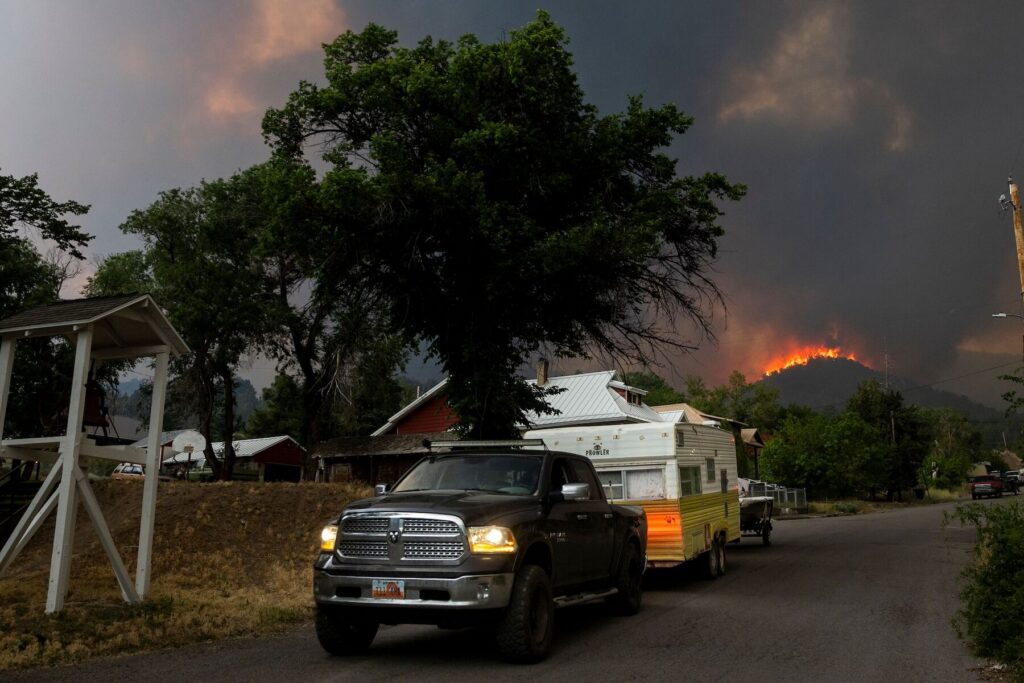
Heat, wind and drought conditions spark wildfires across US West | OUT WEST ROUNDUP
Ernest Luning
ernest.luning@coloradopolitics.com
Updated 5 hours ago
Heat, drought spark wildfires Extreme heat and dry, windy conditions fueled several wildfires in the West on June 21, including an uncontained blaze in Utah that forced the evacuation of a small town southwest of Salt Lake City. The Iron...
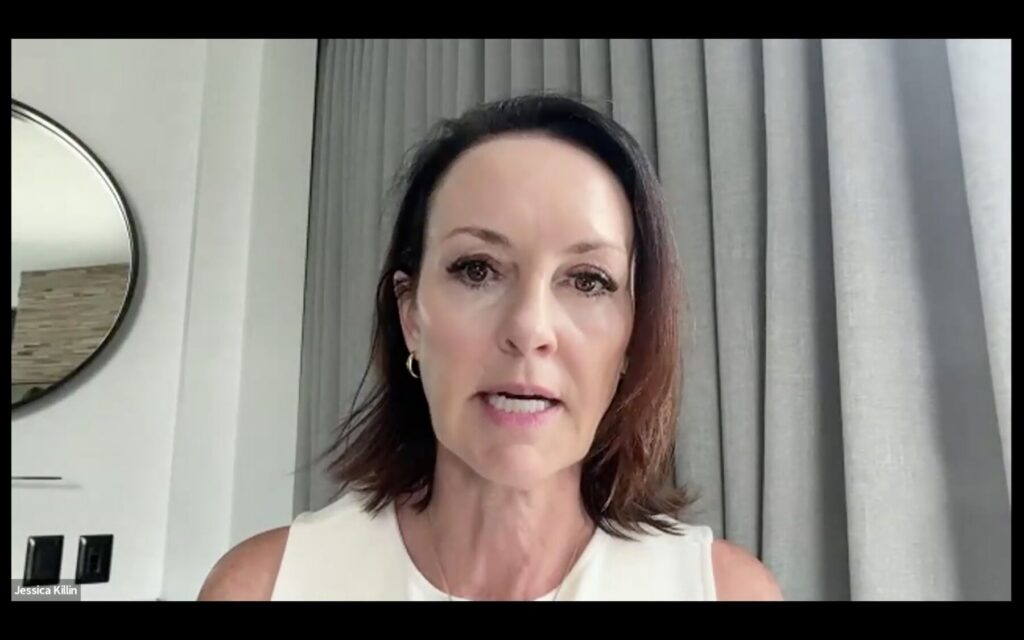
Crank challenger Jessica Killin signs on to new centrist Democratic group’s ‘Promise to America’
Ernest Luning
ernest.luning@coloradopolitics.com
Updated 2 hours ago
Jessica Killin, one of the Democrats running in Tuesday’s primary for the chance to challenge U.S. Rep. Jeff Crank in Colorado’s 5th Congressional District, joined with more than a dozen incumbent Democratic lawmakers and candidates this week signing on to...

Colorado Politics Calendar June 29-July 5
Rachael Wright, Special to Colorado Politics
rachael.wright@coloradopolitics.com
Updated 4 days ago
CoPo’s weekly political calendar will help you find political and public-policy events throughout Colorado. It includes candidate and issue campaign events, public policy meetings, court hearings, state and local party conventions, assemblies, debates, rallies, parades, speaking engagements, traveling dignitary appearances,...
Gov. Lamm’s GOP challenger gives insights into his campaign | A LOOK BACK
Rachael Wright, Special to Colorado Politics
rachael.wright@coloradopolitics.com
Updated 4 days ago
Forty-five years ago this week: “I see Gov. (Richard) Lamm is fairly popular in general,” said gubernatorial candidate and state Sen. Bill Hughes, R-Colorado Springs. “ … And he’ll be hard to beat.” Hughes was on a whirlwind campaign trail...
Giving credit to Polis where credit is due | SONDERMANN
Eric Sondermann
eric-sondermann@coloradopolitics.com
Updated 4 days ago
It is an understatement to suggest that Gov. Jared Polis has had a tough couple of months. The bloom was already off the rose and Coloradans were paying far more attention to the choice of his replacement than they were...

Bennet, Hickenlooper to vote against Trump’s 10th Circuit nominee from Colorado
Michael Karlik
michael.karlik@coloradopolitics.com
Updated 1 day ago
Colorado’s two Democratic senators will not vote to confirm President Donald Trump’s nominee to a vacancy on the Denver-based federal appeals court. Trump has selected U.S. District Court Chief Judge Daniel D. Domenico, who he appointed as a federal trial...
Who’s spending in Colorado to get your vote?
Marianne Goodland
marianne.goodland@coloradopolitics.com
Updated 1 day ago
Groups that raise unlimited amounts of money have spent about $20 million in May and June to try and influence Colorado voters’ choices in the upcoming June 30 primaries. By law, these groups cannot coordinate with the candidates they support....
U.S. government declines to oppose multiple challenges to immigration detention in Colorado
Michael Karlik
michael.karlik@coloradopolitics.com
Updated 2 days ago
Multiple federal judges in Colorado granted petitions from people challenging the lawfulness of their immigration detention this week after the government took the unusual step of declining to submit arguments in opposition. Colorado’s federal trial court is facing a flood of...

Tina Peters tells supporters to ‘stand up and fight back’ at Castle Rock event
Marissa Ventrelli
marissa.ventrelli@coloradopolitics.com
Updated 2 days ago
Tina Peters, the former Mesa County clerk recently released from prison, warned supporters that what happened to her could happen to them, too, if they did not “stand up and fight back” at an event at the Douglas County Fairgrounds....

Iran strikes cargo ship in Strait of Hormuz, endangering Trump’s peace
Christian Datoc
christian-datoc@coloradopolitics.com
Updated 2 days ago
Iran attacked a cargo ship traveling through the Strait of Hormuz on Thursday, possibly upending President Donald Trump‘s diplomatic end to the war with Iran. A U.S. official confirmed to the Washington Examiner that the Islamic Revolutionary Guard Corps “struck...
PREV
PREVIOUS

Judge grants partial ban on use of less-lethal devices during protests
A federal judge has partially granted a request for a temporary restraining order on the Denver Police Department’s use of less-lethal weapons against protesters. The order from U.S. District Judge Brooke Jackson, which was handed down Friday night, bans officers from using any kind of chemical weapons or projectiles against peaceful protesters unless an on-scene […]

SONDERMANN | Who in the GOP will take on Trump?
Eric Sondermann Where are today’s Republicans of conscience, principle and courage? If there are any leading Republicans with a semblance of spine and any inkling for putting the national interest above the parochial and partisan, history is begging you to come forward. It was not always so. Picture a scene so at odds with the […]