

Court of Appeals rules whistleblower complaint against IT office cannot be heard by state board

An employee who filed a whistleblower complaint against the state’s information technology office was not entitled to a hearing because he is not part of the civil service system, the Colorado Court of Appeals decided on Thursday.
In 2006, the General Assembly created the Governor’s Office of Information Technology, which began to assume all of the IT functions in state government. Today, the office employs over 900 people across 70 locations, with duties ranching from tech support to app development. At the time, the legislature provided that employees who were already part of the state’s civil service “shall retain all rights to the state personnel system and retirement benefits under the laws of this state” when they became employees of OIT.
The Colorado civil service system, created in 1918, protects employees and their jobs from political interference and is distinct from at-will hiring.
The office hired Jeffreyson Robert Gieck in 2015 as a senior developer. Two years later, he filed a whistleblower complaint to the State Personnel Board alleging that when he raised concerns about the project management software that OIT was using, he received a negative performance evaluation.
An administrative law judge held a hearing to determine the nature of Gieck’s work. Per the state constitution, employees whose work is solely in the governor or lieutenant governor’s offices are exempt from the civil service system. The judge found that Gieck did interact with other state agencies as a result of his duties, but because the legislature placed OIT in the governor’s office, he did not fall within the civil service system.
The board, which hears appeals from civil servants about adverse actions against them, subsequently agreed that it lacked jurisdiction to address Gieck’s complaint.
In his lawsuit challenging the decision, Gieck alleged that because the law creating OIT preserved employees’ status in the state personnel system, the protection applied to all employees of the office, not just those who transferred to it. He based his argument on the language the legislature used each time it merged duties and personnel into the office. OIT countered that the law only applied to existing employees who wound up in the office, and not new hires.
The Colorado Court of Appeals sided with OIT, with Judge Rebecca R. Freyre writing that “Because the statute requires that employees ‘retain’ rights to the state personnel system, it demonstrates that the General Assembly intended the transferring employees (here the employees in the Office of Innovation and Technology) to ‘keep in possession’ the rights that they already had, i.e., their rights under the state personnel system.”
The Office of Innovation and Technology was the predecessor to OIT.
Addressing Gieck’s claim that it was unconstitutional to deny him civil service benefits while employees who transferred could retain them, Freyre concluded that the fact that governor’s office employees were grandfathered into the civil service system was proof that the General Assembly was not trying to “legislate around” the Constitution. The court affirmed the personnel board’s decision not to take up the whistleblower complaint.
The case is Jeffreyson Robert Gieck v. Governor’s Office of Information Technology.



The Latest: US military launches strikes against Iran in response to downing of American helicopter
The Associated Press
the-associated-press@coloradopolitics.com
Updated 12 hours ago
The U.S. military announced that it has begun strikes against Iran following the crash of a U.S. Army Apache helicopter off the coast of Oman. In a statement posted to social media, U.S. Central Command said the strikes would be...

Colorado governor signs bill requiring pollution controls, cost reporting for extended coal operations
Scott Weiser
scott.weiser@gazette.com
Updated 13 hours ago
Gov. Jared Polis signed into law a bill in reaction to orders from the U.S. Department of Energy to keep older coal units online. The federal government’s instructions applied to Craig Unit 1 in Colorado, one of five coal units...

Mental Health Colorado names 2026 legislators of the year
Marissa Ventrelli
marissa.ventrelli@coloradopolitics.com
Updated 12 hours ago
Six state lawmakers have received recognition from the advocacy organization Mental Health Colorado for their work during the 2026 legislative session. “Mental Health Colorado’s work to pass laws, change practices, and build a movement depends on courageous advocates and bipartisan...
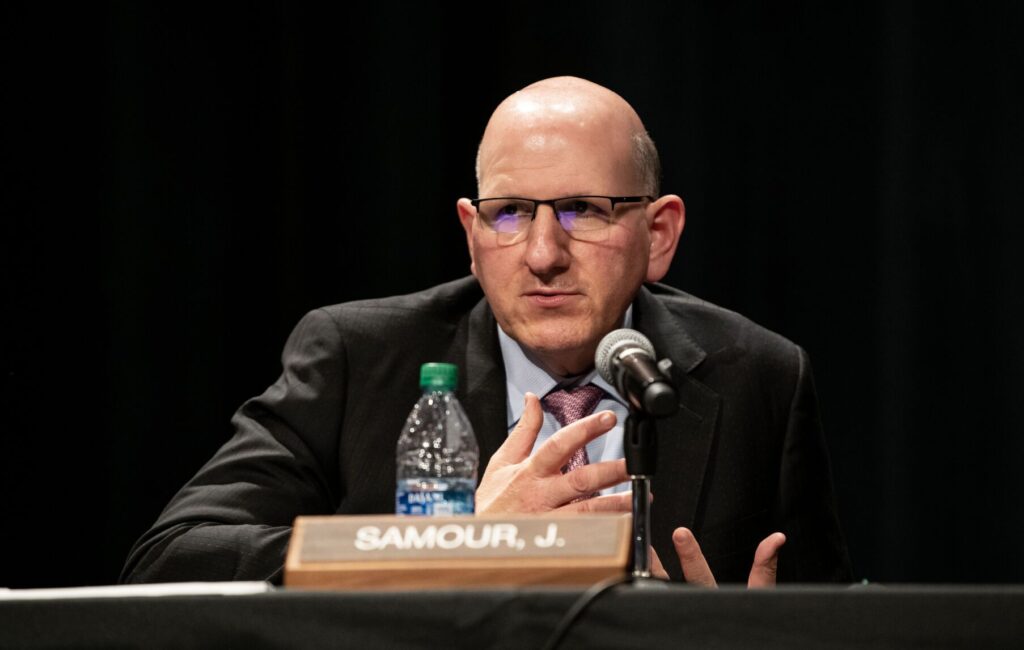
Colorado justices say judges can nearly eliminate parenting time without it being a ‘restriction’
Michael Karlik
michael.karlik@coloradopolitics.com
Updated 11 hours ago
The Colorado Supreme Court concluded last month that judges can reduce the number of days a parent spends with their child post-divorce to just above zero without it rising to the level of a “restriction” that requires more rigorous justification...

Geo Group sues Colorado over new immigration detention facility inspection law
Marissa Ventrelli
marissa.ventrelli@coloradopolitics.com
Updated 12 hours ago
The private prison company that operates the U.S. Immigration and Customs Enforcement center in Aurora has filed a lawsuit against Colorado to stop the enforcement of a new law requiring additional health and safety inspections of immigration detention facilities. The...

Trump will get another pick on influential federal appeals court
Jack Birle, Washington Examiner
jack.birle.washington.examiner@gazetteedit.wpenginepowered.com
Updated 14 hours ago
President Donald Trump will have the opportunity to nominate another judge to a key federal appeals court after one of the judges announced this week that he would take senior status. Circuit Judge Kurt Engelhardt, who was nominated to the...
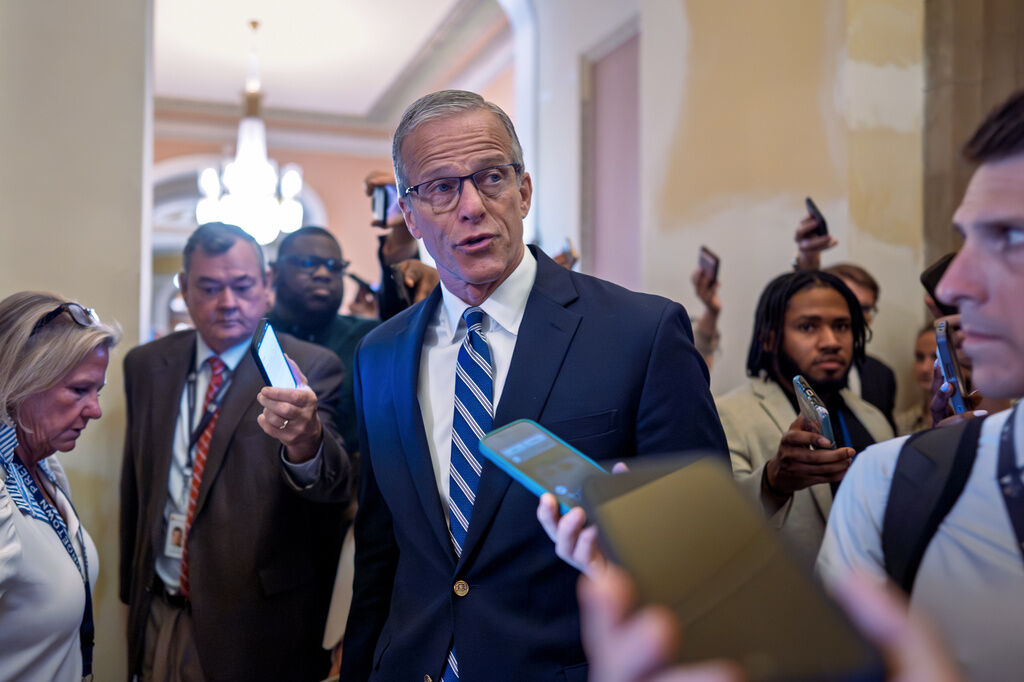
Senate GOP cool to House push for third party-line budget bill: ‘Really not an option’
Ramsey Touchberry, Washington Examiner
ramsey.touchberry.washington.examiner@gazetteedit.wpenginepowered.com
Updated 14 hours ago
Senate Republicans are unlikely to take up a third budget reconciliation bill to advance more of President Donald Trump’s agenda. The development is sure to be unwelcome news for their counterparts in the House, who have advocated a third bill....

Cigna to pull out of individual health market, affecting thousands in Colorado
Marianne Goodland
marianne.goodland@coloradopolitics.com
Updated 16 hours ago
Another firm is withdrawing from the individual health insurance market, including for Colorado, effective Jan. 1, 2027. The move by Cigna Healthcare is part of the company’s overall plan to withdraw entirely from the Affordable Care Act market. It will...

Trump vows US response after confirming Iran shot down Apache helicopter
Christian Datoc, Washington Examiner
christian.datoc.washington.examiner@gazetteedit.wpenginepowered.com
Updated 14 hours ago
President Donald Trump said Tuesday that Iran shot down an American Apache attack helicopter near the Strait of Hormuz Monday night, and that the United States would respond to the attack. Trump has fought to hold together a fragile ceasefire...

Colorado Springs may be sued for faulty intersection, state Supreme Court rules
Michael Karlik
michael.karlik@coloradopolitics.com
Updated 16 hours ago
The Colorado Supreme Court decided last month that Colorado Springs can be sued over a collision that occurred as a result of traffic lights that were functioning normally in one direction, but were inoperative in the perpendicular direction. The question...
PREV
PREVIOUS
More business groups align against Polis ballot order
A lawsuit to overturn Gov. Jared Polis’ executive order on petition-gathering to get on the November ballot will be in a Denver courtroom Friday morning, as business groups argue he overreached in his authority and violated the state constitution. Polis signed the executive order on May 15 allowing petitions to be gathered by email, instead […]

Report: Denver has 11th-highest percentage of millennial homeowners among big cities
Denver has the 11th-highest percentage of homeowners who are millennials, according to a survey of 173 U.S. cities with populations exceeding 150,000. ImproveNet, a consulting company for home contracting, reviewed demographic data from the Census Bureau’s 2018 American Community Survey. The company found that 11% of homeowners on average were millennials in the cities analyzed, […]