

Colorado Supreme Court rules on juvenile probation
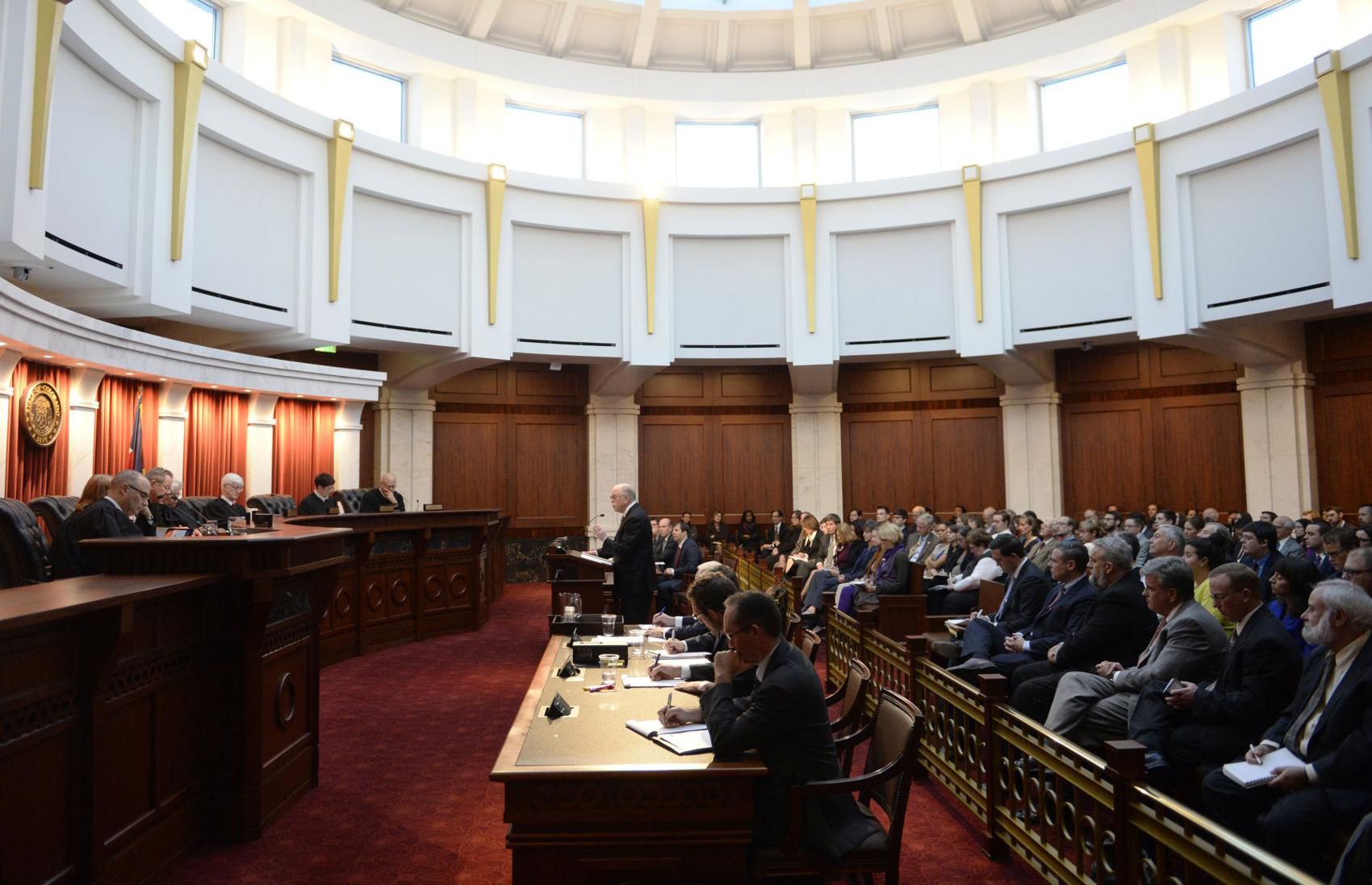
The state Supreme Court on Monday ruled that juveniles convicted of violent crimes are ineligible for probation regardless of whether their case was transferred from juvenile court or directly filed to district court.
Nevik Howard was 16 years old when his charges of first degree assault and criminal trespass from a stabbing incident transferred from juvenile court to district court. A jury convicted Howard, and he pointed out that he would receive a harsher, mandatory minimum punishment because of his transfer than he would if prosecutors had directly filed his case to the district court. That, said Howard, violated his right to equal protection under the law.
The court conceded his point, but concluded that the transfer status still made him ineligible to receive probation. Howard ultimately received a six-year sentence in youth offender services. The Colorado Court of Appeals sided against Howard, saying that his equal protection argument did not apply. He did not, the court decided, have the criminal record that a juvenile eligible for direct-file charges would need to have.
Direct file is only available to juvenile offenders who are 16 or older, have committed certain felonies or sex offenses, and had prior charges before a district court.
Justice Brian D. Boatright, writing for the Supreme Court, upheld the appeals court’s decision, but for a different reason: there is no probation eligibility for any juvenile convicted of a crime of violence, no matter how their case was filed.
“The crime of violence statute itself makes defendants subject to it ineligible for probation,” he wrote. “If the legislature intended for probation to be an option under the direct-file statute, it could have pointed to the probation sections in the Criminal Code.”
As to the mandatory minimum provision, Boatright’s ruling did not take a position because of the lower court’s decision to not apply it. Under the mandatory minimum triggered by Howard’s transfer case, he would have received between 10 and 32 years in prison. Had the charges been direct-file, the 10-year minimum would not have applied.
The Supreme Court did acknowledge the discrepancy.
“As a result, a juvenile being treated as an adult with a felony record at the time of the offense would be subject to less time in prison than a juvenile who had a clean record even though they were convicted of the exact same offenses,” wrote Boatright.
The case is Nevik Dean Howard v. The People of the State of Colorado.
Editor’s note: This article has been clarified to refer to probation only.


10th Circuit agrees Colorado Springs paramedic, officer not liable for constitutional violations in man’s death
Michael Karlik
michael.karlik@coloradopolitics.com
Updated 1 hour ago
The Denver-based federal appeals court decided on Monday that a Colorado Springs paramedic and police officer could not be held liable for constitutional violations for their roles in restraining a man in a mental health crisis, leading to his death....

Republican Victor Marx maintains slim lead over Barb Kirkmeyer in Colorado gubernatorial primary
Ernest Luning
ernest.luning@coloradopolitics.com
Updated 12 hours ago
Republican Victor Marx held on to a narrow lead Monday over state Sen. Barb Kirkmeyer as county clerks continued to count ballots in Colorado’s gubernatorial primary. Following an update posted at 3:30 p.m. by the Colorado Secretary of State’s Office,...
10th Circuit revives Colorado voter intimidation lawsuit due to judge’s error
Michael Karlik
michael.karlik@coloradopolitics.com
Updated 17 hours ago
The Denver-based federal appeals court on Monday reversed a trial judge’s finding that the leaders of an “election integrity” effort had not illegally intimidated Colorado voters through an organized door-to-door canvassing project to search for election fraud in the wake...

State Supreme Court’s final decisions of term, Trump’s judicial nominee appears before Senate | COURT CRAWL
Michael Karlik
michael.karlik@coloradopolitics.com
Updated 12 hours ago
Welcome to Court Crawl, Colorado Politics’ roundup of news from the third branch of government. The state Supreme Court has released its final opinions before its summer recess, plus the president’s nominee for the Denver-based federal appeals court fielded questions...

Colorado joins 24-state challenge to USPS rule tied to Trump election order
Marissa Ventrelli
marissa.ventrelli@coloradopolitics.com
Updated 11 hours ago
The Colorado Attorney General’s Office joined 24 state attorneys general in filing a formal complaint against what it called the U.S. Postal Service’s attempt to aid President Donald Trump’s efforts to seize control of elections and restrict mail-in voting. In...

Wyoming governor sues state board, asks court to enforce property tax cap | OUT WEST ROUNDUP
The Associated Press
the-associated-press@coloradopolitics.com
Updated 6 days ago
WYOMING Governor sues over property tax cap Gov. Mark Gordon filed a lawsuit on June 16 to force the State Board of Equalization to certify residential property tax values after the panel concluded it could not do so due to...

25 lessons and wishes to celebrate America’s 250th | SONDERMANN
By Eric Sondermann
by-eric-sondermann@coloradopolitics.com
Updated 6 days ago
The 250th celebration of America’s birth is upon us. There is undoubtedly much to salute. Despite plenty of strife and discontent at home, America remains a beacon to much of the world. The wisdom of our founders has largely withstood...

Colorado Politics Calendar July 6-12
Rachael Wright, Special to Colorado Politics
rachael.wright@coloradopolitics.com
Updated 6 days ago
CoPo’s weekly political calendar helps you find political and public policy events throughout Colorado. It includes candidate and issue campaign events, public policy meetings, court hearings, state and local party conventions, assemblies, debates, rallies, parades, speaking engagements, traveling dignitary appearances,...
Democratic Colorado rural congressman threatens to caucus with GOP to preserve PILT | A LOOK BACK
Rachael Wright, Special to Colorado Politics
rachael.wright@coloradopolitics.com
Updated 5 days ago
Forty-Five Years Ago This Week: “It’s sometimes like talking to a brick wall,” said Colorado Congressional District 3 U.S. Rep. Ray Kogovsek. Kogovsek was frustrated at the lack of support from congressional representatives from the East Coast and the Midwest...

Victor Marx holds a steady lead over Barbara Kirkmeyer in Colorado Republican governor contest
Thelma Grimes
thelma.grimes@coloradopolitics.com
Updated 4 days ago
Victor Marx overtook state Sen. Barbara Kirkmeyer in the Republican primary for governor on Wednesday evening, seizing a narrow lead after trailing her since polls closed. Kirkmeyer, one of three candidates, opened the night with a clear advantage, at one...
PREV
PREVIOUS

Weiser testifies in support of bail reform bill
Attorney General Phil Weiser testified in support on Monday of a bill that would create a pretrial release screening process in each judicial district in a way that minimizes race, ethnicity or gender bias, and lessens dependence on cash bail. “The main purpose of our bail system is both simple and limited – ensuring defendants appear […]

Denver’s fire chief Eric Tade to step down, following ribald firefighters ball controversy
Denver Fire Chief Eric Tade is stepping down amid a union-sponsored fighters ball last weekend that was rife with sexual innuendo for the second year in a row. “After deep reflection on the potential benefits to the department of a change in leadership,” Tade informed Mayor Michael Hancock of his resignation late Monday afternoon, according […]