

Denver weighs renewing community corrections contract amid ‘real consequences’ of alternative

Denver City Council is wrestling with the consequences of its sudden move last summer to sever its relationships with for-profit corrections companies and seek neighborhood-based ones instead.
As a result, CoreCivic – one of two private prison companies the council cut ties with, in part, because of its treatment of detained immigrants – could be given another year to continue running four of its halfway houses in Denver. The $5.5 million contract extension was advanced by the council’s safety committee on Wednesday and would run through June 2021 if approved by the full council later this month.
“We’re on a cliff of losing an additional 330 beds if the contract is not extended,” said Greg Mauro, the director of Denver Community Corrections. Those beds would add to 157 already lost as a result of the contract termination with the GEO Group, which ran two halfway houses in the city.
Meanwhile, Mauro said 120 people are waiting for placement because of the shortage, 75% of whom are waiting behind bars.
If the city can’t come up with a plan for replacing the 330 CoreCivic beds, Mauro told Colorado Politics in a separate interview, Denver will be at risk of losing about 70% of the $18 million the state allocates for its community corrections programs.
Community corrections serve as an option for people “halfway in” and “halfway out” of prison, meaning they’re often both a last chance for people who are on the verge of being incarcerated and are viewed as a tool for those transitioning from incarceration back to society.
Without other options – which the city currently doesn’t have in place – inmates and people leaving prison are left in limbo, and potentially posing a public safety risk. Colorado Politics recently reported that the number of violent offenders in Denver’s halfway houses has more than doubled since 2009.
Other concerns abound by not passing the contract, some city officials say. Not only will “exponentially” more people be held up in prison or jail because they have nowhere else to go, but a growing number of people have already escaped from their halfway houses out of fear.
“Folks ran because they were nervous they were going to get sent back to prison,” Councilwoman Robin Kniech said.
There’s also the issue of retaining staffing, Mauro said. Once it’s clear a company closure is imminent, “you can’t staff a program safely,” and the prison system “loses its capacity even further.”
Councilwoman Candi CdeBaca, who led the fight against Denver’s private prison companies, isn’t opposed to renewing CoreCivic’s contract for one more year, but she first wants Denver Corrections to make clear which new service providers could be eligible to replace the company.
“We’re saying to the public that we want to end this contract … but we still haven’t opened a door for new people to come in,” CdeBaca said.
She also requested CoreCivic commit in some way to keeping their facilities off the market until the city has had its say. With Denver ownership, community organizations strapped for cash could have access to more affordable spaces.
The city recently bought the GEO Group’s Tooley Hall facility for $1.3 million and is considering a similar move with one of CoreCivic’s properties.
Councilwoman Deborah Ortega, who voted against the Tooley Hall deal, raised the fact that she is “uncomfortable” acquiring any of CoreCivic’s four halfway houses without a request-for-proposal process.
“That just assumes we’re going to purchase the properties from the very people we’re saying we’re divesting from,” she said. “That is not divestment.”
Kniech said an RFP process is not in the city’s favor because it will drive up the price of the building, which the city must compete for.
“I’ve never in my years of government service seen people compete to sell a building to the city,” she told the committee. “This is absolutely the wrong approach.”
A letter of intent from CoreCivic stating it will not place its properties on the open market will suffice, Kniech said, pointing to the fact that it operated for several months with no funding while the city figured out its first contract extension, which would expire this June if no action is taken.
“I in no way, shape or form believe there’s evidence that this operator is acting in bad faith as it pertains to the City and County of Denver,” she said.
The contract is expected to have its first reading on the floor of City Council on Feb. 18.



Federal judge upholds constitutionality of Colorado campaign contribution limits
Michael Karlik
michael.karlik@coloradopolitics.com
Updated 4 hours ago
A federal judge upheld Colorado’s individual campaign contribution limits as constitutional on Thursday, finding that three Republican plaintiffs failed to prove the campaign finance framework violates their First Amendment rights. U.S. District Court Senior Judge John L. Kane recognized that...

Appeals court rejects theory that existing tax revenue undermines need for new fees
Michael Karlik
michael.karlik@coloradopolitics.com
Updated 10 hours ago
Colorado’s second-highest court rejected a plaintiff’s claim on Thursday that the tax revenue generated by an existing activity should prevent local governments from imposing new fees aimed at regulating the activity. The question stemmed from Colorado’s unique constraints on taxation...

Colorado ski resorts announce early closures amid historic snowpack lows, high temperatures
Kyla Pearce
kyla.pearce@gazette.com
Updated 10 hours ago
As Colorado’s historically low snowpack year comes to a close and spring conditions take over the mountains, the state’s major ski resorts are announcing closing dates — some of which are weeks before historic closing dates. Most of Colorado’s ski...

Marco Rubio’s star power rises at CPAC 2026
Mabinty Quarshie and Samantha-Jo Roth, Washington Examiner
mabinty.quarshie.and.samantha-jo.roth.washington.examiner@gazetteedit.wpenginepowered.com
Updated 12 hours ago
GRAPEVINE, Texas — Secretary of State Marco Rubio’s popularity is growing and could possibly boost him to one of the top two spots in the 2028 GOP presidential race, if attendees at the Conservative Political Action Conference are to be believed. ...

Boulder police investigate sexual assault, ‘drugging’ at bar near CU
Matt Kyle
matt.kyle@denvergazette.com
Updated 13 hours ago
The Boulder Police Department is investigating reports of sexual assault and “suspected drugging” involving underage girls at a bar. There may be additional victims who have not yet come forward, the department said in a news release. The bar, Scrooge...
Appeals court finds no illegal sentence when defendants forfeit time-served credit
Michael Karlik
michael.karlik@coloradopolitics.com
Updated 15 hours ago
Colorado’s second-highest court ruled on Thursday that criminal defendants may agree to relinquish the credits they earned while incarcerated pending trial, despite a state law guaranteeing that such time “shall be deducted” from a person’s sentence. Kerry Ellis Endsley pleaded...
Appeals court reinstates Garfield County arson charge
Michael Karlik
michael.karlik@coloradopolitics.com
Updated 1 day ago
Colorado’s second-highest court reinstated a Garfield County defendant’s arson charge on Thursday, concluding a trial judge improperly credited a witness’s claim that she alone was responsible for starting the fire. A sheriff’s deputy responded to a brush fire near Parachute...

Democratic US Sen. John Hickenlooper qualifies for Colorado primary by petition, will skip assembly
Ernest Luning
ernest.luning@coloradopolitics.com
Updated 1 day ago
U.S. Sen. John Hickenlooper has qualified for Colorado’s Democratic primary after the first-term incumbent submitted enough valid petition signatures to make the ballot, state officials said. Hickenlooper is facing primary challenges from state Sen. Julie Gonzales, D-Denver, and university professor...
Federal judges rebuke ex-Colorado judicial discipline director for conduct in lawsuit
Michael Karlik
michael.karlik@coloradopolitics.com
Updated 1 day ago
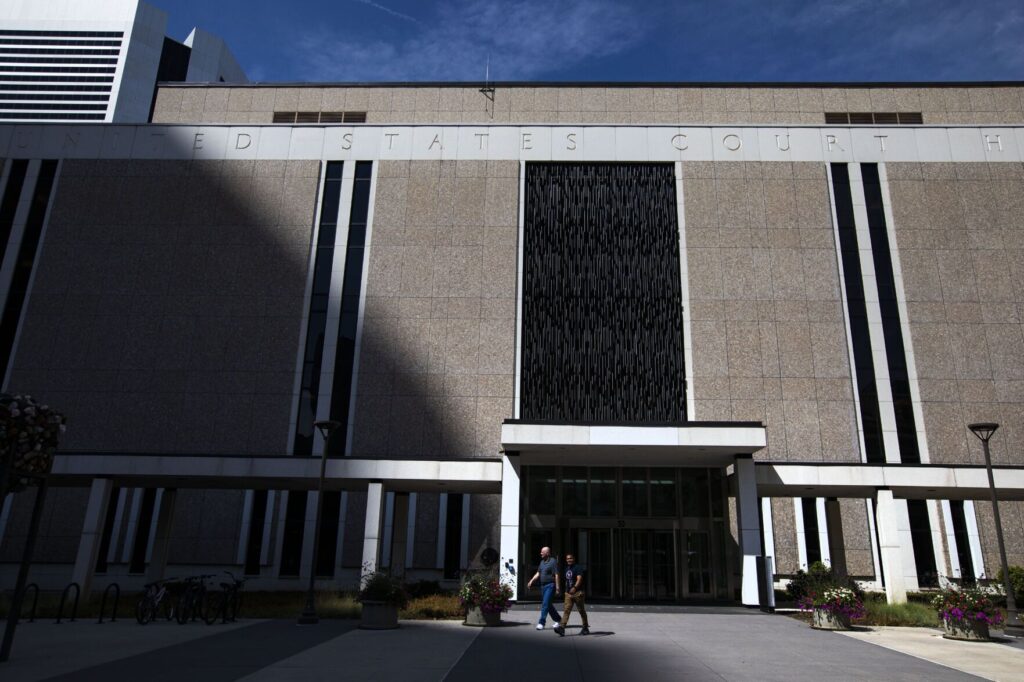
A pair of federal judges expressed a desire on Thursday to break the logjam on a lawsuit by Colorado’s former judicial discipline director against the state Supreme Court and related entities, while simultaneously showing little tolerance for the plaintiff’s scorched-earth...
‘Civility in the City’ event with two national experts to be held Monday at UCCS
DEBBIE KELLEY
debbie-kelley@coloradopolitics.com
Updated 8 hours ago
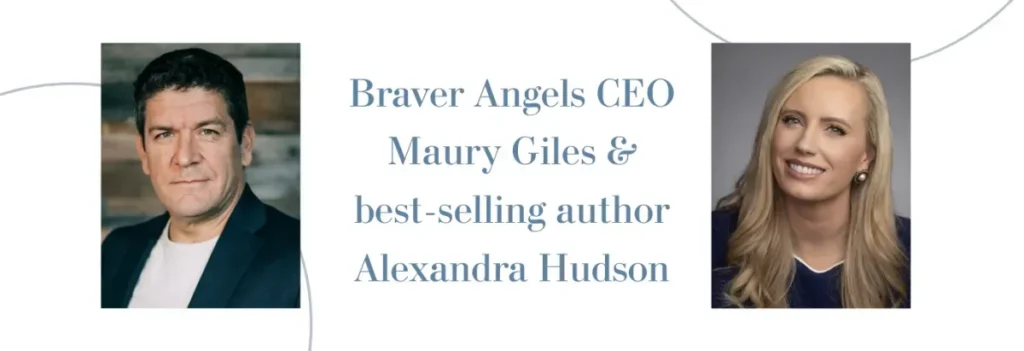
Two notables working on the front lines of civic and cultural repair will discuss “Civility in the City” on Monday at the University of Colorado’s Colorado Springs campus. The event will feature Maury Giles, CEO of Braver Angels, and Alexandra...
PREV
PREVIOUS

TRAIL MIX | Campaign cash flows in for Hick, Gardner, Crow
Money isn’t everything in top-ticket campaigns, but with scant available public polling, it’s one of the only measures of any candidates’ standing until voters start weighing in. In Colorado, candidates for the U.S. Senate and the state’s seven congressional seats are falling into distinct tiers a month before the March 7 precinct caucuses test their […]

10th Circuit vacates conviction of deceased defendant under obscure doctrine
The U.S. Court of Appeals for the Tenth Circuit on Thursday vacated the conviction of a man accused of fraud under the doctrine that criminal defendants who die during their appeal are entitled to dismissal of their case. A jury convicted Daniel Dirk Coddington on charges of wire fraud and securities fraud, and he received […]