

Snowmass Village HOA settles with federal government over housing discrimination complaint

The U.S. government has entered into a consent agreement with a homeowners association in Snowmass Village after a federal complaint alleged that the group violated the Fair Housing Act by denying an emotional support dog to a resident.
Jason Neilson, who owns one of the 27 units in Creekside Condominiums, and his partner Kirsten Swick brought home the dog on Dec. 14, 2016. Swick has depression and anxiety that are substantial impairments, according to a lawsuit filed in the U.S. District Court for Colorado. In a letter required by the homeowners association board of managers, a licensed psychologist attested that Swick’s “psychiatric disability severely limits her ability to tolerate loneliness.”
Creekside allowed one cat per unit as well as service animals, provided there was “reliable documentation of a disability and their disability related need for a service animal.”
However, between January and July 2017 the board rejected the request for the dog multiple times and fined Neilson and Swick $3,650. Board members asked for “authentic letters on authentic medical stationery,” according to the complaint. The board was not satisfied with the documentation that the two residents did submit .
“Despite the fact that Neilson and Swick complied with the board’s request that the emotional support animal not stay at Creekside, the board continued to levy fines against Neilson and Swick,” U.S. Attorney Jason R. Dunn wrote in the complaint.
Only after an attorney became involved did the board acquiesce.
In October, the board e-mailed all homeowners informing them of a $500 charge for legal expenses and blamed Neilson and Swick.
“The Board granted ‘reasonable accommodation’ for an [emotional support animal] and rescinded all fines for the homeowner, Jason Neilson. Jason has an attorney who has continued to threaten the HOA with litigation,” they wrote. “We hope this clears up any questions you might have about this special assessment.”
On Nov. 27, 2017, Neilson and Swick filed a housing discrimination complaint with the U.S. Department of Housing and Urban Development. An investigation found reasonable cause to believe that discrimination had occurred.
A 2013 guidance document from HUD explains that “An assistance animal is not a pet. It is an animal that works, provides assistance, or performs tasks for the benefit of a person with a disability, or provides emotional support that alleviates one or more identified symptoms or effects of a person’s disability.”
The department wrote that housing providers should evaluate a request for reasonable accommodation by asking, “Does the person seeking to use and live with the animal have a disability — i.e., a physical or mental impairment that substantially limits one or more major life activities?”
Landlords could deny the request if there was an undue financial burden, a threat to the health and safety of residents from the animal, or property damage by the animal.
The Creekside board of managers agreed through the consent order not to “coerce, intimidate, threaten, or interfere with any person” making use of the Fair Housing Act. Board members will also undergo at least two hours of training on the law. The U.S. government will also monitor any fair housing complaints against Creekside for three years.
Within 30 days, the board must also apologize to Neilson and Swick and pay them $50,000.
Colorado Politics Must-Reads:


Colorado Supreme Court signals intervention in dispute over treatment for trans children
Michael Karlik
michael.karlik@coloradopolitics.com
Updated 2 hours ago
The Colorado Supreme Court ordered Children’s Hospital Colorado on Tuesday to explain why it should not direct the organization to resume providing certain types of services to transgender children in compliance with the state’s non-discrimination law. Last month, a Denver...

Trump faces first domestic test on Iran conflict with Senate war powers vote
Ramsey Touchberry, Washington Examiner
ramsey.touchberry.washington.examiner@gazetteedit.wpenginepowered.com
Updated 3 hours ago
Administration officials are scrambling to sell members of Congress on President Donald Trump’s military operations in Iran ahead of bipartisan attempts to limit his war powers in the Middle East without approval from lawmakers. The Senate and House are set...
Supreme Court hands California parents win over secret gender transition policy
Jack Birle, Washington Examiner
jack.birle.washington.examiner@gazetteedit.wpenginepowered.com
Updated 3 hours ago
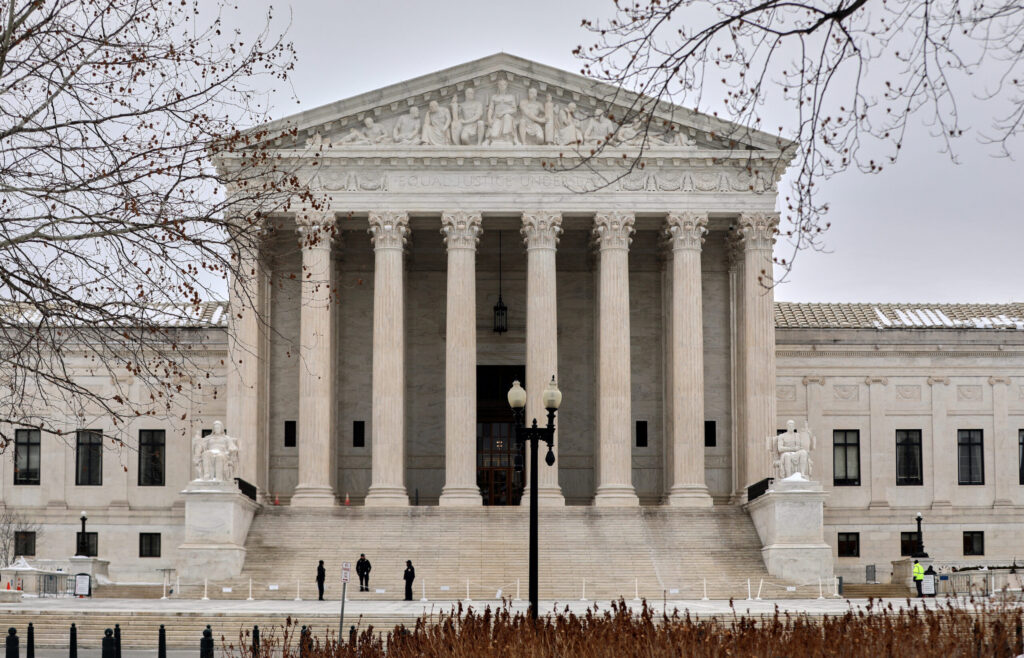
The Supreme Court gave California parents a significant victory late Monday when it kept in place a lower court’s block of the Golden State’s public school policy hiding students’ gender identity and preferred pronouns from parents. A 6-3 majority on...

Judge nixes latest policy requiring 7 days’ notice for Congress members to visit ICE facilities
Michael Kunzelman
michael.kunzelman@associatedpress.com
Updated 3 hours ago
WASHINGTON (AP) — A federal judge agreed on Monday to temporarily suspend the latest version of a Trump administration policy that requires members of Congress to provide a week’s notice before they can visit immigration detention facilities. U.S. District Judge...
Judge nixes latest policy requiring 7 days’ notice for Congress members to visit ICE facilities
Michael Kunzelman
michael.kunzelman@associatedpress.com
Updated 1 hour ago
WASHINGTON • A federal judge agreed on Monday to temporarily suspend the latest version of a Trump administration policy that requires members of Congress to provide a week’s notice before they can visit immigration detention facilities. U.S. District Judge Jia...

Gov. Polis, Upper Basin states criticize federal draft plan for managing the Colorado River
Marianne Goodland
marianne.goodland@coloradopolitics.com
Updated 4 hours ago
With no agreement among the seven Colorado River states and federal deadlines now passed, the Upper Colorado River Commission on Monday sharply criticized the U.S. Department of the Interior’s draft plan for managing the river after current guidelines expire this...

Ballot access, dual-office ban bills move swiftly through Colorado legislature
Marianne Goodland
marianne.goodland@coloradopolitics.com
Updated 5 hours ago
With an eye on the 2026 election cycle and mounting tensions with the Trump administration, Colorado lawmakers are fast-tracking a pair of election bills they say will protect the state’s mail ballot system and tighten rules for elected officials. The...
Colorado GOP chair Brita Horn loses ‘no-confidence’ vote, vows to refocus on ‘mending that divide’
Ernest Luning
ernest.luning@coloradopolitics.com
Updated 5 hours ago
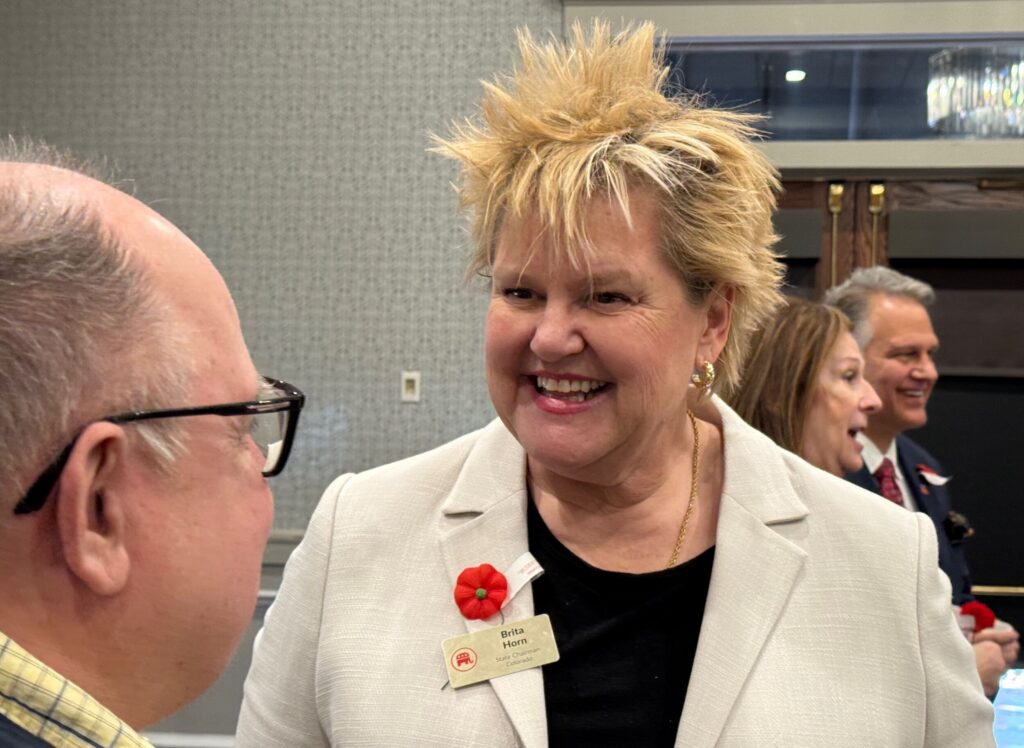
The Colorado Republican Party’s state central committee approved a resolution expressing “no confidence” in state chair Brita Horn in a landslide late Monday night near the end of an online meeting marked by rancor and confusion. Almost 80% of the...

Trump to attend White House Correspondents’ Dinner for first time as president
Washington Examiner Staff, Washington Examiner
washington.examiner.staff.washington.examiner@gazetteedit.wpenginepowered.com
Updated 7 hours ago
President Donald Trump announced on Monday that he accepted an invitation to this year’s White House Correspondents’ Dinner. It would mark the first time Trump has attended the dinner, in either term, since he’s been president. Trump announced the decision...
Primary rival sues to prevent Democrat Eileen Laubacher from going through assembly in Colorado’s 4th CD
Ernest Luning
ernest.luning@coloradopolitics.com
Updated 10 hours ago
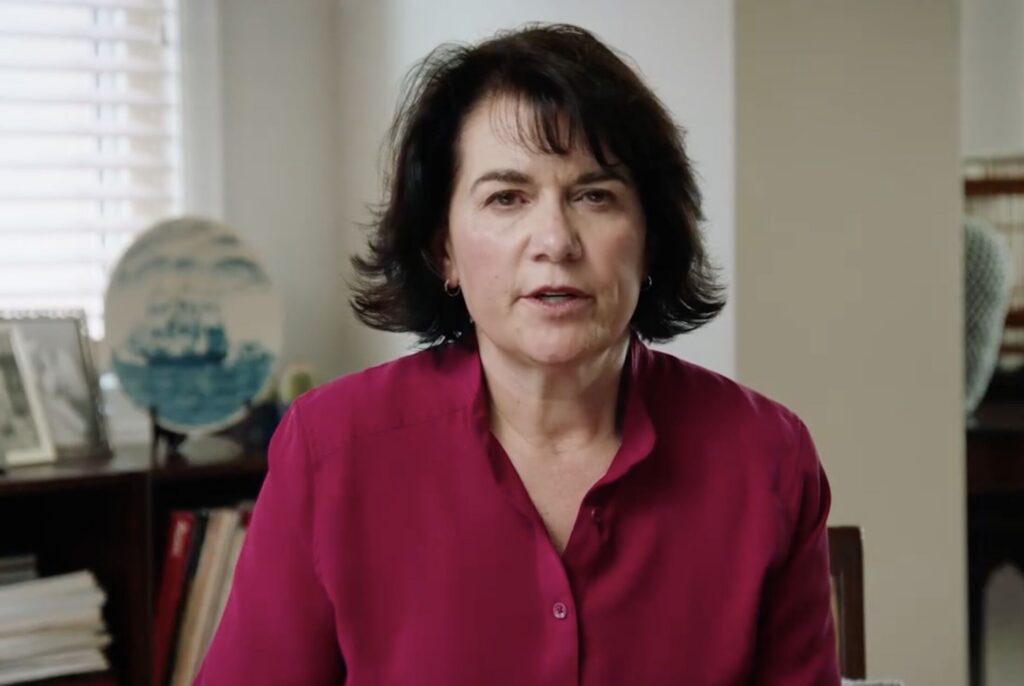
Democratic congressional candidate Trish Calvarese on Monday asked a judge to prevent one of her primary rivals, Eileen Laubacher, from participating in the caucus and assembly process to seek the nomination to challenge Republican U.S. Rep. Lauren Boebert in Colorado’s...
PREV
PREVIOUS

Polis, Gardner monitoring rural mystery drones
Gov. Jared Polis and other officials are monitoring the appearance of drones in northeastern Colorado, more than one week after The Denver Post first reported on the sightings. “I’m actively monitoring the reports of drone sightings in eastern Colorado and share the expressed concerns of law enforcement and local residents,” Polis said, according to The […]

Capitol M extra: The Colorado General Assembly celebrates a milestone
The occasionally lighter side of the state Capitol and those who wander within. Today, Capitol M salutes Darren Thornberry. Thornberry is a senior legislative editor for the Office of Legislative Legal Services , which means he edits bills, resolutions, amendments and the like. In his spare time, he’s a freelance writer and keeps his eye […]