

Bennet introduces bill to curb evictions

Renters facing eviction could receive emergency financial assistance and be less likely to face eviction proceedings under proposed legislation from U.S. Sen. Michael Bennet.
The Eviction Crisis Act, introduced on Thursday, would create a grant program for short-term financial assistance to renters under threat of eviction, assisting them in payments for utilities, past-due rent and fees. Up to one-quarter of the money could be used for case management in child welfare, health or addiction problems, and employment, with the goal of keeping people stably housed.
“An unexpected illness, a car accident, or a family emergency can lead to a family being evicted from their home and falling into a cycle of poverty that lasts for years,” said Bennet. “As a former school superintendent, I saw kids unable to stay awake in class because they didn’t have a stable place to sleep the night before.”
U.S. Sens. Rob Portman, R-Ohio, and Todd Young, R-Ind., are the co-sponsors for the bill.
A large component of the legislation involves improving data collection on evictions nationwide. In 2016, one in 50 renters experienced an eviction, and the National Low Income Housing Coalition calculated that there is a deficit of 3.7 million housing units needed for extremely low income renters — defined as being below the poverty level or earning below 30% of median income for their area.
The bill would create a database to track evictions and order a study of trends between local laws and evictions over the past 30 years.
There would also be a grant program for community courts, which provide an alternative procedure to eviction that focuses on involving social services representatives in the dispute resolution. Diverting cases to this process would correct a disparity in conventional legal proceedings between the parties. In Denver, lawyers represent 90% of landlords in eviction cases, while only 2% of tenants have attorneys.
The courts would need to be in high-eviction areas, serve people with disabilities, and accommodate those with limited English proficiency to receive the federal grants.
Colorado Politics Must-Reads:

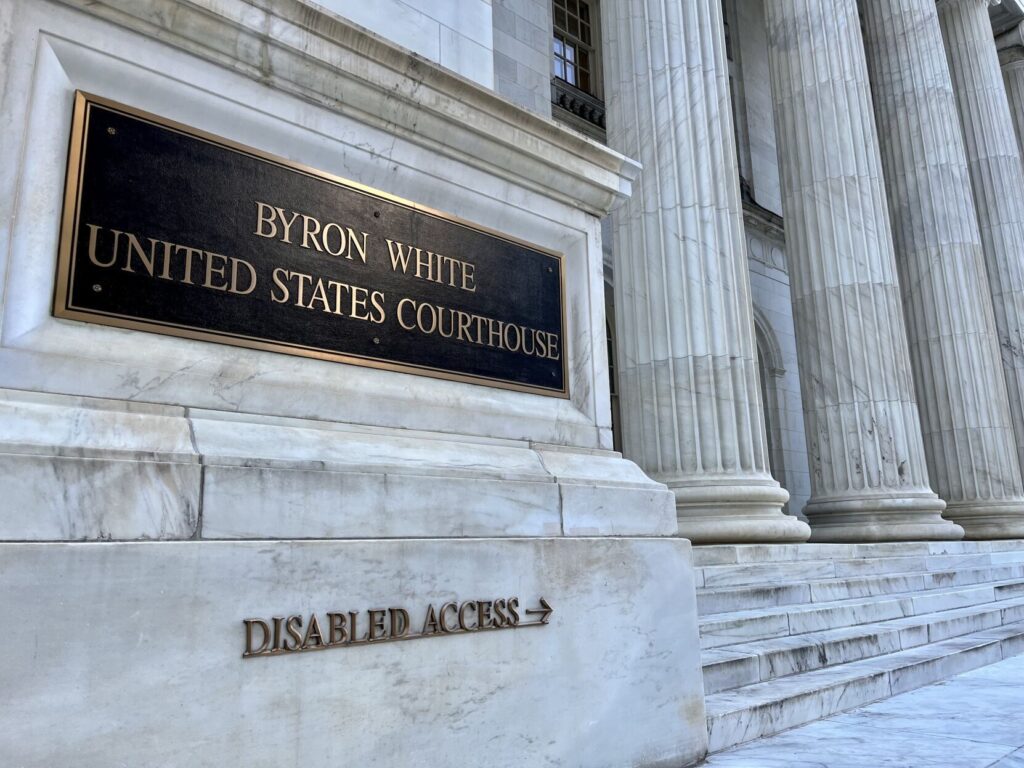
10th Circuit grants rare all-judges’ review of Colorado banking regulation
Michael Karlik
michael.karlik@coloradopolitics.com
Updated 1 hour ago
The Denver-based federal appeals court announced on Thursday that it will hold a rare all-judges review of a recent decision that permits Colorado to require out-of-state banks to abide by the state’s maximum interest rates when they lend to in-state...
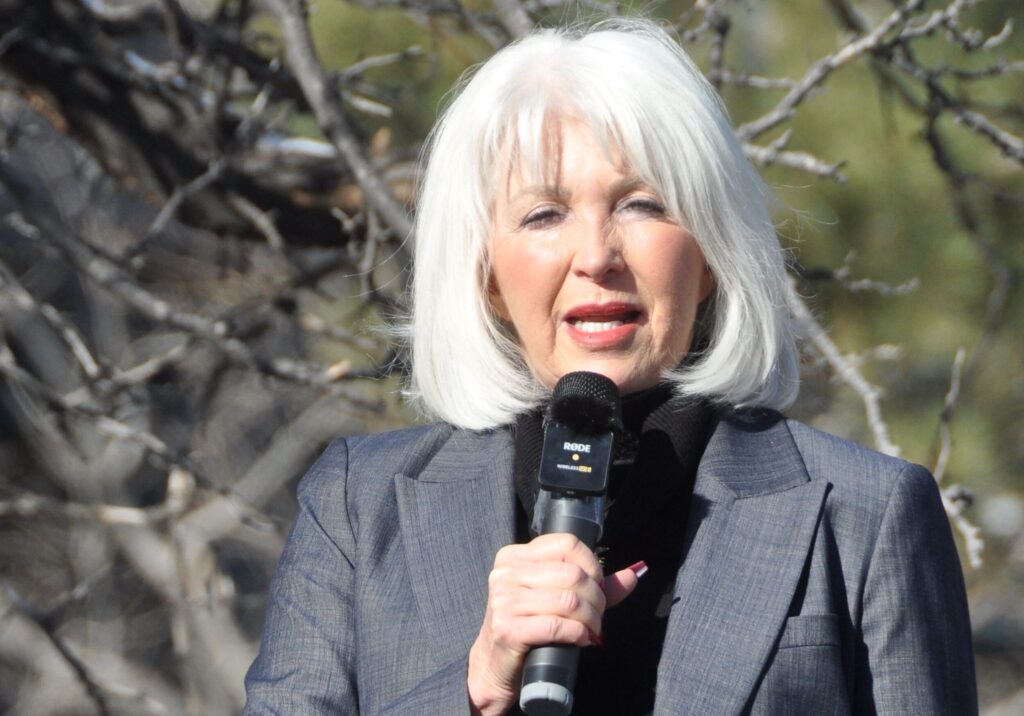
Colorado appeals court orders new sentencing for Tina Peters, upholds convictions
Michael Karlik
michael.karlik@coloradopolitics.com
Updated 3 hours ago
Colorado’s second-highest court determined on Thursday that a trial judge improperly sentenced former Mesa County clerk Tina Peters based upon her exercise of protected speech, while at the same time upholding her convictions. The three-judge Court of Appeals panel also...

Denver promised every school funding from $1B bond — but campuses later closed received far less | Analysis
Nico Brambila
nico.brambila@denvergazette.com
Updated 8 minutes ago
Denver voters overwhelmingly approved the largest bond measure in Denver Public Schools history on the promise that every school — including charter campuses — would receive something. And they did. But the nearly $1 billion bond was not distributed evenly....

National conservation area growing by 4,000-plus acres in western Colorado
Seth Boster
seth-boster@coloradopolitics.com
Updated 4 hours ago
A formerly private, sweeping swath of western Colorado is growing a public, red rock wonderland. Spanning 4,000-plus acres, Escalante Ranch has been transferred to the Bureau of Land Management and incorporated into Dominguez-Escalante National Conservation Area, The Conservation Fund recently...
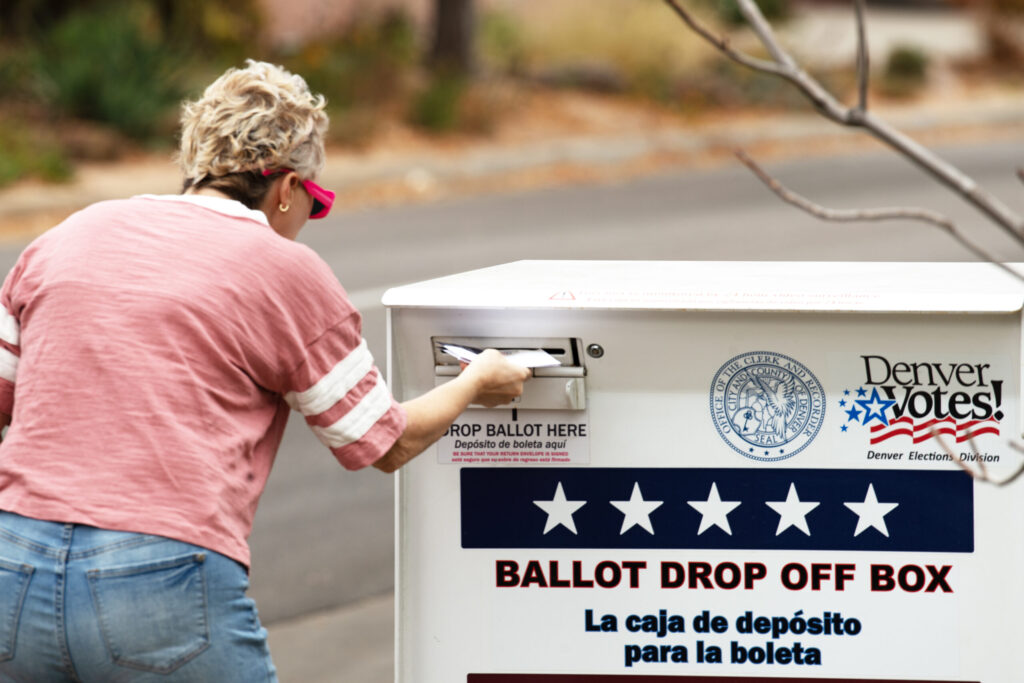
Judge rules that Colorado law makes it too hard for parties to bar unaffiliated voters from primaries
Ernest Luning
ernest.luning@coloradopolitics.com
Updated 3 hours ago
A federal judge ruled in favor of the Colorado Republican Party late Tuesday, saying that a portion of the state law that allows unaffiliated voters to cast ballots in party primaries is unconstitutional because it imposes an unrealistic burden on...
10th Circuit upholds regulator’s methodology for Tri-State exit fees
Michael Karlik
michael.karlik@coloradopolitics.com
Updated 3 hours ago
The Denver-based federal appeals court upheld a regulatory agency’s methodology for calculating the fee owed by entities seeking to withdraw from Tri-State Generation and Transmission Association last week. Tri-State is a Westminster-based cooperative that provides and transmits electricity to member...

Federal judge proposes sanctions against Mike Lindell’s lawyers for continued fake citations
Michael Karlik
michael.karlik@coloradopolitics.com
Updated 22 hours ago
A federal judge is once again pursuing sanctions against lawyers for MyPillow CEO Mike Lindell for continuing to cite to court cases that do not exist, likely based on the faulty output of artificial intelligence tools. Last year, a jury...

Front Range cities oppose Democratic proposal to permit lot‑splitting
Marianne Goodland
marianne.goodland@coloradopolitics.com
Updated 2 hours ago
Colorado lawmakers are pressing ahead with a plan to let homeowners split their lots to make room for smaller, less expensive houses — a proposal that has drawn sharp opposition from Aurora, Colorado Springs, Denver and other Front Range cities...

Susan Blanco signals views on role of appellate courts in first opinion as Colorado justice
Michael Karlik
michael.karlik@coloradopolitics.com
Updated 1 day ago
Justice Susan Blanco’s first solo opinion as a new member of the Colorado Supreme Court made clear her view of the guardrails that keep the state’s highest court tethered to the issues it is asked to decide. On Monday, the...

Hegseth features Fort Carson soldiers after returning from Middle East, gives warning on Iran war
Reuters
reuters@gazette.com
Updated 1 day ago
Defense Secretary Pete Hegseth said on Tuesday the next few days in the war against Iran would be decisive and warned Tehran that the conflict would intensify if it did not make a deal. Hegseth also highlighted his trip to the Middle...
PREV
PREVIOUS

Crow provision included in House-passed prescription drug bill
On Thursday, the U.S. House of Representatives passed by a vote of 230-192 the Elijah E. Cummings Lower Drug Costs Now Act, which seeks to reduce drug prices by empowering the federal government to negotiate directly with manufacturers. Among Colorado’s representatives, all four Democrats voted yes, while the three Republicans voted no. The bill is […]

Colorado's Neguse, Buck split along party lines as panel sends Trump impeachment articles to full House
The two Colorado congressmen who sit on the U.S. House Judiciary Committee voted along party lines Friday morning as the panel approved two articles of impeachment charging President Donald Trump with abuse of power and obstruction of Congress. U.S. Rep. Joe Neguse, D-Lafayette, voted for both articles, and U.S. Rep. Ken Buck, R-Windsor, voted against […]