

A Denver fire station’s WWII-inspired logos were banned last year, but the Denver Firefighters Museum is still selling it on T-shirts
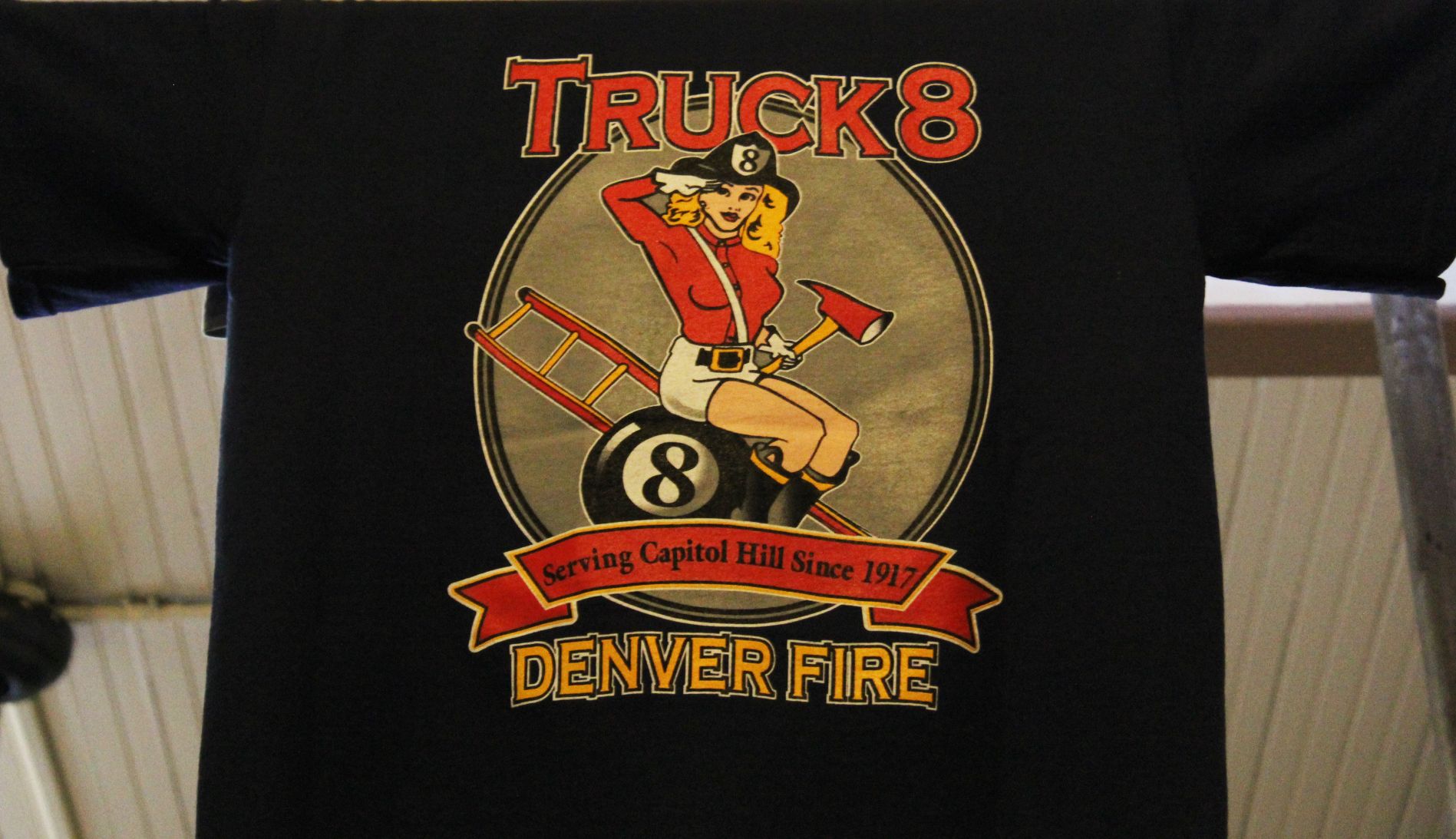
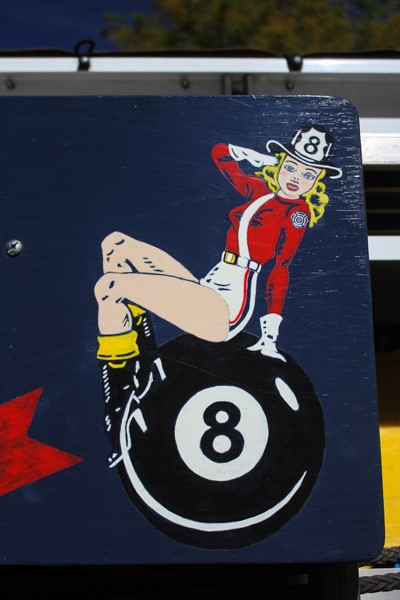
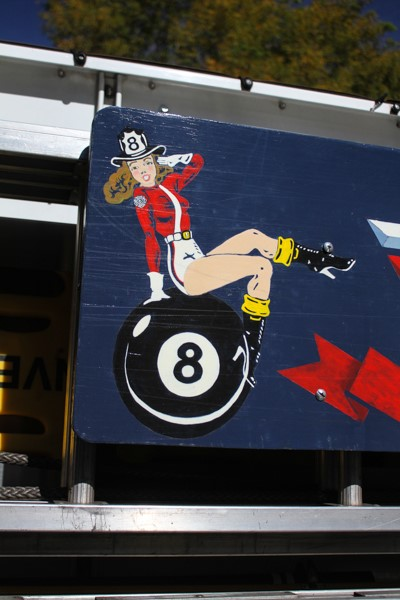
In the wake of the #MeToo movement and multiple gender discrimination lawsuits, the city’s fire department decided last year to disallow the use of Fire Station 8’s logo, featuring women in revealing clothing sitting on eight-balls.
The logo, which was inspired by World War II-era nose art commonly painted on U.S. aircraft, was used on the station’s engine and elsewhere for 15 years, between 2003 and 2018. During that time, Denver Fire’s Capt. Greg Pixley said the department never received any complaints about the artwork from the community.
But by April 2018, individuals within DFD had raised their own concerns about the logo.
“When that happened, the administration decided that it’s not worth it,” Pixley said. “We said, ‘Let’s just tell them they can’t use that anymore.'”

The decision comes two years after a $75,000 settlement with former firefighter Camilla VonBurkhardt, who filed a complaint against the department after male firefighters allegedly used porn to harass her because of her gender, and almost exactly one year prior to the resignation of a fire department lieutenant who was criminally charged for planting a hidden camera in the firehouse sleeping quarters of a female firefighter.
Just last month, former Denver fire Capt. Colley Fisher was awarded nearly $1 million for a sexual discrimination case after she was fired in 2015, allegedly in retaliation for filing two sexual discrimination complaints against her male colleagues.
Denver City Councilwoman Candi CdeBaca, whose district includes Fire Station 8, said she was shocked when the logo was first brought to her attention on Oct. 22 by a user on Twitter.
“It kind of blew my mind,” she said. “I didn’t believe it was real at first.” But after calling up DFD, she learned the logo was indeed legitimate.
“The Department of Public Safety is just notorious for this,” CdeBaca said. “Not a single one of the entities under the Department of Safety has meaningfully addressed the gender discrimination that’s going on – and it’s very concerning.”
The Denver Firefighters Museum, a private nonprofit housed downtown inside Denver’s first fire station, currently sells the logo on T-shirts within the museum, as well as through its online store.
CdeBaca finds that problematic.
“It’s a huge issue – but it doesn’t surprise me,” she said. “It’s deeply embedded in the culture of who they are.”
But Jamie Wilms, the museum’s executive director and chief curator, said she sees no issue with the logo.
“We’re all about preserving history and celebrating firefighters, and [the logo] is part of their history,” she said.
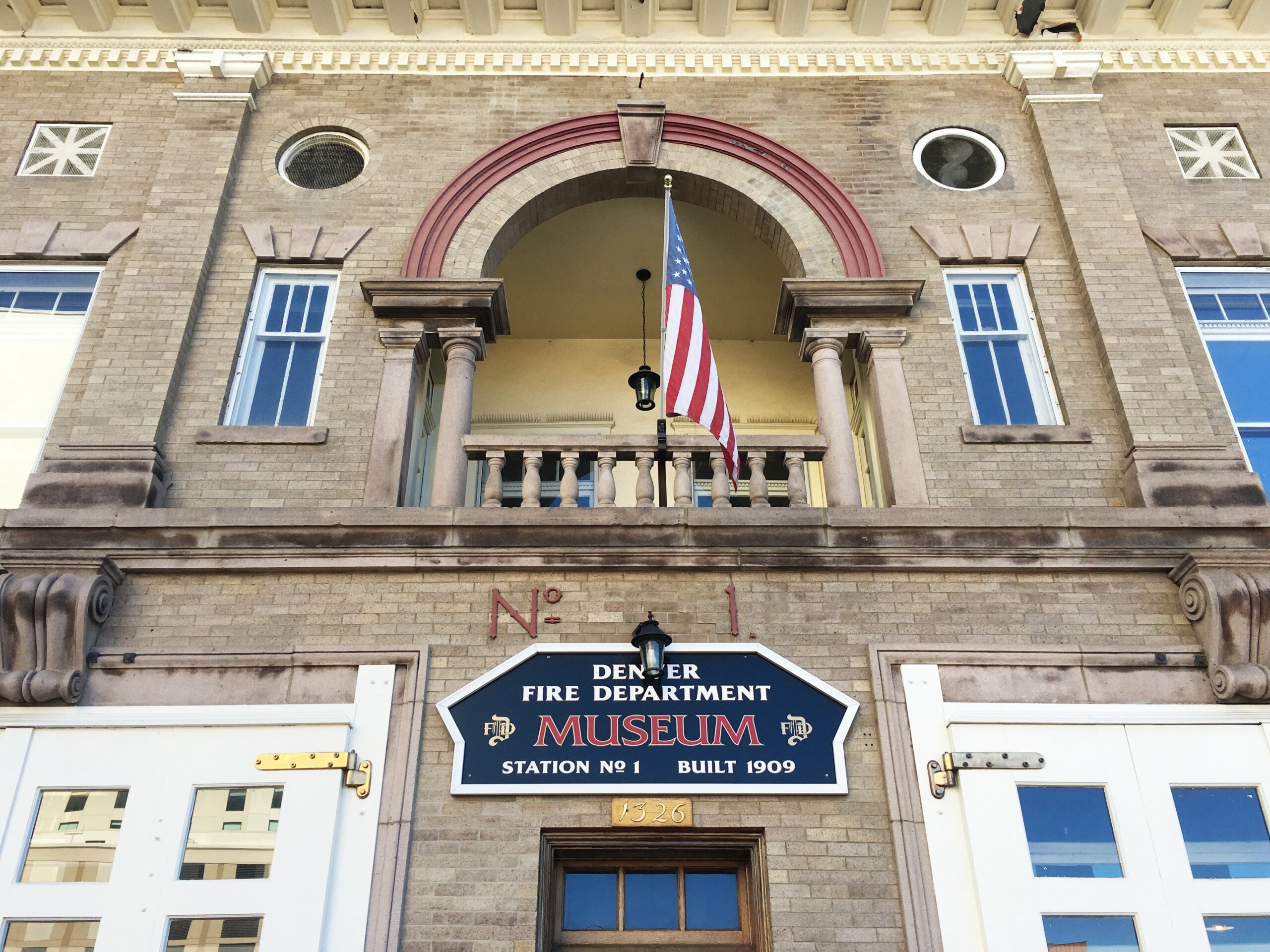
Wilms also said that, as far as she’s aware, no visitor has ever complained about the logo.
In fact, the Station 8 T-shirt is the museum’s highest-selling piece of merchandise. Between January 2017 and September 2019, 370 Station 8 logo shirts were sold, netting $7,800.
Wilms said those proceeds help the museum keep the doors open and the heat on.
“Personally, I love the 1940s – the fashion, the artwork, everything,” she said. “I think people are kind of looking for that nostalgia of the past, and she and that shirt reminds them of it.”
Pixley said the fire department may consider having a conversation with the museum to ensure they know the logo is not approved within the department and that they “respect that.” But at the end of the day, he said, it’s up to the museum and the museum only to choose whether to continue selling the shirts and displaying the logo.
Historically, nose art was a way for the military to express individuality and creativity that was often inhibited by uniformity.
It was a way “of bringing life to an inanimate object,” said Matthew Burchette, the senior curator at the Museum of Flight in Seattle, who also wrote a thesis on the subject.
Burchette said the “golden age” of nose art was in World War II and was “very much an American thing.” The British, Germans and Canadians also incorporated similar artwork, but to a much lesser extent.
At one point, even the Walt Disney Co., got involved, Burchette said.
“You could write to Walt Disney and say, ‘Hey, I’d like you to develop an insignia,’ and they would do it for you,” he said. “Then they would send it to you, and you could use it on any and everything without paying a dime.”
Burchette said when he saw the Station 8 logo, he immediately thought of World War II and found it similar in appearance to the work of Alberto Vargas, a Peruvian painter of pin-up girls.
He also pointed to the eight ball the young women are perched on, which he interpreted as a nod to the phrase “behind the eight ball,” which means being at a disadvantage.
“It’s like, ‘We’re constantly behind the eight ball because we’re always going into a fire or into a wreck. We’re always in a bad situation,'” he said.
The logo’s designer clearly “put a lot of thought into it,” Burchette said.
Pixley said the logo was designed “in light of the military to honor the military,” and the women were replicas from the front end of a U.S. aircraft in World War II.
“All they did is put a firefighter boots and a firefighter hat on the girls to make it more firefighter specific,” he said.
Fire Station 8 also borrowed the logo from the 1986 movie “Top Gun” and changed it to “Top Run,” as the station at one point had the highest tally of emergency calls in Denver, “running about 5,000 calls a year,” Pixley said.
“The logo wasn’t meant to be disrespectful,” he said. “It wasn’t meant to cause concerns.”
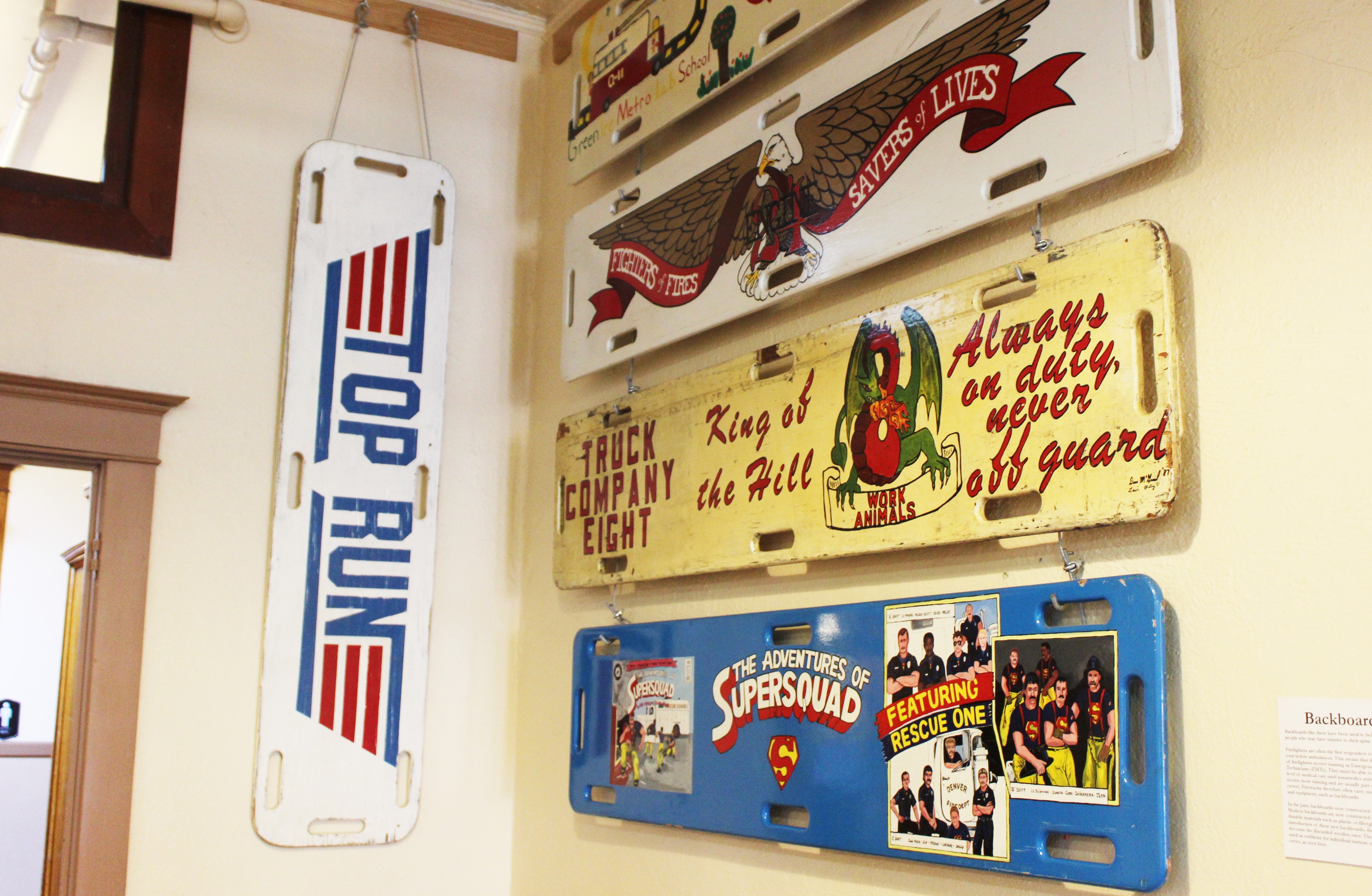
Since the station’s insignia was disallowed in 2018, the fire department has put in place a process for vetting its stations’ logos to ensure an extra degree of oversight.
“If somebody wants to create a logo like that,” Pixley said, “it first has to go through the administrative pieces and be vetted through our operations division and our HR division to ensure it is appropriate and keeping with the good nature of the fire department.”
In reviewing Denver’s 39 firehouse logos, Pixley said the department has had to address a few others with logos that could be “misconstrued.” Of those logos was Station 7’s, located on 38th Ave., which called itself the “38 Specials.” The artwork portrayed a revolver, commonly known as a “.38 special.”
The intent of the Station 7 logo was not to show violence, Pixley said, but the department determined nevertheless that the station should create something “a little more subtle that stills allows for the personality and the character” of its firehouse members.
“We’re not infallible,” Pixley said. “But we really want to do the right thing, and we work hard daily to do the right thing for ourselves and for the administration – but primarily for the citizens of Denver.”


Planned legislation outlines $300M deal for Pinnacol to break from state
Marianne Goodland
marianne.goodland@coloradopolitics.com
Updated 6 minutes ago
Colorado lawmakers are weighing a proposal that would allow Pinnacol Assurance to sever its remaining ties to the state in exchange for a $300 million payment, a long‑debated shift that supporters say could stabilize the insurer’s future and help plug...
Legislation requiring employers to grant unpaid leave to Colorado lawmakers heads to governor’s desk
Marissa Ventrelli
marissa.ventrelli@coloradopolitics.com
Updated 48 minutes ago
Colorado lawmakers are one step away from securing guaranteed unpaid leave from their day jobs during the legislative session, after the House narrowly approved a proposal Thursday aimed at making it easier for working‑class residents to serve in the General...
Redistricting fight escalates as Colorado Title Board clears competing ballot proposals
Marianne Goodland
marianne.goodland@coloradopolitics.com
Updated 18 minutes ago
Colorado’s title board on Wednesday gave final approval to multiple ballot measures related to congressional redistricting, setting up a series of proposals that could alter how the state draws its U.S. House districts for the 2028 and 2030 elections. The...

Trump downplays major reform bill and says housing is ‘all about interest rates’
Zach Halaschak, Washington Examiner
zach.halaschak.washington.examiner@gazetteedit.wpenginepowered.com
Updated 2 hours ago
President Donald Trump downplayed the bipartisan housing legislation that many congressional allies hope will ease the affordability worries plaguing voters, saying instead in an exclusive Washington Examiner interview that housing is “all about interest rates.” Trump said on a phone call Thursday morning...
Colorado lawmakers propose deep cuts to close $1.2B budget gap
Marianne Goodland
marianne.goodland@coloradopolitics.com
Updated 2 hours ago
The panel of Colorado legislators in charge of crafting next year’s budget has finalized the 2026–27 spending plan built on deep cuts and one‑time cash transfers in an attempt to close a shortfall of more than $1.2 billion. The plan...
Denver judge denies Gov. Polis request to dismiss ICE-related records case
Marianne Goodland
marianne.goodland@coloradopolitics.com
Updated 2 hours ago
A year after blocking the release of state records to federal immigration agents, a Denver judge has now denied Gov. Jared Polis’ effort to end the lawsuit at the center of the dispute. The lawsuit filed against the governor in...
10th Circuit grants rare all-judges’ review of Colorado banking regulation
Michael Karlik
michael.karlik@coloradopolitics.com
Updated 4 hours ago
The Denver-based federal appeals court announced on Thursday that it will hold a rare all-judges review of a recent decision that permits Colorado to require out-of-state banks to abide by the state’s maximum interest rates when they lend to in-state...
Colorado appeals court orders new sentencing for Tina Peters, upholds convictions
Michael Karlik
michael.karlik@coloradopolitics.com
Updated 5 hours ago
Colorado’s second-highest court determined on Thursday that a trial judge improperly sentenced former Mesa County clerk Tina Peters based upon her exercise of protected speech, while at the same time upholding her convictions. The three-judge Court of Appeals panel also...
Denver promised every school funding from $1B bond — but campuses later closed received far less | Analysis
Nico Brambila
nico.brambila@denvergazette.com
Updated 3 hours ago
Denver voters overwhelmingly approved the largest bond measure in Denver Public Schools history on the promise that every school — including charter campuses — would receive something. And they did. But the nearly $1 billion bond was not distributed evenly....

National conservation area growing by 4,000-plus acres in western Colorado
Seth Boster
seth-boster@coloradopolitics.com
Updated 7 hours ago
A formerly private, sweeping swath of western Colorado is growing a public, red rock wonderland. Spanning 4,000-plus acres, Escalante Ranch has been transferred to the Bureau of Land Management and incorporated into Dominguez-Escalante National Conservation Area, The Conservation Fund recently...
PREV
PREVIOUS

Analysis: Repealing Affordable Care Act could affect over 1M Colorado women and girls
Repeal of the Obama-era Affordable Care Act could affect a little under 1.2 million Colorado women and girls with preexisting conditions, an analysis from the Center for American Progress found. The law prohibited discriminatory coverage and pricing, and CAP’s estimate relies on a report from the U.S. Department of Health and Human Services, which noted […]

State ethics commission releases investigative report on Hickenlooper complaint
The Colorado Independent Ethics Commission on Thursday released a 31-page investigative report into two ethics complaints lodged against then-Gov. John Hickenlooper. The investigative report does not draw any conclusions nor make any recommendations as to further action, which will be decided by the commission. The commission is scheduled to meet again on Dec. 5. RELATED: […]