

BIDLACK | Conserving Colorado’s water begins at home
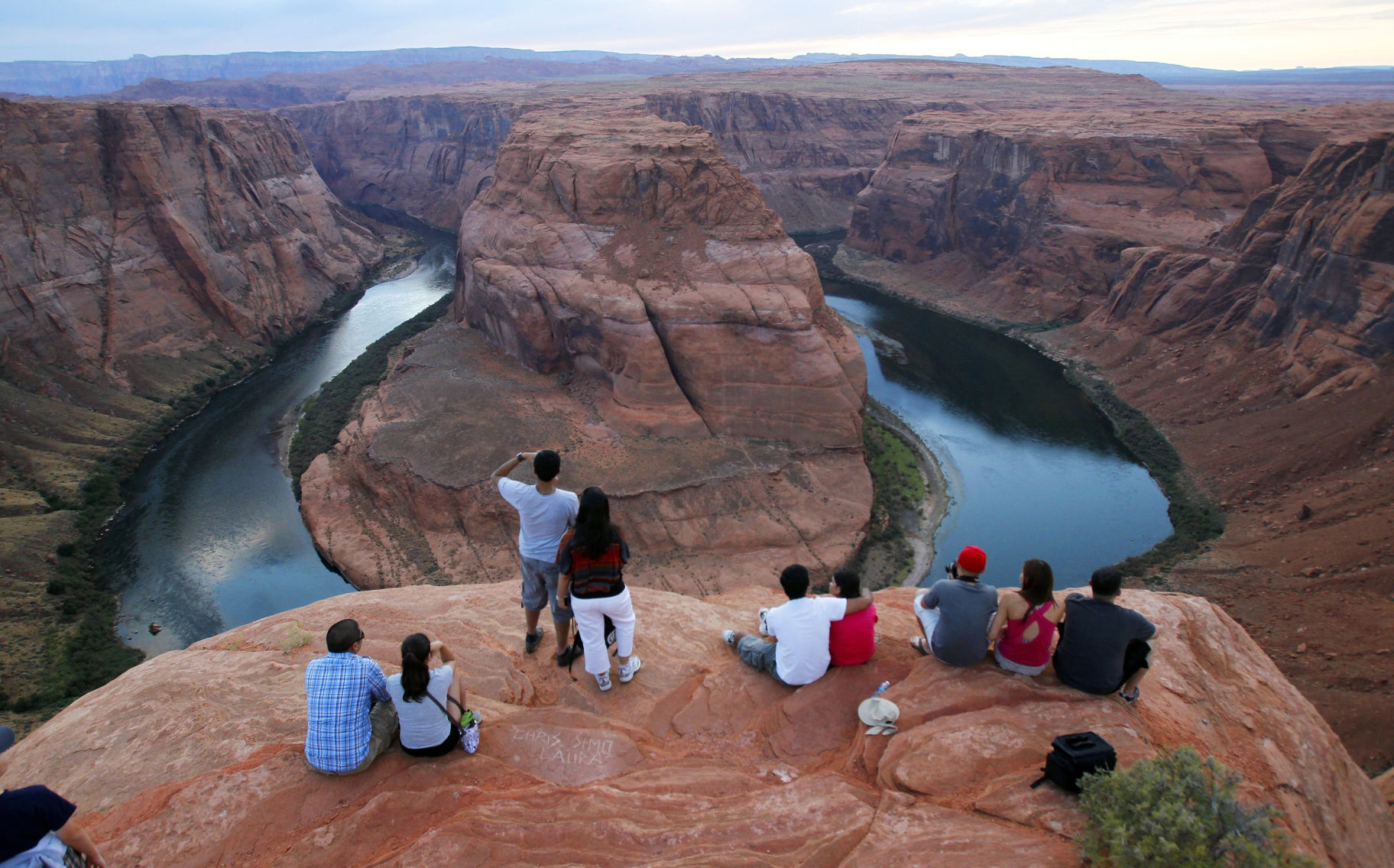

There are lots and lots of important things in the political world. It matters what our leaders do. We listen to candidates to hear what they would do. Government creeps along, always inefficiently (as the Founders intended, but that story must await a future column) and policies come and go. We hear various leaders and wannabes talking about the important issues of the day. You may have attended some political dinner somewhere, where the speaker talks about the future of Colorado, while all the time, something that was almost certainly sitting on your table as you listened turns out to be far more important than the issues being discussed.
That thing being your glass of water.
This week we saw an excellent article in Colorado Politics discussing current and more importantly, future water concerns. It’s very informative and I’ll wait here while you read it.
All set? Great. As you see from the article, the group of states that deal with water from the Colorado River form two groups. The upper-basin states, including Colorado, and the lower-basin states of Arizona, Nevada and California. As you recall from the article, we’ve been in tough spots before, most notably the early 2000s, and there is worry that such drought conditions could easily return, given the impacts of climate change on our ecosystem. A significant part of the problem tends to be that where you stand on the water issue tends to depend on where you live. The upper-basin states are not looking at any significant reduction in water availability from any negotiations now ongoing, but the lower basin states can’t say the same.
I’ve long been involved in environmental things, usually from the perspective of environmental security issues – that is, how environmental factors impact national security. Make no mistake – water is truly a national security concern for the West and for the entire United States. While water quality is always a concern, the simple scarcity of water in the American West could well be far more important in terms of the direct impacts on Coloradan’s lives. I remember when Colorado Springs really started to grow to the East, in a high prairie area. I recall wondering where the water would come from for those folks and those that followed. We are almost certainly near the tipping point on the Ogallala Aquifer, into which we’ve drilled countless times to extract well water. Water is likely to be a critically short resource in our common futures.
So, what is being done about it? The article discusses efforts to craft an up-to-date and comprehensive drought contingency plan (DCP) for the dry times as well as planning for continued growth in consumption. The picture that accompanies the article noted above is an important one, because it clearly shows, in the background of the people attending the conference, the so-called “bathtub ring” around Lake Mead near Las Vegas, Nevada, clearly showing where the water level once was, and dramatically pointing out the degree to which that water resource is being depleted.
While agriculture consumes the lion’s share of the Colorado River’s water – roughly 80% goes to irrigate 4 million acres, which in turn provides roughly 15% of the nation’s crops and 13% of its livestock production – the more traditional water use by the good people of the American West can be an area of significant savings. But such savings requires not so much of a sacrifice but rather a rethinking of our non-ag water usage.
We need to rethink, for example, what our front and back yards should be. Growing up in Michigan, we had thick, green grass in both places because, well, it rains there. We now in the more arid West must think beyond the Kentucky Blue Grass that is so lovely but so water-intensive. And it is doable!
Not more than a few miles from my home is the city of Colorado Springs xeriscaping demonstration garden, where they will help folks learn about lovely ways to fix up their property without needing much (if any) additional watering. We also need to move past old thinking on water, such as my own homeowners association, that will send you nasty notes if you let your grass get at all dried out.
So, should Colorado join in additional compacts to aid in the proper management of water and especially to formulate plans for water crisis events? Yes. But we the people must also begin taking steps to more fully acknowledge the reality of where we live. Colorado is a wonderful place to live, but it will be even better if we can get a firm handle on our water needs. Together, with proper state, regional and national planning, we can have a future that includes growth and enough water for all. It won’t be easy, and we need to get started soon. The DCP is a good next step, and I urge you to support it.
Hal Bidlack is a retired professor of political science and a retired Air Force lieutenant colonel who taught more than 17 years at the U.S. Air Force Academy in Colorado Springs.


If only walls could talk in Colorado governor’s office | Dick Wadhams
Dick Wadhams
dick-wadhams@coloradopolitics.com
Updated 10 hours ago
Restoring the office of the governor in the Colorado State Capitol to its historic glory was a worthy project despite its cost. There is probably never a good time to spend $2.4 million on such a restoration but it is...
TABOR and the Colorado Constitution’s fiscal Gordian Knot | Miller Hudson
Miller Hudson
miller-hudson@coloradopolitics.com
Updated 9 hours ago
A corporate president advised me once there are two kinds of lawyers: “those who tell you why you can’t do things and those who figure out how to get things done anyway.” He only hired the latter. Since the adoption...
Fierce, capable women at the Super Bowl of livestock shows | Rachel Gabel
Rachel Gabel
rachel-gabel@coloradopolitics.com
Updated 9 hours ago
The first cattle to show in the CoBank Arena in the Sue Anschutz-Rodgers Livestock Center at the National Western Stock Show were the Herefords of the Catch-a-Calf program. Anschutz is an ardent supporter of the program and a big fan...
Election 2026 will be a big Democratic year, unless President Trump avoids the ‘sixth-year’ jinx | Bob Loevy
Bob Loevy
bob-loevy@coloradopolitics.com
Updated 9 hours ago
Here is analysis of which political party, the Democrats or the Republicans, will win the 2026 general elections for the U.S. Senate and the U.S. House of Representatives next November. Because the U.S. president will not be on the ballot...

Colorado is shrinking — time for our elected officials to take notice | Jon Caldara
Jon Caldara
jon-caldara@coloradopolitics.com
Updated 3 days ago
By Jon Caldara Something strange is happening in Colorado — strange enough that the political class should notice. People are leaving Colorado. After years of being one of the fastest-growing states in the nation, net in-migration has stopped and may...
Capitol M: Return to Gold Dome High, 2026 edition, and a salute to old IU
Marianne Goodland
marianne.goodland@coloradopolitics.com
Updated 4 days ago
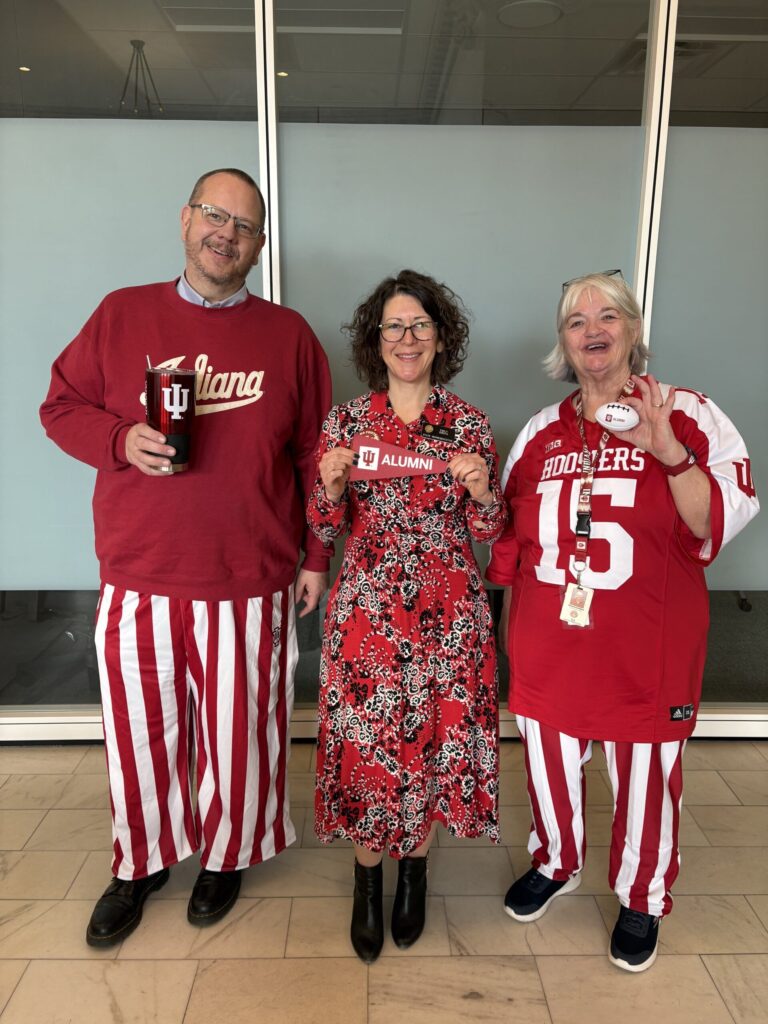
Welcome back, campers! The 2026 legislative session is upon the good citizens of Colorado, and for a few, the first Monday of the session, Jan. 19, was pretty special. There are at least four folks in the Capitol who are...

The biggest accelerant of our political tribalism | SONDERMANN
Eric Sondermann
eric-sondermann@coloradopolitics.com
Updated 5 days ago
In years past, my go-to word in describing our political condition was “polarization.” I used it endlessly and still do on occasion. But as time has moved on, and the divide has only grown in depth and toxicity, polarization no...

The ramifications of President Trump’s pursuit of Greenland | Kelly Sloan
Kelly Sloan
kelly-sloan@coloradopolitics.com
Updated 3 days ago
President Donald Trump has evidently stepped back from his threatened fantasy of invading Greenland — the sovereign territory of a U.S. ally — to which many a sigh of relief has been expressed, including by the markets. There was next...
Let’s find out who’s up to the gubernatorial task post Polis | Paula Noonan
Paula Noonan
paula-noonan@coloradopolitics.com
Updated 4 days ago
Gov. Jared Polis is bold and his policies are bolder than bold. That’s the paraphrase of his State of the State speech to open the 2026 General Assembly and start off his last year in office. His sweeping review of...

We dream, we dare, we decouple — how Colorado turns values into policy | OPINION
Colorado Politics
colorado-politics@coloradopolitics.com
Updated 4 days ago
By Kathy White Gov. Jared Polis’ final State of the State address was a clear victory lap. After eight years as governor, he used the moment to highlight accomplishments, reflect on progress and remind Coloradans what his administration has delivered....
PREV
PREVIOUS

OPINION | New marine fuel standards a boon to air quality — and Colorado's economy
Angie Binder In less than six months, the International Maritime Organization’s (IMO) standards on sulfur content in marine fuel – commonly known as “IMO 2020” – will go into effect, bringing the rest of the world more in line with clean-fuel standards that the United States has used and benefited from for years. In an […]
OPINION | Colorado's oil & gas development pays its own way — and then some
Lynn Granger In recent weeks, Coloradans have seen a number of stories in the news that imply the state is short-changing itself on the taxes collected from natural gas and oil operations. Nothing could be further from the truth. To look at revenue streams through a singular lens oversimplifies the subject, particularly when comparing Colorado’s […]