

THE PODIUM | A Denver carbon tax would do far more harm than good


Carbon taxes are unpopular, and with good reason. This lesson was relearned last month when tax supporters failed to get the 8,000 signatures necessary to put a tax on electricity and natural gas for Denver county residents on the 2019 ballot.
But when it comes to lousy policy ideas, it pays to remain vigilant. Voters in Washington state soundly rejected a carbon tax initiative in 2016. Undeterred, backers tried again in 2018. Again voters said no.
So, while Denver ratepayers should celebrate the defeat of this proposal, they cannot rest assured that it will not be resurrected.
The Denver City Council plans to move a very similar proposal, that, while excluding residential users, would tax commercial and industrial consumers. Even Mayor Michael Hancock sent a letter to council members urging them to study the impacts and unintended consequences before moving forward, as no major city in the U.S has enacted a similar tax.
Rest assured they will be back to tax residential consumers, as City Council President Jolon Clark made it clear in his intervention last week at the Finance and Governance committee. And the impacts will be equally distressing.
The City Council is expected to vote Monday on whether to put the proposal on the ballot in November. Some bad ideas, like the villain in a slasher movie franchise, just won’t die.
Carbon taxes represent a government intrusion that falls heaviest on the backs of those least able to afford it, because the explicit goal is to increase the price of the energy we use to heat our homes, power our cars and cook our food.
Energy taxes cost low-income families a much larger share of their incomes than wealthier families. According to a recent study, over 58,000 households in Denver County – nearly one-fifth of all the households in the region – are suffering under crushing energy costs, in some cases paying more than 31 percent of their annual income to cover their energy bill. And while this proposal doesn’t apply to residential consumers just yet, they’ll still have to pay the higher costs passed on to them by the industrial and commercial customers that are affected.
There’s a simpler solution. Just don’t enact the tax.
The real goal of the proposed tax is not so much to achieve meaningful environmental improvements but to raise revenue to fund a new Office of Climate Action and Resiliency. This new bureaucracy would have broad powers to impose new restrictions and regulate large swaths of the Denver economy, and would be equipped with a large budget to redistribute ratepayers’ dollars via grants, rebates and subsidies for politically favored business and constituencies.
Another group also would allegedly benefit: households enrolled in the 100% renewable energy program offered by the local utility, as they would have been exempted from the tax. The rationale is that they use power only from renewables. But that’s not possible for customers connected to the grid.
The electricity grid is like a pool, and all customers – residential and commercial – draw from it as they use power. All forms of generation – coal, gas, wind, solar or anything else – contribute to the grid.. No one is consuming exclusively renewable energy.
To the extent participation in the 100% renewable energy program matters at all, it would be yet another way for preferred constituencies to be subsidized. These mostly well-off consumers would have been the primary recipients of the grants, rebates and incentives the new office would oversee, as the high up-front cost of the investments that would have qualified for subsidies makes it nearly impossible for most people to participate.
So while consumers participating in the 100% renewable program won’t chip into the fund, they would be among the primary beneficiaries of its largesse – creating a scheme that has hard-working families subsidizing the expenses and home upgrades of people who don’t need subsidies in the first place.
The reality is that artificially raising the price of energy to fund corporate welfare is irresponsible public policy. It would simply impose more barriers to opportunity for those who already face too many, and it would empower a new bureaucracy that wouldn’t have done anything to improve the environment.
It also would help turn Denver from a vibrant metropolis into an uncompetitive laggard, where it is harder for Hispanics and everyone else to flourish. This carbon tax proposal is better off dead.
Ivette Diaz is the Denver-based spokesperson for The LIBRE Initiative®, a non-partisan, non-profit grassroots organization dedicated to empowering the U.S. Hispanic community and helping it remove barriers to opportunity so it can thrive and contribute to a more prosperous America.



Killing off the Regional Transportation District | Miller Hudson
Miller Hudson
miller-hudson@coloradopolitics.com
Updated 11 hours ago
This column is appearing the same day state Sen. Matt Ball (D) of Denver and his legislative co-sponsors unveil legislation implementing many of the recommendations advanced by last summer’s Regional Transportation District Accountability Committee. Although it isn’t readily apparent, they...

Green energy shouldn’t come at expense of Colorado farmers, ranchers feeding us | Rachel Gabel
Rachel Gabel
rachel-gabel@coloradopolitics.com
Updated 11 hours ago
In 2023, the Department of Energy released the National Interest Electric Transmission Corridors (NIETC) study identifying areas they speculate would experience transmission capacity constraints of congestion. The map identified more than 2 million acres or 24% of the state of...

Bill in state legislature would put large apartment projects in single-family neighborhoods | Cronin & Loevy
Tom Cronin Bob Loevy
tom-cronin-bob-loevy@coloradopolitics.com
Updated 10 hours ago
There is an old joke that goes something like this: “When the state legislature is in session, no person and their property are safe.” That is not a joke in the older, more traditional neighborhoods that surround the downtown regions...

Colorado hates its disabled citizens | Jon Caldara
Jon Caldara
jon-caldara@coloradopolitics.com
Updated 4 days ago
This is a selfish column. The legislature is about to hurt my disabled son. My son, Chance, has Down syndrome and a few years ago would have been labeled “retarded.” Then “developmentally delayed.” Now the hypersensitive prefer “intellectually disabled.” Whatever...
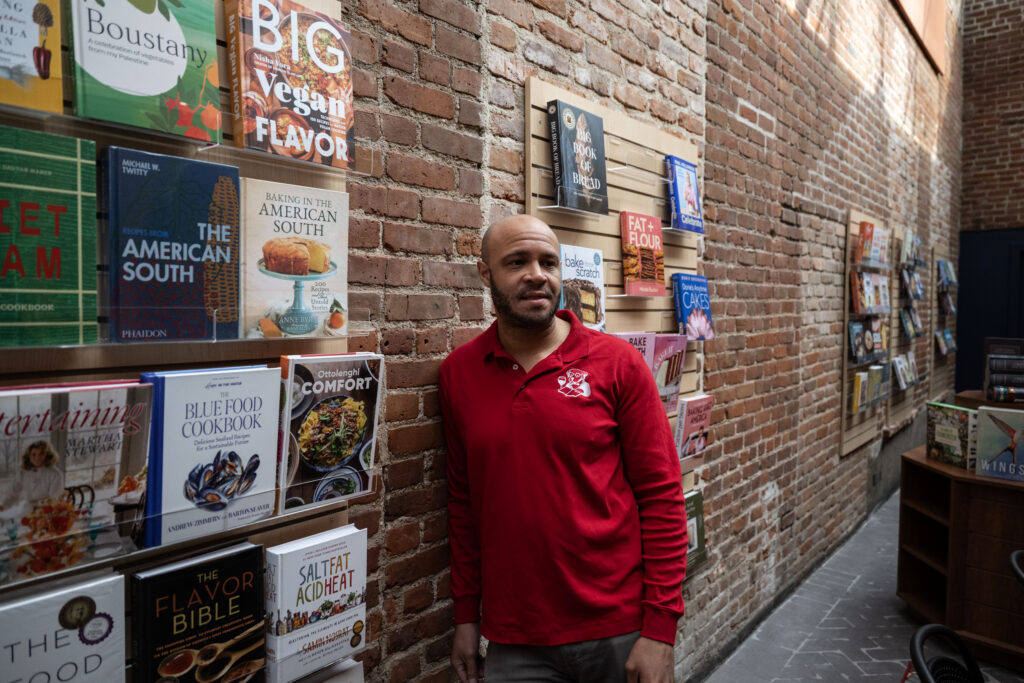
Kwame Spearman warrants plenty of criticism, not cancellation | SONDERMANN
By Eric Sondermann
by-eric-sondermann@coloradopolitics.com
Updated 4 days ago
All of us are flawed humans, some more so than others. This is the tale of Kwame Spearman who burst onto Denver’s business and political scene a handful of years back. His ride has taken a downhill trajectory. Within the...
From pause to progress — a better path on AI policy | OPINION
Colorado Politics
colorado-politics@coloradopolitics.com
Updated 4 days ago
By Brittany Morris Saunders and Loren Furman Last year, following the Special Legislative Session, we wrote in Colorado Politics that delaying Colorado’s AI Act was not a setback. It was an opportunity. We asked state leaders to pause, bring more...
Cutting Prop 123 would cost Colorado far more than it saves | OPINION
Colorado Politics
colorado-politics@coloradopolitics.com
Updated 3 days ago
By Luke Teater Colorado’s legislative budget writers are about to receive updated revenue forecasts and begin making final cuts to close a historic budget gap, and Proposition 123’s affordable housing financing tools are on the chopping block. But in their...
Colorado’s place in President Trump’s oil-and-gas approach | Paula Noonan
Paula Noonan
paula-noonan@coloradopolitics.com
Updated 4 days ago
Head spinning is the unwanted reality of today’s world. Let’s start at the international level. The wars in the Middle East since the 1950s have never ended. Though religion and ethnicity are factors, oil and gas access is always predominant...
Reject onerous ad limits in sports-betting bill | OPINION
Colorado Politics
colorado-politics@coloradopolitics.com
Updated 5 days ago
By Justin Sasso A dangerous precedent is potentially afoot in the Colorado state Senate right now, where a bill was recently introduced to restrict advertising for local broadcast media across Colorado. Senate Bill 26-131, seemingly designed to discourage Coloradans from participating...
Reform to Colorado’s grantmaking drives efficiency, strengthens state’s partnership with nonprofits | OPINION
Colorado Politics
colorado-politics@coloradopolitics.com
Updated 5 days ago
By Marco Dorado and Jack Murphy Colorado’s nonprofit sector is one of the most significant contributors to our state’s economic and civic life, with more than 14,000 registered nonprofit organizations supporting more than 262,000 jobs — approximately 10% of all...
PREV
PREVIOUS

BIDLACK | Do you have a right to never be annoyed?
Hal Bidlack I have an acquaintance who has a very wide libertarian streak in him, and one of the reasons he moved to a rural part of El Paso County was to find peace and quiet while being left alone by a government he believes intrudes on his space all too often. Ironically, this fellow […]

OPINION | Gun control must be reasonable and practical
Mike Rosen Public mass shootings are defined by the Congressional Research Service as the indiscriminate killing of four or more persons in a single incident. This isn’t a new problem, although they now seem to be alarmingly more frequent. And mass public attacks with weapons other than guns, like arson or explosives, have also happened […]