

Colorado lawmakers debate oil and gas drilling on public lands
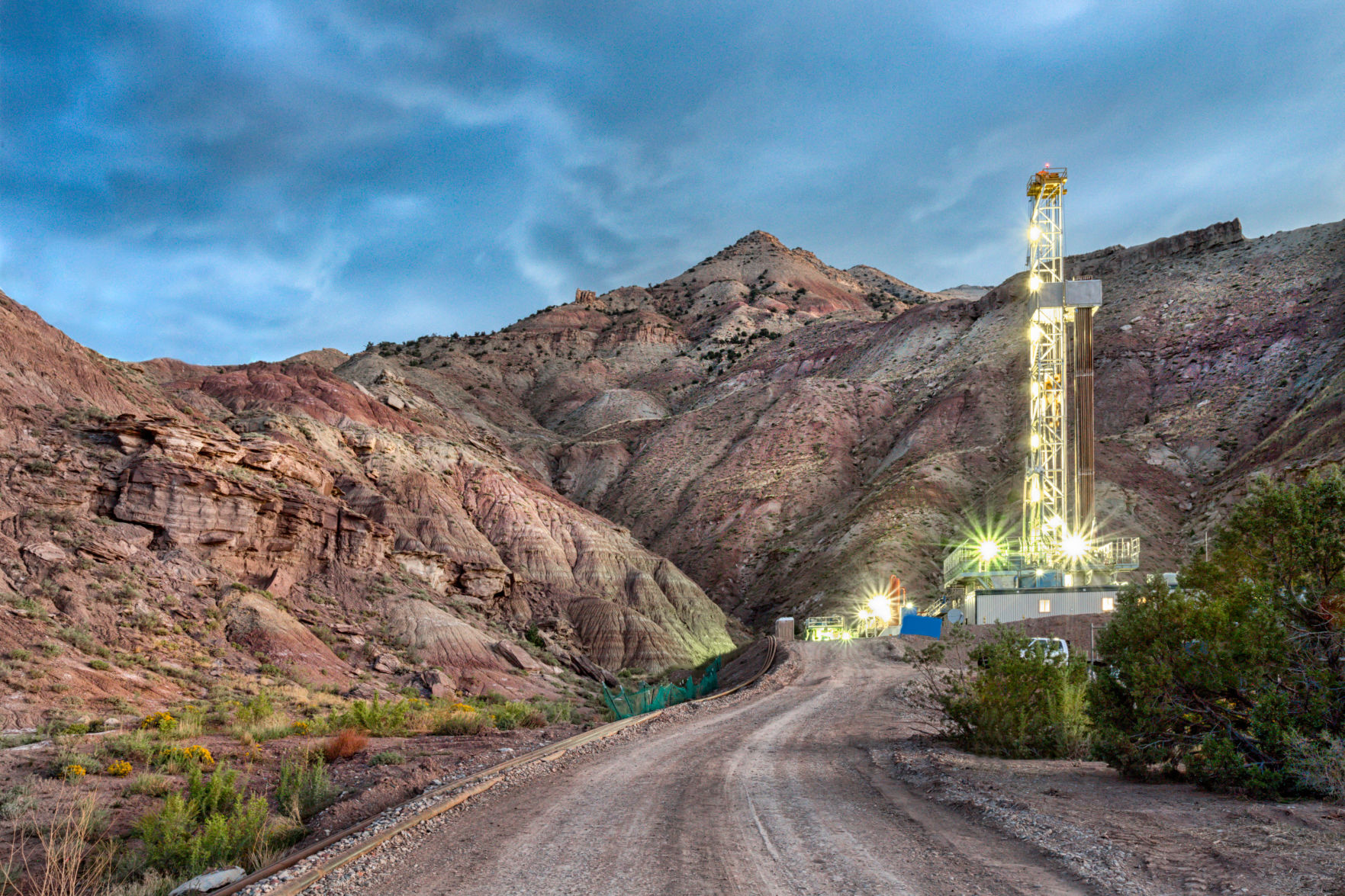
WASHINGTON ? Two Colorado members of Congress expressed sharply divided views over oil and gas drilling on public lands during a U.S. House hearing Tuesday.
U.S. Rep. Diana DeGette, Democrat of Denver, criticized the Trump administration for allowing more oil and gas drilling on federal acreage, while U.S Rep. Doug Lamborn, Republican of Colorado Springs, touted the benefits to the economy.
Lamborn, a Colorado Springs Republican, also questioned whether oil and gas drilling significantly contributes to global warming.
At the hearing, he asked an economist who studies environmental regulation what would happen if environmentally-friendly political candidates win the next election and imposed tough restrictions on oil and gas drilling on public lands.
“That’s simply going to drive up prices,” said the economist, Nicolas Loris, a policy analyst for the conservative Heritage Foundation.
The House Natural Resources subcommittee on energy and mineral resources held the hearing to determine whether current policies on oil and gas drilling should be revised to avoid greenhouse gas emissions that contribute to climate change.
The drilling produces large amounts of methane, which some climatologists say is the most potent and dangerous greenhouse gas.
Loris said negative consequences from tighter restrictions could have “adverse effects throughout the economy.”
“Would it do much for the environment?” Lamborn asked.
Loris answered, “It would not make any meaningful impact on climate change.”
He said estimates on how oil and gas drilling on public lands might add to global warming are unreliable and “really all over the map.”
Some Republicans on the House Natural Resources Committee cautioned that limiting U.S. oil and gas drilling would make the United States more dependent on foreign energy sources.
They also said it would not benefit the climate because oil and gas drilling in foreign countries typically lacks the strict environmental controls found in the United States.
However, DeGette accused the Trump administration of largely ignoring harmful effects of its environmental policies.
“Would you say the Trump administration is working to expand the extraction of oil and gas from public lands and offshore?” DeGette asked an environmental advocacy group official.
“Yes,” said David Hayes, director of the State Energy and Environmental Impact Center.
“What do you think the Department of the Interior should do in the meantime to address climate change before we do some kind of legislation?” DeGette asked Hayes, who also was a deputy secretary of the Interior Department in the Obama administration.
He recommended more policies to reach “net zero” emissions, meaning greenhouses gases would be limited to the degree that they no longer contribute to climate change. One of his suggestions was halting oil and gas drilling in environmentally sensitive areas.
DeGette discussed a bill she introduced this year that would set aside an additional 744,000 acres of public lands in central and western Colorado as protected wilderness. They would not be eligible for commercial development.
Wilderness land, particularly planting of trees, was discussed during the hearing as a natural solution to greenhouse gas emissions. The photosynthesis performed by tree leaves removes carbon dioxide from the atmosphere and replaces it with clean air.
“Could we get to the goals we need to solely by the natural solutions?” DeGette asked.
Jamie Williams, president of the environmental group the Wilderness Society, said natural solutions alone were inadequate to eliminate climate change.

Can deliberation save democracy? | Vince Bzdek
Vince Bzdek
vince.bzdek@gazette.com
Updated 4 hours ago
In September 2019, 523 Americans traveled to Dallas for an experiment called “America in One Room.” The gathering was designed to test a theory: Could representative citizens deliberate productively even in an era of intense polarization? The event took place...

Colorado health equity funder’s redirection debated
DEBBIE KELLEY
debbie-kelley@coloradopolitics.com
Updated 1 day ago
A redirection in grantmaking that began two years ago for The Colorado Trust, a 40-year-old Denver-headquartered funder, has led some employees to now voice concerns, which has reportedly put their jobs in jeopardy. The vice president of communications for the...
Redistricting scheme would give Colorado Democrats seven House members, split El Paso County | Bob Loevy
Bob Loevy
bob-loevy@coloradopolitics.com
Updated 6 minutes ago
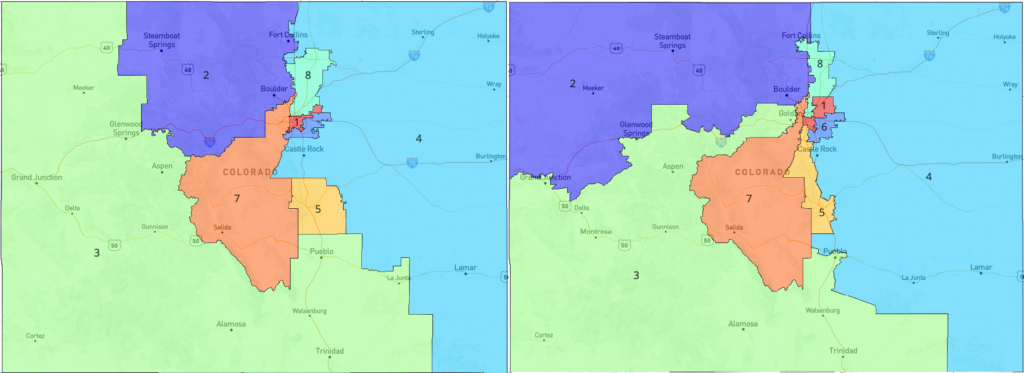
A proposed redistricting plan, which could give Colorado seven Democratic members of the U.S. House of Representatives and only one Republican, would split El Paso County into two parts and thereby weaken the county’s influence in Congress. El Paso County,...

Is Trump a builder or just a latter-day headhunter? | SONDERMANN
By Eric Sondermann
by-eric-sondermann@coloradopolitics.com
Updated 2 days ago
It was well under 100 hours after President Donald Trump’s overly long, overly theatrical State of the Union speech that he unleashed American bombers across Iran. As I write, it is now less than 100 hours since those bombers started...

LDS activist excommunicated from the church speaks out on women’s rights across Colorado | A LOOK BACK
Rachael Wright, Special to Colorado Politics
rachael.wright@coloradopolitics.com
Updated 3 days ago
Forty-Five Years Ago This Week: “Women must demand — now and if necessary at the peril of our lives — that we be granted civil rights in the same way rich white men in this country were granted them: constitutional...

Democrats eye new taxes on alcohol, marijuana to fund Colorado mental health spending
Marissa Ventrelli
marissa.ventrelli@coloradopolitics.com
Updated 2 days ago
Facing a more than $1 billion budget shortfall, Colorado lawmakers are searching for ways to fund mental health services in a state that consistently ranks among the worst in the nation for mental health outcomes. Several proposals this session aim...

Hopes and fears: Colorado Iranians speak out on widening war
Mark Samuelson Special to The Denver Gazette
mark.samuelson@denvergazette.com
Updated 35 minutes ago
Group talks about young people protesting against the Islamic Republic, and Reza Pahlavi and the monarchy When Denver area real estate agent Fara Novin dined out for her birthday Friday night, Feb. 27, she blew out a candle on a...
DOJ publishes more Epstein documents mentioning Trump after initial omission
Rena Rowe, Washington Examiner
rena.rowe.washington.examiner@gazetteedit.wpenginepowered.com
Updated 1 day ago
The Justice Department released additional Epstein files on Thursday, including uncorroborated accusations from a woman claiming she was sexually assaulted by President Donald Trump. Last week, Rep. Robert Garcia (D-CA), the top Democrat on the House Oversight and Government Reform...
Federal judge dismisses developer’s challenge to Denver affordable housing ordinances
Michael Karlik
michael.karlik@coloradopolitics.com
Updated 1 day ago
A federal judge dismissed a homebuilder’s constitutional challenge on Tuesday to a pair of Denver ordinances that impose obligations on developers related to the affordable housing demands created by new construction. Two related companies, redT Homes and redT Capital Partners,...
Another TABOR fight: Democrats plan to redirect residents’ refunds to K-12 spending
Marianne Goodland
marianne.goodland@coloradopolitics.com
Updated 11 hours ago
Colorado voters could decide this fall whether billions of dollars that would otherwise be returned as refunds under the Taxpayer’s Bill of Rights should instead go to public schools under a ballot measure unveiled Thursday by Democrats. Supporters say the...
PREV
PREVIOUS
Recall petition against state Sen. Brittany Pettersen withdrawn
A petition seeking the recall of Democratic state Sen. Brittany Pettersen of Lakewood has been withdrawn by its proponents due to an error in the recall statement – an error first reported by Colorado Politics. The recall statement claimed Pettersen voted on House Bill 1312, a bill that would have modernized Colorado’s immunizations standards. However, […]

US House condemns Trump's 'racist' tweets; Colorado delegation splits on vote
WASHINGTON ? In a remarkable political repudiation, the Democratic-led House voted Tuesday night to condemn President Donald Trump’s “racist comments” against four congresswomen of color, despite protestations by Trump’s Republican congressional allies and his own insistence he hasn’t “a racist bone in my body.” Two days after Trump tweeted that four Democratic freshmen should “go […]