

OUT WEST ROUNDUP | NM film production spikes amid abortion controversy; crude oil pipeline planned

NEW MEXICO
State’s film industry gains amid abortion fights elsewhere
SANTA FE – New Mexico’s film industry appears to be on the brink of a boom due to abortion law controversies in other states and expanded incentives.
A recent spike in film production in the state comes as Hollywood targets both Georgia and Louisiana over recently passed restrictive abortion laws, the Albuquerque Journal reports.
The political developments are being watched closely in New Mexico, which is poised to benefit even though state officials have said there’s no organized campaign to lure film productions from those states.
The jump also comes as New Mexico is set to more than double its annual state spending cap on film incentives.
In addition, NBCUniversal announced it will build a television and film studio in a warehouse district just north of downtown Albuquerque as it seeks to expand its footprint in one of the fastest-growing film production hubs in the country.
The New Mexico Film Office said the coming Amazon TV series production “The Power” reached out to New Mexico because of Georgia’s political climate.
“The Power” will be a 10-part series based on Naomi Alderman’s 2016 novel in which women around the world suddenly gain the ability to electrocute people.
New Mexico was one of the first states to launch a film incentive program in 2003 and upped the ante with a new package of film and TV incentives passed by lawmakers during this year’s 60-day legislative session and signed into law by Democratic Gov. Michelle Lujan Grisham in March.
NORTH DAKOTA
$1.6B pipeline proposed to move crude oil
BISMARCK – Two companies are proposing a $1.6 billion pipeline to move North Dakota crude oil, making it the biggest such project to move oil out of the state since the Dakota Access pipeline that sparked violent clashes between protesters and law enforcement in 2016 and 2017.
Houston-based Phillips 66 and Casper, Wyoming-based Bridger Pipeline announced the joint venture called Liberty Pipeline. It’s designed to move 350,000 barrels of oil daily – the bulk of which from western North Dakota’s oil patch – to the nation’s biggest storage terminal in Cushing, Oklahoma. From there, the companies said shippers can access multiple Gulf Coast destinations.
The 24-inch pipeline would start in Guernsey, Wyoming, and end in Cushing, Oklahoma, Bridger Pipeline spokesman Bill Salvin said.
A separate 55-mile, 16-inchNorth Dakota line would run through the west-central part of the state, travel south though Montana and connect with the Liberty Pipeline at Guernsey, Salvin said.
North Dakota is the nation’s second-biggest oil producer behind Texas. The state’s oil production is pegged at 1.4 million barrels daily.
The $3.8 billion Dakota Access oil pipeline, which has the capacity to move about half of the oil produced daily in North Dakota, has been moving North Dakota oil through South Dakota and Iowa to a shipping point in Illinois since June 2017.
Native American tribes and other groups that feared environmental harm from the pipeline staged large protests that resulted in more than 760 arrests in southern North Dakota over a six-month span beginning in late 2016.
NEBRASKA
Strong job market hampers FEMA hiring
LINCOLN – The Federal Emergency Management Agency is facing an unexpected challenge in meeting the needs of the many people affected by this spring’s widespread flooding and violent storms: a strong economy.
Tasked with responding to natural disasters that seem ever more frequent and destructive, the agency finds itself further challenged by the robust job market and an inability to match what the private sector can offer, in many cases.
FEMA officials are turning for help to retirees, recent college graduates and those who lost their jobs to the disasters, though they’re finding few available workers in many of the rural communities that are in some of the hardest-hit areas.
In no place is that clearer than Nebraska and Iowa, which were ravaged by floods and have some of the nation’s lowest unemployment rates. Iowa had the third-lowest unemployment rate in April, at 2.4 percent, while Nebraska’s was the ninth-lowest, at 2.9 percent.
FEMA has gone to job fairs and sent emails to about 20 local colleges, with a focus on students who might be interested in an emergency management career, Doering said. He said the agency tries to focus on hiring students, retirees, veterans and those who lost their jobs or homes in the natural disasters. The agency also is working with the Nebraska Department of Labor to recruit employees.
FEMA officials are dealing with the same problem nationally, though they say it hasn’t hindered their ability to respond to disasters.
UTAH
Son who spoke out against polygamous leader dies
SALT LAKE CITY – A man who spoke out against his infamous father who led a polygamous sect has died, his sister said.
Roy Jeffs was abused sexually and psychologically as a child by his father Warren Jeffs, and died by suicide May 29, his sister and brother said. He was 26.
He was determined to tell his story to help other loved ones break away from the group controlled by their father, who is serving a life prison sentence in Texas after being convicted of sexually assaulting girls he considered wives.
Roy Jeffs told The Associated Press in 2015 that his father controlled the group based along the Utah-Arizona state line with an iron fist, separating families and banning things such as movies and bicycles.
He said his father imposed his control over followers by reassigning children and wives to different men, sending people to “houses of hiding” and wielding the constant threat of exile. Cellphones, toys, movies, the internet, bicycles and even swimming were strictly forbidden.
KANSAS
Zoo: Protocols weren’t followed before tiger attack
TOPEKA – A veteran zookeeper didn’t follow procedures for handling potentially dangerous animals in April when she was attacked at the Topeka Zoo by a tiger, zoo officials said.
A report detailing the zoo’s internal investigation says “multiple” zoo protocols that dictate what should happen before a person enters a space previously occupied by a tiger had prevented attacks at the zoo for decades.
“On the morning of April 20, a staff person omitted the crucial step of locking the tiger inside prior to the staff person entering the outdoor habitat,” according to the report.
Although he didn’t use her name, Zoo Director Brendan Wiley said in an email that the zookeeper who was injured, Kristyn Hayden-Ortega, was responsible for closing the gate.
Hayden-Ortega suffered puncture wounds and cuts to her head, neck and back when a 7-year-old Sumatran tiger named Sanjiv pounced on her. She was hospitalized after the attack.
Shortly after the attack, the zoo implemented a policy requiring an employee to check locks, doors and the location of animals before a second employee enters a space open to a potentially dangerous animal. That policy was already in place for elephants and apes and now applies to all carnivores.
Zoo officials didn’t consider euthanizing Sanjiv, who they said reacted normally to someone being in his habitat.


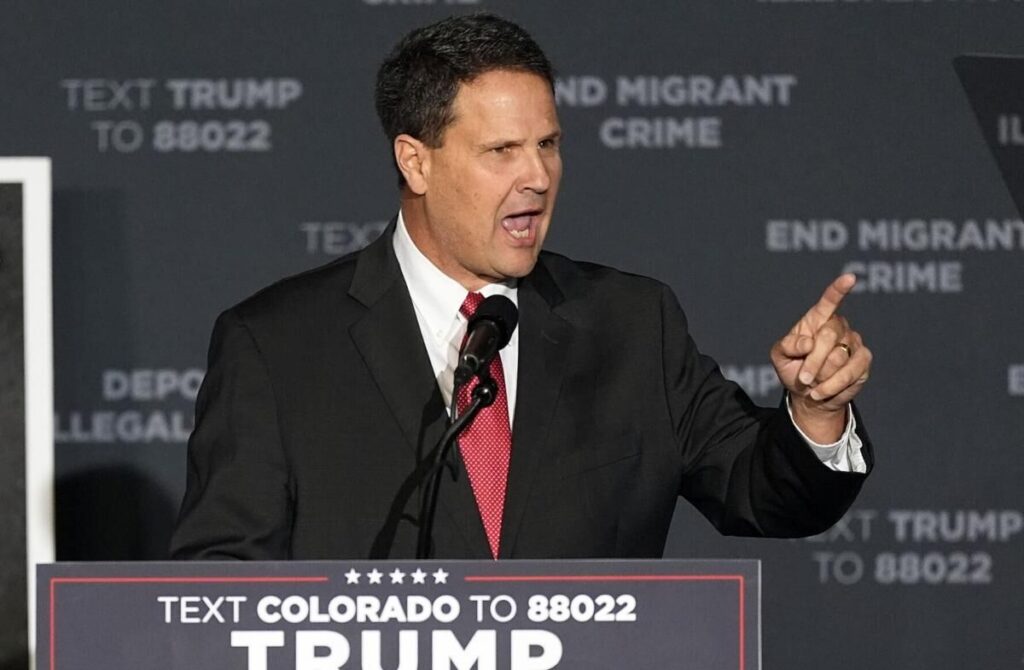
Rep. Jeff Crank thinks Democrats are too focused on Trump, not enough on Colorado Springs | Vince Bzdek
Vince Bzdek
vince.bzdek@gazette.com
Updated 5 hours ago
For U.S. Rep. Jeff Crank, who’s unopposed in the Republican primary for the 5th Congressional District but the main target of both candidates in the lively Democratic primary, the big question in the midterms is not who will stand up...

Colorado Politics Calendar June 22-28
Rachael Wright, Special to Colorado Politics
rachael.wright@coloradopolitics.com
Updated 3 days ago
CoPo’s weekly political calendar will help you find political and public-policy events throughout Colorado. It includes candidate and issue campaign events, public policy meetings, court hearings, state and local party conventions, assemblies, debates, rallies, parades, speaking engagements, traveling dignitary appearances,...
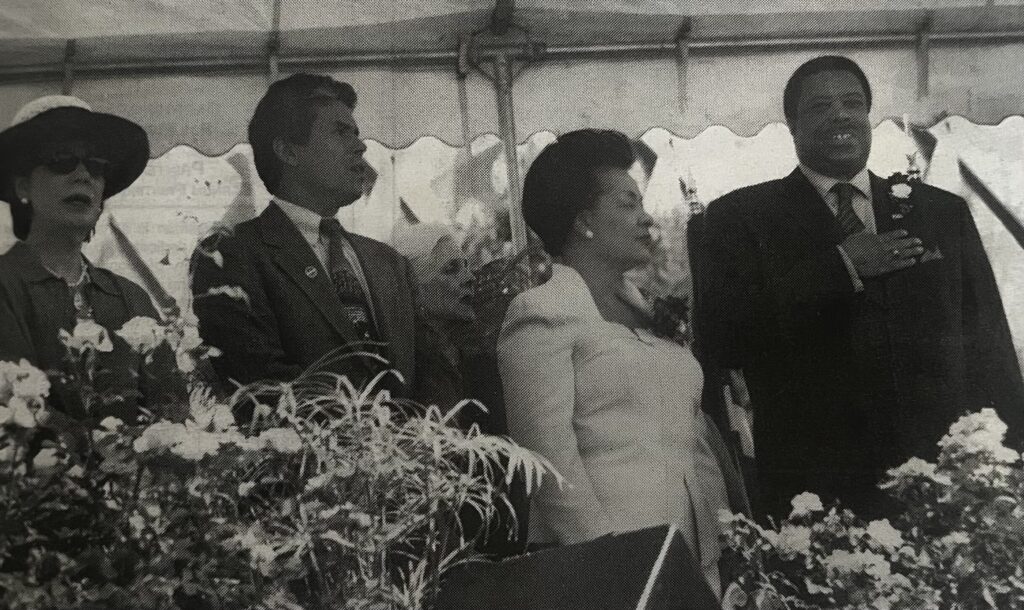
Vice president attends Denver event to support energy freedom; more news from the past | A LOOK BACK
Rachael Wright, Special to Colorado Politics
rachael.wright@coloradopolitics.com
Updated 3 days ago
Forty-Five Years Ago This Week: Vice President George H.W. Bush flew to Denver to address the annual meeting of the American Association of Petroleum Landmen, where he assured the audience that the Reagan administration’s strong belief was that the private...
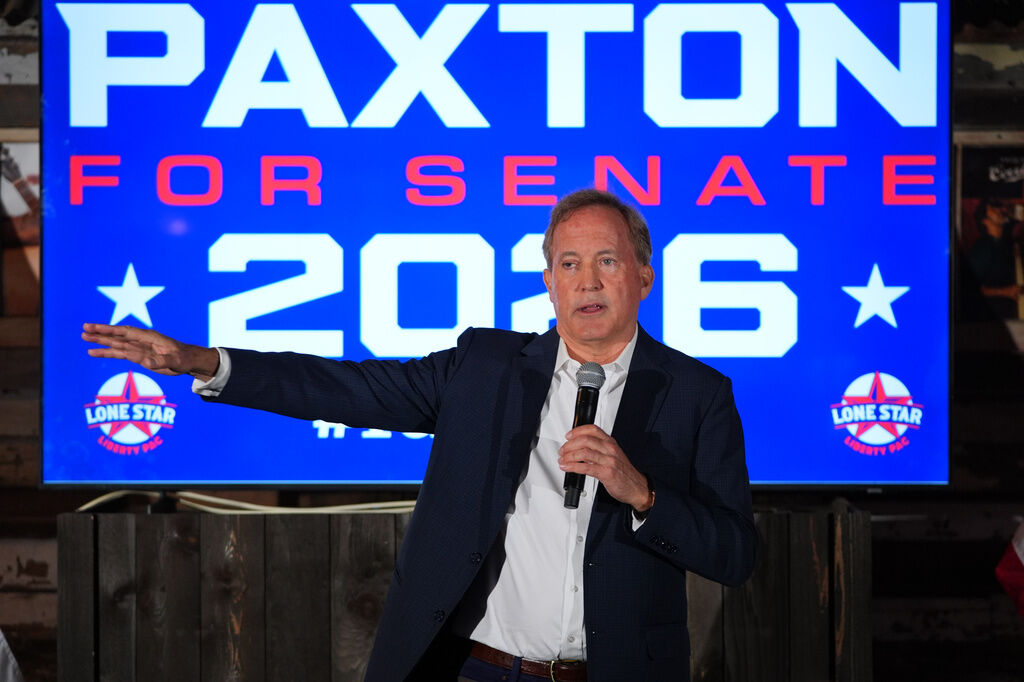
Does character matter anymore? | SONDERMANN
By Eric Sondermann
by-eric-sondermann@coloradopolitics.com
Updated 3 days ago
The last few weeks have been illuminating in the manner of a headlamp pointing the way to some deep, dark, murky netherworld. Graham Platner, a hero to the populist set on the Democratic side, became his party’s Senate nominee in...

A special edition of Capitol M: In remembrance of the outrageous Lynn Bartels
Marianne Goodland
marianne.goodland@coloradopolitics.com
Updated 1 day ago
I had Lynn Bartels envy. For almost longer than I can remember. There, I said it. And it’s true. Lynn died Friday, age 69, after a short battle with glioblastoma. I was just heartsick when that news of her diagnosis...

Bernie Sanders endorses DeGette challenger Melat Kiros in Colorado’s 1st CD Democratic primary
Ernest Luning
ernest.luning@coloradopolitics.com
Updated 1 day ago
U.S. Sen. Bernie Sanders on Friday endorsed congressional candidate Melat Kiros, one of two Democrats challenging 15-term U.S. Rep. Diana DeGette in Colorado’s June primary. Sanders, a Vermont independent who caucuses with the Democrats, called the 29-year-old Kiros “exactly the...
Trump’s 10th Circuit nominee recuses from cases against federal government without explanation
Michael Karlik
michael.karlik@coloradopolitics.com
Updated 1 day ago
President Donald Trump’s nominee to fill a vacancy on the Denver-based federal appeals court recused himself without a clear explanation from nine cases against the executive branch while he was undergoing vetting by the White House this spring. U.S. District...

Trump’s low approval unchanged as Iran war perceptions continue to plague him
Rena Rowe, Washington Examiner
rena.rowe.washington.examiner@gazetteedit.wpenginepowered.com
Updated 1 day ago
A new poll shows most Americans disapprove of President Donald Trump’s handling of Iran, with views on the issue closely mirroring his overall job approval rating. Just 37% of U.S. adults approve of the way Trump is handling his presidency,...

Colorado Iranians express disappointment with U.S.-Iran deal
Mark Samuelson Special to The Denver Gazette
mark.samuelson@denvergazette.com
Updated 1 day ago
Iranians in Colorado worry agreement solidifies the Islamic regime’s power A group of Colorado Iranians expressed disappointment in the agreement reached between the U.S. and the Islamic Republic of Iran, arguing it preserves the government’s hold on power and any...
Adams County murder conviction reversed due to faulty jury instruction
Michael Karlik
michael.karlik@coloradopolitics.com
Updated 1 day ago
Colorado’s second-highest court overturned an Adams County defendant’s murder conviction last month because the instruction provided to the jury about a trespasser’s right to use self-defense did not accurately reflect Colorado law. A person is justified in using force to...
PREV
PREVIOUS

Thousands respond to Columbine High School demolition survey (VIDEO)
Thousands of Colorado residents have responded to a survey asking whether Columbine High School should be demolished and rebuilt. Denver’s KMGH-TV reports the Jefferson County School District administration received nearly 7,000 responses to its survey posted in May. The district says it is in the process of reviewing the responses and expects to finalize the […]

Polis' signature blue sneakers replaced? Say it ain't so ....
Have Colorado Gov. Jared Polis’ signature blue sneakers been replaced – for good? It seems possible, according to a Wednesday tweet from the tech entrepreneur-turned-politician, who posted an animated graphic of his dancing feet clad in Colorado flag-themed tennis shoes with red laces. “How cool are these?!” the governor tweeted. “I’m loving my new Colorado shoes […]