

Neguse, DeGette pressure Pelosi on Trump impeachment
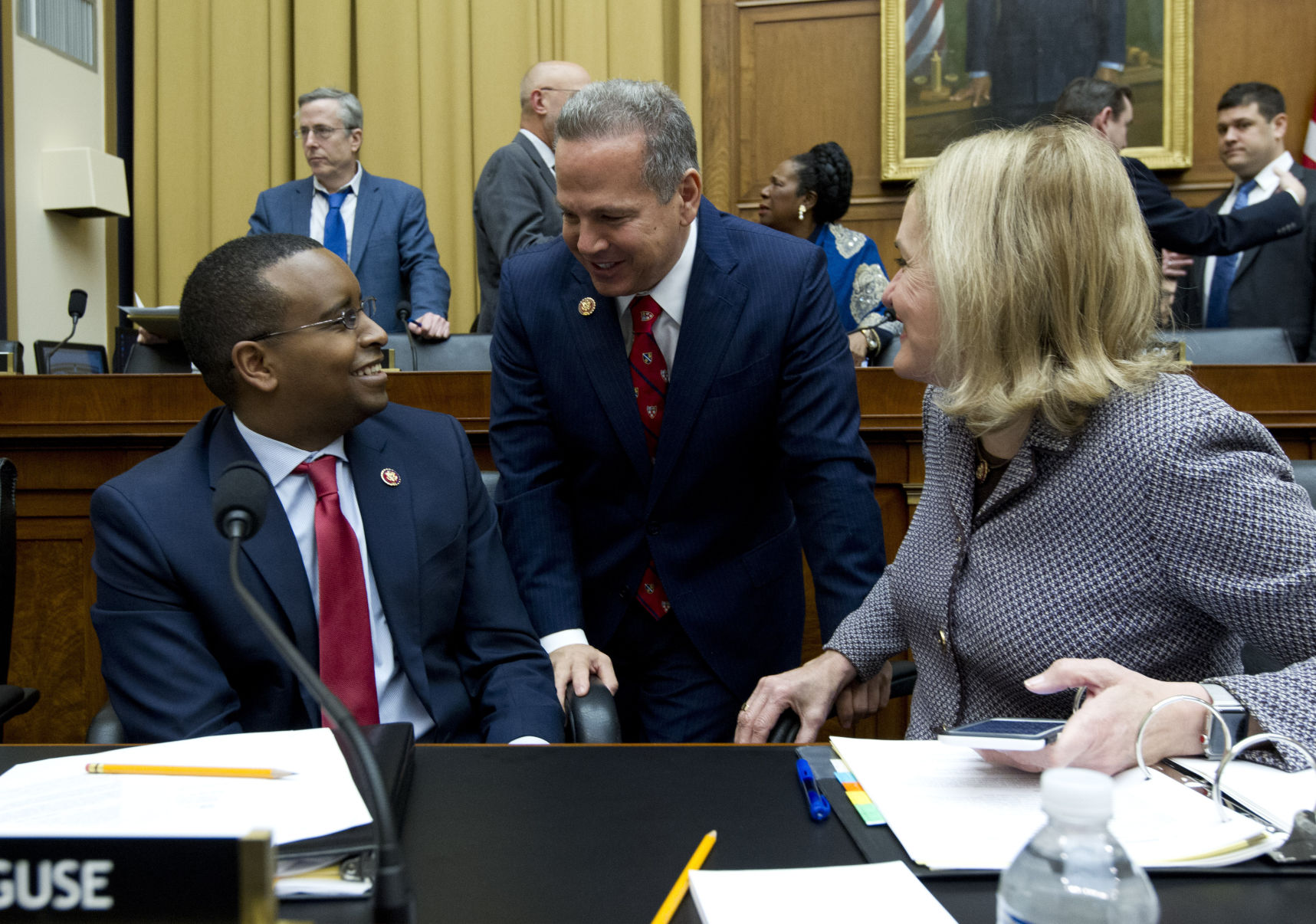
House Speaker Nancy Pelosi shot down repeated attempts by Congress members of her own party, including Colorado’s Joe Neguse and Diana DeGette, to move forward on an impeachment inquiry against President Donald Trump on Monday.
Rep. Steve Cohen, D-Tenn., insisted on impeachment during a Democratic Steering and Policy Committee meeting, but Pelosi was unmoved.
“This is not about politics, it’s about what’s best for the American people,” Pelosi said, a member at the meeting told Politico.
During a separate meeting in Pelosi’s office Monday, Neguse, D-Lafayette, along with Democrats David Cicilline of Rhode Island and Jamie Raskin of Maryland, made another case to launch impeachment proceedings.
DeGette, D-Denver, said on Twitter that it’s time for Congress to act.
“The facts laid out in the Mueller report, coupled with this administration’s ongoing attempts to stonewall Congress, leave us no other choice,” DeGette tweeted. “It is time for Congress to officially launch an impeachment inquiry against the President of the United States.”
Pelosi, along with Rep. Rosa DeLauro of Connecticut, again dismissed the suggestion, warning that talk of impeachment is getting in the way of advancing Democrats’ message.
If former White House counsel Don McGahn fails to adhere to a subpoena to appear before the House Judiciary Committee on Tuesday, Cicilline said the House may have no other options but impeachment.
“I think if this pattern by the president continues, where he’s going to impede and prevent and undermine our ability to gather evidence to do our job, we’re going to be left with no choice,” Cicilline said.
The Trump administration has instructed McGahn to not appear before the panel to testify about special counsel Robert Mueller’s Russia investigation, setting up a second contempt vote in Congress.
Under the constitution, a simple majority vote of the Democrat-led House would be enough to impeach Trump. A trial would then be held in the Republican-led Senate, where a two-thirds majority vote would be needed to remove the president from office.
President Bill Clinton was impeached by the House in December 1998 but was acquitted by the Senate the following February and remained in office.
Colorado Politics contributed.


Trump to attend White House Correspondents’ Dinner for first time as president
Washington Examiner Staff, Washington Examiner
washington.examiner.staff.washington.examiner@gazetteedit.wpenginepowered.com
Updated 2 hours ago
President Donald Trump announced on Monday that he accepted an invitation to this year’s White House Correspondents’ Dinner. It would mark the first time Trump has attended the dinner, in either term, since he’s been president. Trump announced the decision...
Primary rival sues to prevent Democrat Eileen Laubacher from going through assembly in Colorado’s 4th CD
Ernest Luning
ernest.luning@coloradopolitics.com
Updated 4 hours ago
Democratic congressional candidate Trish Calvarese on Monday asked a judge to prevent one of her primary rivals, Eileen Laubacher, from participating in the caucus and assembly process to seek the nomination to challenge Republican U.S. Rep. Lauren Boebert in Colorado’s...
Colorado lawmakers tackle legislation on sexual assault
Jenny Deam
jenny-deam@coloradopolitics.com
Updated 7 hours ago
A panel of Colorado lawmakers on Monday unanimously approved a bill that supporters say will offer protections and support to victims of domestic violence, stalking, sex trafficking and sexual assault, including mandatory training for law enforcement on trauma. The measure,...

Denver adopts face mask ban for law enforcement
Deborah Grigsby
deborah.smith@denvergazette.com
Updated 4 hours ago
Members of the Denver City Council unanimously approved an ordinance Monday that prohibits law enforcement officers, including federal immigration agents, from wearing a mask or face covering while interrogating, detaining, or arresting an individual within Denver, including in city-owned buildings....

More than 20 Colorado counties receive grants to improve land record-keeping systems
Maren Prince
maren.prince@denvergazette.com
Updated 3 hours ago
More than 20 Colorado counties received $2.5 million to improve their land record-keeping systems, according to a Monday news release. The State’s Electronic Recording Technology Board awarded 22 counties with grants ranging from $5,000 to $350,000, according to the release....

Denver among top 5 finalist cities for 2028 DNC
Deborah Grigsby
deborah.smith@denvergazette.com
Updated 4 hours ago
Denver is among the five cities that could host the 2028 Democratic National Convention, the Democratic National Committee announced Monday. Along with Denver, Philadelphia, Atlanta, Boston and Chicago have advanced in the application process to host the next DNC, which...

Colorado bill would require employers to grant legislative leave to state lawmakers
Marissa Ventrelli
marissa.ventrelli@coloradopolitics.com
Updated 3 hours ago
When she was elected to the legislature in 2022, Sen. Janice Marchman was hopeful she could bring real-world experience to the state’s education policy. Marchman, a Loveland Democrat, was the only actively-working teacher in the General Assembly for the past...

Colorado Supreme Court clarifies restraining order violations can always support burglary charge
Michael Karlik
michael.karlik@coloradopolitics.com
Updated 21 hours ago
The Colorado Supreme Court’s majority ruled on Monday that a violation of a restraining order can also serve as a basis for finding a defendant guilty of burglary. Under state law, a person commits second-degree burglary by unlawfully entering or...

Big week ahead for major legislation to address housing affordability woes
Zach Halaschak, Washington Examiner
zach.halaschak.washington.examiner@gazetteedit.wpenginepowered.com
Updated 23 hours ago
The Senate is pushing ahead with a bipartisan bill to improve housing affordability, teeing up a critical week for housing on Capitol Hill and raising major questions about what provisions will be included. Senate Majority Leader John Thune (R-SD) filed cloture on legislation from the...

Macron goes nuclear with increases to French warhead arsenal
Timothy Nerozzi, Washington Examiner
timothy.nerozzi.washington.examiner@gazetteedit.wpenginepowered.com
Updated 23 hours ago
French President Emmanuel Macron is channeling the atomic spirit of his predecessor Charles de Gaulle with orders for the French military to “increase the number of nuclear warheads” in the nation’s arsenal. Macron announced the seismic shift in France’s defensive...
PREV
PREVIOUS

Colorado Supreme Court: Police need cause before using pot-sniffing dogs
The Colorado Supreme Court has ruled that police require probable cause before deploying dogs trained to detect marijuana. The Denver Post reports the court ruled 4-3 Monday that under the state constitution, a dog trained to alert officers to marijuana cannot be used before police obtain evidence that a crime was committed. Previously officers operated […]

2nd police complaint filed against Democratic lawmaker who resigned seat
A second complaint has been filed with the Greeley Police Department against Rochelle Galindo, the Greeley Democrat who abruptly resigned her seat in the Colorado House of Representatives earlier this month, multiple news outlets have reported. A police spokesman confirmed last week that Galindo was the subject of an active police investigation based on a […]