

District court judge rules in favor of Senate GOP on bill reading
Senate Republicans prevailed Tuesday, at least temporarily, after a Denver District Court battle over whether a recent computer-assisted reading of a legislative bill is legal.
Judge David Goldberg issued a ruling Tuesday afternoon that grants a preliminary injunction against Senate Democrats and the secretary of the Senate, Cindi Markwell, requiring that bills be read at “an understandable speed,” although Goldberg did not define the speed.
In his ruling, Goldberg said the action sought by Senate Republicans was warranted and and appropriate.
“The Court does not perceive this issue to be a political question,” he wrote. “The Court does not concern itself with the legislation at hand, the majority or minority party, or the number of days remaining in the legislative session.”
“Using multiple computers to read simultaneously different portions of a bill, any bill, at 650 words per minute is not within legitimate limits,” he wrote. “The Court was unable to discern a single word from the tape played during the court proceeding. To ‘read’ the bill, which is a constitutional requisite, in such a manner renders it a nullity.”
Goldberg said that granting the injunction will preserve the status quo until final resolution of the legal case takes place.
The court requires the Senate, including the Senate secretary, to “employ a methodology that is designed to read legislation in an intelligible and comprehensive manner, and at an understandable speed.”
The issue dates back to March 11, when Senate Republicans asked that a 2,023-page bill, on recodification of a section of statute, be read at length. The move was viewed as a delaying tactic, one that Senate Minority Leader Chris Holbert said Tuesday is the only tool the minority has to slow down what it views as too rapid a process on controversial bills.
The reading of House Bill 1172, sponsored by Republican Sen. Bob Gardner of Colorado Springs, began with the Senate reading clerk reciting the bill for about two hours.
After that, Senate Democrats set up five computer-reading programs to finish the task; each read a different section of the bill. In all, the reading took about seven hours.
Senate Republicans obtained the aforementioned temporary injunction the following day.
The argument advanced by Republicans was that the Constitution requires each bill to be read at length twice – once prior to debate, known as second reading, and once before the final vote. Republicans contended that the reading was not intelligible, although there is no standard in law for what “intelligible” means.
The practice of getting around the “reading at length” requirement is old hat in the General Assembly. Usually, when someone asks that a lengthy bill be read in its entirety, the practice has been to line up a host of readers, all reading from different sections of the bill.
It’s a tactic most often used by the minority party and has been used by Democrats and Republicans alike over the years, depending on who ran the chamber.
Attorney Chris Murray, representing the Senate Republicans, told Goldberg that if what happened on March 11 qualified as reading a bill at length, “anything would qualify,” creating what he called “white noise.” That would render the constitution’s requirement null, he claimed.
The reading on March 11 violated the constitution in two ways, Murray said: It was not understandable, and it employed multiple readers.
“It’s so far afield that it failed to function” as a reading, he added. “The powers that be in the Senate insisted on this and it gave my clients no opportunity” to be heard.
Attorney Mark Grueskin, representing the Senate Democrats and Markwell, said the General Assembly, by law, has been allowed to make its own rules on procedure and that a request for the court to intervene would be unprecedented.
He cited previous case law that said the judiciary’s role is limited to legislative enactments – what happens after a bill is passed – and that legislatures must be left “untrammeled, and act in such manners as its wisdom” may determine.
Process is “left wholly” to the Legislature, Grueskin said. “There’s no room for doubting what that means.”
A ruling in the GOP’s favor would go far beyond just House Bill 1172, Grueskin claimed. It could apply to the Senate and House, their staff, and even to the governor if the bill in question reaches his desk, and would “imply greater control over the legislative branch” by the judiciary, a separation of powers issue.
Grueskin also raised the question of just how “intelligible” or “understandable” would be defined, since they’re not explicitly defined in statute or the Constitution.
And then there’s the definition of reading itself, which Grueskin pointed out includes “silent.”
Grueskin estimated that if House Bill 1172 had to be read at length, at a rate of 250 words per minute, it would take six days for one reading, and 12 days, or 10 percent of the entire General Assembly session, for both.
Goldberg challenged Grueskin on the issue of understandability.
“Reading,” Goldberg said, “connotes an ability to understand, otherwise the requirement is of no effect.”
As to the claim that the judicial branch should not interfere in the legislative process, Goldberg said the role of the judiciary is to resolve issues.
“Courts have a right to say what the law is,” even when it involves co-equal branches of government, he said. He did agree that a ruling on the matter would be unprecedented and pointed out that similar readings in the past have gone unchallenged, at least in the courts.
Goldberg also questioned why the framers of the constitution would require two readings if there was no standard for the reading being understandable.
Grueskin pointed out that when the state constitution was written in 1876, the General Assembly didn’t give lawmakers copies of every bill, so if a bill got lost, that was the end of it. At that time, the reading requirement had a unique purpose, he said. However, modern technology has resulted in multiple formats for lawmakers and the public to view the contents of a bill.
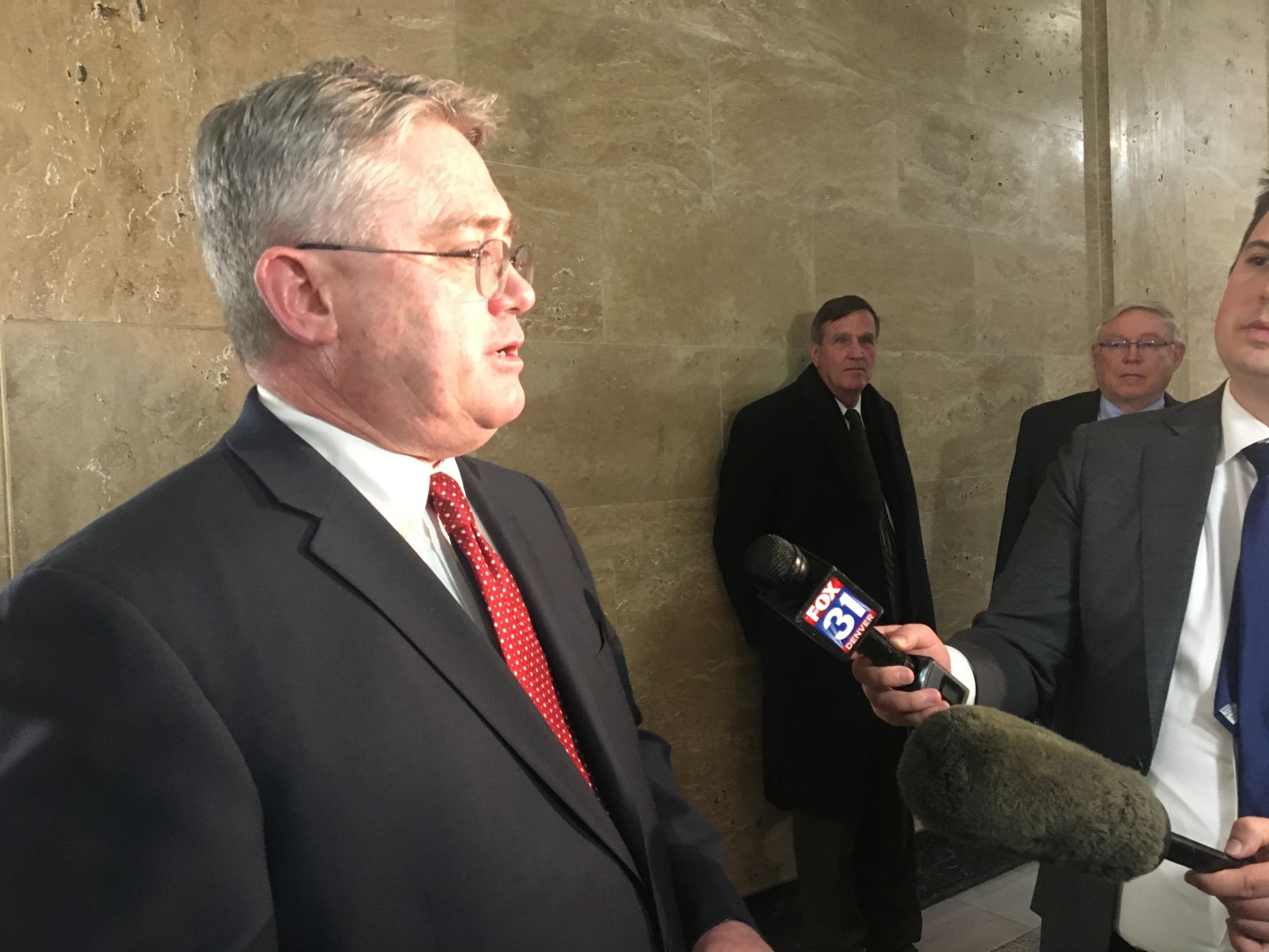
After the hearing, Senate President Leroy Garcia spoke briefly to reporters, stating, “Everyone’s known my style from the beginning. It’s important to work together.”
He said he looked forward to the court’s ruling.
Senate Minority Leader Chris Holberg of Parker said the dispute is not whether a computer or other technology is used.
“It’s just that a bill [should] be read at a speed that we can comprehend,” he said.
As to whether the practice of using multiple readers for reading lengthy bills should continue, Holbert said it could be addressed by rule and that he would welcome the opportunity to discuss the issue with the Senate Democrats.
After the ruling was issued, Holbert thanked Goldberg “for his expeditious and informed decision in defense of the Colorado Constitution. We sincerely hope that this marks a new beginning for discourse with Senate President Garcia. He is a good man and a thoughtful leader.”
Garcia issued a statement Tuesday evening expressing his disappointment with the ruling.
“The people of Colorado lost today,” he said in the statement. “I have a deep respect for the process and the opinion of the court and will uphold their decision; however, the reading of this 2,000 page bipartisan bill means that our work trying to improve the lives of millions of Coloradans grinds to a halt.”

It’s time to let unaffiliated voters caucus | Vince Bzdek
Vince Bzdek
vince.bzdek@gazette.com
Updated 11 hours ago
There’s no getting around it: Colorado’s 3,000 county caucuses, which just wrapped up recently, left half the electorate out in the cold. Since unaffiliated voters now make up 51% of all Colorado voters, a majority of Colorado electors are barred...

Governor warns energy development both a boon and a risk to Colorado | A LOOK BACK
Rachael Wright, Special to Colorado Politics
rachael.wright@coloradopolitics.com
Updated 3 days ago
Forty-Five Years Ago This Week: “The real opportunity and the dangers before us are both real,” said Gov. Dick Lamm in his January state of the state address before the Colorado General Assembly. Lamm argued that energy development would continue...
A Mile High, again: Capitol M | Week of March 21, 2026
Marianne Goodland
marianne.goodland@coloradopolitics.com
Updated 3 days ago
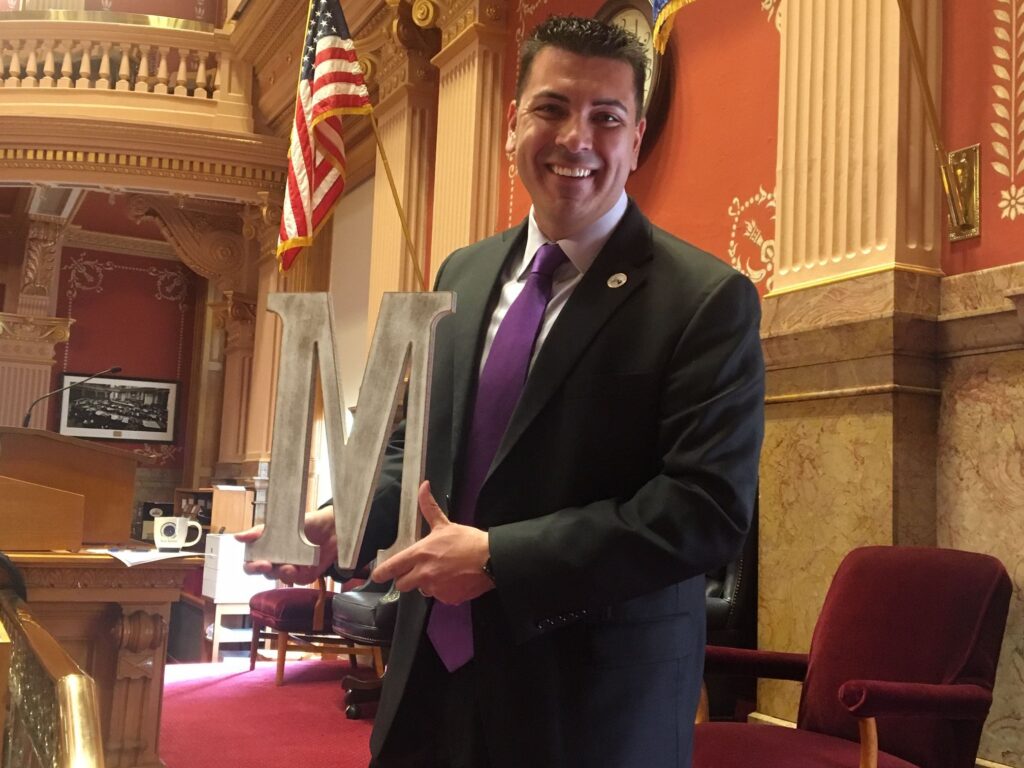
The lighter side of the Capitol, usually…. Local Journalism Day, except they forgot their very own local journalists. The state Senate on Thursday, March 19, passed a resolution recognizing Local Journalism Day. Everyone voted for it, which is good, because...

Colorado Politics Calendar Mar. 23-29
Rachael Wright, Special to Colorado Politics
rachael.wright@coloradopolitics.com
Updated 2 days ago
CoPo’s weekly political calendar will help you find political and public-policy events throughout Colorado. It includes candidate and issue campaign events, public policy meetings, court hearings, state and local party conventions, assemblies, debates, rallies, parades, speaking engagements, traveling dignitary appearances,...

The insular bubble of caucuses and assemblies | SONDERMANN
Eric Sondermann
eric-sondermann@coloradopolitics.com
Updated 2 days ago
Nearly 30 years ago, then-Federal Reserve Chairman Alan Greenspan coined the term “irrational exuberance” to describe the overheated stock market. That descriptive phrase could also apply to much of the political realm. The hype in politics often grossly exceeds the...

Lauren Boebert’s hard ‘no’ on Pentagon Iran funding request puts Mike Johnson in tough spot
Emily Hallas, Washington Examiner
emily.hallas.washington.examiner@gazetteedit.wpenginepowered.com
Updated 1 day ago
Colorado U.S. Rep. Lauren Boebert announced on Thursday that she will not support further funding for the United States’s war in Iran, marking an uphill battle for the Trump administration’s effort to secure additional financing from Congress. “I’ve already told...

Rubio gains ground in 2028 jockeying as Iran war elevates his profile
Samantha-Jo Roth, Washington Examiner
samantha-jo.roth.washington.examiner@gazetteedit.wpenginepowered.com
Updated 1 day ago
Secretary of State Marco Rubio’s high-profile role in the Trump administration’s response to the Iran war is boosting his standing in the early jockeying for the 2028 Republican presidential nomination — and positioning him as a possible rival to Vice...
Federal judge dismisses claims against medical contractor for Eagle County jail suicide
Michael Karlik
michael.karlik@coloradopolitics.com
Updated 1 day ago
A federal judge dismissed the claims against a medical contractor for the Eagle County jail and its employees earlier this month, concluding there were insufficient allegations that they violated the constitutional rights of a man who died by suicide in...

Colorado Senate committee advances bill increasing overtime threshold for farmworkers
Marianne Goodland
marianne.goodland@coloradopolitics.com
Updated 4 hours ago
The struggle to balance farmworker protections with the survival of Colorado’s family farms took center stage Thursday as senators debated two competing overtime bills. The Senate Business, Labor and Technology Committee held a rare double-bill hearing that led to a...

Colorado bill to fund mental health by raising alcohol taxes defeated in House committee
Marissa Ventrelli
marissa.ventrelli@coloradopolitics.com
Updated 7 hours ago
Colorado legislators on Wednesday narrowly rejected a second measure that would raised taxes on alcohol products in order to fund mental health care treatment in the state. Proponents said the new revenue is necessary to help pay for mental health...
PREV
PREVIOUS
Ex-Boulder DA won't review confrontation with black man
BOULDER – The Latest on the investigation into a police confrontation with a black resident in Colorado: 2:40 p.m. A Colorado city is backing away from plans to have a former prosecutor review an incident in which police officers confronted a black man who was picking up trash outside his house. Boulder […]

Hancock vows to push ahead on 'Denveright' 20-year master plan
Passage of a new comprehensive plan that sets goals for the city over the next 20 years should not be delayed until after the May 7 municipal election, Denver Mayor Michael Hancock said Tuesday. Hancock’s remarks came after he unveiled Denveright, a plan three years in the making and the city’s first attempt at a […]