

Police internal files could become public under bill approved by Colorado House committee
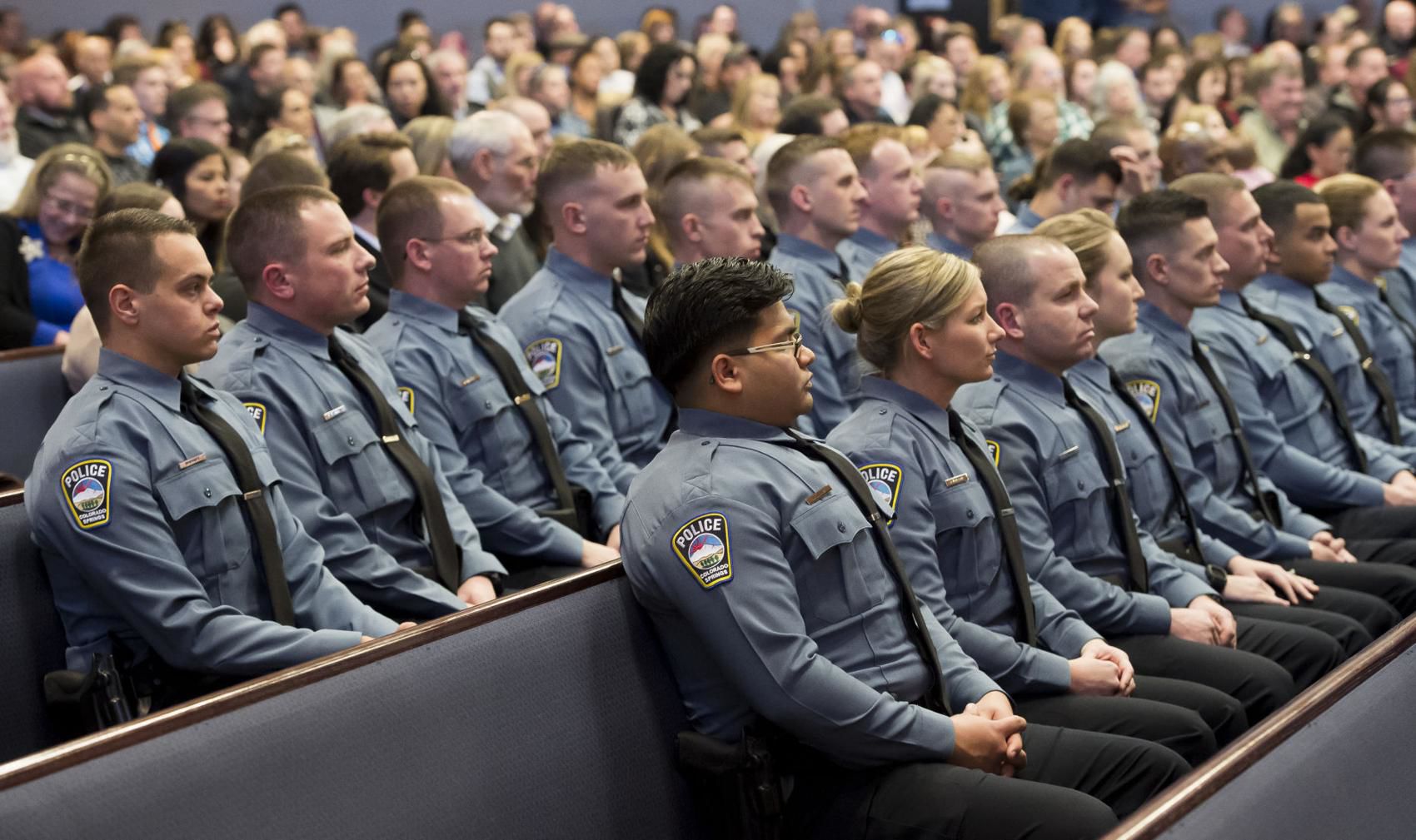
A Colorado Springs police officer was disciplined after he allegedly slammed a handcuffed teenager to the floor of Memorial Hospital in late 2013, severely injuring her jaw, teeth, face and neck.
Alexis Acker, then 18, received $100,000 from the city in 2016 to settle her excessive force lawsuit. But the officer’s discipline and the reasoning behind it never were released. The Police Department ruled that releasing those files would be contrary to the public’s interest.
Colorado police departments now have broad authority to decide whether to release such files. But that would change under a law proposed by state Rep. James Coleman, D-Denver, and approved Tuesday evening by the House Judiciary Committee after hours of debate.
Opening such documents would hold law enforcement agencies accountable and increase their transparency, say advocates of House Bill 1119.
But others say the records could expose officers to often-unfounded scrutiny and diminish their right to privacy.
The bill now goes to the House floor, where it could be heard Thursday.
This is the second time such legislation has been proposed, said Jeff Roberts, executive director of the Colorado Freedom of Information Coalition.
That organization and others, including the American Civil Liberties Union, “have encouraged this type of legislation because we think that there’s a public interest in knowing how law enforcement officers conduct themselves while on duty,” Roberts said. “If there are allegations of misconduct and there’s an internal investigation … we feel like the public has an interest in knowing the outcome of that, especially … in some of these cases, there are tax dollars paid out to someone who makes an allegation.”
Colorado Springs police Lt. Howard Black declined to discuss the bill but said the department will comply with any requirements imposed by law.
In 2017, the department received 197 external or citizen complaints and 103 internal or directed complaints, Black said.
Many internal investigations are deemed unfounded, said Rep. Shane Sandridge, R-Colorado Springs, a former police officer and member of the House committee.
“It’s always easier to blame the police officer,” Sandridge said. “He planted it. He hit me… He broke my arm. He beat me.”
But the committee’s Vice Chair, Rep. Leslie Herod, D-Denver, said civilians have been hurt and beaten and biased policing has taken place. The fact that people sometimes lie does not negate the need for transparency, Herod said.
Don Sisson, an attorney for the Colorado Fraternal Order of Police, said an officer’s right to privacy sometimes outweighs the public’s right to transparency.
“This bill is really about eliminating the balancing test: Get rid of one side of the scale, the officer privacy side of the scale,” Sisson said.
In Acker’s case, he said, “When you dig a little bit deeper, she was arrested for assaulting an officer, attempted to kick the officer in the groin and as a result was taken to the ground.”
Acker’s attorney, however, said she had kicked the officer’s clipboard and did not make contact with him.
Citizens shouldn’t have to hire attorneys to view police records, testified Rebecca Wallace, an attorney for the American Civil Liberties Union of Colorado. Officers are subject to more records requests because of the firepower they carry and their ability to take a life.
Rep. Hugh McKean, R-Loveland, said the Denver Police Department has a good record of releasing internal documents and questioned why that system needs a change. But many witnesses testified that Denver is the exception.
In a survey of 48 law enforcement agencies statewide, only Denver’s was willing to release any information, said Margaret Kwoka, a law professor at the University of Denver. Otherwise, surveyors couldn’t obtain any files, “regardless of seriousness, regardless of outcome or regardless of a demonstration of public interest.”
“Most agencies’ denials that we received were across the board without consideration of individual circumstance,” Kwoka said.
Before the vote, Rep. Terri Carver, R-Colorado Springs, said she was concerned that even with private information redacted, it would be easy to read between the lines and identify officers who participated in the investigation. That could discourage officers from being as forthcoming, she said.
The committee chairman, Rep. Mike Weissman, D-Aurora, told Coleman he would support the bill in the committee but would like to see changes made when it’s up for a vote on the House floor.


Ex-Colorado Sen. Sonya Jaquez Lewis avoids prison, gets probation for forged ethics letters
Marianne Goodland
marianne.goodland@coloradopolitics.com
Updated 1 minute ago
Former state Sen. Sonya Jaquez Lewis, D-Longmont, was sentenced Friday to two years of supervised probation and 150 hours of community service, and a $3,000 fine, to be waived if she completes an additional 100 hours of community service. The...

Bipartisan bill aims to launch Colorado ‘Cradle to Career’ anti-poverty grant program
Marissa Ventrelli
marissa.ventrelli@coloradopolitics.com
Updated 17 minutes ago
The bill’s sponsors say it will help Colorado families living in poverty, and the organizations that support them have cleared their first hurdle, but they will need to raise just over $1 million before things get off the ground. Senate...
Senate GOP sends warning to House SAVE Act agitators: Don’t tell us what to do
Ramsey Touchberry, Washington Examiner
ramsey.touchberry.washington.examiner@gazetteedit.wpenginepowered.com
Updated 52 minutes ago
If there’s one thing senators don’t take kindly, it’s outsiders telling them how to run their chamber. It’s in that spirit that the resistance among Senate Republicans to skirt the traditional 60-vote filibuster threshold and advance the SAVE America Act...
Benavidez chosen to fill Senate District 21 vacancy after Michaelson Jenet resigns
Marianne Goodland
marianne.goodland@coloradopolitics.com
Updated 2 hours ago
A Democratic Senate District 21 vacancy committee Thursday night chose former Rep. Adrienne Benavidez, D-Adams County, to replace former Sen. Dafna Michaelson Jenet. Michaelson Jenet resigned on Feb. 13 to become the director of the David and Laura Merage Foundation...

Colorado delegation’s plus-one picks convey messages at Donald Trump’s State of the Union | TRAIL MIX
Ernest Luning
ernest.luning@coloradopolitics.com
Updated 4 hours ago
It’s become a tradition for members of Congress to deliver messages of their own at the State of the Union address, though this year none of the Colorado lawmakers shouted at the president during the speech, nor did the delegation...

Colorado Democrat John Hickenlooper becomes first statewide candidate to submit nominating petitions
Ernest Luning
ernest.luning@coloradopolitics.com
Updated 4 hours ago
U.S. Sen. John Hickenlooper on Thursday became the first statewide candidate to submit petition signatures for Colorado’s June Democratic primary, according to his campaign and the Colorado Secretary of State’s Office. Seeking reelection to a second term, Hickenlooper is facing...
Bill Clinton faces grilling from lawmakers over his connections to Jeffrey Epstein
Stephen Groves
stephen.groves@associatedpress.com
Updated 4 hours ago
WASHINGTON (AP) — Former President Bill Clinton is testifying Friday before members of Congress investigating convicted sex offender Jeffrey Epstein, answering for his connections to the disgraced financier from more than two decades ago. The closed-door deposition in Chappaqua, New...

Toll to sexual assault survivors rises if they feel blamed and disbelieved
Jenny Deam
jenny-deam@coloradopolitics.com
Updated 2 hours ago
Natalie, a single mother, dropped off her son at daycare, went to therapy and then returned home. She swallowed a fistful of pills, washing them down with a six-pack of beer. She was ready to end her life. “I just...
Colorado rape cases rarely result in an arrest and prosecution
Jenny Deam
jenny-deam@coloradopolitics.com
Updated 2 hours ago
Authorities say they are especially difficult cases. In Colorado, most go nowhere. Over the past decade, for every 10 reports of rape, there is only one arrest. Warning: This story contains descriptions of sexual violence. Kiersten May remembered a fuzziness...
10th Circuit upholds finding of no misconduct against Colorado federal judge
Michael Karlik
michael.karlik@coloradopolitics.com
Updated 19 hours ago
A judicial committee for the Denver-based federal appeals court upheld the chief judge’s finding last week that a federal judge in Colorado did not engage in misconduct by handling a civil case involving other attorneys and judges in the state....
PREV
PREVIOUS

Bill to reshape Colorado oil and gas regulations is coming soon, say Democrats
Backers of tighter rules on Colorado oil and gas development struck out at the ballot box in November and at the state Supreme Court in January. Now, the Democrats who lead the state legislature are stepping up to the plate. State House and Senate Democrats say they plan to introduce a sweeping bill in coming […]

Arsenic, lead in water pouring out of former mine sites in Colorado, elsewhere
Every day many millions of gallons of water loaded with arsenic, lead and other toxic metals flow from some of the most contaminated mining sites in the U.S. and into surrounding lakes and streams without being treated, The Associated Press has found. That torrent is poisoning aquatic life and tainting drinking water sources in Montana, […]