

OUT WEST ROUNDUP | Idaho test reactor is pivotal in US nuclear power strategy
IDAHO
Test reactor is pivotal in nuclear power strategy
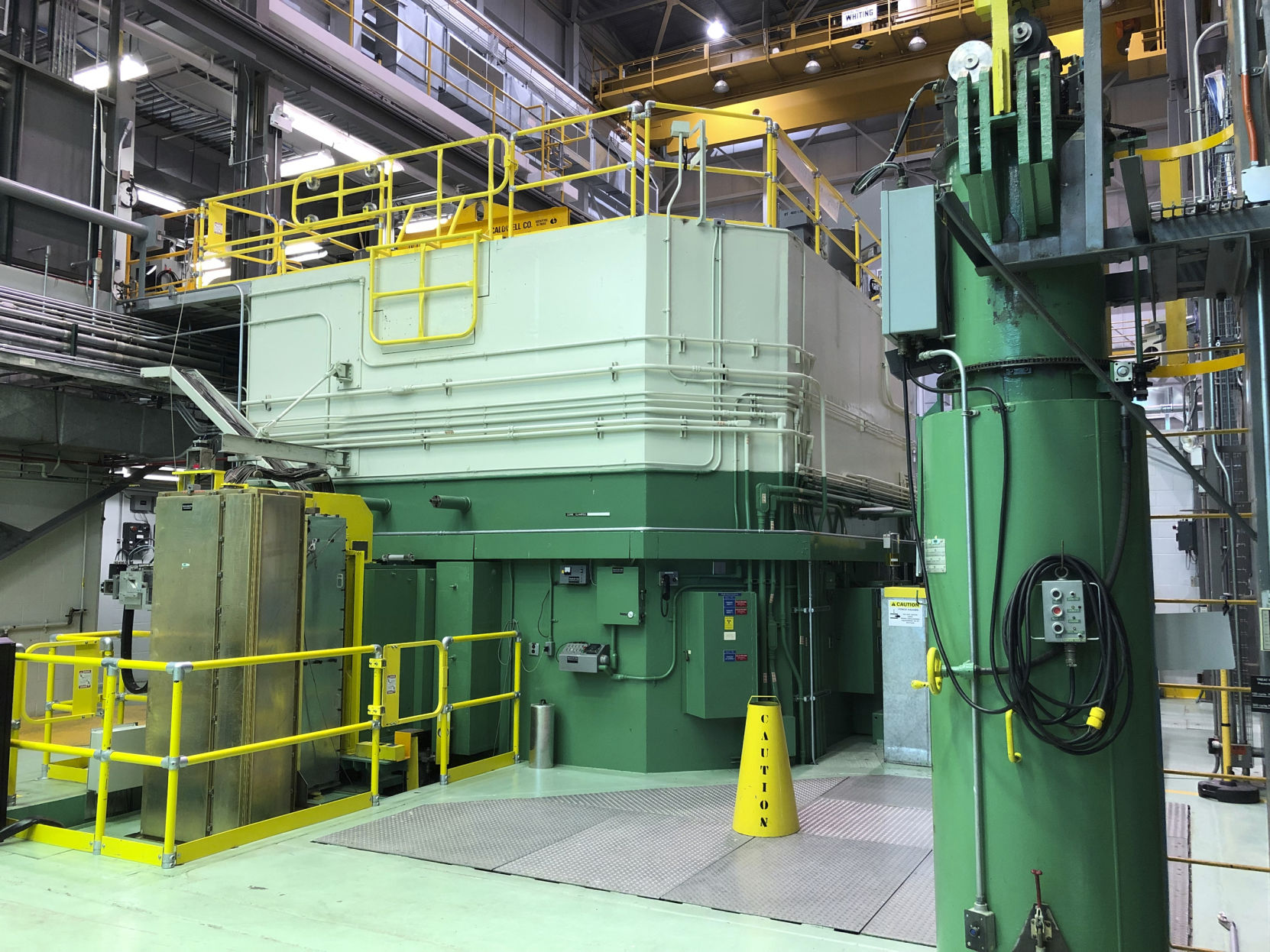
IDAHO NATIONAL LABORATORY, Idaho – A nuclear test reactor that can melt uranium fuel rods in seconds is running again after a nearly quarter-century shutdown as U.S. officials try to revamp a fading nuclear power industry with safer fuel designs and a new generation of power plants.
The Transient Test Reactor at the U.S. Energy Department’s Idaho National Laboratory has performed 10 tests on nuclear fuel since late 2017. In short bursts, it can produce enough energy to power 14 million homes.
The reactor was used to run 6,604 tests from 1959 to 1994, when it was put on standby as the United States started turning away from nuclear power amid safety concerns.
Restarting it is part of a strategy to reduce U.S. greenhouse gas emissions by generating carbon-free electricity with nuclear power initiated under the Obama administration and continuing under the Trump administration, despite President Trump’s downplaying of global warming.
According to the U.S. Energy Information Administration, 98 nuclear reactors at 59 power plants produce about 20 percent of the nation’s energy. Most of the reactors are decades old, and many are having a tough time competing economically with other forms of energy production, particularly cheaper gas-fired power plants.
Some nuclear plants have closed in recent years, and Illinois, New York and New Jersey have approved subsidies in the past two years to bail out commercial nuclear plants. Officials in some areas are considering carbon taxes on coal and natural gas to boost nuclear power.
U.S. officials hope to improve nuclear power’s prospects. They face two main challenges: making the plants economically competitive and changing public perception among some that nuclear power is unsafe.
Researchers want to know if nuclear plants can use accident-tolerant fuels in reactors designed to safely shut themselves down in an emergency.
The Idaho reactor tests tiny fuel rods under accident conditions, including controlled and contained meltdowns, to eventually create safer fuels.
ARIZONA
Governors to study sending gas to Asia through Mexico
PHOENIX – The governors of Arizona, New Mexico and Mexico’s Sonora state have signed an agreement to study a plan to export natural gas to Asia by connecting existing pipelines to move the fuel south to the Gulf of California.
The non-binding agreement calls for the states to collaborate on promoting investment, research and innovation to eventually export natural gas from New Mexico’s abundant supply to Asian nations, which are leading importers of liquefied gas.
The memorandum, signed by Republican Govs. Doug Ducey of Arizona and Susana Martinez of New Mexico and Claudia Pavlovich of Sonora, does not call for the commitment of any funds.
“Asia’s burgeoning demand, New Mexico’s abundant supply, and Arizona and Sonora’s strategic location and transport networks all combine to present an opportunity for continued regional growth,” the agreement states.
New Mexico is a top producer of natural gas and the outgoing Martinez, who leaves office at the end of the month, has made finding ways to export the fuel a priority.
The pact notes that Arizona has been fast-growing in terms of population and employment, suggesting that running the fuel through the state’s pipelines and facilities could bring economic benefits.
The plan proposes that the three states study ways to connect existing pipeline networks in Arizona and Sonora to move the fuel from New Mexico to the U.S.-Mexico border, then south into Sonora state and west to the port of Guaymas on the Gulf of California, where tankers would pick up the fuel for the trip to Asia.
Guaymas is far closer to Asia than Houston on the Gulf of Mexico, where most fuel leaves the U.S. for Asia. Shipping the natural gas from Guaymas would save the time and money it costs to take shipments through the Panama Canal.
OKLAHOMA
Report: State lagging in per-student spending
TULSA, Oklahoma – Oklahoma is trailing behind neighboring states in per-student spending, even when factoring in this year’s teacher pay raises, according to a recent report.
The National Center for Education Statistics report shows that Oklahoma’s annual expenditures were nearly $1.3 billion below the regional average for the 2015-16 school year. The region includes Kansas, Missouri, Arkansas, New Mexico, Colorado and Texas.
The region spent an average of roughly $9,900 per student, but Oklahoma lagged behind by about $1,800.
Adjusting the figures to include the $480 million increase in state funding this year still puts Oklahoma behind about $1,100, according to the Oklahoma State School Boards Association.
“Our state’s elected leaders have repeatedly described the raise as only the first step in much-needed education investment, and this new report reinforces why we must stay the course of improving support for public education,” said Shawn Hime, executive director of the association. “Surrounding states are continuing to devote more resources to education, and we’re playing catch-up.”
State Superintendent Joy Hofmeister has asked lawmakers to approve a $440 million increase in the education budget. The funds would be largely used to reduce class sizes, with $58 million earmarked to fund additional school counselors to help students plan for college and handle personal issues.
Oklahoma teachers walked off the job in April to protest a decade of budget cuts that left classrooms without resources and caused many educators to move to other states.
NEW MEXICO
State debt to filmmakers inches toward $250M
SANTA FE – New Mexico’s debt to the film industry could hit $250 million by summer and reach $700 million in four years, according to the state economist.
Jon Clark, chief economist for the Legislative Finance Committee, told state lawmakers that New Mexico is on track to reach a “breaking point” eventually under the current system, which offers movie companies a 25 percent tax rebate but limits the state’s annual payout to $50 million.
The state is reaching the limit each year, running up an unpaid tab of film incentives.
Senate Majority Leader Peter Wirth, D-Santa Fe, said filmmaking has been an important part of the economy, especially over the past few years when other sectors struggled.
Gov. Susana Martinez, a Republican whose term ends this month, signed legislation in 2011 imposing the $50 million annual limit as a way to provide budget certainty and protect state finances.
Rep. Antonio “Moe” Maestas, D-Albuquerque, said the state should take a fresh look at the film incentive law in light of the deal announced in October to bring Netflix’s first U.S. production hub to Albuquerque.
KANSAS
Man wrongly convicted to receive $1M
The state of Kansas will pay more than $1 million to compensate Richard Anthony Jones for the 17 years he spent in prison for a crime that was committed by someone who looked like him, Kansas Attorney General Derek Schmidt announced.
The payment comes as part of an agreement to resolve the lawsuit Jones filed seeking compensation for the state’s mistake, which became known as the doppelganger case.
It was the first lawsuit filed under a new state law enacted earlier this year that provides compensation to people who are wrongly imprisoned.
Jones, 42, was sent to prison for the robbery of a woman who was attacked in the parking lot of a Roeland Park Walmart in 1999. After he had been in prison for many years, other inmates pointed out to him that he bore a strong resemblance to another man .
His attorneys were able to identify that man. They learned that he had the same first name as Jones and lived much closer to the Walmart where the crime occurred.
In June 2017, Jones’ attorneys showed evidence in a court hearing that witnesses, including the robbery victim, who looked at the pictures of the two men together could no longer say if Jones was the robber.
The conviction was overturned and Jones was released from prison.
Records of his arrest and conviction were ordered expunged and any biological samples associated with his mistaken conviction were ordered destroyed.
The compensation sought, the lawyers wrote, “is relatively small given the unfathomable hardship of 17 years of wrongful imprisonment.”


Colorado lawmakers react along partisan lines to Donald Trump’s State of the Union address
Ernest Luning
ernest.luning@coloradopolitics.com
Updated 36 minutes ago
President Donald Trump could have been describing two different countries in Tuesday’s State of the Union address — one entering a “Golden Age” and the other enduring daily stress under a “lawless” regime — at least as far as the...

‘We’re winning so much.’ Trump delivers State of the Union address
Michelle L. Price
michelle.l..price@associatedpress.com
Updated 8 hours ago
WASHINGTON • President Donald Trump said America has been “winning so much” during Tuesday’s State of the Union, touting a jobs and manufacturing boom at home and promising a “Golden Age” as the U.S. prepares to celebrate the 250th anniversary of its...
10th Circuit upholds violations, sanctions against Colorado Springs psych hospital
Michael Karlik
michael.karlik@coloradopolitics.com
Updated 11 hours ago
The Denver-based federal appeals court agreed earlier this month that the government properly cited and penalized a Colorado Springs psychiatric hospital for failing to protect its staff from known risks posed by patients. The Occupational Safety and Health Administration inspected...
Watch Live: 2026 State of the Union Address
Will Weissert
will.weissert@associatedpress.com
Updated 11 hours ago
WASHINGTON (AP) — President Donald Trump will use Tuesday’s State of the Union address to champion his immigration crackdowns, his slashing of the federal government, his push to preserve widespread tariffs that the Supreme Court just struck down and his...
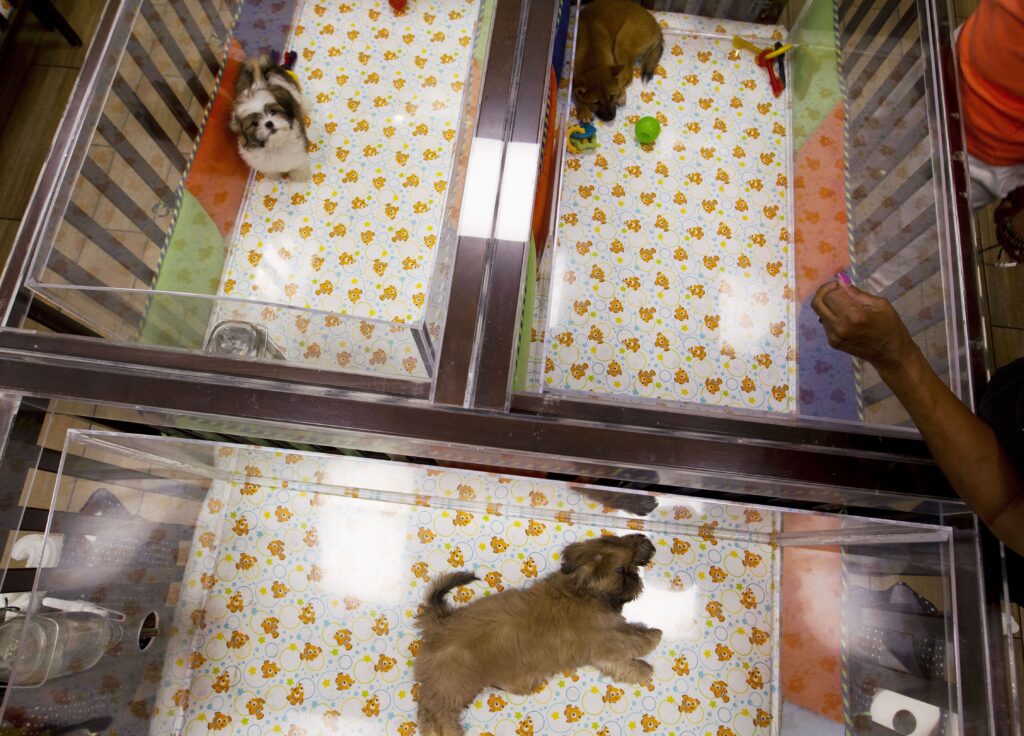
Colorado House advances bill to ban pet stores from selling dogs as cats, as opponents warn of black market surge
Marissa Ventrelli
marissa.ventrelli@coloradopolitics.com
Updated 16 hours ago
Colorado lawmakers advanced legislation Monday that would prohibit pet stores from selling dogs and cats sourced from large-scale commercial breeders, a move sponsors say will shut down the “puppy mill pipeline.” Critics, however, warn that the bill will instead push...
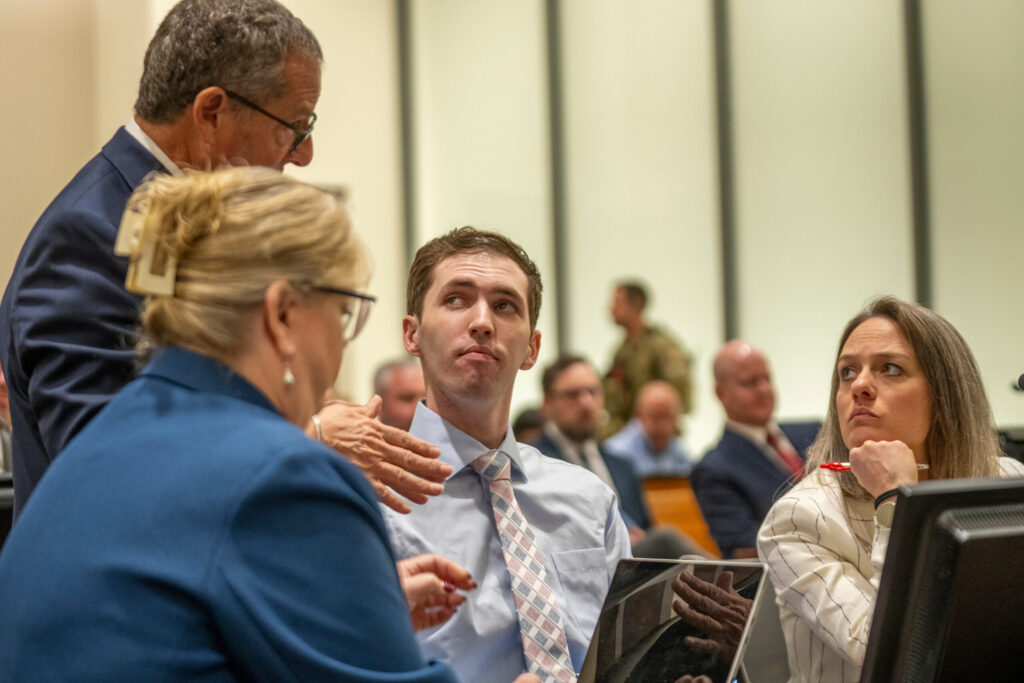
Judge declines to remove prosecutors from Tyler Robinson murder trial
Jack Birle, Washington Examiner
jack.birle.washington.examiner@gazetteedit.wpenginepowered.com
Updated 17 hours ago
A Utah judge denied efforts by the lawyers of Tyler Robinson, the alleged killer of Turning Point USA co-founder Charlie Kirk, to disqualify prosecutors over allegations of a conflict of interest related to Robinson’s upcoming trial on murder charges. Judge...

Newsom office tells reporter to ‘f*** off’ for question on dyslexia diagnosis as governor under fire for allegedly racist comments
Claire Carter, Washington Examiner
claire.carter.washington.examiner@gazetteedit.wpenginepowered.com
Updated 17 hours ago
Gov. Gavin Newsom‘s (D-CA) office gave an expletive-laced response on Monday to a reporter who asked about the governor’s dyslexia diagnosis and backlash over allegedly racist comments. During the press interaction, a reporter asked the governor’s communications team a follow-up...
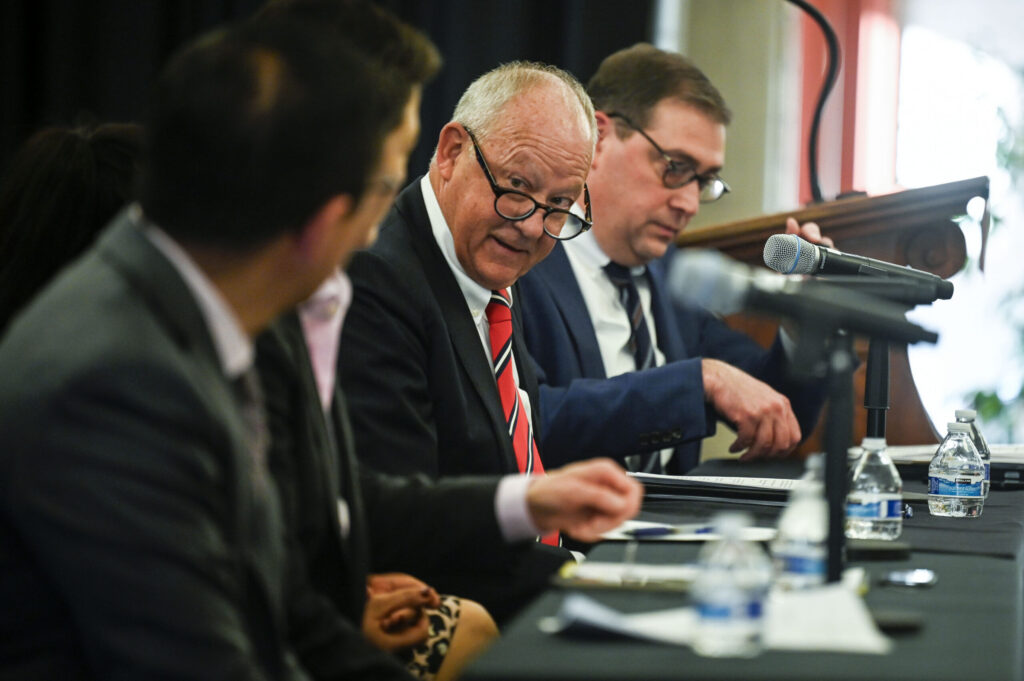
Judge Timothy Tymkovich to step aside, create Colorado-based vacancy on 10th Circuit
Michael Karlik
michael.karlik@coloradopolitics.com
Updated 14 hours ago
Judge Timothy M. Tymkovich of Colorado has announced his intent to step aside as an active member of the Denver-based federal appeals court, creating the first vacancy for President Donald Trump to fill in his second term. In a Feb....
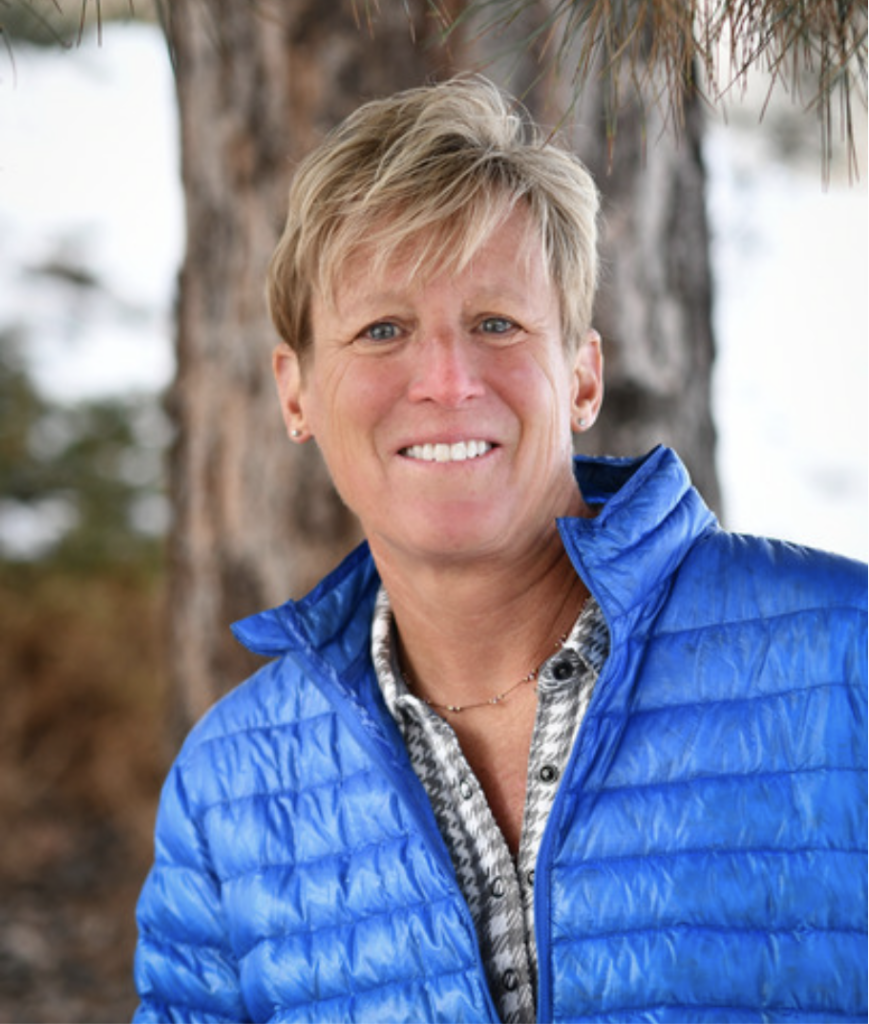
Laura Clellan officially named director of Colorado Parks and Wildlife
Marianne Goodland
marianne.goodland@coloradopolitics.com
Updated 14 hours ago
Laura Clellan, who has been acting director of Colorado Parks and Wildlife since Nov. 25, was named the agency’s permanent director Monday by the Colorado Parks and Wildlife Commission. She replaced Jeff Davis, who resigned in lieu of termination weeks...

Colorado group files 6 ballot measures to counter redistricting proposals backed by Democrats
Marianne Goodland
marianne.goodland@coloradopolitics.com
Updated 12 hours ago
A half-dozen congressional redistricting ballot measures were filed Friday by a Colorado advocacy group in response to proposals filed last week from a group seeking to flip three Republican-held U.S. House seats in two years. “The gist of it is...
PREV
PREVIOUS

COMMENTARY | Mattis' departure marks the end of the age of alliances
On a military base in the Mideast, the location of which is a secret, there is a giant room with more than 70 seats facing a two-story bank of television screens. It looks like something out of Dr. Strangelove, but this room is the very real, everyday office of the 74-nation coalition that came together […]

Federal workers in Colorado, elsewhere face grim prospect of lengthy shutdown
Three days, maybe four. That’s how long Ethan James, 21, says he can realistically miss work before he’s struggling. So as the partial government shutdown stretched into its sixth day Thursday with no end in sight, James, a minimum-wage contractor sidelined from his job as an office worker at the Interior Department, was worried. “I […]