

OUT WEST ROUNDUP | Utah lawmaker wants to raise state’s legal marriage age to 18

Utah
Utah lawmaker wants to raise state’s legal marriage age to 18
SALT LAKE CITY – A push against underage marriage in the U.S. is coming to Utah, where a lawmaker wants to raise the legal age to 18 to prevent girls from being pressured into the unions associated with higher poverty and lower education rates.
High-profile teen marriage cases in Utah have happened in polygamous groups involving leaders like Warren Jeffs, who is serving a life prison sentence for sexually assaulting girls he considered wives. But it’s not the only place where it’s an issue.
There have been thousands of underage marriages in the U.S. since 2000, and until recently more than half of states didn’t set a limit on how young someone could be to get married if they met criteria like parental approval, said Jeanne Smoot of the Virginia-based Tahirih Justice Center.
“Many people assume this was something from generations that’s no longer happening in the U.S.,” she said. But marriage data show more than 200,000 Americans younger than 18 got married between 2000 and 2015, she said.
In Utah, 253 people under age 18, most of them girls, got married in 2010, the most recent year figures are available.
Under current Utah law, people as young as 15 can marry with permission from their parents and the court, while 16- and 17-year-olds can marry with parental permission.
Rep. Angela Romero, a Salt Lake City Democrat, is preparing a proposal to raise the legal marriage age for the next legislative session in 2019. Teenage unions are particularly concerning when there is a large age gap between a bride and a groom, or when a there’s pressure to wed due to pregnancy, she said.
Kansas
Kansas group rips Kobach’s ties to militias, other extremists
Kansas Secretary of State Kris Kobach is a “danger to democracy” whose ties to extremists make him a poor choice for governor, a new political action committee said last week as it released a report detailing concerns about the Republican gubernatorial candidate.
The report, “Kris Kobach: The Candidate with Militia-Minded Friends,” was issued by the Kobach Is Wrong for Kansas PAC.
Among the concerns cited: Kobach’s ties to extremist groups and a national gun-rights organization whose leader promoted the formation of armed citizen militias more than two decades ago.
“Kobach is a hard-core ideologue who has no business trying to be the political leader for all the people of Kansas,” said Leonard Zeskind, founder of the Institute for Research and Education on Human Rights and one of the PAC’s organizers.
Kobach did not respond to requests for comment. In the past, he has denied any connections to extremist or hate groups.
Larry Pratt, executive director emeritus of Gun Owners of America, said he was “delighted with what Kobach has been doing.”
“To call him some sort of scary wannabe militia guy, I think is the kind of hyperbole that has been rather harmful to the left,” said Pratt, who is named in the report. “And they don’t seem to get it. They don’t want to tone down their rhetoric. Just keep talking like that, and they’ll get Kobach elected for sure.”
Zeskind said the PAC is nonpartisan and not endorsing anyone for governor.
New Mexico
Candidate forum seeks cultural preservation for Hispanics
ALBUQUERQUE – Federal immigration policy and concerns about preserving New Mexico’s Native American and centuries-old Hispanic cultures were at the forefront of a congressional candidate forum last week, as six Democrats compete for an open Albuquerque-based seat in primary elections.
Attorney Damian Lara described his own background as a childhood immigrant and field worker who went on to earn a law degree.
He reminded the audience that the Trump administration has moved to revoke the legal status not only of young “Dreamers” but also immigrant parents of children who are either legal residents or citizens, and do away with the temporary protected status of people fleeing natural disasters and instability in Central America and the Caribbean.
Former law professor Antoinette Sedillo Lopez suggested freezing federal funding for Immigration and Customs Enforcement while the office is investigated for “inhumane” arrest and detention practices.
Former state lawmaker Janice Arnold-Jones, the sole Republican candidate, expressed support for President Trump’s effort to build a border wall in so far as it will fix broken security efforts.
Wyoming
Meetings between mayor, council remain behind closed doors
CHEYENNE – Contrary to Mayor Marian Orr’s multiple statements this spring, the city will be not be livestreaming monthly “leadership” meetings between her and a handful of ranking city council members, or certain regular meetings between her and council members.
Those kinds of meetings haven’t been public in the past due to lack of a six-person quorum. And the traditional leadership meetings have been private in the past to allow council members to freely discuss ongoing public projects or nascent ideas without fear of public scrutiny.
But beginning in March, Orr signaled a shift in that practice.
Under fire for her handling of the municipal court site selection committee, which Councilman Bryan Cook wrote was rigged in a lengthy Facebook post, she told council members in an email that Cook wasn’t the first to voice “inaccuracies” about meetings and that she felt it “best just to open it all up and make those conversations accessible.”
When Cook emailed back asking how the recordings would be made available, she wrote, “I’m going to Facebook Live them all. You can watch real time or go back and watch the archive. Open government it is.”
But Orr said last week the meetings will not be streamed at all.
“It’s conversation driven, not policy driven,” she said. “At times, there does seem to be animosity between the executive branch and the legislative branch, and it’s a time for us to build rapport and get to know each other better and ask about the spouse and kids.”
Councilman Richard Johnson, who uses Facebook extensively to communicate with residents and solicit input on ideas, was disappointed to hear the news and rejected Rinne’s argument.
Montana
‘Jurassic Park’ dinosaur expert’s next big thing: holograms
HELENA, Montana – Forget the gray, green and brown dinosaurs in the “Jurassic Park” movies. Paleontologist Jack Horner wants to transport people back in time to see a feathered Tyrannosaurus rex colored bright red and a blue triceratops with red fringe similar to a rooster’s comb.
Horner, who consulted with director Steven Spielberg on the “Jurassic Park” films, is developing a three-dimensional hologram exhibit that will showcase the latest theories on what dinosaurs looked like. He is working with entertainment company Base Hologram to create an exhibit that will let people feel as though they’re on an archaeological dig, inside a laboratory and surrounded by dinosaurs in the wild.
“I’m always trying to figure out a good way to get the science of paleontology across to the general public,” Horner said in a recent interview with The Associated Press. “Like taking them into the field or taking them into my laboratory and then using the technology that we have to show people what dinosaurs were really like.”
That understanding of what dinosaurs looked like has changed a lot since the original “Jurassic Park” in 1993. For example, researchers now believe dinosaurs were much more bird-like than lizard-like, and scientists studying dinosaur skulls have found keratin, a substance that gives birds their bright colors.
Horner and Base Hologram workers have been developing the exhibit’s story line for a couple of months, with plans to have multiple traveling exhibits ready to launch by spring 2019. The company wants to place them in museums, science centers and other institutions where they might spur debate among scientists who don’t share the theory that dinosaurs were colorful, feathered creatures.

Colorado Springs mother Deborah Nicholls’ murder conviction overturned
Nick Smith
nick-smith@coloradopolitics.com
Updated 6 hours ago
A Colorado Springs mother convicted in 2008 of murdering her three children in a house fire might get a new trial after a judge ruled that prosecutors withheld key evidence that could have impacted the jury’s verdict. Deborah Nicholls, whose...
Colorado court overturns illegal $7,000 restitution order
Michael Karlik
michael.karlik@coloradopolitics.com
Updated 6 hours ago
Colorado’s second-highest court overturned a Weld County defendant’s obligation to pay more than $7,000 in crime victim restitution on Thursday because a trial judge failed to issue a legally compliant restitution order at the time of sentencing. In Colorado, as...
Appeals court orders second look at Denver Water’s immunity for cyclist’s injury
Michael Karlik
michael.karlik@coloradopolitics.com
Updated 6 hours ago
Colorado’s second-highest court ordered another look at a bicyclist’s negligence lawsuit against Denver Water on Thursday, concluding that a trial judge needed to evaluate the utility’s potential immunity using the state Supreme Court’s new guidance. Joseph A. “Joey” Scott alleged...

Right-to-natural-gas proposal in Colorado qualifies for ballot
Marissa Ventrelli
marissa.ventrelli@coloradopolitics.com
Updated 7 hours ago
A citizen initiative that seeks to enshrine the right to natural gas has qualified for the November ballot, Colorado’s election office confirmed on Thursday. Petitions containing signatures for Initiative No. 177 were turned in to the Secretary of State’s Office for review...
Labels, duration not definitive proof of ‘intimate relationship,’ Colorado court rules in domestic violence case
Michael Karlik
michael.karlik@coloradopolitics.com
Updated 6 hours ago
Colorado’s second-highest court clarified on Thursday that the length of a couple’s relationship and the labels they attach to it are not conclusive evidence of whether it is an “intimate relationship” that can give rise to a domestic violence prosecution....
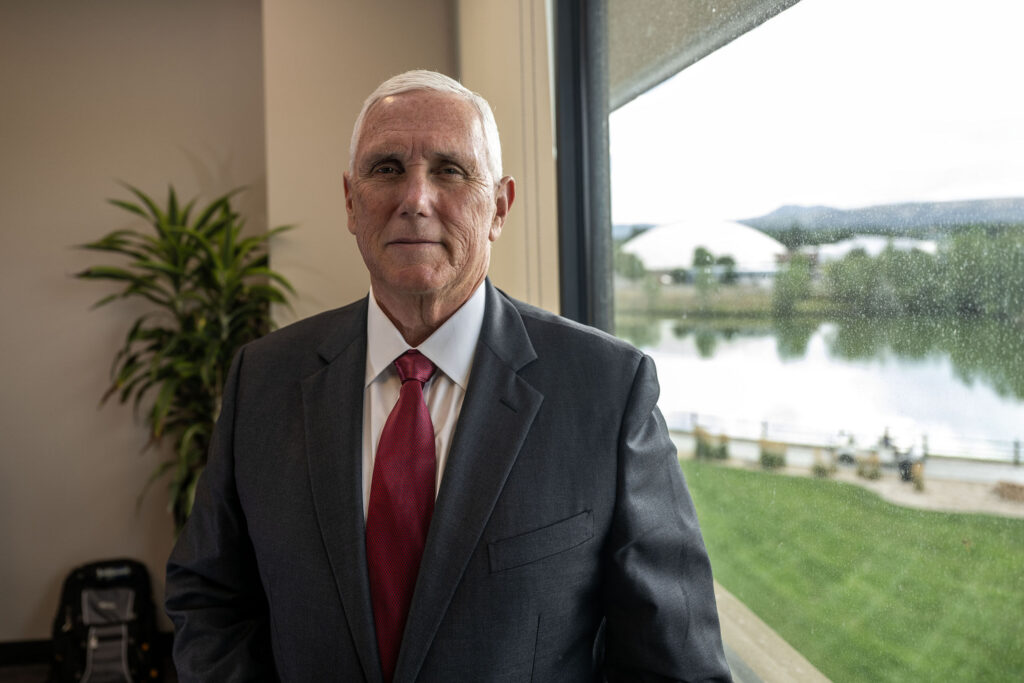
Former VP Mike Pence joining Colorado Christian University faculty
Marissa Ventrelli
marissa.ventrelli@coloradopolitics.com
Updated 8 hours ago
Former Vice President Mike Pence has been hired as a visiting faculty member at Colorado Christian University, the Lakewood-based private evangelical university announced Tuesday. Pence will be on campus about once a month during the 2026-2027 school year to give...
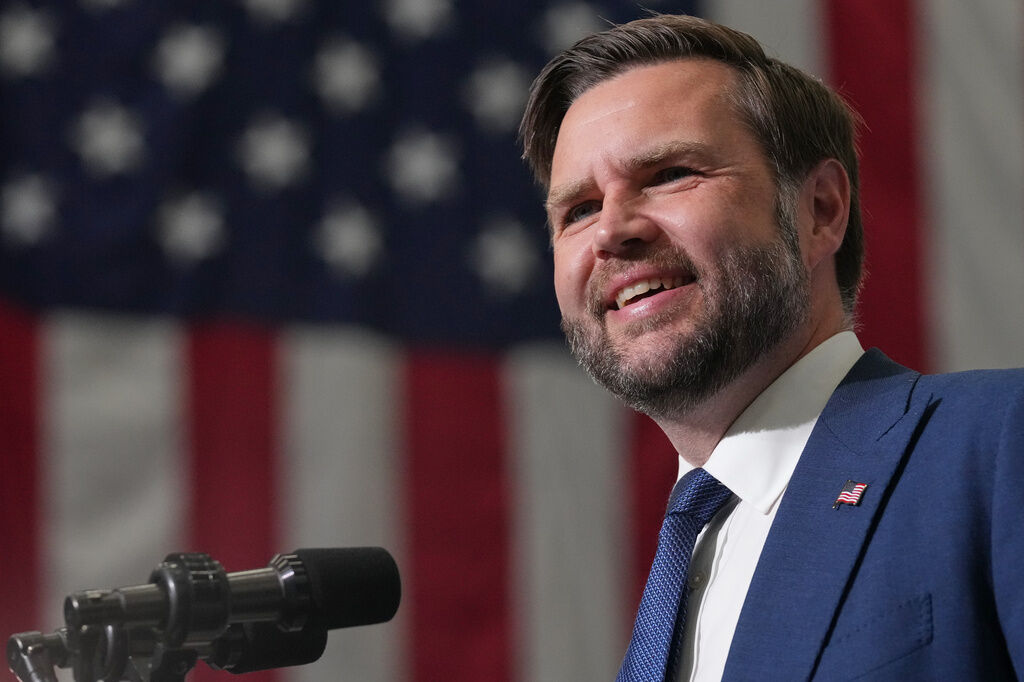
White House launches Fraud.gov to track fraud cases
Adisa Hargett-Robinson
adisa.hargett-robinson@washingtonexaminer.com
Updated 15 hours ago
The White House launched Fraud.gov on Thursday, a website tracking the administration’s crackdown on fraud across federal agencies. According to the White House, the website serves as a public dashboard that highlights investigations, criminal charges, funding suspensions, recoveries, and enforcement...

Democrats from opposite sides of the party all rally behind a ‘big tent’
Rena Rowe
rena.rowe@washingtonexaminer.com
Updated 15 hours ago
Since their losses in the 2024 election, Democrats have struggled to settle on a clear message ahead of the 2026 midterm elections. As the party fights to reclaim control of Congress, primaries in New York, Michigan, and Colorado have exposed...

Emerald ash borer confirmed in Colorado Springs, ‘pest is here to stay’
Brennen Kauffman
brennen-kauffman@coloradopolitics.com
Updated 17 hours ago
Colorado Springs is asking residents to be on the lookout for an invasive beetle species that has jumped down the Front Range and into local ash trees. City officials said Wednesday that a confirmed emerald ash borer infestation had been...
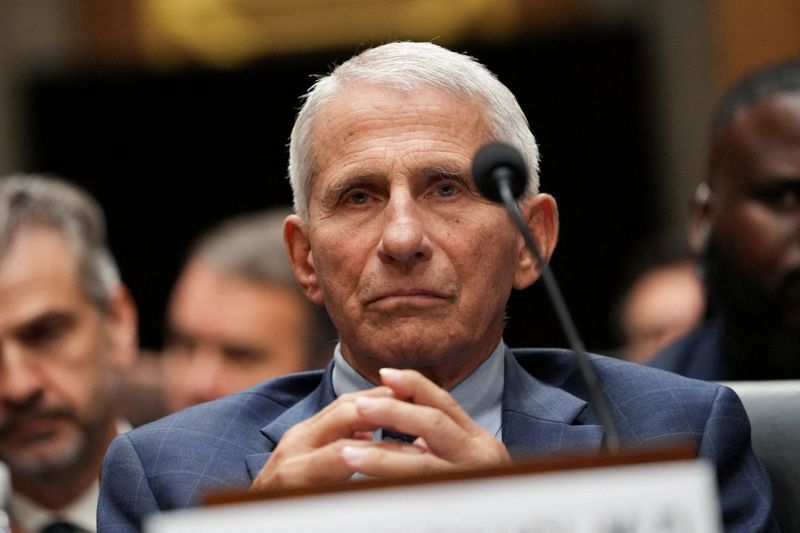
US Senate panel votes to hold Fauci in contempt of Congress
Reuters
reuters@gazette.com
Updated 11 hours ago
By Ahmed Aboulenein WASHINGTON, Aug 6 (Reuters) – A U.S. Senate committee voted on Thursday to hold Dr. Anthony Fauci in contempt of Congress after the former top U.S. infectious disease official refused to answer questions about his handling of...
PREV
PREVIOUS

TRAIL MIX: Colorado candidates take aim at gun issues
As Colorado’s primary-election campaign hits the home stretch (ballots get mailed in early June) and the general election lies within sight, some of the sharpest jabs thrown by candidates and their supporters lately have involved guns and legislation aimed at curbing gun violence. With news of the May 18 shooting that left 10 dead at […]

Colorado mountain pass roads open for summer
DENVER – Colorado’s highest elevation roads are open in time for Memorial Day weekend. The Mount Evans Highway opened Friday, a day after Independence Pass to Aspen and Trail Ridge Road through Rocky Mountain National Park opened for the season after being cleared of snow. The Colorado Department of Transportation says the roads over Kebler […]