

Monday’s revenue forecast to set the stage for state spending

On Monday the most anticipated revenue forecast of the year will be presented to the Joint Budget Committee (JBC) and other lawmakers – one that could determine just how much of a surplus is available for Colorado’s 2018-19 budget and beyond.
The March 19 revenue forecast is among the final steps before the JBC releases its proposal for the next budget, which is due to start in the House on March 26.
In December, economists produced a pre-Christmas surprise for lawmakers: news that the state would have a surplus, with estimates as high as $1 billion for 2018-19.
Lawmakers and Gov. John Hickenlooper both reacted with suggestions to boost transportation spending, with the governor pledging $148.2 million toward the state’s $9 billion, 10-year wish list for road and bridge projects. Republicans in the state Senate are seeking $300 million per year for the next 20 years, which could allow the state, with voter approval, to bond for around $3.5 billion in transportation needs.
Their proposal, contained in Senate Bill 1, is stalled on the Senate floor and headed for a third day of debate, as Democrats have mounted a filibuster in hopes of amending the bill to address issues such as rural projects and multi-modal ideas. And at least a few members of the Democratic caucus are using the debate as a way to draw attention to their demand that Senate President Kevin Grantham of Cañon City allow a resolution they’re sponsoring to go forward. That resolution calls for the expulsion of the prime sponsor of Senate Bill 1, Sen. Randy Baumgardner of Hot Sulphur Springs, who’s alleged to have slapped the buttocks of a legislative aide in 2016. Baumgardner has denied the allegation, but voluntarily resigned as chair of the Senate Transportation Committee.
The revenue forecast is also expected to give lawmakers their first hard look at the how the federal Tax Cuts and Job Plan will affect Colorado revenues. The federal legislation was signed by President Trump on December 22, two days after the state revenue forecasts were presented. Henry Sobanet, director of the governor’s Office of State Planning and Budgeting, told lawmakers in December he believed forecasts might have to be downgraded in the wake of the tax law. “It will take every minute in the next three months to figure out the implications of the federal tax law,” Sobanet said in December.
Legislative Council economists indicated in December the state could see higher revenue due to higher taxes paid by Coloradans as a result of the tax law, with an early beginning estimate at around $200 million.
One area of worry for lawmakers is just how much severance tax revenue will be available. In December, economists noted that severance taxes, which had been expected at around $150 million for 2017-18 instead was less than a third of that, around $42.5 million. The downturn is the result of lower oil and gas prices and less activity in the energy sector. The state also lost a lawsuit in the Colorado Supreme Court in 2016 that required the state to pay the companies millions of dollars for “cost of capital” income tax deductions.
That downturn dramatically impacts programs that rely on those dollars, particularly in the Department of Local Affairs and the Department of Natural Resources, which uses those dollars for water projects.
The revenue forecasts will be presented at 1:30 p.m. Monday.


Colorado justices to hear appeal in Kendrick Castillo death lawsuit, ‘fugitive’ rule
Michael Karlik
michael.karlik@coloradopolitics.com
Updated 12 hours ago
The Colorado Supreme Court announced on Tuesday that it will decide whether it was proper to dismiss a lawsuit over the 2019 shooting death of Kendrick Castillo after the defendants paid the maximum amount of damages available to Castillo’s parents,...

Two more wolves killed by Colorado wildlife staff
Marianne Goodland
marianne.goodland@coloradopolitics.com
Updated 13 hours ago
Two yearling wolves from the Copper Creek and Three Creeks packs in Pitkin and Rio Blanco counties, respectively, were killed by Colorado Parks and Wildlife staff on Monday. That brings to 19 the number of wolves that have died under...

U.S. Rep. Lauren Boebert calls Trump’s 90-day wolf-delisting review ‘real progress’
Marianne Goodland
marianne.goodland@coloradopolitics.com
Updated 11 hours ago
President Donald Trump has directed Interior Secretary Doug Burgum to launch a 90-day review on whether gray wolves and Mexican wolves should be removed from Endangered Species Act protections. The order drew mixed reactions for Colorado’s wolf-reintroduction effort, with ranchers...

Arapahoe County judge’s frustration with defense lawyer not grounds for new trial
Michael Karlik
michael.karlik@coloradopolitics.com
Updated 13 hours ago
Colorado’s second-highest court decided last week that an Arapahoe County judge’s repeated rebukes of a defense attorney and orders to “be quiet” did not rise to the level of bias or a violation of the defendant’s due process rights. A...

Divided appeals court upholds vehicle theft conviction despite unclear origin of car’s value
Michael Karlik
michael.karlik@coloradopolitics.com
Updated 10 hours ago
Colorado’s second-highest court upheld a defendant’s conviction for aggravated motor vehicle theft last week, even though it was unclear how the Thornton Police Department estimated the value of the stolen car. Officer Marc Faivre encountered Ashley Shelee Gibbens-Martinez in a...
Disgraced ex-CBI analyst Missy Woods sentenced to prison in DNA scandal
Jenny Deam
jenny.deam@gazette.com
Updated 13 hours ago
A Jefferson County district court judge on Tuesday sentenced a disgraced former Colorado Bureau of Investigation DNA analyst to a decade in prison for altering and deleting data in scores of criminal cases over several years. Jefferson County District Judge...
Lindsay Clancy’s attorney makes plea for pardon from Trump
Emily Hallas
emily-hallas@coloradopolitics.com
Updated 19 hours ago
Lindsay Clancy’s attorney urged President Donald Trump on Tuesday to give her a pardon before her murder case could head for another trial. Clancy is a Massachusetts woman who admitted to strangling her three young children in 2023 but argued...

Russia launches massive, deadly, and ‘complex’ attack against Ukraine
Washington Examiner Staff
washington-examiner-staff@coloradopolitics.com
Updated 20 hours ago
Fighting between Ukraine and Russia commenced after a 72-hour pause for diplomatic visits to both countries by U.S. officials. Russia launched a massive attack on Ukraine on Tuesday, firing dozens of cruise missiles and over 140 drones as the war...
Jason Crow endorses Democrats up and down Colorado’s ballot, chips in $100K for campaign efforts
Ernest Luning
ernest.luning@coloradopolitics.com
Updated 13 hours ago
Democratic U.S. Rep. Jason Crow on Tuesday formally endorsed more than 60 Democrats running up and down Colorado’s ballot and said he’s putting $100,000 into statewide and county campaigns and organizing programs to drive turnout in the fall election. Crow,...
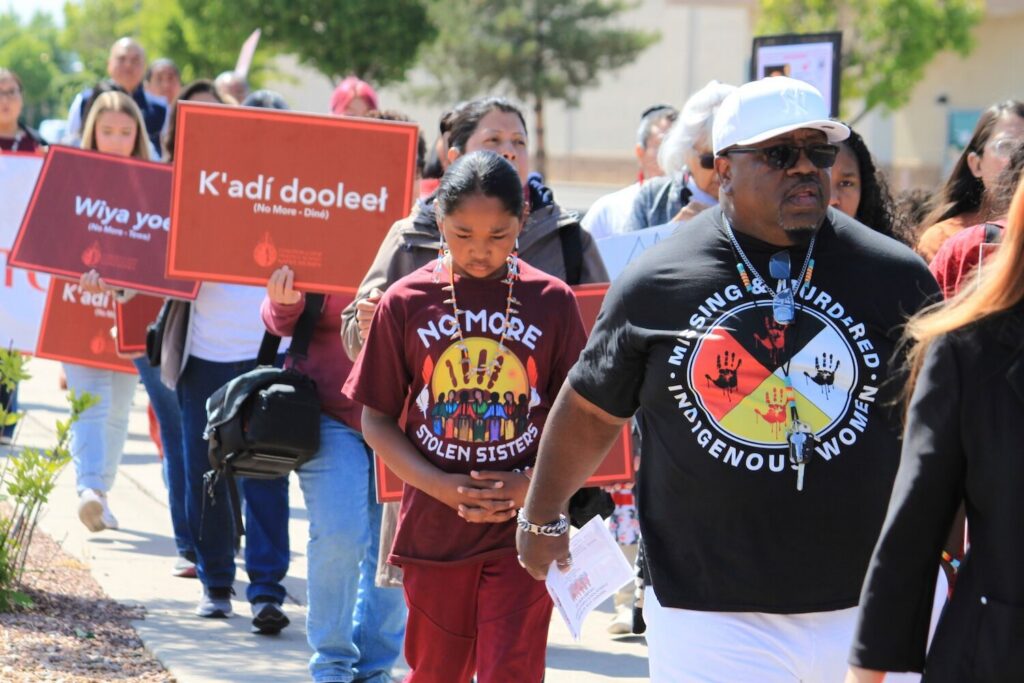
FBI sets $25,000 minimum reward for dozens of unsolved Indian Country cases | OUT WEST ROUNDUP
The Associated Press
the-associated-press@coloradopolitics.com
Updated 22 hours ago
SOUTH DAKOTA Indian Country rewards set SIOUX FALLS — The Federal Bureau of Investigation has established a minimum reward of $25,000 in cases where people went missing or were killed in Indian Country, part of a broader effort to address...
PREV
PREVIOUS

Q&A with Scott Wasserman: 'The best politics are centered around policy debates, not culture wars'
The Bell Policy Center is by many accounts the brain trust of Colorado’s center-left. Meet the brain-truster in chief, Scott Wasserman. Going on two years now as the think tank’s president, Wasserman helms an operation that provides a knowledge base and idea incubator for many of the state’s leading Democratic policy makers. But Wasserman doesn’t […]

Democrat Mark Williams turns in petitions, tees up primary with Joe Neguse in 2nd Congressional District
Mark Williams, a former chair of the Boulder Democratic Party running in the 2nd Congressional District, submitted nominating petitions Friday to the Colorado secretary of state – likely setting up a June primary with former University of Colorado Regent Joe Neguse for the seat held by U.S. Rep. Jared Polis, a Democratic candidate for governor. […]