

Colorado disability advocates say Congress unfairly puts business first with ADA reform bill
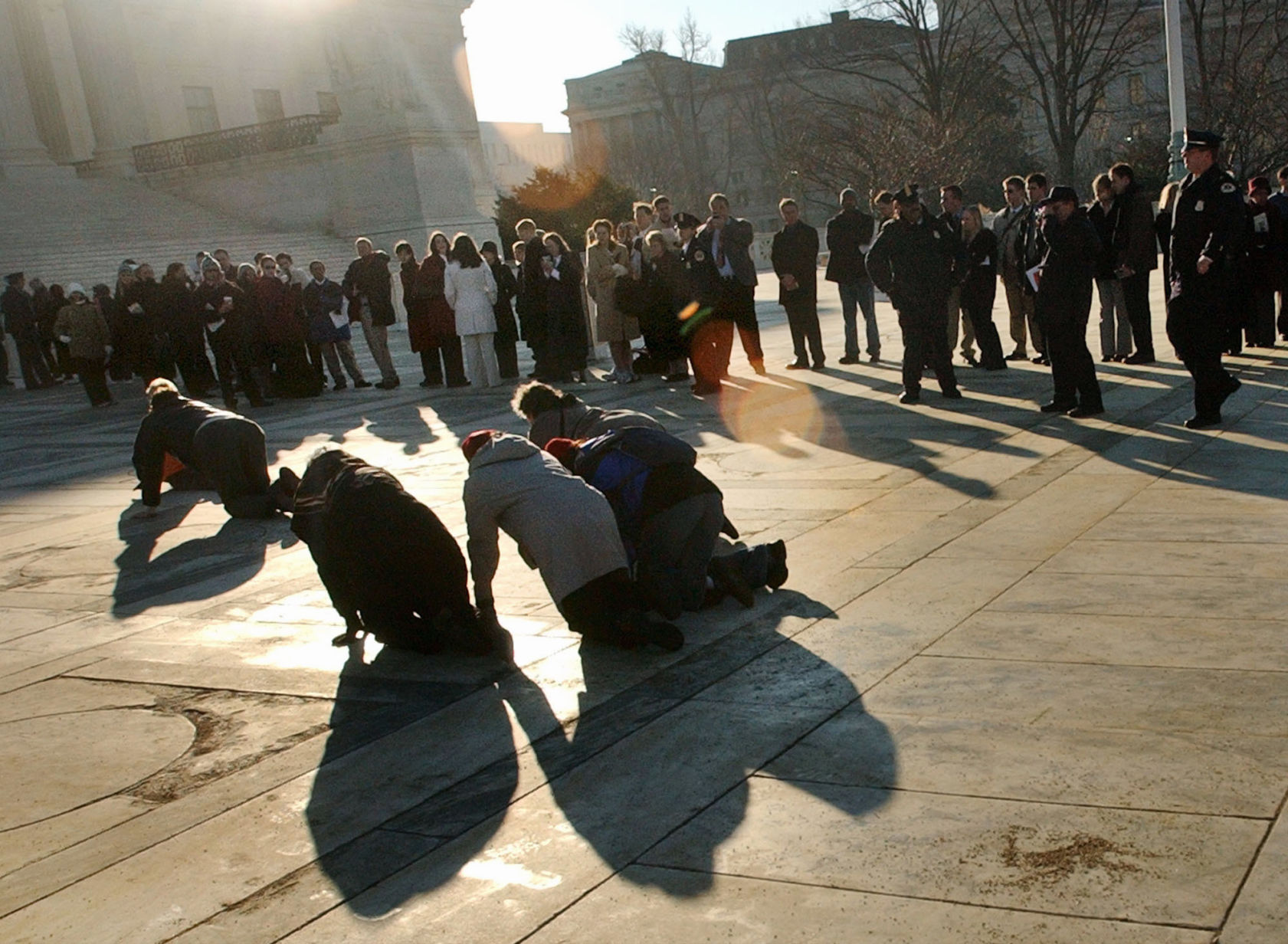
A bill approved last week by the U.S. House of Representatives is drawing sharp criticism from Colorado’s advocates of the disabled but endorsements from business interests.
The legislative proposal would make it harder for disabled persons to sue businesses they accuse of creating architectural barriers to their access.
The bill would create a new obstacle to rules of the Americans with Disabilities Act that authorizes the lawsuits.
Instead, the bill, H.R. 620, would allow lawsuits only if the disabled persons notify business owners in writing of architectural barriers and meet with them to discuss how to overcome them. The businesses would have 120 days to make “substantial progress” to improve accessibility.
“We are horrified at H.R. 620,” said Julie Reiskin, executive director of the Colorado Cross-Disability Coalition, a Denver-based advocacy organization. “This will hurt people with disabilities because it will force lay people who are not attorneys to notify businesses, get precise ownership information and tell them what part of the law they broke before taking legal action.”
She said the bill could diminish the rights of 68 million disabled Americans.
The 1990 Americans with Disabilities Act (ADA) extends some protections to the disabled that were first described in the Civil Rights Act of 1964, which makes discrimination illegal based on race, religion, gender or national origin.
The ADA also requires covered employers to offer disabled employees “reasonable accommodations” and to make public accommodations accessible.
The accessibility most often refers to removing barriers to wheelchairs but can include putting up Braille signs for blind persons or making handicapped parking spaces wide enough for paratransit vans.
Critics of the law say it is used excessively by persons claiming disability, sometimes to get money for attorneys rather than to ensure accessibility.
The critics can be found among Colorado Republicans in Congress.
“For far too long in Colorado and across the country, small businesses, such as local restaurants and retail shops, have fallen prey to unscrupulous lawyers and individuals looking to get quick paydays by filing dozens of lawsuits against small businesses who cannot afford the time or the money to go to court to defend themselves,” said Rep. Mike Coffman, R-Aurora, who co-sponsored H.R. 620. “These suits are generally filed for very minor discrepancies, such as a door handles situated millimeters too high or too low, or even a mirror/fixture that is in the wrong place.
“This bill not only protects businesses from abusive lawsuits but also helps incentivize those businesses to become ADA compliant,” Coffman said.
One provision of the bill would create a program to educate businesses and local governments on how to improve disability access.
Rep. Ken Buck, R-Greeley, added, “This bill benefits business and the disabled by allowing them to resolve issues of non-compliance with the ADA in a way that empowers the disabilities community and allows a business owner a reasonable time to cure a defect before both sides face expensive litigation.”
Opponents of the bill included Rep. Diana DeGette, D-Denver, who said, “I voted against H.R. 620, a cruel attack on the disabled that undermines the bipartisan Americans With Disabilities Act,” DeGette said. “We should be aiming to advance this progress but this bill could prove dangerously regressive.”
The bill, also known as the ADA Education and Reform Act, was introduced by Rep. Ted Poe, R-Texas, who said a primary goal of the legislation is to reduce frivolous lawsuits. Many of the ADA lawsuits are compelled by attorneys trying to collect fees, he said.
The ADA does not allow plaintiffs to collect monetary damages but it does authorize their attorneys to seek settlements for their fees.
Instead of taking on the cost and expense of lawsuits, many businesses settle the lawsuits, which can include paying the plaintiffs’ attorneys thousands of dollars in legal fees, according to congressional testimony.
A companion bill is pending in the Senate.



Misconduct complaints from ex-Colorado judicial discipline director dismissed against federal judges
Michael Karlik
michael.karlik@coloradopolitics.com
Updated 10 hours ago
The administrative body for the Denver-based federal appeals court upheld a finding last week that misconduct complaints against Colorado’s chief federal trial judge and the chief appeals judge warranted dismissal and appeared to be a “litigation tactic” by the complaining...

First-ever Red Rocks naturalization ceremony draws most diverse group of new citizens
Michael Karlik
michael.karlik@coloradopolitics.com
Updated 13 hours ago
Colorado’s federal trial court held its first-ever naturalization ceremony for nearly 300 new citizens on Thursday at Red Rocks Park and Amphitheater. “We’re doing it to commemorate the 250th anniversary of the Declaration of Independence and the United States. Red...

Colorado lawmakers start crafting strategy to manage $200 million in federal rural health funds
Marissa Ventrelli
marissa.ventrelli@coloradopolitics.com
Updated 14 hours ago
Members of the Colorado legislature’s new Commission on Medicaid raised concerns Wednesday about the federal Rural Health Transformation Program created under H.R. 1. The bipartisan, bicameral commission, created in the last legislative session to guide implementation of Medicaid changes under...

Democrat Jessica Killin’s internal poll shows dead heat with U.S. Rep. Jeff Crank in Colorado’s 5th CD
Ernest Luning
ernest.luning@coloradopolitics.com
Updated 11 hours ago
Jessica Killin, the Democratic nominee in Colorado’s 5th Congressional District, is in a statistical tie with Republican U.S. Rep. Jeff Crank, according to an internal poll released this week by Killin’s campaign. The poll of likely general election voters, conducted...

Thousands of migrants bull-rush Spanish border, sparking ‘total humanitarian and social emergency’
Timothy Nerozzi
timothy-nerozzi@coloradopolitics.com
Updated 15 hours ago
Hundreds of migrants in Morocco have bull-rushed through the Spanish border into the European Union, exacerbating the migration crisis. A mob of African migrants plowed past border guards and circumvented barriers into the Spanish territory of Ceuta this week, creating...

Violent and property crimes decreased in Colorado in 2025, according to new data
Marissa Ventrelli
marissa.ventrelli@coloradopolitics.com
Updated 14 hours ago
Violent and property crime rates in Colorado decreased significantly in 2025, according to data from the state’s public safety agency. The violent crime rate decreased by 10.7% from 2024 to 2025, resulting in over 3,300 fewer crimes reported statewide, while...

Colorado Springs D-11 may present voters with $775 million bond measure
Eric Young
eric.young@gazette.com
Updated 19 hours ago
Colorado Springs’ oldest school district could see new capital funding for the first time in over 20 years. Colorado Springs District 11’s Board of Education will decide whether to present a new, districtwide bond totaling $775 million to voters this...

Victor Marx says he’ll only debate Phil Weiser once in Colorado governor’s race — without a moderator
Ernest Luning
ernest.luning@coloradopolitics.com
Updated 15 hours ago
Colorado Republican gubernatorial nominee Victor Marx said on Tuesday that he will participate in only one debate with Attorney General Phil Weiser before the November election — and he challenged the Democratic nominee to hold the event without a moderator....

Denver seeks to move more than $18 million to cover George Floyd protest claims
Deborah Grigsby
deborah.smith@denvergazette.com
Updated 22 hours ago
City officials want to move millions from Denver’s General Fund contingency account to the City Attorney’s Liability Claims Fund to cover legal settlements and claims stemming from the 2020 George Floyd protests. The hefty shift of cash, proposed in Council...
10th Circuit finds no fair housing violation by Littleton landlord for worker’s alleged rape of tenant
Michael Karlik
michael.karlik@coloradopolitics.com
Updated 2 days ago
The Denver-based federal appeals court concluded on Monday that Littleton’s housing authority could not be held liable for a maintenance worker’s alleged rape of a tenant, as the worker’s employment did not provide any special access to the victim. A...
PREV
PREVIOUS

School shooting videos could scar kids — or galvanize them
PARKLAND, Fla. – When two teenagers slaughtered 12 students and a teacher at Columbine High School in Colorado 19 years ago, young people across the country learned the news the old-fashioned way: largely on television and in newspapers. It took days, if not weeks, to process the information and discover the full, horrific story. When […]

Colorado Gov. Hickenlooper tells ag community future is in outdoor recreation
Colorado Gov. John Hickenlooper, in remarks at this week’s 27th annual Governor’s Forum on Agriculture, pointed to the outdoor recreation industry as one area that can help rural communities rebound economically. In January, the Colorado Convention Center hosted the first of five years of shows from the Outdoor Industry Association, which for years had been […]