

Colorado lawmakers want answers on prison system’s inmate math
Colorado Gov. John Hickenlooper and a legislative working group that will convene for the first time Wednesday are scrutinizing how the Department of Corrections estimates how many beds – and ultimately how much money – the state needs for inmates.
Lawmakers, Republicans and Democrats, are holding up a budget request from the prison system, questioning cost projections for the last decade.
Hickenlooper signed an executive order last Friday calling on prison officials and other members of his administration to “review the historical accuracy of forecasting models” used to submit budget requests to the General Assembly each year.
“On one hand you could say this is a good-faith mistake,” Rep. Cole Wist of Centennial, a member of the working group, told Colorado Politics Tuesday. “On the other hand, you could say that this is manipulation of data to drive fiscal policy.
“And I’m going to say it’s a little bit of both.”
Wist, the assistant House Republican leader, said the department’s projections have been off in seven of the last 10 years, and he knew of no effort to pull budget requests and actual costs in line with one another after the fact.
“This is a bipartisan frustration,” he said. “We want to know what’s going on with these projections. Can we rely on these projections, because we’re being told the sky is falling and the numbers don’t seem to justify that?”
The Department of Corrections responded to a Colorado Politics’ request Tuesday night, including about Wist’s concern about past estimates that didn’t hold up.
“Current prison population forecasts – from both the executive and legislative branches of government – indicate that we will see growth in the state inmate population through 2020,” spokesman Mark Fairbairn said in an e-mail. “If such projections are accurate, this growth will have societal and economic consequences that must be considered from both a budgetary and policy standpoint.
“We appreciate the governor and the General Assembly for their leadership and desire to examine prison population projections and capacity needs. Since both branches of government projected a similar uptick in their analyses, it is imperative that we partner-up and collaborate to address these complex issues together.”
Hickenlooper instructed members of his administration to work with the legislative panel to resolve the questions by April 1. Next year’s state budget is usually set in April, before the four-month legislative session ends in mid-May.
The Department of Corrections is asking for $922 million in next year’s budget, which includes a staff of 6,228 and about 20,000 inmates, according to its budget proposal.
The department expects that number to grow by more than 1,000 next year, according to the Dec. 20 budget document.
In his executive order, the governor noted that the actual number of prisoners in the state has fallen by 3,748 since 2009. “Now, new population projections conducted by both the legislative and executive branches indicate that the state inmate population may rise significantly through 2020 and beyond,” Hickenlooper stated in the order.
The outcome of the hearings could have a significant impact on the department’s funding and programs.
Rep. Leslie Herod, D-Denver, another group member, said she has been concerned about the department’s miscalculations, as well, but she’s ask bothered that there are almost 400 empty prison beds in Colorado.
“I wonder if we’re using our current capacity in the most effective way,” she said. “And I wonder why we’re not moving more people into community corrections.”
This session, prison officials are asking lawmakers for an extra $5.4 million to reopen the empty Huerfano Correctional Facility near Walsenburg, a private prison with 250 beds.
The Department of Corrections also has considered reopening the 913-bed Colorado State Penitentiary II in Canon City, now called Centennial South, which opened in 2010 at a cost of $208 million and closed in early 2013, because of declining prison population and to save money in the department’s budget. Taxpayers still spend millions each year to maintain the relatively new but empty prison.
Last fall, prison officials were mulling a $10.9 million request for a 250-bed private prison there, Noelle Phillips of the Denver Post reported.
Herod said Tuesday that there are scores of inmates still jailed past their parole eligibility date “just waiting in the Department of Corrections.”
She thinks values, not money, need to shift.
“They need to shift their focus from just meeting their capacity and filling their beds to how do we move people back into society in a productive way,” Herod said. “Are we providing mental health treatment, are we providing addiction services, are we utilizing these community corrections beds in the best way possible to transition these people and reduce our recidivism rate?
“That’s where the focus should be, not just paying for more and more prison beds.”
Herod said she was optimistic about the bipartisan interest that the working group represents.
She and Wist are joined by Sens. Don Coram of Montrose, John Cooke of Greeley, Daniel Kagan of Cherry Hills Village and Leroy Garcia of Pueblo, along with Reps. Pete Lee of Colorado Springs and Yeulin Willett of Grand Junction.


Trump faces first domestic test on Iran conflict with Senate war powers vote
Ramsey Touchberry, Washington Examiner
ramsey.touchberry.washington.examiner@gazetteedit.wpenginepowered.com
Updated 11 minutes ago
Administration officials are scrambling to sell members of Congress on President Donald Trump’s military operations in Iran ahead of bipartisan attempts to limit his war powers in the Middle East without approval from lawmakers. The Senate and House are set...
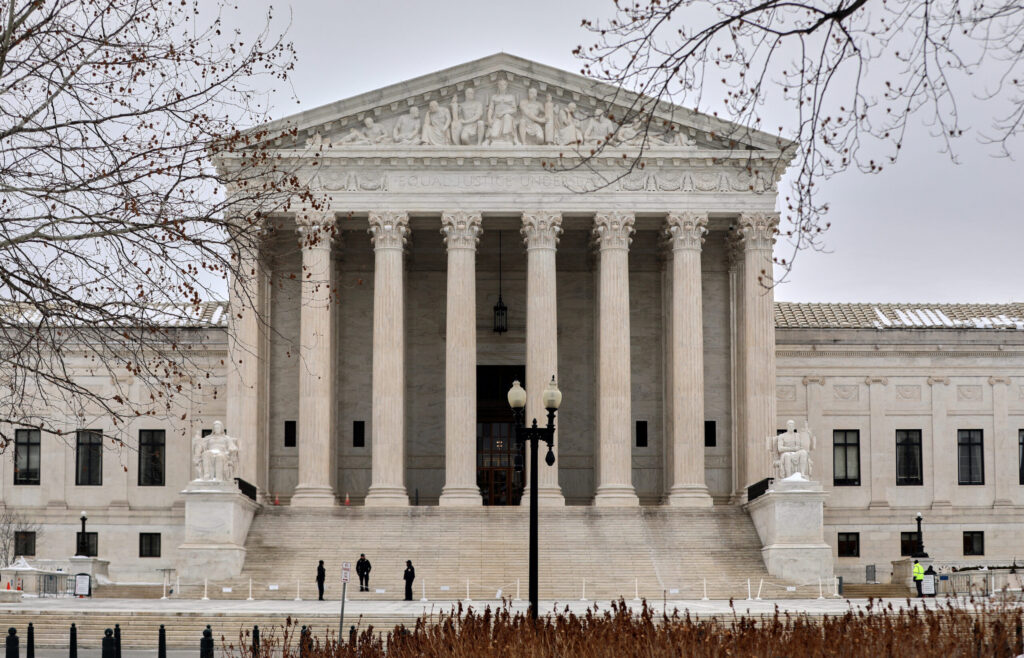
Supreme Court hands California parents win over secret gender transition policy
Jack Birle, Washington Examiner
jack.birle.washington.examiner@gazetteedit.wpenginepowered.com
Updated 18 minutes ago
The Supreme Court gave California parents a significant victory late Monday when it kept in place a lower court’s block of the Golden State’s public school policy hiding students’ gender identity and preferred pronouns from parents. A 6-3 majority on...
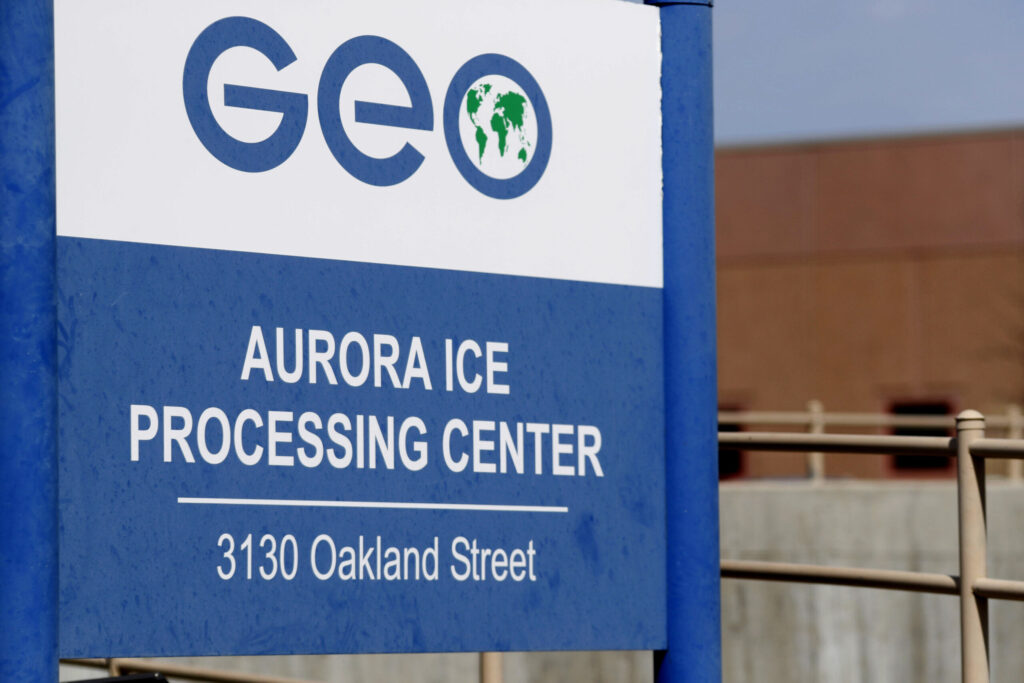
Judge nixes latest policy requiring 7 days’ notice for Congress members to visit ICE facilities
Michael Kunzelman
michael.kunzelman@associatedpress.com
Updated 21 minutes ago
WASHINGTON (AP) — A federal judge agreed on Monday to temporarily suspend the latest version of a Trump administration policy that requires members of Congress to provide a week’s notice before they can visit immigration detention facilities. U.S. District Judge...
Judge nixes latest policy requiring 7 days’ notice for Congress members to visit ICE facilities
Michael Kunzelman
michael.kunzelman@associatedpress.com
Updated 21 minutes ago
WASHINGTON (AP) — A federal judge agreed on Monday to temporarily suspend the latest version of a Trump administration policy that requires members of Congress to provide a week’s notice before they can visit immigration detention facilities. U.S. District Judge...

Gov. Polis, Upper Basin states criticize federal draft plan for managing the Colorado River
Marianne Goodland
marianne.goodland@coloradopolitics.com
Updated 54 minutes ago
With no agreement among the seven Colorado River states and federal deadlines now passed, the Upper Colorado River Commission on Monday sharply criticized the U.S. Department of the Interior’s draft plan for managing the river after current guidelines expire this...

Ballot access, dual-office ban bills move swiftly through Colorado legislature
Marianne Goodland
marianne.goodland@coloradopolitics.com
Updated 2 hours ago
With an eye on the 2026 election cycle and mounting tensions with the Trump administration, Colorado lawmakers are fast-tracking a pair of election bills they say will protect the state’s mail ballot system and tighten rules for elected officials. The...
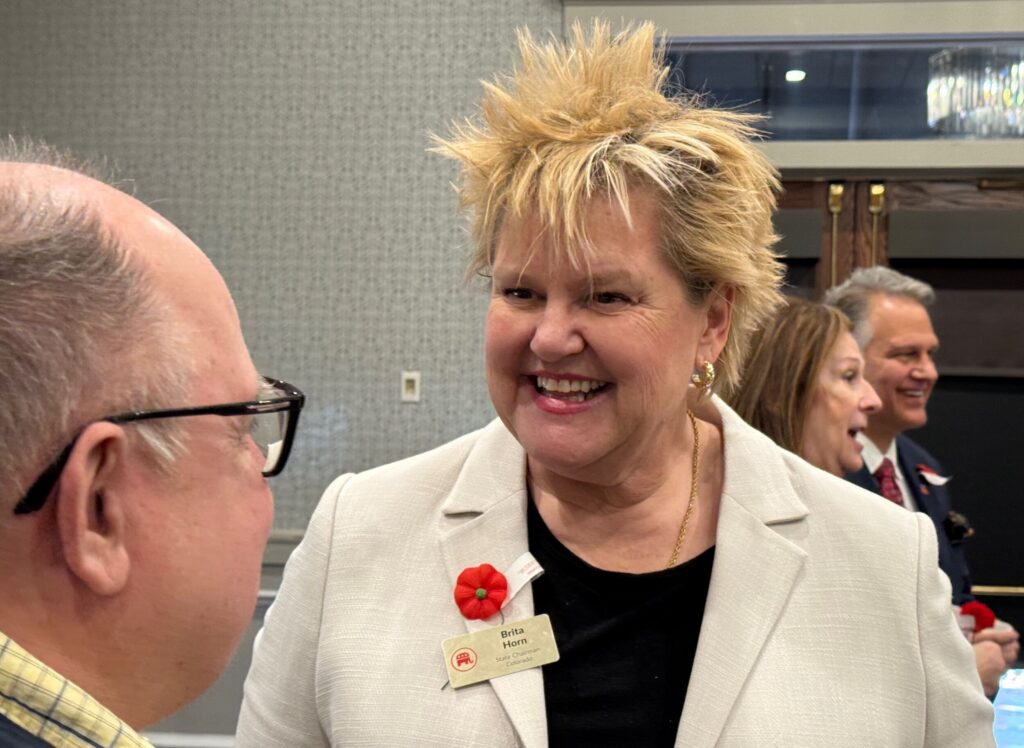
Colorado GOP chair Brita Horn loses ‘no-confidence’ vote, vows to refocus on ‘mending that divide’
Ernest Luning
ernest.luning@coloradopolitics.com
Updated 2 hours ago
The Colorado Republican Party’s state central committee approved a resolution expressing “no confidence” in state chair Brita Horn in a landslide late Monday night near the end of an online meeting marked by rancor and confusion. Almost 80% of the...

Trump to attend White House Correspondents’ Dinner for first time as president
Washington Examiner Staff, Washington Examiner
washington.examiner.staff.washington.examiner@gazetteedit.wpenginepowered.com
Updated 4 hours ago
President Donald Trump announced on Monday that he accepted an invitation to this year’s White House Correspondents’ Dinner. It would mark the first time Trump has attended the dinner, in either term, since he’s been president. Trump announced the decision...
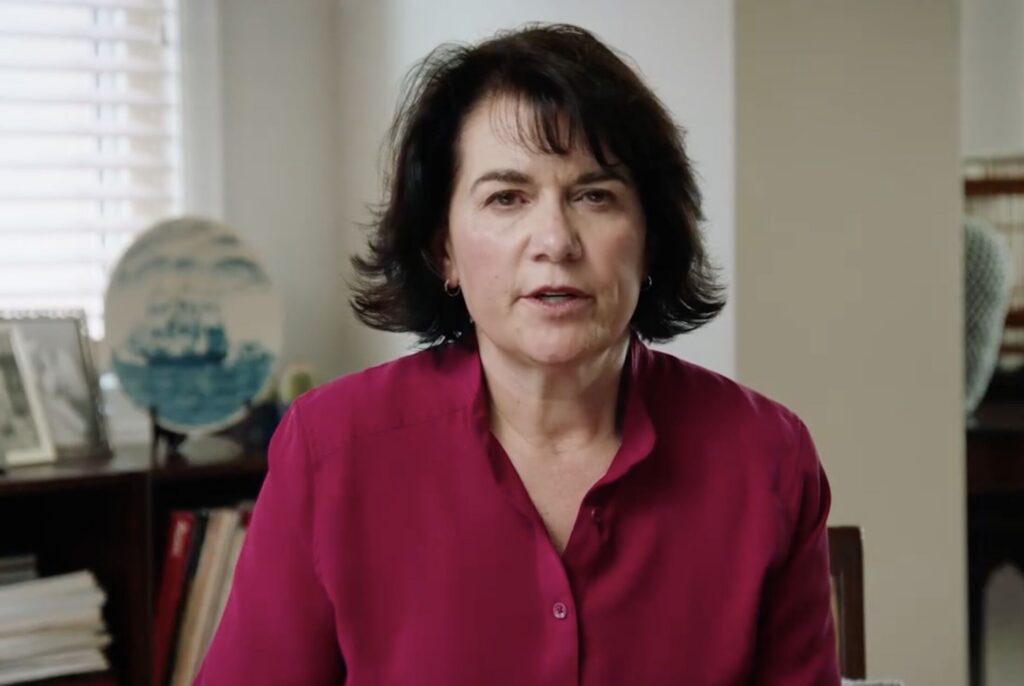
Primary rival sues to prevent Democrat Eileen Laubacher from going through assembly in Colorado’s 4th CD
Ernest Luning
ernest.luning@coloradopolitics.com
Updated 7 hours ago
Democratic congressional candidate Trish Calvarese on Monday asked a judge to prevent one of her primary rivals, Eileen Laubacher, from participating in the caucus and assembly process to seek the nomination to challenge Republican U.S. Rep. Lauren Boebert in Colorado’s...
Colorado lawmakers tackle legislation on sexual assault
Jenny Deam
jenny-deam@coloradopolitics.com
Updated 9 hours ago
A panel of Colorado lawmakers on Monday unanimously approved a bill that supporters say will offer protections and support to victims of domestic violence, stalking, sex trafficking and sexual assault, including mandatory training for law enforcement on trauma. The measure,...
PREV
PREVIOUS

In 'State of the Fifth' address, Lamborn focuses on defense
U.S. Rep. Doug Lamborn on Tuesday hailed a $700 million defense budget, passed in December, as one of the biggest recent legislative victories for the Pikes Peak Region. The National Defense Authorization Act gives military personnel a 2.4 percent pay raise – the largest in eight years – and $90.5 million for local military construction, […]

Call in Wednesday to ask questions, learn more about CDOT plan to the I-25 'Gap' with toll lanes
El Paso County residents can call in to a telephone town hall Wednesday night to ask about the widening of the Interstate 25 “Gap,” the Colorado Department of Transportation said. To hear an update on the project – which would widen the 18-mile stretch from Monument to Castle Rock from two to three lanes in […]