

Environment Colorado paper backs bill to aid renewable energy storage
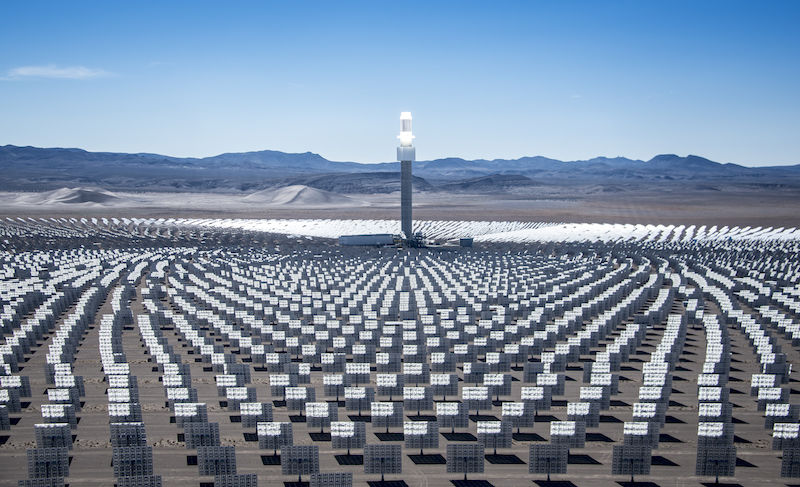
A bipartisan bill this session would allow Coloradans to install storage systems to collect energy, connect it to the grid and cut their outside sources of juice.
Senate Bill 9, cosponsored by Sen. Kevin Priola, R-Henderson, and Rep, Steve Fenberg, D-Boulder,
This bill would have the Public Utilities Commission to adopt rules for the use of distributed electricity storage systems by customers of Xcel Energy and Black Hills Energy, the state’s two investor-owned utilities.
The bill is supported by a white paper put out last week by Environment Colorado. The organization noted that concerns over the variability and dependability of renewable sources been impeded use of unlimited energy resources such as solar and wind. Emerging energy storage technology is a “game-changer,” the report says.
“As renewable energy production rises, energy storage is increasingly becoming a ‘go-to’ option for utilities, businesses and homeowners. But many people are still unaware that it’s ready for prime time,” Garrett Garner-Wells, director of Environment Colorado, said in a statement. “We’re working with policy makers around the state to ensure that they know how the smart use of energy storage can make Colorado’s transition to clean, renewable energy possible”
Environment Colorado’s report, “Making Sense of Energy Storage: How Storage Technologies Can Support a Renewable Energy Future” can be read by clicking here.
“More than 300 new storage projects were added to the grid over the last decade, and at least 300 more are already being planned or built,” said Elizabeth Berg, a Frontier Group analyst and co-author of the report, stated. “Our report shows that these technologies cannot only aid our transition to a renewable energy system, but can provide many other benefits to the electric grid as well.”
The report calls for several policies that would advance renewable energy storage related to the grid, permitting, rates, transmission and distribution costs, as well as incentives for homes and businesses to store the power their systems generate.


Who has the power to declare war?
Tom Cronin Bob Loevy
tom-cronin-bob-loevy@coloradopolitics.com
Updated 13 hours ago
Our constitutional framers boldly and ambitiously granted Congress the power to declare war yet granted the executive the responsibility, after war is declared, to supervise war as the commander-in-chief. That worked well until the Cold War began. The U.S. has been...

The delicate, ever-changing dance between politics and religion | SONDERMANN
Eric Sondermann for Colorado Politics
eric_sondermann_for_colorado_politics@coloradopolitics.com
Updated 2 days ago
The dance, really a marathon that brings to mind the classic movie “They Shoot Horses, Don’t They?”, has been going on as long as there have been governments and organized religion. That is to say that this delicate tango has...
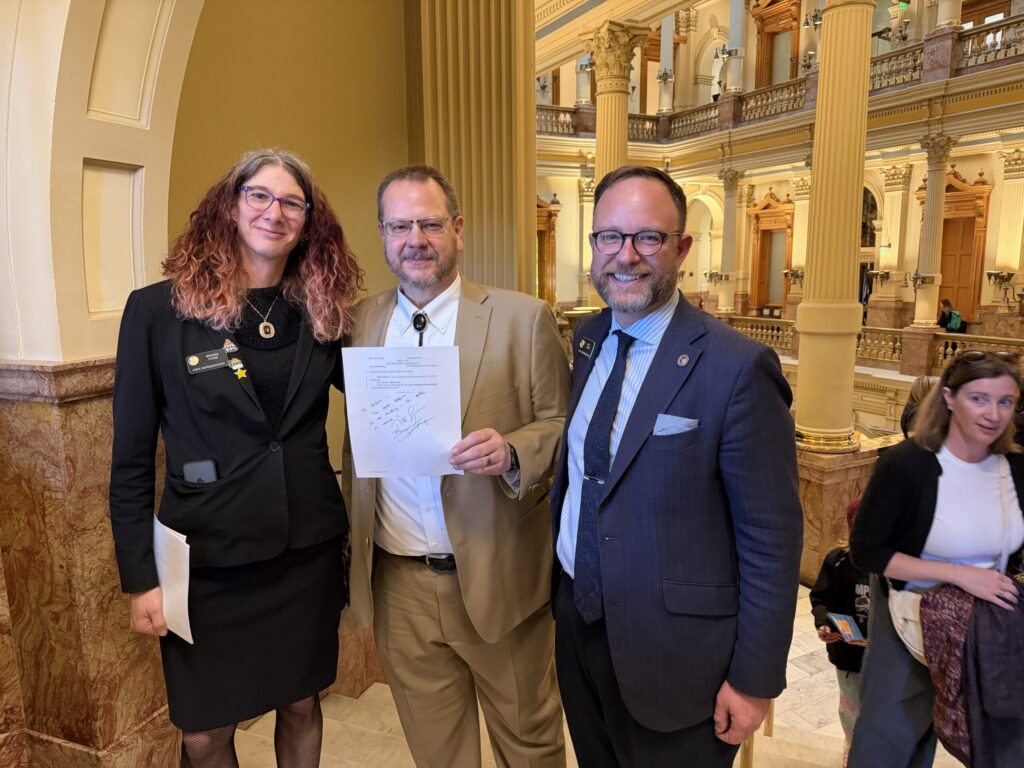
Roasts, get yer roasts, here: Capitol M | Week of March 14, 2026
Marianne Goodland
marianne.goodland@coloradopolitics.com
Updated 3 days ago
The lighter side of the Capitol, especially in the past week Apparently, the pending and eventual switch to daylight stupid time has put people in some pretty funny moods. And thank goodness! On March 4, the Senate approved the appointments...
Polly Baca elected to DNC | A LOOK BACK
Rachael Wright, Special to Colorado Politics
rachael.wright@coloradopolitics.com
Updated 3 days ago
Forty-Five Years Ago This Week: After her loss to Republican U.S. Rep. Hank Brown the previous year in the race for the 4th Congressional District, state. Sen Polly Baca-Barragan, D-Thortnon, was elected as one of the three vice-chairs of the...
Colorado Politics Calendar Mar. 16-22
Rachael Wright, Special to Colorado Politics
rachael.wright@coloradopolitics.com
Updated 3 days ago
CoPo’s weekly political calendar will help you find political and public-policy events throughout Colorado. It includes candidate and issue campaign events, public policy meetings, court hearings, state and local party conventions, assemblies, debates, rallies, parades, speaking engagements, traveling dignitary appearances,...

Boebert challenger Eileen Laubacher joins lawsuit aimed at blocking her from Democratic assembly
Ernest Luning
ernest.luning@coloradopolitics.com
Updated 12 hours ago
A Denver District Court judge on Thursday permitted Democratic congressional candidate Eileen Laubacher to join a lawsuit filed by one of her primary opponents seeking to prevent Laubacher from participating in the party’s assembly process in a bid to qualify...
House Ethics Committee to begin hearing on Weinberg complaint
Marianne Goodland
marianne.goodland@coloradopolitics.com
Updated 18 hours ago
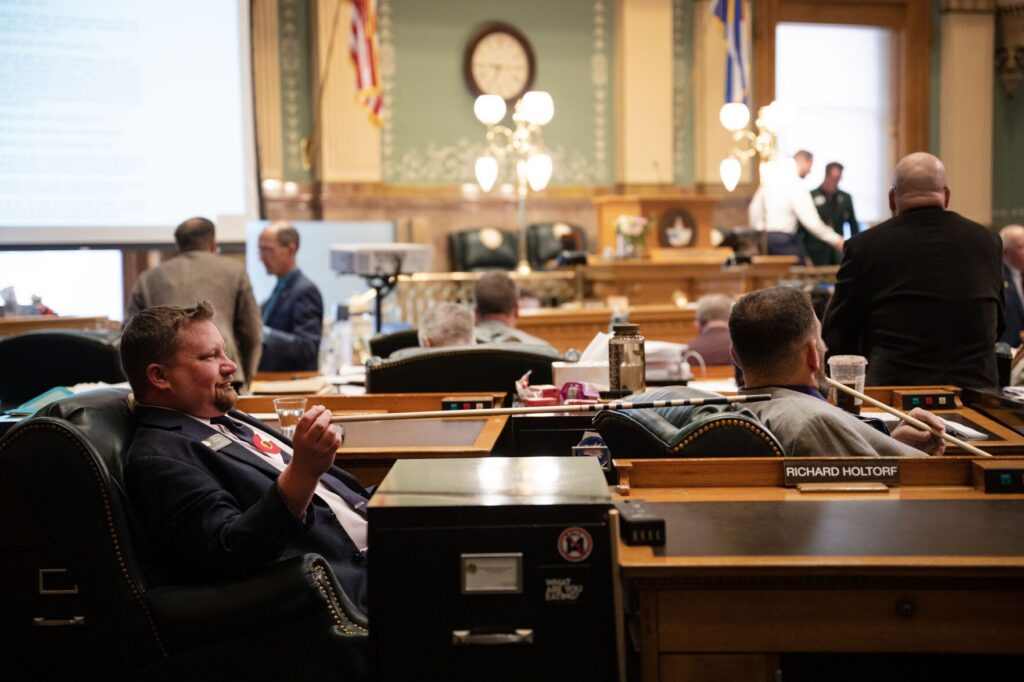
The House Ethics Committee on Tuesday will begin a hearing requested by Rep. Ron Weinberg, R-Loveland, tied to an ethics complaint filed against him by Rep. Brandi Bradley, R-Roxborough Park. The ethics committee had found probable cause on two issues...

Iran war enters next phase of destroying entire missile supply chain: Hegseth
Brady Knox, Washington Examiner
brady.knox.washington.examiner@gazetteedit.wpenginepowered.com
Updated 19 hours ago
Secretary of War Pete Hegseth said the war with Iran was entering a new phase, as the United States was focusing on destroying Tehran’s defense industrial base. At a Friday Pentagon briefing, Hegseth and Gen. Dan Caine, chairman of the Joint...
Jeffco Public Schools found in violation of Title IX
Sage Kelley
sage.kelley@denvergazette.com
Updated 14 hours ago
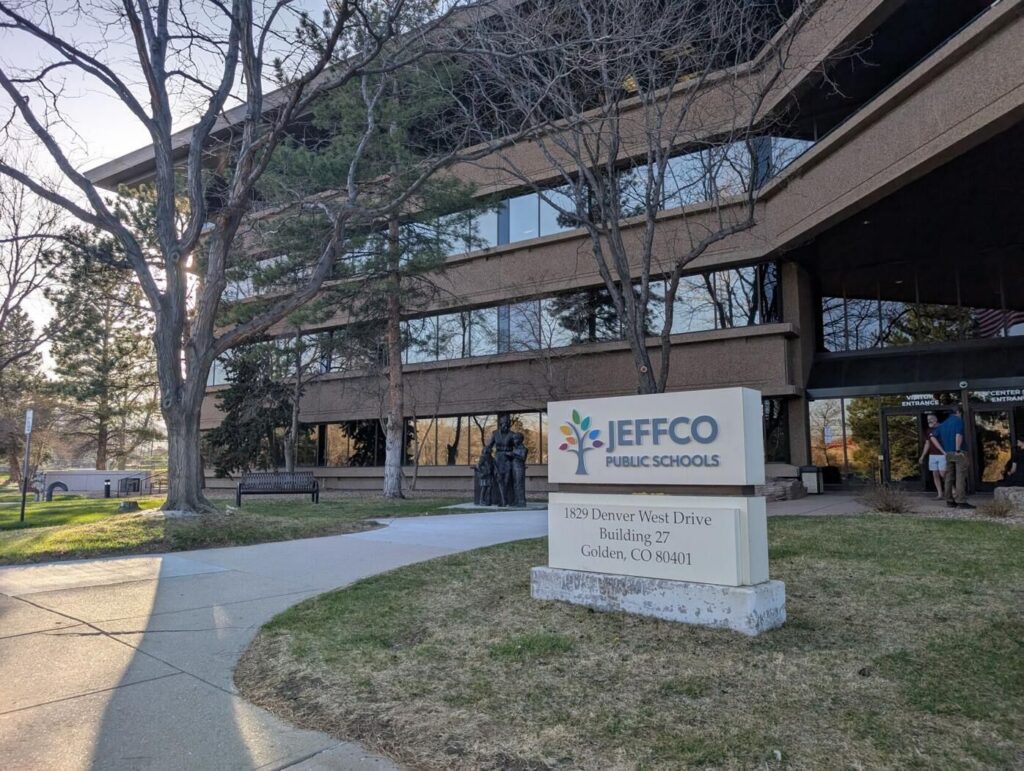
Civil rights office: Male students occupy 61 roster positions on girls’ sports teams The U.S. Department of Education announced Friday that the Jeffco Public Schools district violated Title IX by permitting male students to access female bathrooms and compete in...
Colorado plans to slash interim committee work amid budget woes
Marianne Goodland
marianne.goodland@coloradopolitics.com
Updated 11 hours ago
In a tight-budget year, the work of interim committees — those off-session groups that look at transportation, agriculture, water, healthcare, wildfires, pensions, and anything else lawmakers want to look at — is on the chopping block. And this year, no...
PREV
PREVIOUS

The Fray's front man joins governor to promote music in Colorado schools
Students at Clyde Miller P-8 School in Aurora strummed along on ukuleles as Gov. John Hickenlooper, on a banjo, and Isaac Slade, the frontman for the Colorado-born band The Fray, played guitar and led them in “Will the Circle Go Unbroken.” The school is one of five sharing $450,000 raised by musicians and other benefactors […]

Tolls on Colorado interstates aren't in legislators' plans, but they're still in the works
A bill last year to plow $300 million a year in Colorado from a sales tax bogged down over tolls. Legislation this year would take that much money out of the state budget, and it steers around the sticky politics of toll roads. “If we ask voters to let us use $300 million of taxpayer […]