

Colorado House and Senate leaders continue to duel over transportation solution
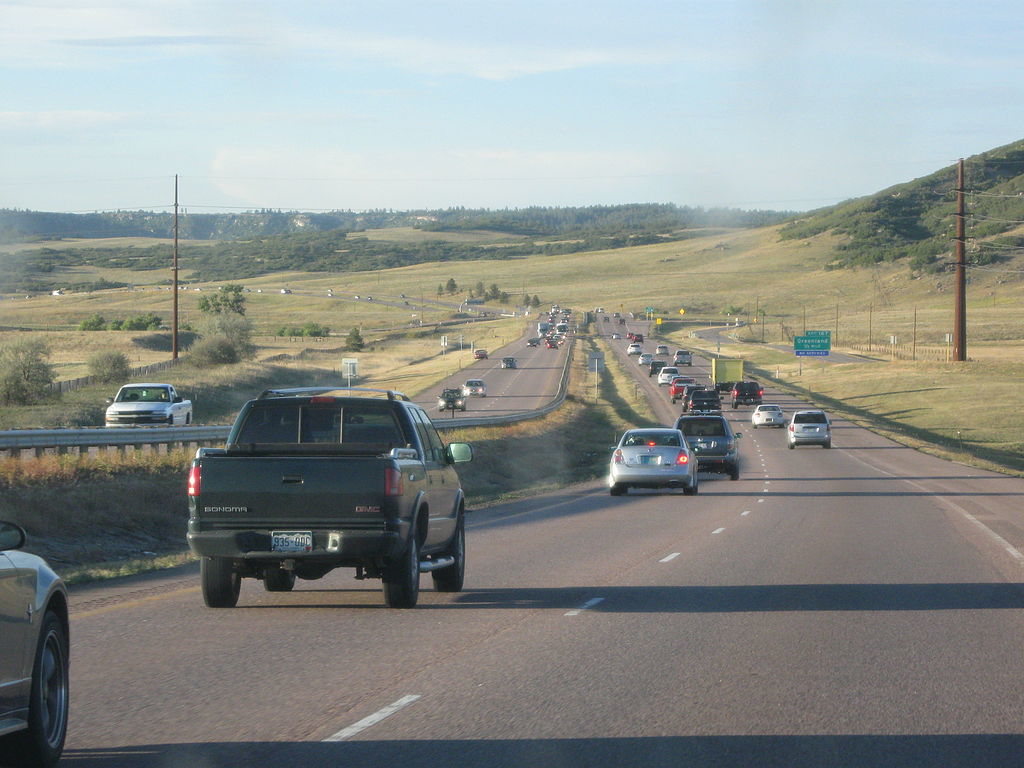
The debate over transportation at the Colorado state Capitol this week has all the feel of an “I was here first!” argument.
Leaders of the Colorado House and Senate spoke Monday about their views on transportation, with both claiming it’s their top priority.
But on how to get there, they still appear to be miles apart.
Speaking to reporters Monday, Senate President Kevin Grantham of Cañon City continued to advocate for the Senate’s top priority bill, Senate Bill 1, which would take $300 million from existing state revenues and bond, with voter approval, to cover about $3.5 billion of the state’s top tier of transportation projects. It’s far short of the $9 billion on the Department of Transportation’s initial wishlist, nor will it touch the $25 billion CDOT estimates the state will have to spend in the next 20 years or so.
The measure is up for its first hearing Tuesday in the Senate Transportation Committee.
Grantham claimed that for Democrats, including Gov. John Hickenlooper, transportation is actually at the bottom of their priority list. The $148.2 million Hickenlooper asked for in December, part of a revised budget proposal for 2018-19, was actually the last of the money from an unexpected revenue surplus, which could top $1 billion, Grantham said. That’s the result of extra dollars left over from the 2017-18 budget and money coming into the state through increased individual income taxes, the result of the federal Tax Cuts and Jobs Act.
Senate Republicans advocate that $300 million from that $1 billion surplus go to roads and highways, and another $340 million to $350 million refunded to taxpayers through a measure sponsored by Senate President Pro tem Jerry Sonnenberg of Sterling. The rest, around $350 million, could repay some of the dollars borrowed by the government to keep the budget balanced without huge cuts. That includes millions of dollars taken from severance tax accounts or the state’s debt to K-12 public education, known as the “negative factor.”
Sonnenberg’s income tax bill, SB 61, would lower the state’s individual and corporate income tax rates by two-tenths of a percent, from 4.63 percent to 4.43 percent. Grantham pointed out in his opening day speech that the bill is in part a response to a refusal by the Governor to implement a 2 percent across-the-board-cut in spending for most state agencies, excluding education and transportation. One provision out of last year’s rural Colorado bill, SB 17-267, required state agencies to submit budgets with those cuts, but the bill didn’t mandate that the governor or his budget team implement those cuts. Two weeks ago, House Republicans submitted an open records request to the governor to demand the budget submissions. The two sides are still talking but indications are that the governor’s office believes those submissions fall under “work product,” an exclusion in the state’s open records law.
“If [transportation] were a priority” for the governor, Grantham said, the $300 million would already be available for transportation. What the governor promised – the $148.2 million – is all that’s left after he spent it elsewhere, Grantham said.
“We can make better choices …. Senate Bill 1 will change the face of Colorado.”
Speaker of the House Crisanta Duran of Denver insisted that transportation is also a priority for her caucus, but Senate Bill 1 is not the answer.
“I’m not convinced Senate Bill 1 is the right policy,” she told reporters Monday. Her opposition is based on concerns that setting aside $300 million from the state budget every year will “mortgage the state’s future.”
That turned out to be the case with the Denver T-Rex project, started in 2000 and completed in 2006, at a cost of $1.67 billion. At the time, it was the most expensive highway project in Colorado history.
Although work on the project concluded in 2006, the state made bond payments of $167 million per year through 2016, payments that had to be made despite two recessions and millions of dollars in cuts in other areas of state government, such as education (currently $828 million) and severance tax revenues ($322 million). That the mortgage that Duran and other Democrats fear.
Duran still holds out hope for a ballot measure forged by the stakeholders from last year’s failed transportation measure. “All options are on the table,” she said.
But it appears Senate Bill 1 isn’t one of them.


Can deliberation save democracy? | Vince Bzdek
Vince Bzdek
vince.bzdek@gazette.com
Updated 4 hours ago
In September 2019, 523 Americans traveled to Dallas, Texas, for an experiment called “America in One Room.” The gathering was designed to test a theory: Could representative citizens deliberate productively even in an era of intense polarization? The event took...

Colorado health equity funder’s redirection debated
DEBBIE KELLEY
debbie-kelley@coloradopolitics.com
Updated 22 hours ago
A redirection in grantmaking that began two years ago for The Colorado Trust, a 40-year-old Denver-headquartered funder, has led some employees to now voice concerns, which has reportedly put their jobs in jeopardy. The vice president of communications for the...
Redistricting scheme would give Colorado Democrats seven House members, split El Paso County
Bob Loevy
bob-loevy@coloradopolitics.com
Updated 11 hours ago
A proposed redistricting plan, which could give Colorado seven Democratic members of the U.S. House of Representatives and only one Republican, would split El Paso County into two parts and thereby weaken the county’s influence in Congress. El Paso County,...

Is Trump a builder or just a latter-day headhunter? | SONDERMANN
By Eric Sondermann
by-eric-sondermann@coloradopolitics.com
Updated 2 days ago
It was well under 100 hours after President Donald Trump’s overly long, overly theatrical State of the Union speech that he unleashed American bombers across Iran. As I write, it is now less than 100 hours since those bombers started...
LDS activist excommunicated from the church speaks out on women’s rights across Colorado | A LOOK BACK
Rachael Wright, Special to Colorado Politics
rachael.wright@coloradopolitics.com
Updated 2 days ago
Forty-Five Years Ago This Week: “Women must demand — now and if necessary at the peril of our lives — that we be granted civil rights in the same way rich white men in this country were granted them: constitutional...
Democrats eye new taxes on alcohol, marijuana to fund Colorado mental health spending
Marissa Ventrelli
marissa.ventrelli@coloradopolitics.com
Updated 2 days ago
Facing a more than $1 billion budget shortfall, Colorado lawmakers are searching for ways to fund mental health services in a state that consistently ranks among the worst in the nation for mental health outcomes. Several proposals this session aim...

Hopes and fears: Colorado Iranians speak out on widening war
Mark Samuelson Special to The Denver Gazette
mark.samuelson@denvergazette.com
Updated 9 hours ago
Group talks about young people protesting against the Islamic Republic, and Reza Pahlavi and the monarchy When Denver area real estate agent Fara Novin dined out for her birthday Friday night, Feb. 27, she blew out a candle on a...
DOJ publishes more Epstein documents mentioning Trump after initial omission
Rena Rowe, Washington Examiner
rena.rowe.washington.examiner@gazetteedit.wpenginepowered.com
Updated 1 day ago
The Justice Department released additional Epstein files on Thursday, including uncorroborated accusations from a woman claiming she was sexually assaulted by President Donald Trump. Last week, Rep. Robert Garcia (D-CA), the top Democrat on the House Oversight and Government Reform...
Federal judge dismisses developer’s challenge to Denver affordable housing ordinances
Michael Karlik
michael.karlik@coloradopolitics.com
Updated 21 hours ago
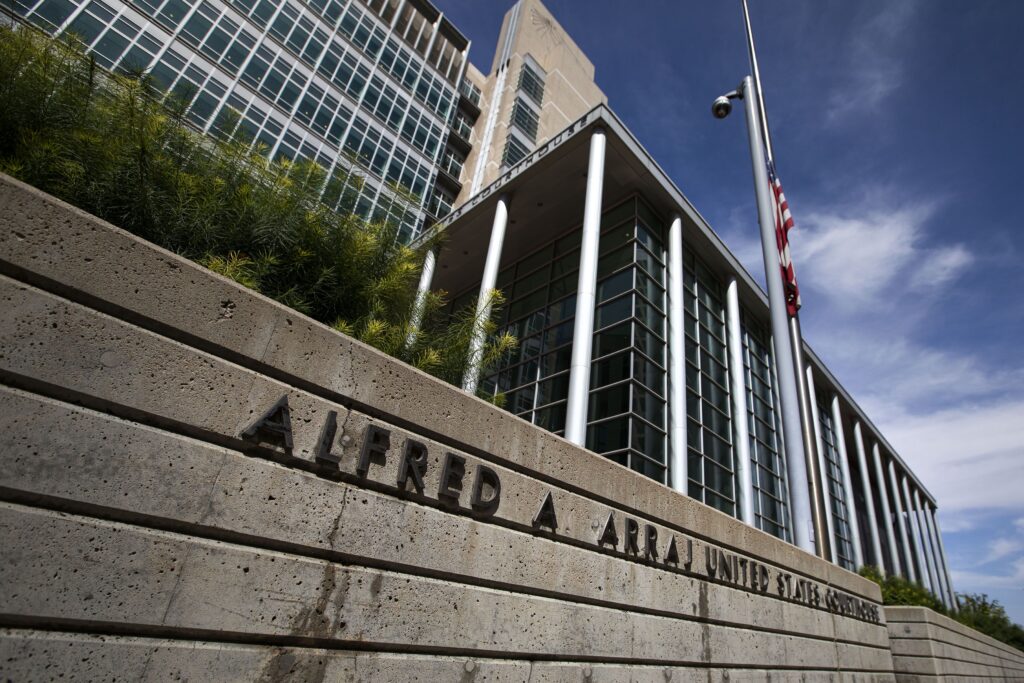
A federal judge dismissed a homebuilder’s constitutional challenge on Tuesday to a pair of Denver ordinances that impose obligations on developers related to the affordable housing demands created by new construction. Two related companies, redT Homes and redT Capital Partners,...
Another TABOR fight: Democrats plan to redirect residents’ refunds to K-12 spending
Marianne Goodland
marianne.goodland@coloradopolitics.com
Updated 6 hours ago
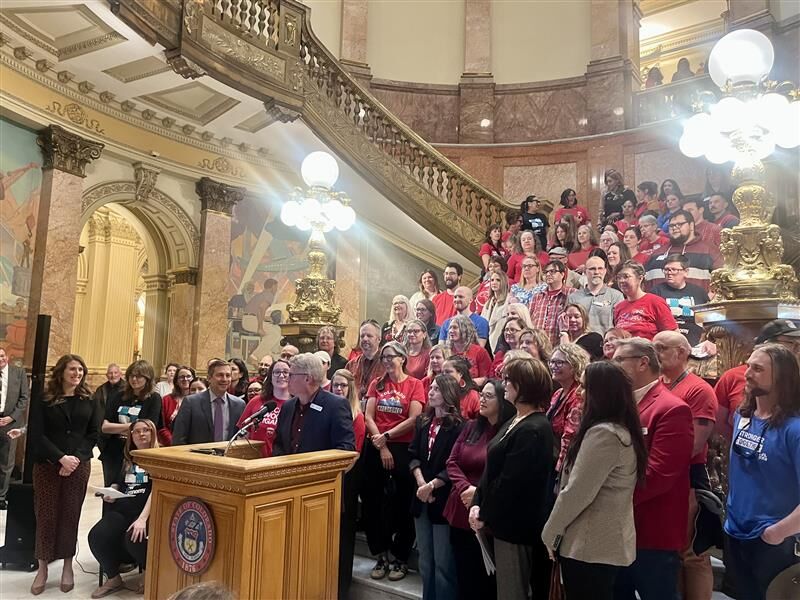
Colorado voters could decide this fall whether billions of dollars that would otherwise be returned as refunds under the Taxpayer’s Bill of Rights should instead go to public schools under a ballot measure unveiled Thursday by Democrats. Supporters say the...
PREV
PREVIOUS
Colorado Supreme Court backs dismissal of abortion lawsuit
DENVER – The Colorado Supreme Court has supported other judges’ dismissals of a lawsuit accusing the state of funding an abortion provider in violation of the state constitution. Former lieutenant governor Jane Norton filed the lawsuit in 2013, arguing that state funding given to Rocky Mountain Planned Parenthood for medical services effectively subsidized an affiliate […]

What's the impact on Colorado? Applying the crystal ball to GOP’s Tax Cuts and Jobs Act
Unlike a lot of heralded reforms that are adopted by Congress but soon forgotten by the public, the newly enacted Tax Cuts and Jobs Act will have a noticeable and lasting impact on everyday Coloradans. The challenge now is figuring out what that impact will be. To fully grasp how the measure’s many moving parts […]