

How Colorado’s congressional delegation voted this week
H.Con.Res. 71: Establishing the congressional budget for the U.S. government for fiscal 2018 and setting budget levels for fiscal 2019 through 2027
This was a vote to agree to the H.Con.Res. 71 budget resolution in the House.
The House approved the controversial budget bill by only four votes. Critics said it would increase the federal deficit by $1.5 trillion in the next decade while supporters said it would create a surplus of $9 billion. The federal government’s debt already stands at more than $20 trillion. The deficit for fiscal 2017, which ended Sept. 30, reached $666 billion. The bill would reduce the corporate income tax rate to 20 percent from the current 35 percent. The number of individual income tax brackets would be cut from seven to three or four. The tax rate would be 12 percent for the lowest income bracket, 25 percent for middle incomes and 35 percent for the highest incomes. There is a possibility for one higher bracket. The bill would nearly double the standard deduction to $12,000 for individuals and $24,000 for married couples filing jointly. The resolution sets discretionary spending for fiscal 2018 at $1.132 trillion, which includes $621.5 billion for defense discretionary spending and $511 billion in non-defense discretionary spending. By clearing the House this week, it means Congress could approve the budget without any Democratic votes. Senate leaders hope to introduce their version of the same bill and have it approved by the end of November.
Passed.
H.R. 1698: Iran Ballistic Missiles and International Sanctions Enforcement Act
This was a vote to pass H.R. 1698 in the House.
H.R. 1698 requires the president to impose sanctions on foreign persons and entities involved with Iran’s ballistic missile program and on any country or group that provides or receives conventional weapons from Iran. It won nearly unanimous support in the House as one more measure to put pressure on Iran without eradicating the international agreement that is supposed to block its development of nuclear weapons. The “Iran Ballistic Missiles and International Sanctions Enforcement Act” also calls on the president to report to Congress on the supply chain for Iran’s ballistic missile program and to impose sanctions on any governments or foreign entities that support it. President Donald Trump said this month he might terminate Iran’s nuclear treaty after being unable to certify the country was complying with terms of the agreement. The bill requires the president to investigate Iran’s possible violations of arms restrictions and report them to Congress for consideration of additional sanctions.
Passed.
H.R. 469: Sunshine for Regulations and Regulatory Decrees and Settlements Act of 2017
This was a vote to pass H.R. 469 in the House.
H.R. 469 would create new public notice and comment requirements before federal agencies could settle lawsuits filed against them by groups seeking more regulations. It is intended to prevent the agencies from altering the terms of legislation approved by Congress in response to lawsuits. The Sunshine for Regulations and Regulatory Decrees and Settlements Act of 2017 would require agencies to publish consent decrees and legal settlement agreements as a step toward a new rulemaking. In other words, the agencies would be forced to develop new rules rather than allowing court judgments to determine how they enforce laws. The bill gives interested parties a right to intervene in the lawsuits and to join settlement negotiations. Democrats who opposed the bill said it would give industry groups too much leverage over agency rulemakings. Republicans said the bill would restore the right of Congress to have the legislation they enact carried out through agency action, rather than by court judgments.
Passed.
H.R. 3898: Impeding North Korea’s Access to Finance Act of 2017
This was a vote to pass H.R. 3898 in the House.
The House overwhelmingly approved H.R. 3898 to cut off China’s support for North Korea as well as any financing it could use for its nuclear missile development program. The legislation imposes sanctions on nearly any country, organization or individual that does business with North Korea. The sanctions would fall hardest on Chinese companies. They are North Korea’s main trading partners, particularly for oil and textiles. The bill seeks to stiffen international sanctions the U.S. government sought at the United Nations. Russia and China opposed them. The bill would require the U.S. government to block countries that continue to do business with North Korea from receiving International Monetary Fund and the World Bank assistance. The bill is called the Otto Warmbier North Korea Nuclear Sanctions Act. It is named for the American college student who was imprisoned while traveling in North Korea after he tore down a poster in the hallway of his hotel that he wanted to take as a souvenir. He died shortly after the North Koreans returned him to the United States in a coma.
Passed.
H.R. 732: Stop Settlement Slush Funds Act of 2017
This was a vote to pass H.R. 732 in the House.
H.R. 732 would prohibit government officials from reaching settlement agreements in lawsuits if the agreements require any party to the settlement to make a donation to a non-victim third party. The Stop Settlement Slush Funds Act of 2017 was motivated by settlements between the Justice Department and the nation’s largest banks after the 2008 financial crisis. The settlements with Bank of America and CitiBank required the banks to make contributions to housing counseling agencies and legal aid organizations. Sponsors of H.R. 732 were bothered by specific nonprofit groups that received some of the $150 million settlement to support their housing counseling work. The bill’s sponsor said in a statement, “In its last two years, the Obama Justice Department directed nearly a billion dollars to third-parties entirely outside of Congress’s spending and oversight authority. In some cases, these mandatory donation provisions reinstated funding Congress specifically cut.” The prohibition on settlements paid to third parties would not limit restitution for damages caused by the defendants.
Passed.
H.R. 2142: INTERDICT Act
This was a vote to pass H.R. 2142 in the House.
H.R. 2142 seeks to halt illegal importation of opioid painkillers into the United States by providing Customs and Border Protection with a $9 million appropriation for advanced chemical screening devices and scientific support. The portable chemical screening devices would be used at ports of entry and at mail and express consignment facilities. More sophisticated fixed chemical screening devices would be installed in Customs and Border Protection laboratories. The bill is called the International Narcotics Trafficking Emergency Response by Detecting Incoming Contraband with Technology (INTERDICT) Act. The most common opioid trafficked illegally is fentanyl. Most of it comes from Mexico and China. The drug typically is smuggled across the U.S. border or sent by mail or express consignment couriers. Fentanyl can also be ordered online. Because of its potency, fentanyl typically comes in small amounts, making it difficult for authorities to detect without sensitive equipment.
Passed.
Source: GovTrack

Colorado justices accept appeals on Netflix taxation, children pursuing neglect cases
Michael Karlik
michael.karlik@coloradopolitics.com
Updated 27 minutes ago
The Colorado Supreme Court announced on Monday that it will decide whether Netflix subscriptions are subject to the state’s sales tax as “tangible personal property.” At least three of the court’s seven members must agree to hear an appeal. The...
Proposal outlines $300M deal separating Pinnacol from Colorado state government
Marianne Goodland
marianne.goodland@coloradopolitics.com
Updated 38 minutes ago
Colorado lawmakers are weighing a proposal that would allow Pinnacol Assurance to sever its remaining ties to the state in exchange for a $300 million payment, a long‑debated shift that supporters say could stabilize the insurer’s future and help plug...
Legislation requiring employers to grant unpaid leave to Colorado lawmakers heads to governor’s desk
Marissa Ventrelli
marissa.ventrelli@coloradopolitics.com
Updated 2 hours ago
Colorado lawmakers are one step away from securing guaranteed unpaid leave from their day jobs during the legislative session, after the House narrowly approved a proposal Thursday aimed at making it easier for working‑class residents to serve in the General...
Redistricting fight escalates as Colorado Title Board clears competing ballot proposals
Marianne Goodland
marianne.goodland@coloradopolitics.com
Updated 2 minutes ago
Colorado’s title board on Wednesday gave final approval to multiple ballot measures related to congressional redistricting, setting up a series of proposals that could alter how the state draws its U.S. House districts for the 2028 and 2030 elections. The...
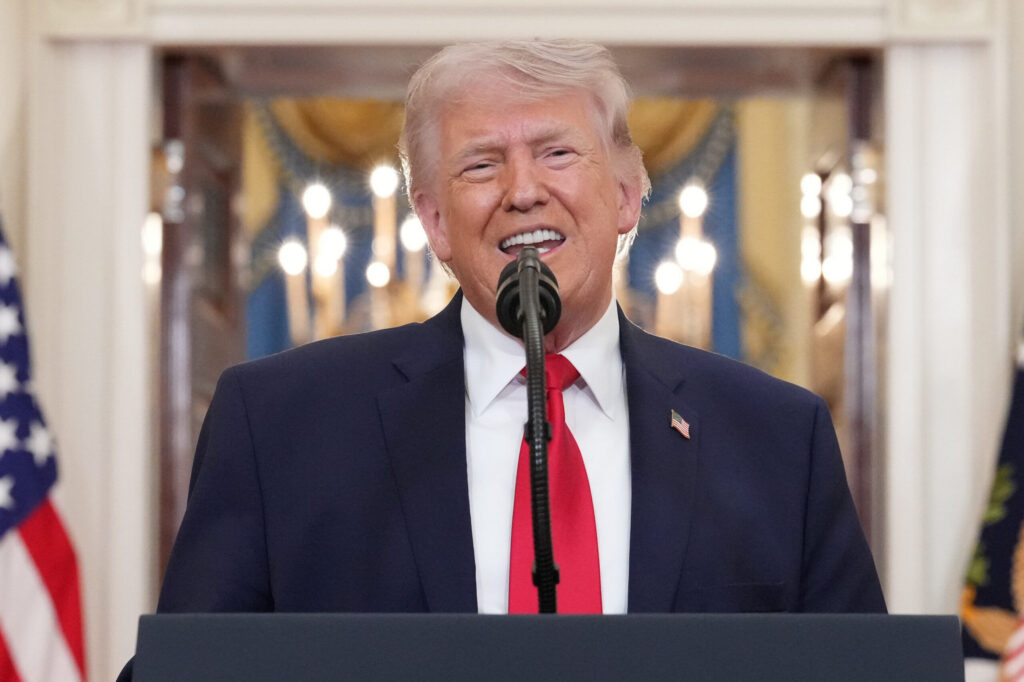
Trump downplays major reform bill and says housing is ‘all about interest rates’
Zach Halaschak, Washington Examiner
zach.halaschak.washington.examiner@gazetteedit.wpenginepowered.com
Updated 3 hours ago
President Donald Trump downplayed the bipartisan housing legislation that many congressional allies hope will ease the affordability worries plaguing voters, saying instead in an exclusive Washington Examiner interview that housing is “all about interest rates.” Trump said on a phone call Thursday morning...

Colorado lawmakers propose deep cuts to close $1.2B budget gap
Marianne Goodland
marianne.goodland@coloradopolitics.com
Updated 3 hours ago
The panel of Colorado legislators in charge of crafting next year’s budget has finalized the 2026–27 spending plan built on deep cuts and one‑time cash transfers in an attempt to close a shortfall of more than $1.2 billion. The plan...
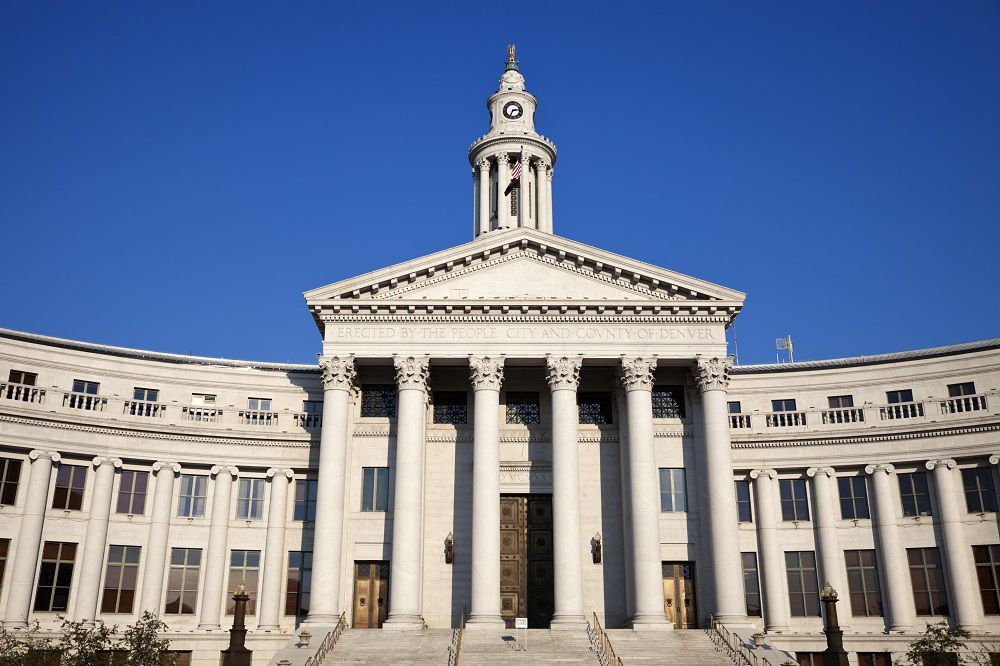
Denver judge denies Gov. Polis request to dismiss ICE-related records case
Marianne Goodland
marianne.goodland@coloradopolitics.com
Updated 3 hours ago
A year after blocking the release of state records to federal immigration agents, a Denver judge has now denied Gov. Jared Polis’ effort to end the lawsuit at the center of the dispute. The lawsuit filed against the governor in...
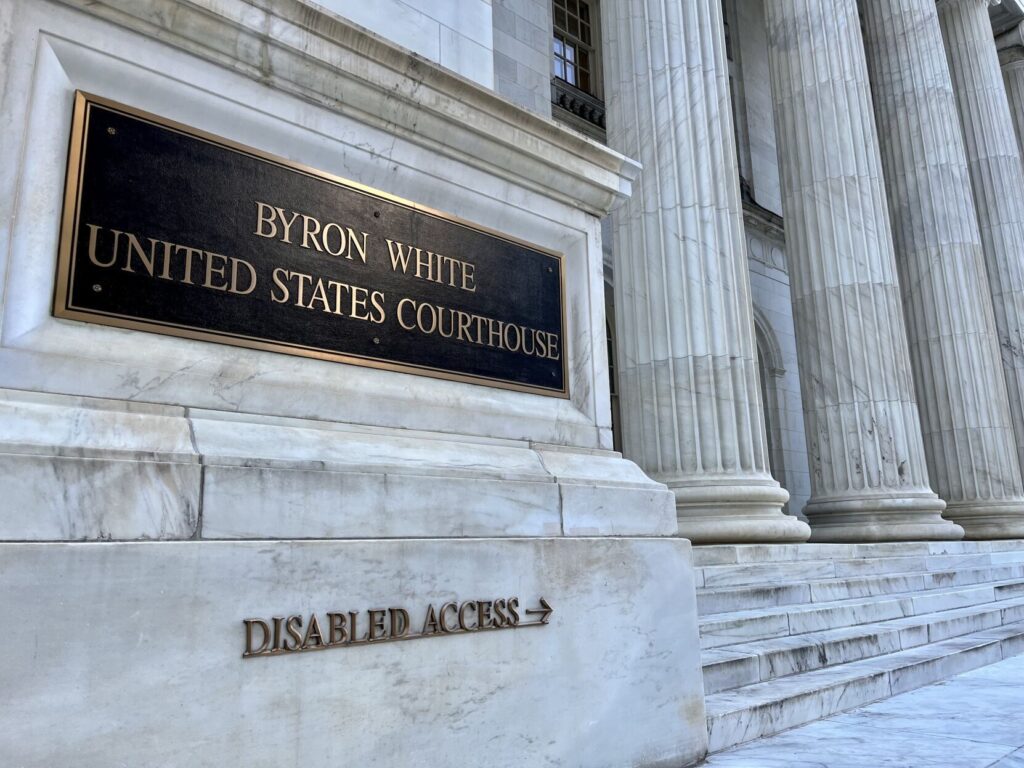
10th Circuit grants rare all-judges’ review of Colorado banking regulation
Michael Karlik
michael.karlik@coloradopolitics.com
Updated 5 hours ago
The Denver-based federal appeals court announced on Thursday that it will hold a rare all-judges review of a recent decision that permits Colorado to require out-of-state banks to abide by the state’s maximum interest rates when they lend to in-state...
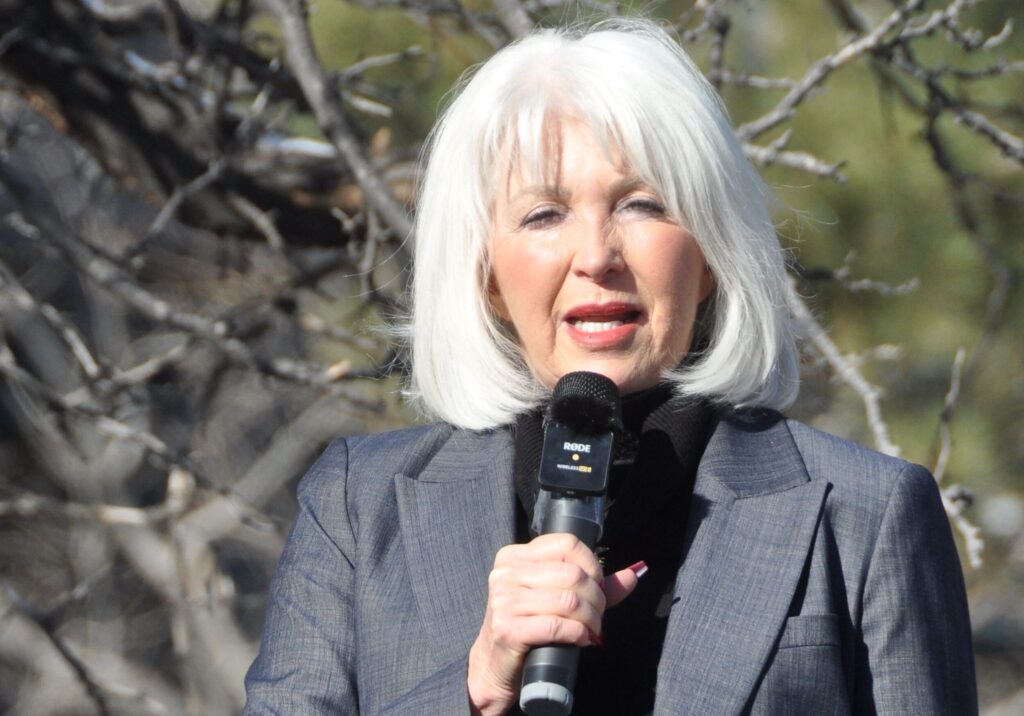
Colorado appeals court orders new sentencing for Tina Peters, upholds convictions
Michael Karlik
michael.karlik@coloradopolitics.com
Updated 6 hours ago
Colorado’s second-highest court determined on Thursday that a trial judge improperly sentenced former Mesa County clerk Tina Peters based upon her exercise of protected speech, while at the same time upholding her convictions. The three-judge Court of Appeals panel also...

Denver promised every school funding from $1B bond — but campuses later closed received far less | Analysis
Nico Brambila
nico.brambila@denvergazette.com
Updated 4 hours ago
Denver voters overwhelmingly approved the largest bond measure in Denver Public Schools history on the promise that every school — including charter campuses — would receive something. And they did. But the nearly $1 billion bond was not distributed evenly....