

Colorado bows to federal pressure, adopts system that penalizes schools for testing opt-out
In an effort to keep federal dollars flowing to Colorado classrooms, the State Board of Education voted Wednesday to create two quality systems for the state’s schools – the existing one designed in 2009 by state lawmakers, and a new one that meets federal requirements.
The unusual arrangement amounts to a compromise between the state education department and the U.S. Department of Education.
After Colorado became a national epicenter for the opt-out movement in 2015, the State Board of Education adopted a policy that did not count students who opted out of the tests in the school’s average test score. Students who missed the test and were not excused by parents still counted against a school’s score.
That proved to be a sticking point when state officials submitted Colorado’s plan for complying with the nation’s new education law, the Every Student Succeeds Act. Federal officials sent the plan back, saying the opt-out provision didn’t comply with the new law.
In the compromise, the state will continue to issue state school quality ratings that don’t penalize schools for high opt-out rates.
However, the state will create a separate list of schools based on the federal requirement that students who opt out are counted as not proficient.
Some state board members worried two systems would create additional work for teachers, create confusion among the public or misidentify schools.
State officials said Wednesday, teachers, students and parents shouldn’t notice much difference. No school or district will be responsible for submitting more data. The state will be responsible for slicing and dicing results from annual tests as they have in the past.
Because Colorado students who opt out tend to be white and more affluent, this change could flag schools for financial support to boost learning that really don’t need it.
State education officials assured the board that it had discretion in identifying whether a school is truly low-performing or if its scores are deflated from low participation.
Earlier this fall, the state took a voluntary step toward the two-system approach when it published a list of schools that qualify for federal grants. The state adopted some, but not all of the federal requirements, when it created that list.
Board member Steve Durham, a Colorado Springs Republican, said he hoped the state would not publicize the results from the federal identification system.
“It should not be given equal weight with the data that we find appropriate,” he said.
Durham also asked the state education department to remind schools that it is still illegal to penalize students who opt out of state tests. (It’s also against the law to incentivize students to skip the English and math exams.)
The state must resubmit its plan to the federal government by Oct. 23.
___
Chalkbeat is a nonprofit news site covering educational change in public schools.

Colorado board permits state to appeal injunction against arthritis drug price cap
Marissa Ventrelli
marissa.ventrelli@coloradopolitics.com
Updated 13 hours ago
A Colorado board voted Friday to allow the Attorney General’s Office to fight an injunction against a price cap on a drug that treats arthritis. A U.S. district court judge had granted the company Amgen a preliminary injunction, temporarily blocking...

Federal judge rejects constitutional claims, ‘expressions of hatred’ by Club Q defendant
Michael Karlik
michael.karlik@coloradopolitics.com
Updated 13 hours ago
A federal judge rejected a defendant’s claims that he received constitutionally ineffective assistance of counsel while facing federal hate crime and firearms charges for murdering five people at a Colorado Springs LGBTQ nightclub in 2022. Anderson Lee Aldrich is serving...

Divided 10th Circuit upholds Colorado congestion fee on car rentals
Michael Karlik
michael.karlik@coloradopolitics.com
Updated 9 hours ago
The Denver-based federal appeals court concluded on Monday that a 2024 “congestion impact fee” that lawmakers imposed on short-term vehicle rentals did not conflict with a federal prohibition on certain airport-related charges. Beginning in the 1970s, Congress began limiting the...

Space Force should measure workforce needs as it prepares to double in size, GAO report says
Mary Shinn
mary-shinn@coloradopolitics.com
Updated 18 hours ago
The Space Force needs more people. It’s just not precisely sure how many more. A Government Accountability Office report released earlier this month found that the youngest and smallest military branch does not have a process to consistently or accurately...

Colorado schools receive $24 million for free meals program
Marissa Ventrelli
marissa.ventrelli@coloradopolitics.com
Updated 13 hours ago
The Colorado Department of Education is providing Colorado schools with nearly $24 million in grant funding to implement a free lunch program. Approved by voters in 2022, the Healthy School Meals for All provides free breakfast and lunch to all...
Secret Service agent placed on administrative leave after arrest for near-deadly hazing ritual
Claire Carter
claire.carter@washingtonexaminer.com
Updated 20 hours ago
A Miami Secret Service agent in Florida was placed on administrative leave following his arrest on Sunday in connection with a near-deadly hazing incident at a University of Miami fraternity. Marquez Christopher Pinder, 29, was arrested alongside two other individuals...
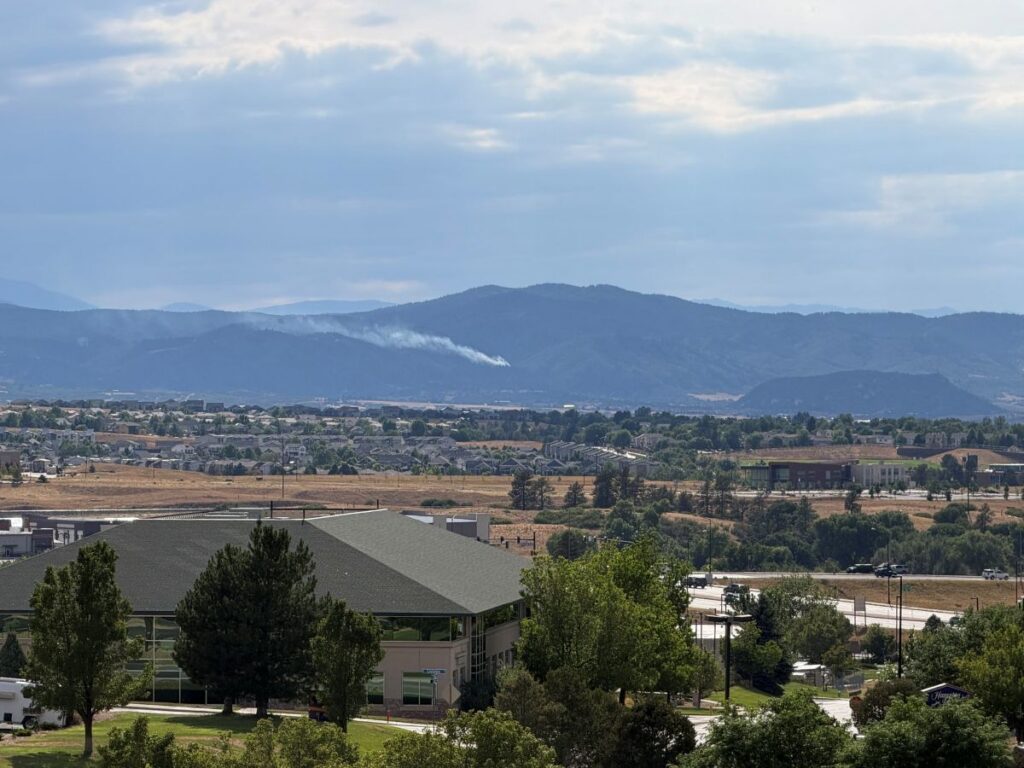
Forest fire west of Sedalia prompts evacuations in Douglas County
Nicholas Fogleman
nicholas.fogleman@denvergazette.com
Updated 22 hours ago
Emergency crews are responding to a forest fire burning west of Sedalia, prompting evacuation orders for nearby residents Sunday afternoon. At about 5 p.m. Sunday, the Douglas County Sheriff’s Office issued an evacuation order for residents within a 2-mile radius...

Airstrikes have paused and talks are pressing forward. But can the US and Iran take the off-ramp?
The Associated Press
the-associated-press@coloradopolitics.com
Updated 22 hours ago
WASHINGTON (AP) — The U.S. military has paused its airstrikes on Iran after nearly two weeks of intensifying bombing, while diplomatic efforts have pushed forward to try to avert a return to all-out war. But it remains to be seen...
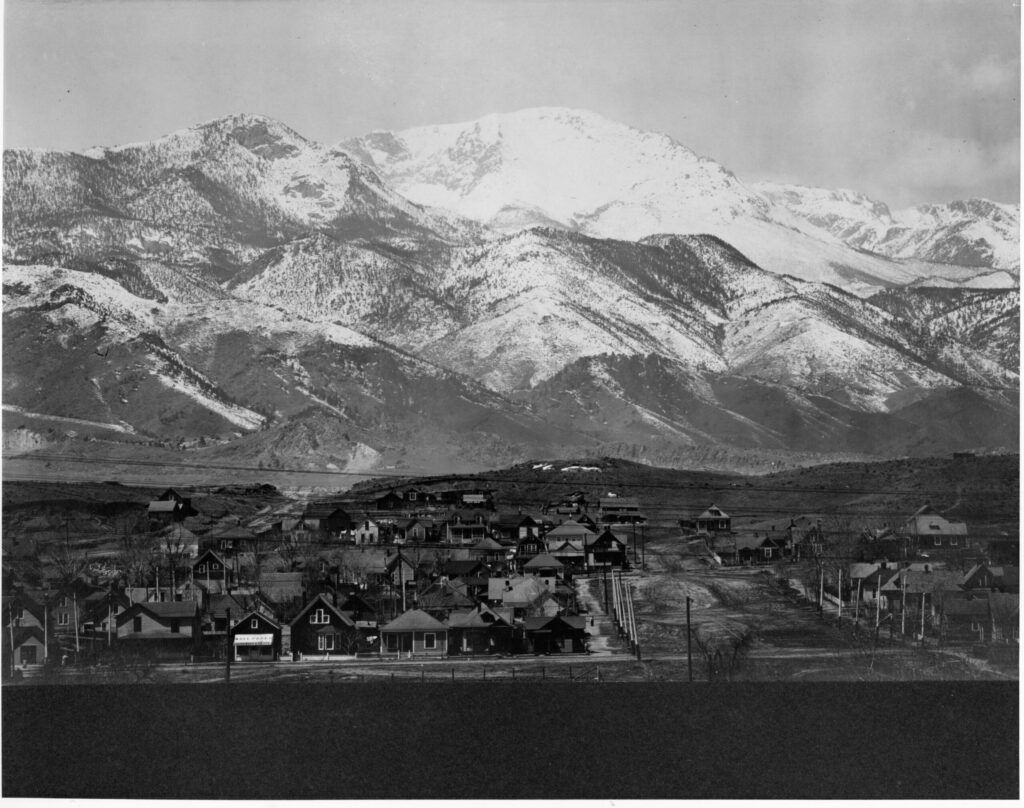
Penrose fortune paved the way for Colorado Springs to be a military, space and sports town
Mary Shinn
mary-shinn@coloradopolitics.com
Updated 22 hours ago
Colorado Springs is always working to catch the next big economic wave. “We’re always trying to figure out what the next thing is going to be,” explained Matt Mayberry, director of the Colorado Springs Pioneers Museum. In the early days,...

Colorado Politics Calendar July 27-Aug. 2
Rachael Wright, Special to Colorado Politics
rachael.wright@coloradopolitics.com
Updated 6 days ago
CoPo’s weekly political calendar will help you find political and public-policy events throughout Colorado. It includes candidate and issue campaign events, public policy meetings, court hearings, state and local party conventions, assemblies, debates, rallies, parades, speaking engagements, traveling dignitary appearances,...