

Bennet among critics of Obamacare replacement bill at Monday Senate hearing
Colorado Senator Michael Bennet harshly criticized a Republican proposal for revamping the nation’s health insurance during an emotional congressional hearing Monday in Washington, D.C.
He said the plan would leave millions of Americans without health insurance.
“What they’re doing is stripping hard-earned protections from the American people,” Bennet, a Democrat, said during a hearing of the Senate Finance Committee.
The committee was reviewing the Graham-Cassidy bill, a conservative proposal supported by President Donald Trump that would repeal the Obama administration’s Affordable Care Act, also known as Obamacare.
It would return control of Medicaid to states through block grants and cap funding for the program that helps pay health care costs for low-income persons.
Federal health care subsidies to states would be redistributed. States that expanded Medicaid under Obamacare would lose federal funding compared with predominantly Republican states that did not expand it.
In addition, persons with pre-existing conditions would not automatically be eligible for the same health insurance rates as everyone else, which is different from Obamacare’s nearly universal coverage.
The bill would get rid of federal subsidies for buying insurance on the individual market, as well as the requirement to purchase it.
Bennet described the Graham-Cassidy bill as a political maneuver by its supporters rather than a serious effort to amend problems with the Affordable Care Act, which was enacted in 2010.
“The only thing I can come to is a conclusion that this is a campaign promise to repeal Obamacare,” Bennet said.
He called the disruptions to individuals’ health insurance that would result from the Graham-Cassidy bill “a disgrace.”
Bennet’s opposition to the bill was joined almost unanimously by other Democrats in the Senate. Even some Republican leaders, such as Sen. John McCain, R-Ariz., have said they would vote against it.
Surveys of senators show the bill would not win the minimum 51 votes needed to approve it. A vote is expected as soon as this week.
The hearing was delayed when protesters – some of them in wheelchairs – shouted repeatedly, “No cuts to Medicaid. Save our liberty.”
It reconvened about 15 minutes later after police cleared the room of protesters.
Critics of the bill in Colorado include Gov. John Hickenlooper. He supports giving states greater discretion over their own health insurance but he does not believe the Graham-Cassidy bill is the appropriate method.
“Only open, bipartisan approaches can achieve true, lasting reforms,” Hickenlooper and nine other governors wrote in a letter last week to Senate leaders.
A spokesman for Hickenlooper said the Graham-Cassidy bill would cost Colorado at least $1 billion a year in 2025 and 2026. By 2027, the costs would increase to $3 billion a year.
The Colorado Hospital Association submitted written testimony to the Senate hearing that opposed the bill.
“One in five Coloradans is covered by Medicaid, which means that cuts of this magnitude will likely impact hospitals’ ability to provide care for Colorado’s most vulnerable patients,” Steven J. Summer, Colorado Hospital Association president, said in a statement.
Sen. Lindsey Graham, R-S.C., defended his bill during the hearing by saying, “My goal is to get the money and power out of Washington, closer to where people live, so they’ll have a voice about the most important thing in their life.”
At the current rate of insurance premium rate increases under Obamacare, the entire U.S. government budget would be consumed by health care payments by 2042, Graham said.
“What you have created is not working,” Graham said. “It’s time to try something new.”
An economic assessment from the financial services company Standard & Poor’s Global Ratings cast doubt on whether the bill represented an improvement. The bill would make the U.S. economy lose 580,000 jobs and $240 billion in economic activity by 2027, depressing the nation’s gross domestic product, the assessment said.

Colleagues and friends remember former Colorado state lawmaker Lew Entz
Marianne Goodland
marianne.goodland@coloradopolitics.com
Updated 3 hours ago
Lew Entz, 94, a former Republican state senator from Hooper, died Wednesday, Dec. 10, following a long illness. A visitation for Entz is scheduled at Rogers Family Mortuary, 205 State St. in Alamosa, on Friday, Jan. 2, from 4 to...

Colorado’s cost of living soars, ranks third-most expensive in the U.S.
Marissa Ventrelli
marissa.ventrelli@coloradopolitics.com
Updated 2 hours ago
Colorado is now the third most expensive state to live in, according to a new report by a business group. Released on Thursday, the Colorado Scorecard “presents a mixed outlook,” according to the state chamber’s president and CEO, Loren Furman....
Appeals judge believes revised ‘reasonable doubt’ definition is unconstitutional
Michael Karlik
michael.karlik@coloradopolitics.com
Updated 3 hours ago
Although Colorado’s second-highest court has issued multiple decisions in recent months upholding a revised definition of “reasonable doubt” from three years ago, an appellate judge became the first on Thursday to argue that a key phrase violates defendants’ constitutional right...
Thune nears spending deal with fiscal hawks ahead of Christmas recess
David Sivak, Washington Examiner
david.sivak.washington.examiner@gazetteedit.wpenginepowered.com
Updated 3 hours ago
Majority Leader John Thune (R-SD) is closing in on a deal to move the next set of spending bills, with the breakthrough leaving open the possibility the Senate could hold a floor vote before the Christmas recess. Leadership has run...
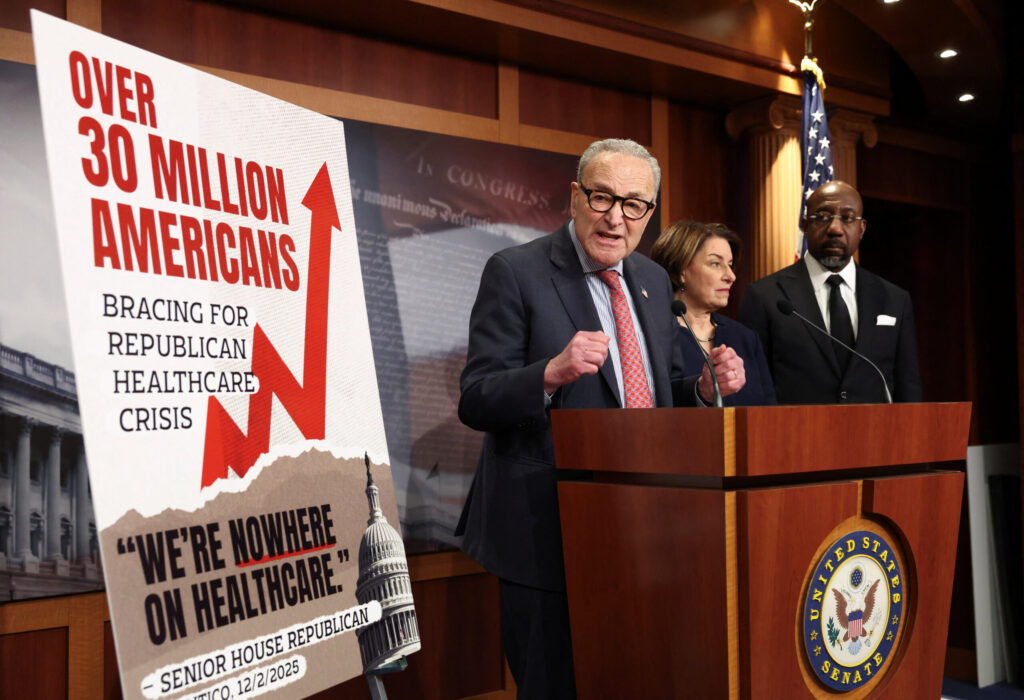
Dueling healthcare bills rejected by Senate as Obamacare subsidies set to expire
Ramsey Touchberry, Washington Examiner
ramsey.touchberry.washington.examiner@gazetteedit.wpenginepowered.com
Updated 3 hours ago
Clashing healthcare plans from Republicans and Democrats both failed to advance in the Senate on Thursday, dividing lawmakers along mostly party lines and all but ensuring that Congress will fail to address enhanced Obamacare subsidies that expire at year’s end....

NATO chief says Europe is ‘Russia’s next target’ and continent must be prepared for world war
Molly Parks, Washington Examiner
molly.parks.washington.examiner@gazetteedit.wpenginepowered.com
Updated 4 hours ago
NATO Secretary General Mark Rutte issued a stern warning to the organization’s allied nations on Thursday, suggesting they stand as “Russia’s next target” after Ukraine. Rutte delivered the sobering message that NATO countries are “already in harm’s way” during a...
DOJ sues Colorado Secretary of State for refusing to release voter information
Marissa Ventrelli
marissa.ventrelli@coloradopolitics.com
Updated 2 hours ago
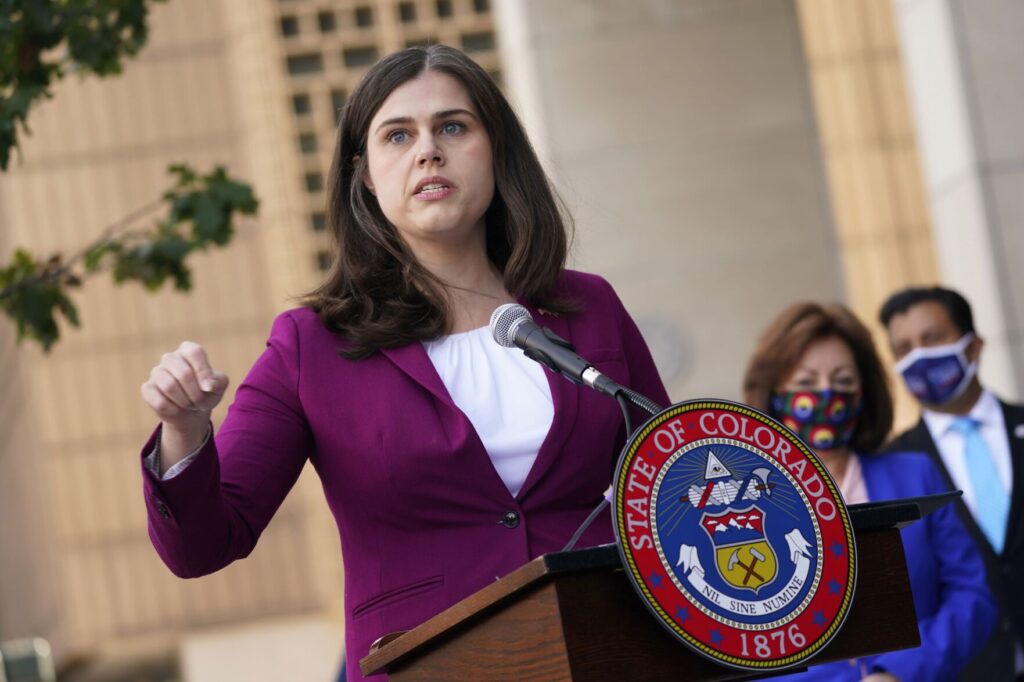
The U.S. Department of Justice has filed a lawsuit against Colorado Secretary of State Jena Griswold after she refused to provide the agency with certain voter information. Last week, the DOJ’s Civil Rights Division asked Griswold’s office to provide unredacted...
Colorado unemployment fell to 4.1% in September, delayed data shows
Bernadette Berdychowski
bernadette.berdychowski@denvergazette.com
Updated 6 hours ago
Colorado’s unemployment rate is improving, according to the Colorado Department of Labor and Employment. The state recorded 134,000 unemployed people in September, 4,800 fewer people compared to August. The state’s unemployment rate fell from 4.2% to 4.1%. The national unemployment...

Rocky Mountain National Park at ‘tipping point’ with moose, embarks on plan
Seth Boster
seth-boster@coloradopolitics.com
Updated 6 hours ago
Moose’s impact on one of Colorado’s most cherished landscapes has been a concern over the years. Now Rocky Mountain National Park officials are launching an effort to address it. A recent webinar marked “the very beginning of this planning process,”...
CDOT did not violate constitutional rights of outdoor advertising company, appeals court says
Michael Karlik
michael.karlik@coloradopolitics.com
Updated 1 hour ago
Colorado’s second-highest court concluded last month that the Colorado Department of Transportation did not violate the constitutional rights of an outdoor advertising company by denying two permits for billboards in Adams County. StreetMediaGroup, LLC argued CDOT violated its right to...