

Republicans, don’t try suicide
Don’t jump. It’s not worth it. Step back from the ledge so we can talk about this.
The Colorado Republican Party’s central committee will decide Saturday whether to commit suicide. Given our preference for a two-party system, rather than a state controlled by a lone Democratic Party, we hope the central committee chooses life.
Colorado’s Proposition 108, approved in a 2016 statewide vote, opens Democratic and Republican primaries to the state’s 1.2 million unaffiliated voters. Each unaffiliated voter can choose to vote in one of the primaries, without joining a party. The law contains a suicide provision, in which a party can close its primary with the support of 75 percent of central committee members.
Open primaries provide the opportunity for each party’s candidates to sell their ideas to nonparty members, who are essential to winning general elections. This law could improve the quality of Colorado’s political process.
Conventional wisdom views the state’s unaffiliated voters as a bloc of moderates who consider either party too extreme. Party loyalists worry about “selling out” to moderates if unaffiliated voters participate in primaries. Moderates hope this is true.
The assumption is likely overstated, and possibly backward.
Though attractive to some moderates, unaffiliated status also attracts a growing number who consider each party too moderate and compromising.
Consider former Republican U.S. Rep. Tom Tancredo, a staunch conservative who two years ago called the state GOP “Democrat Lite” and registered unaffiliated. As the Constitutional Party’s nominee in 2010, Tancredo took 36.1 percent of the gubernatorial vote, and held the Republican nominee to 11.1 percent. Tancredo returned to the Republican Party this summer to consider seeking its nomination for the 2018 governor’s race.
On the left, unaffiliated registrants include Bernie Sanders fans dismayed by the Democratic Party’s nomination of Hillary Clinton. Significant numbers of Donald Trump voters registered as unaffiliated after feeling disenfranchised by the Republican Party at the 2016 Colorado Republican State Convention and the Republican National Convention.
The unaffiliated rolls probably consist of greens, socialists, hard left-wingers, hard right-wingers, libertarians who lean left and right, constitutionalists, and other nonmoderates who don’t support the tradition of each party’s establishment insiders choosing nominees for general elections.
Under the new system, created by all assortment of voters, each party should try to maximize support among those who have chosen independence. They should find this support among moderates and extremists alike.
If the GOP’s central committee opts out of an open primary, it will arrogantly tell 1.2 million voters it has no interest in them. Those voters are certain to return the message by trouncing all Republican candidates in general elections. The party will be a joke to all but a few.
State Republican Party Chair Jeff Hays strongly opposes opting out, also calling it “suicide.” He called for a vote because a few central committee members asked for one, and Hays respects the right to vote. The committee should extend similar respect, with regard to open primaries the public demanded.
Republican values don’t include concentrating power, as seen in dictatorships, among establishment insiders. Republicans believe in the ability of individuals to accept and support winning candidates with ideas that uphold the rights of individuals to pursue life, liberty and happiness.
Central committee voters should do the right thing Saturday and trounce this bad idea with a landslide vote to embrace the new process duly enacted by a fair and legal vote. That would tell unaffiliated voters the Republican Party’s candidates want to win their support.
Colorado needs two major parties with competitive ideas and candidates. Let’s hope one doesn’t self-destruct Saturday.

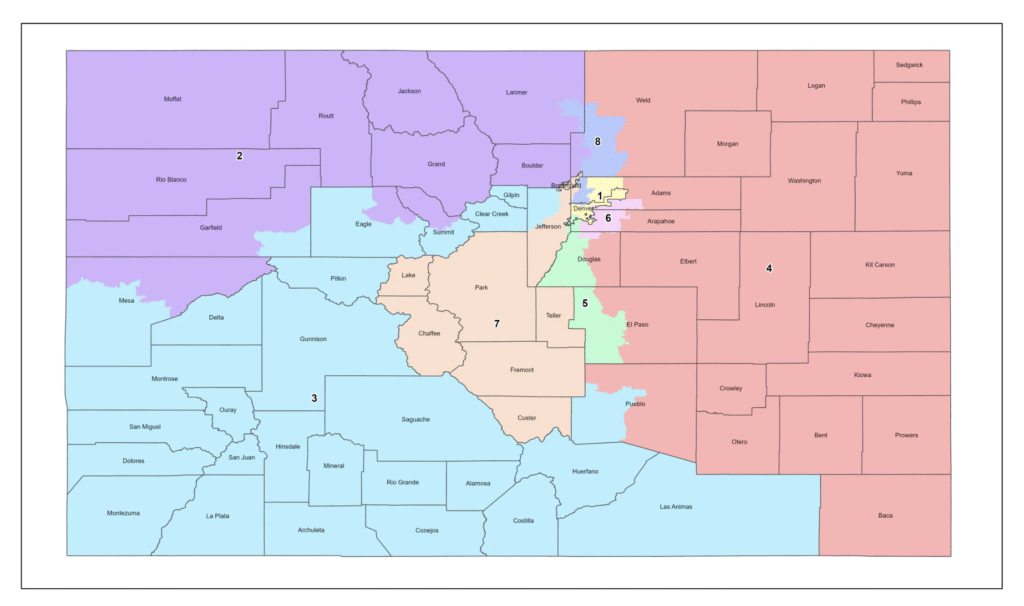
Colorado Title Board advances competing redistricting proposals and revised Pinnacol measure as April ballot deadline nears
Marianne Goodland
marianne.goodland@coloradopolitics.com
Updated 13 hours ago
With just two meetings left before an April 15 deadline, the state’s Title Board on Wednesday pushed through a slate of ballot measures — including a revised proposal to privatize Pinnacol Assurance and dueling plans to redraw Colorado’s congressional map...
SAVE America Act showdown relished by GOP and Democrats alike
Ramsey Touchberry, Washington Examiner
ramsey.touchberry.washington.examiner@gazetteedit.wpenginepowered.com
Updated 14 hours ago
Both political parties have found rare agreement in a divided Washington, convinced that the GOP’s federal voter ID and election bill is a slam-dunk messaging opportunity. But that’s where the bipartisanship quickly ends. The two sides are diametrically opposed over...

Senate panel advances bill to tighten Colorado sports betting rules amid youth addiction concerns
Marissa Ventrelli
marissa.ventrelli@coloradopolitics.com
Updated 12 hours ago
A divided Senate Finance Committee on Tuesday narrowly advanced a bill to impose new restrictions on Colorado’s booming sports betting industry, as lawmakers cited rising concerns about youth gambling and addiction while operators warned the changes could drive bettors to...

Federal judge green-lights trial against Denver officer over race-based enforcement
Michael Karlik
michael.karlik@coloradopolitics.com
Updated 14 hours ago
A federal judge green-lit a jury trial last week on a man’s claim that a Denver police officer engaged in racially selective enforcement of the law by arresting him for video recording at a police station, while not arresting a...
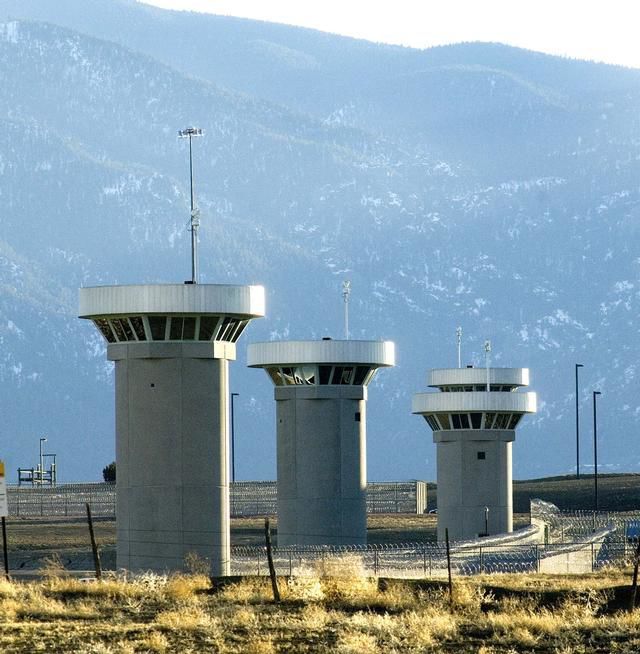
Federal judge says 8 years in solitary confinement not grounds to reduce man’s sentence
Michael Karlik
michael.karlik@coloradopolitics.com
Updated 14 hours ago
A federal judge concluded earlier this month that a man’s eight years allegedly spent in solitary confinement did not justify granting his request for a sentence reduction. However, U.S. District Court Senior Judge William J. Martínez signaled his willingness to...

Democrat Matt Cavanaugh ends campaign in Colorado’s 5th CD, says petition firm came up short
Ernest Luning
ernest.luning@coloradopolitics.com
Updated 11 hours ago
Democratic congressional candidate Matt Cavanaugh said Wednesday that he was ending his bid to challenge Republican U.S. Rep. Jeff Crank in Colorado’s 5th District because the firm his campaign hired to gather petition signatures failed to deliver. Cavanaugh, an Army...

Colorado voters to decide whether to ban gender surgeries for minors
Marissa Ventrelli
marissa.ventrelli@coloradopolitics.com
Updated 10 hours ago
Colorado voters will decide this November whether to prohibit gender surgeries for minors and bar public funding or insurance coverage for procedures that alter children’s biological sex characteristics. The measure qualified for the ballot amid a push by the federal...

Democrats want to bar use of consumer data to set Colorado prices, employee wages
Marissa Ventrelli
marissa.ventrelli@coloradopolitics.com
Updated 12 hours ago
A closely divided House committee advanced a bill aimed at curbing the use of personal data to set individualized prices and wages, reviving a proposal that failed last year and setting up a broader debate over how far the state...

10th Circuit rejects ‘potential for violence’ when police arrest vehicle occupant’s romantic partner
Michael Karlik
michael.karlik@coloradopolitics.com
Updated 17 hours ago
The Denver-based federal appeals court rejected the idea on Tuesday that a vehicle occupant poses a danger to police solely because they are romantically involved with another occupant who officers are arresting. By 2-1, a three-judge panel of the U.S....

Colorado justices grill debt collector about compliance with law
Michael Karlik
michael.karlik@coloradopolitics.com
Updated 11 hours ago
The Colorado Supreme Court repeatedly pressed a debt collection company last week to explain how its lawsuit against a Boulder woman for an unpaid credit card balance complied with the specific requirements that state lawmakers have created. Portfolio Recovery Associates,...