

Author, Denver native Ben Blum explores war, crime, punishment in "Ranger Games"
In his debut book, Ben Blum depicts a winter scene in his hometown of Denver in which cars have “a cauliflower ear of blackened snow caked around each wheel well.”
Blum also brings such sharp observation and arresting prose to character studies and to the issues of war, crime, punishment, his own family’s mythologies and the truth itself.
“I initially set out with an idea that there was truth and there were various distortions of it,” Blum told Colorado Politics about the genesis of his nonfiction “Ranger Games.”
“Over time, that worldview started to crack. And I came to understand human truth as rooted in multiplicity.”
The computer-scientist-turned-writer spoke in a telephone interview from New York ahead of Doubleday’s Sept. 12 release of “Ranger Games” and a Sept. 13 visit to his hometown to appear at Tattered Cover bookstore.
Blum’s subtitle, “A Story of Soldiers, Family and an Inexplicable Crime,” is a fair summary of a 400-page exploration. It is the story of how his cousin – a handsome, popular high school athlete who seemed on the way to realizing a lifelong dream of fighting terrorists as an Army Ranger – got caught up in a crime that made international headlines both because of its audacity and because of the involvement of elite soldiers sworn to protect the country.
Much of what reporters wrote about the 2006 armed robbery of a Tacoma, Washington, bank focused on the mastermind, Luke Elliott Sommer. The charismatic combat veteran had presented himself as a mentor to the slightly younger Alex Blum, then used him as his get-away driver.
Sommer, a dual U.S.-Canadian citizen, fled north after the robbery where he told the Mounties who arrested him: “Boy, you guys are good. You got me. I was the ringleader for the whole thing. I was the one who got the AK-47s.”
While out on bail and fighting extradition to the United States, Sommer ushered journalists into his mother’s basement in British Columbia to claim his goal was not the just over $50,000 he and the other body-armored, machine-gun toting robbers grabbed, but gaining a platform to expose U.S. battlefield atrocities. The Army dismissed Sommer’s war crimes allegations. Ben Blum interviewed Sommer and concluded his stories were fabricated from previously reported events. Alex Blum, meanwhile, told his lawyers and family he thought the robbery was a military exercise.
In her New York Times review of “Ranger Games” journalist Jennifer Senior describes Ben Blum as “a gloriously good writer.” His cousin isn’t bad either. Ben Blum quotes at length from a long email Alex Blum wrote to describe the training that made him a Ranger and created, as he tells it, the mindset that enabled him to take part in a robbery if the alternative meant letting down the team and a leader he hero-worshipped. Blum adds other details that paint military men in a dark light – a 1989 shoot-out between a group of off-duty Rangers and drug dealers in a Tacoma neighborhood; the West Point antics of Stanley McChrystal who would go on to command the Ranger Regiment; the shocking World War II reminiscences of the Blum cousins’ grandfather.
“I’m not depicting the enormous upside of military culture,” Ben Blum acknowledged in the interview. But “I hope that the book is not taken as simplistically anti-military.”
Instead, he depicts the forces that can be unleashed when the possibility of “unbridled violence” meets a person like Sommer.
“Without really accomplished, caring, firm (military) leadership, those forces can be hard to contain,” Alex Blum said.
In a tale full of true twists that a novelist would hesitate to include – like the tae kwon do champion and drug king pin who befriends Sommer in prison- the first mention of Sommer is almost casual. The cousins’ beloved grandmother is quoted trying to understand what happened: “All Alex did was follow that man’s orders.”
Alex Blum is introduced with equal understatement. As Ben Blum describes the robbery, a car is a still point amid the drama. “In the driver’s seat was a 19-year-old kid in a T-shirt and sunglasses.”
The year before, that kid “raised in Greenwood Village, whose young life had never been much more than a long suburban daydream of hockey and Xbox and paintball,” had graduated from Littleton High School. He was known for his kindness, his love of hockey and his fixation on the Army Rangers. Alex Blum’s father and uncles were also jocks. Nerdy Ben Blum felt like an outsider.
Ben Blum earned a PhD in computer science from the University of California at Berkeley and was working in a research lab when news of his cousin’s arrest shook the whole family. The computer expert had already begun contemplating a change after finding science did not answer all the questions he had about what it means to be human. He abandoned numbers for letters, earning a New York University MFA in fiction, though his focus so far has been the “richness and complexity” of nonfiction.
His science background gave him a desire for precision and a respect for evidence that informed his art. The amount of data he collected for “Ranger Games” is impressive. He interviewed his cousin and other family members many times over many years. He spoke to lawyers, investigators, relatives of the other robbers and journalists, as well as Sommer. He attended a bizarre taping of a Dr. Phil episode in which his cousin appeared. He delved into prison records, including documents showing Sommer was diagnosed as bipolar and suffering from PTSD. He scoured a trove of emails that rivaled a Wikileaks dump. He performed a data analysis of Sommer’s computer hard drive that turned up a possible answer to a question even the FBI had failed to crack: Who had supplied the weapons for the robbery?
“Science is a wonderful thing. It gives us reliable knowledge of the natural world that we cannot do without,” said Ben Blum, who also wrote short stories to expand his skills while working out how to tell Alex Blum’s story.
Interviewing Alex Blum for his book, the author found his cousin didn’t quite see how he fit into a family of real estate entrepreneurs. Alex Blum had reveled in war games, books and movies – “Band of Brothers” and “Saving Private Ryan were favorites – since childhood.
“He made the most sense to himself as a member of the team,” Ben Blum wrote of his cousin, whose military aspirations may have been sealed by the 9/11 attacks, which came when he was a high school freshman. Alex Blum signed a contract with an Army recruiter a day after he turned 18 on April 11, 2005.
Alex Blum was a member of the 2nd Battalion 75th Ranger Regiment based at Fort Lewis near Tacoma. During training there, Sommer singled Alex Blum out to drive him on errands in the silver Audi 4 that the inexperienced soldier’s father had driven from Denver to give him. The Audi was used in the robbery. Sommer would turn mundane outings into training exercises, encouraging Alex Blum to consider how to secure a Dairy Queen or porn shop. Or a Bank of America branch.
Alex Blum was headed home to visit his family and girlfriend before deployment to Iraq when he took part in the robbery. Sommer, who eventually surrendered and pleaded guilty, was sentenced to 24 years. Three others involved, two of them also Rangers, received sentences of at least a decade. Alex Blum, who Sommer said was minimally involved, was sentenced to 16 months, which he had already served by the time the judge ruled in early 2009.
An other-than-honorable discharge made any future military career impossible. A felony conviction has made it difficult even to rent an apartment. For a time, the former hockey player drove a Zamboni at a Denver rink. Alex Blum these days is working in sales and refining recipes with the hope of one day owning his own food truck. Ben Blum said his cousin was able to rebuild his life thanks to financial and emotional support from his family, but knows others have been less fortunate.
Ben Blum, meanwhile, is working on another book he will describe only as tackling “the psychology of moral reckoning.”
“Ranger Games” covers some of that ground. It is also a “what did he know and when did he know it” mystery, and a family biography. And more.
“A coming of age story is all about lost illusions, and that is at the core of this book,” its author said.
His cousin dreamed of heroism and war, Ben Blum of uncovering the truth. Both found their limitations.


‘We’re winning so much.’ Trump delivers State of the Union
Luige Del Puerto
luige.delpuerto+co@coloradopolitics.com
Updated 11 minutes ago
WASHINGTON • President Donald Trump said America has been “winning so much” during Tuesday’s State of the Union, touting a jobs and manufacturing boom at home and touting a “Golden Age” for the U.S. as it prepares to celebrate the 250th anniversary...

10th Circuit upholds violations, sanctions against Colorado Springs psych hospital
Michael Karlik
michael.karlik@coloradopolitics.com
Updated 2 hours ago
The Denver-based federal appeals court agreed earlier this month that the government properly cited and penalized a Colorado Springs psychiatric hospital for failing to protect its staff from known risks posed by patients. The Occupational Safety and Health Administration inspected...

Watch Live: 2026 State of the Union Address
Will Weissert
will.weissert@associatedpress.com
Updated 2 hours ago
WASHINGTON (AP) — President Donald Trump will use Tuesday’s State of the Union address to champion his immigration crackdowns, his slashing of the federal government, his push to preserve widespread tariffs that the Supreme Court just struck down and his...

Colorado House advances bill to ban pet stores from selling dogs as cats, as opponents warn of black market surge
Marissa Ventrelli
marissa.ventrelli@coloradopolitics.com
Updated 7 hours ago
Colorado lawmakers advanced legislation Monday that would prohibit pet stores from selling dogs and cats sourced from large-scale commercial breeders, a move sponsors say will shut down the “puppy mill pipeline.” Critics, however, warn that the bill will instead push...
Judge declines to remove prosecutors from Tyler Robinson murder trial
Jack Birle, Washington Examiner
jack.birle.washington.examiner@gazetteedit.wpenginepowered.com
Updated 8 hours ago
A Utah judge denied efforts by the lawyers of Tyler Robinson, the alleged killer of Turning Point USA co-founder Charlie Kirk, to disqualify prosecutors over allegations of a conflict of interest related to Robinson’s upcoming trial on murder charges. Judge...

Newsom office tells reporter to ‘f*** off’ for question on dyslexia diagnosis as governor under fire for allegedly racist comments
Claire Carter, Washington Examiner
claire.carter.washington.examiner@gazetteedit.wpenginepowered.com
Updated 8 hours ago
Gov. Gavin Newsom‘s (D-CA) office gave an expletive-laced response on Monday to a reporter who asked about the governor’s dyslexia diagnosis and backlash over allegedly racist comments. During the press interaction, a reporter asked the governor’s communications team a follow-up...

Judge Timothy Tymkovich to step aside, create Colorado-based vacancy on 10th Circuit
Michael Karlik
michael.karlik@coloradopolitics.com
Updated 5 hours ago
Judge Timothy M. Tymkovich of Colorado has announced his intent to step aside as an active member of the Denver-based federal appeals court, creating the first vacancy for President Donald Trump to fill in his second term. In a Feb....
Laura Clellan officially named director of Colorado Parks and Wildlife
Marianne Goodland
marianne.goodland@coloradopolitics.com
Updated 5 hours ago
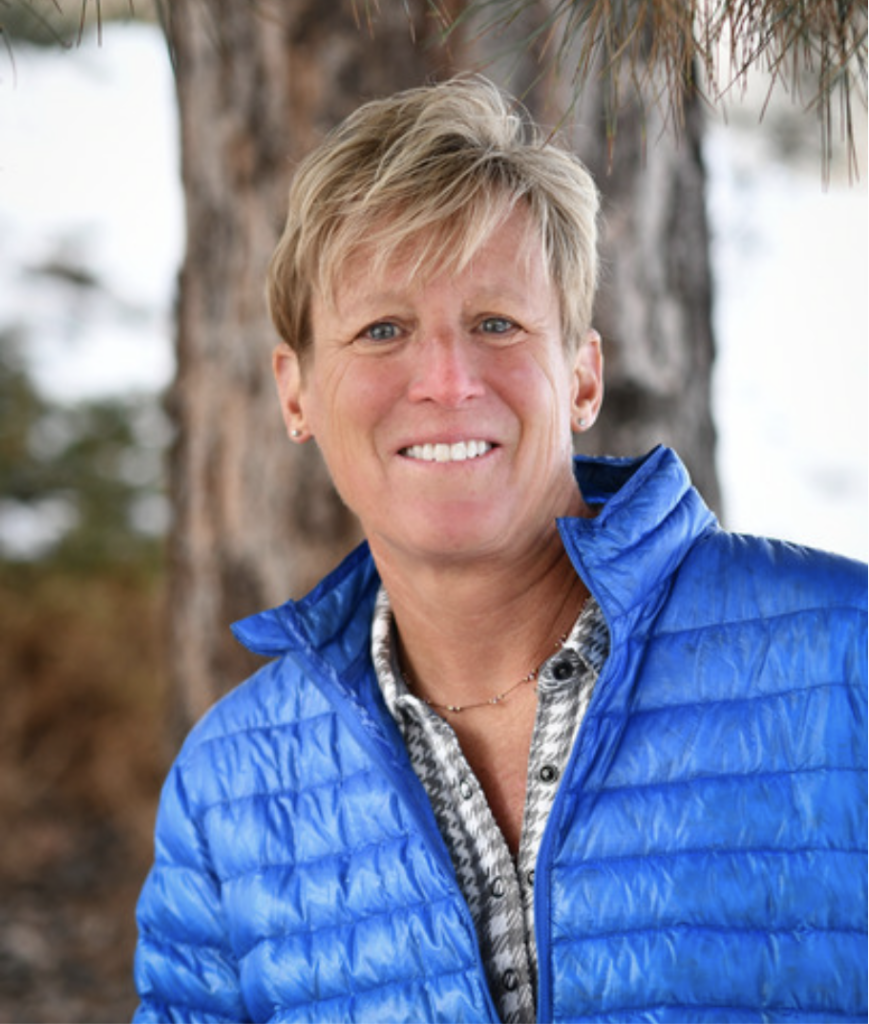
Laura Clellan, who has been acting director of Colorado Parks and Wildlife since Nov. 25, was named the agency’s permanent director Monday by the Colorado Parks and Wildlife Commission. She replaced Jeff Davis, who resigned in lieu of termination weeks...

Colorado group files 6 ballot measures to counter redistricting proposals backed by Democrats
Marianne Goodland
marianne.goodland@coloradopolitics.com
Updated 2 hours ago
A half-dozen congressional redistricting ballot measures were filed Friday by a Colorado advocacy group in response to proposals filed last week from a group seeking to flip three Republican-held U.S. House seats in two years. “The gist of it is...

Secretary Hegseth promises to unleash small defense companies during Colorado visit
Mary Shinn
mary-shinn@coloradopolitics.com
Updated 4 hours ago
Secretary of Defense Pete Hegseth visited Colorado space companies Monday and promised to cut bureaucracy within the Pentagon to ensure smaller defense businesses have a chance to compete for contracts. “If we are going to have space dominance and deterrence,...