

EDITORIAL: The coming transport revolution
RethinkX, a San Francisco think tank, released a report in May that should cause transportation officials all over the country, including Boulder and Boulder County, to re-examine assumptions and biases that could lead them to make major investments in transport modes and ideas that are about to become obsolete.
The report, titled “Rethinking Transportation 2020-2030: The Disruption of Transportation and the Collapse of the Internal-Combustion Vehicle and Oil Industries,” argues that transportation-as-a-service (TaaS) will disrupt current modes much more quickly than traditional analysts have forecast. The report posits that the confluence of technological leaps forward in artificial intelligence and electric vehicles will produce a mass migration to self-driving electric cars by 2030. In the main, it contends, these cars will be owned not by individuals but by fleet operators. Individuals will buy subscriptions in much the way they buy wireless communication plans today.
Economics will drive the mass migration, the report’s authors argue. “Using TaaS, the average American family will save more than $5,600 per year in transportation costs, equivalent to a wage raise of 10 percent,” they write. “This will keep an additional $1 trillion per year in Americans’ pockets by 2030, potentially generating the largest infusion of consumer spending in history.”


Colorado state legislator plans introduction of victim compensation bill | A LOOK BACK
Rachael Wright, Special to Colorado Politics
rachael.wright@coloradopolitics.com
Updated 3 days ago
Forty-Five Years Ago This Week: “People to whom I’ve talked to say, ‘Yes’,” said Sen. Barbara Holme, D-Denver, “victims of crime should be compensated.” Holme said she would introduce a victim compensation bill in the upcoming legislative session, but the...
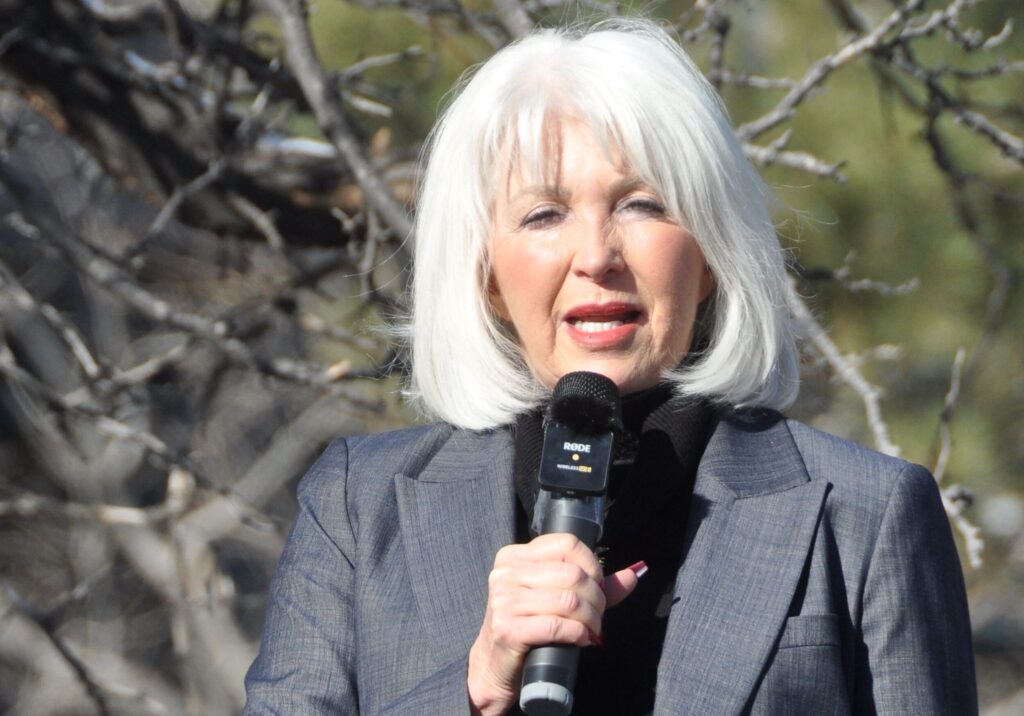
The governor and the inmate: Trying to make sense of Polis and Peters | SONDERMANN
By Eric Sondermann
by-eric-sondermann@coloradopolitics.com
Updated 3 days ago
Amidst the excess of news and outrage competing for our attention, much time and oxygen have been expended in trying to make sense of Jared Polis’s angst-ridden consideration of a sentence reduction for Tina Peters, former county clerk and now...

Colorado Politics Calendar Feb. 2-8
Rachael Wright, Special to Colorado Politics
rachael.wright@coloradopolitics.com
Updated 2 days ago
CoPo’s weekly political calendar will help you find political and public-policy events throughout Colorado. It includes candidate and issue campaign events, public policy meetings, court hearings, state and local party conventions, assemblies, debates, rallies, parades, speaking engagements, traveling dignitary appearances,...

Federal judge green-lights excessive force trial against Fort Collins officers
Michael Karlik
michael.karlik@coloradopolitics.com
Updated 13 hours ago
A federal judge concluded last week that a jury will need to resolve whether two Fort Collins police officers violated a man’s constitutional rights by using excessive force after he refused to accept a citation. In a Jan. 21 order,...
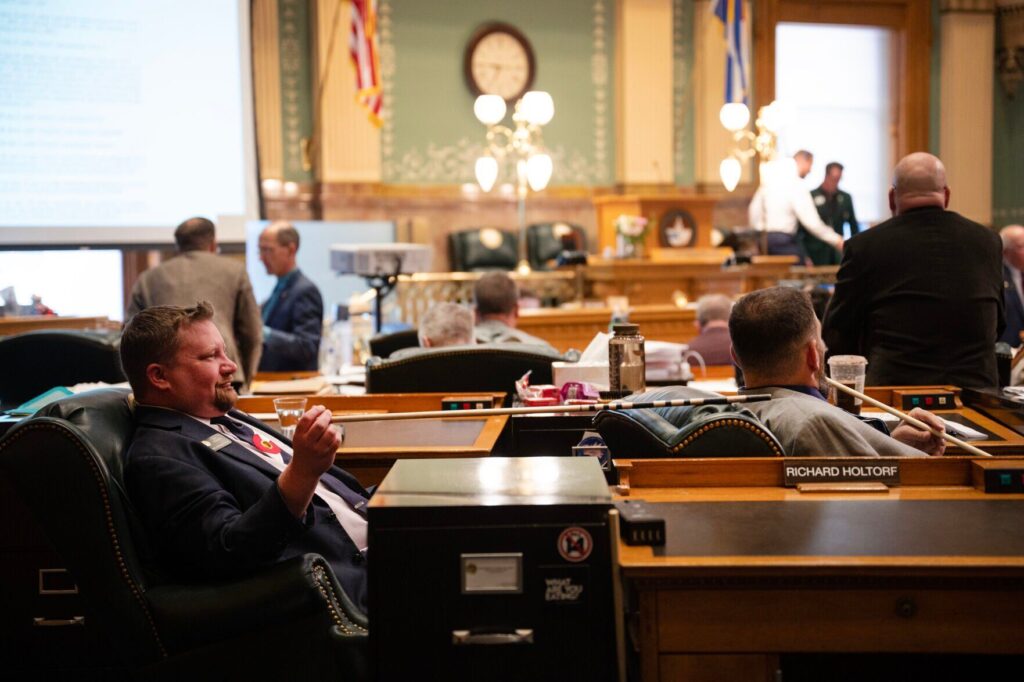
Colorado House launches ethics review of Rep. Ron Weinberg filed by fellow GOP legislator
Marianne Goodland
marianne.goodland@coloradopolitics.com
Updated 15 hours ago
The Colorado House will convene an ethics committee to review a complaint filed by Rep. Brandi Bradley, R-Roxborough Park, against fellow Republican Rep. Ron Weinberg, R-Loveland. It will be the first time since 2012 that the House has formed an...

Colorado lawmakers reverse course, OKs $2.4M funding for additional prison beds
Marissa Ventrelli
marissa.ventrelli@coloradopolitics.com
Updated 13 hours ago
The Colorado legislature’s budget panel changed course on Wednesday, reversing its previous decision to deny the Department of Corrections $2.4 million request to pay for additional prison beds. Last week, JBC members voted, 4-2, to deny the department’s request, with...

Trump allies urge Supreme Court to uphold his birthright citizenship order
Jack Birle, Washington Examiner
jack.birle.washington.examiner@gazetteedit.wpenginepowered.com
Updated 16 hours ago
The Supreme Court will soon hear a landmark challenge over precisely who can enjoy the birthright citizenship granted under the 14th amendment, and the Trump administration and its allies are urging the high court to side with the president’s view....

Trump sues IRS and Treasury for $10 billion over tax return leak
David Zimmermann Washington Examiner
davidzimmermannwashingtonexaminer@wpstage.coloradopolitics.com
Updated 14 hours ago
President Donald Trump filed a $10 billion lawsuit against the IRS and Treasury Department as one of the plaintiffs on Thursday, alleging a former IRS employee leaked his confidential tax records over six years ago. The federal lawsuit, filed in...

Party-line vote sends ‘red flag’ law expansion to Colorado Senate
Marissa Ventrelli
marissa.ventrelli@coloradopolitics.com
Updated 13 hours ago
A panel of Colorado state senators voted along party lines Tuesday to advance a bill that would further expand who can ask a judge to temporarily restrict a person’s access to firearms under Colorado’s extreme risk protection order law. The...

Colorado Republicans plan to return to Pueblo for 2026 state GOP assembly | TRAIL MIX
Ernest Luning
ernest.luning@coloradopolitics.com
Updated 18 hours ago
The Colorado Republican Party plans to hold its 2026 state assembly in Pueblo in April, marking a return to the largest city in the only county in the state that’s flipped from Democrat to Republican to Democrat to Republican in...