

Updated: Black Hills Energy responds to Sen. Leroy Garcia’s infuriation
Updated: Julie C. Rodriguez, a spokeswoman for Black Hills Energy, got back to us with a response to Sen. Leroy Garcia’s withering view of the company’s rate-hike request. Here it is (with the original story below).
“In short, the Phase 2 filing is not a request for a rate increase, it is simply a plan to appropriately allocate among customer groups the revenue that was approved by the PUC in December 2016 (and implemented on January 1, 2017) as part of our Phase 1 filing,” she said. “The proposed Phase 2 changes to customer bills must be approved by the PUC and are revenue-neutral, meaning they would not result in any additional revenue for Black Hills Energy. We expect any changes in bills associated with this filing will not become effective until March 2018. Through smart meter data, we found that residential customers, making up 90 percent of Black Hills Energy customers, are responsible for more energy use than is recovered in their current rates. As a result, other customer groups, like business customers, have been paying a disproportionally greater share of the cost of service. This prompted the proposed changes to customer groups.”
*******************
Sen. Leroy Garcia is infuriated that energy customers in southern Colorado face a rate hike, when they already pay some of the highest rates in the state.
In the last session, Garcia asked to create a legislative committee to hold public meetings before the next session to evaluate Black Hills Energy rate increases, but Republicans shot down the proposal on a party-line vote.
The Democratic senator from Pueblo is riled up that South Dakota-based Black Hills is asking the state Public Utilities Commission for a package of rate hikes to pay for a gas-fired generator in Pueblo. That facility replaces a coal-fired plant in Cañon City, which closed in 2012 under pressure for clean-air advocates. Part of the reason for the high cost – and The Washington Post in 2014 noted there were several – is Colorado’s Clean Air-Clean Jobs Act, which passed the legislature easily with bipartisan support in 2010.
Black Hills wants to create tiered rates for customers who use higher amounts of energy, similar to the summertime rates charged by Xcel Energy. Black Hills, which powers 52 southern Colorado communities, also wants to raise its minimum monthly residential rate from $16.89 to $20.13. The minimum charge covers fixed cost such as a connection, meter and billing to extend service to a home, separate from the amount of energy used in the home.
Net-metered solar customers could pay up to 50 percent more. The utility is asking for a monthly charge of $25.45 to recover the cost of a second meter, which measures solar energy production, as well as a higher energy use charge.
“Energy to cool our homes, heat them during the winter, keep our rooms lit, and cook our meals is a basic need that shouldn’t be held hostage by a big corporation trying to line its pockets with mysterious fees,” Garcia said in a statement Monday afternoon.
“Coming out of a legislative session of pushing back against rate increases, it is especially insulting to see Black Hills try to get rate increases and new fees tacked onto energy bills when they think no one is looking. The PUC needs to think long, and very hard, before they consider rate increases and new fees that will stretch the budgets of hard-working people and their families even thinner.”
Garcia sponsored Senate Bill 105, signed into law in May, to make monthly bills from investor-owned utilities (namely Black Hills and Xcel) easier for everyday folks to understand, including line-item billing and easier-to-grasp visual elements about energy use each month.
He also co-sponsored House Bill 1323 to prevent anyone who had a recent affiliation with a regulated utility from serving on the Public Utilities Commission. The bill died in the Senate State, Veterans and Military Affairs Committee on a 4-1 vote on May 4.
Garcia noted that Wendy Moser, a former lawyer for Black Hills Energy, was appointed to the PUC in January.
The rate hikes are part of the utility’s effort to recoup the cost of the new generating station. After examining costs the Public Utilities Commission lowered the amount Black Hills could recoup from ratepayers from $8.5 million to $636,267. Black Hills has appealed that amount to the courts.
The PUC could hold a hearing to accept or adjust the proposed package of rate increases or ask administrative law judge to hold the hearing and consider the judge’s recommendation, but that decision hasn’t been made yet, said Cindy Schonhaut, the director of the Colorado Office of Consumer Counsel.
The PUC will take public comments until at least November, depending on when the hearing is set.Comments can be emailed to dora_PUC_complaints@state.co.us, or mailed to 1560 Broadway, Suite 250, Denver, CO 80202.


U.S. House probes reports of fraud, waste in Colorado’s Medicaid program
Marianne Goodland
marianne.goodland@coloradopolitics.com
Updated 42 minutes ago
A congressional committee is probing reports of waste, fraud and abuse in Colorado’s Medicaid program, citing recent stories outlining over-billing in transportation spending and The U.S. House Committee on Energy and Commerce has sent a letter to Gov. Jared Polis...

Colorado’s congressional redistricting proposal could flip three Republican House seats | ANALYSIS
Michael Braithwaite
michael.braithwaite@gazette.com
Updated 2 hours ago
A Democrat-backed proposal to redraw Colorado’s congressional map for the 2028 election could flip three Republican districts. The proposal, introduced by a group called Coloradans for a Level Playing Field, is yet another development in a national redistricting debate after...

Appeals court overturns Douglas County vehicular homicide conviction due to faulty jury instructions
Michael Karlik
michael.karlik@coloradopolitics.com
Updated 7 hours ago
Colorado’s second-highest court overturned a defendant’s vehicular homicide conviction and 12-year prison sentence on Thursday after determining a Douglas County judge omitted key language from the jury instructions that could have resulted in a different outcome. James Paul McDonald was...
Colorado lawmakers’ speeches on immigration, Iran draw worries about decorum, grandstanding
Marianne Goodland
marianne.goodland@coloradopolitics.com
Updated 6 hours ago
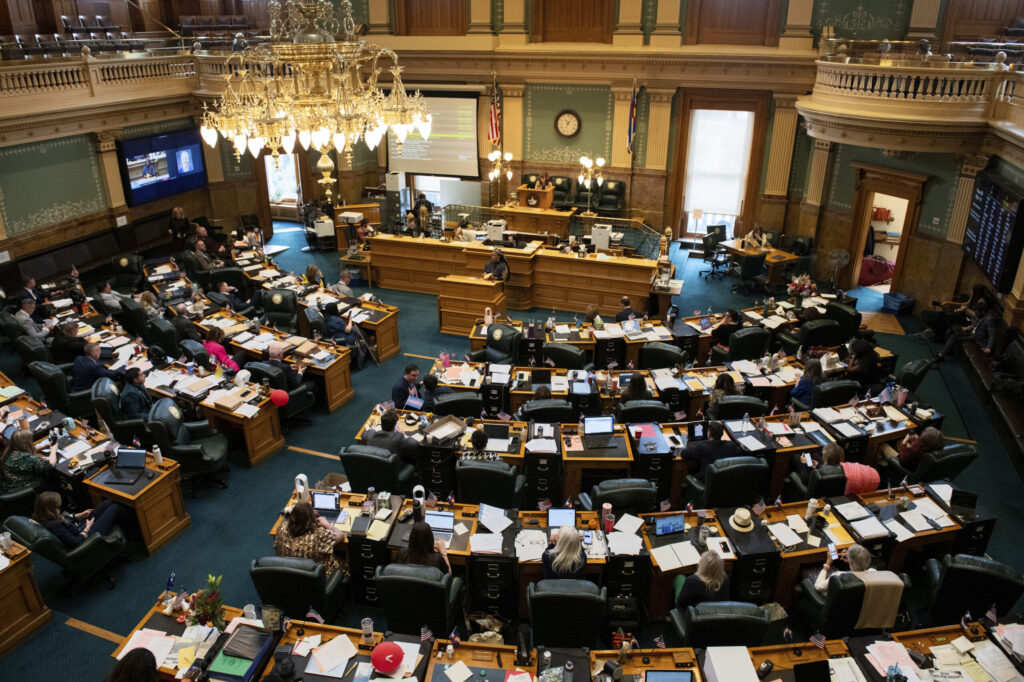
Several speeches from Colorado legislators this week have raised new worries about decorum and grandstanding in the state House after two members talked about immigration and Iran using what’s called a “point of personal privilege.” Under the rules of the...

Trump fires Homeland Security Secretary Noem after building criticism over immigration enforcement
Michelle L. Price
michelle.l..price@associatedpress.com
Updated 8 hours ago
WASHINGTON (AP) — President Donald Trump on Thursday fired his embattled Homeland Security Secretary Kristi Noem and said he will nominate in her place Oklahoma Republican Sen. Markwayne Mullin. Trump made the announcement on social media on Thursday, two days...

Trump wants to be personally ‘involved’ in picking next Iranian leader: Report
Christian Datoc, Washington Examiner
christian.datoc.washington.examiner@gazetteedit.wpenginepowered.com
Updated 9 hours ago
President Donald Trump told Axios Thursday that he wants to be personally involved with picking Iran‘s next leader, despite multiple senior administration officials repeatedly declaring that “regime change” is not a stated objective of Operation Epic Fury. Trump conducted an...

Iran widens regional war with first strike into Azerbaijan
Brady Knox, Washington Examiner
brady.knox.washington.examiner@gazetteedit.wpenginepowered.com
Updated 9 hours ago
Iran spread the growing regional war to the Caucasus with its first drone strike into Azerbaijan, hitting an airport terminal and damaging a nearby school. A video recorded by someone at Nakhchivan International Airport showed one of the drones exploding...

Rand Paul excoriates Congress for failure to pass War Powers Resolution: ‘Should be ashamed’
Claire Carter, Washington Examiner
claire.carter.washington.examiner@gazetteedit.wpenginepowered.com
Updated 9 hours ago
Sen. Rand Paul (R-KY) blasted his colleagues for failing to pass a resolution aimed at limiting President Donald Trump’s military campaign in Iran. The Kentucky Republican made the remarks in an opinion column published on Fox News a day after...
DOJ quietly closes autopen investigation targeting Biden and aides
Kaelan Deese, Washington Examiner
kaelan.deese.washington.examiner@gazetteedit.wpenginepowered.com
Updated 9 hours ago
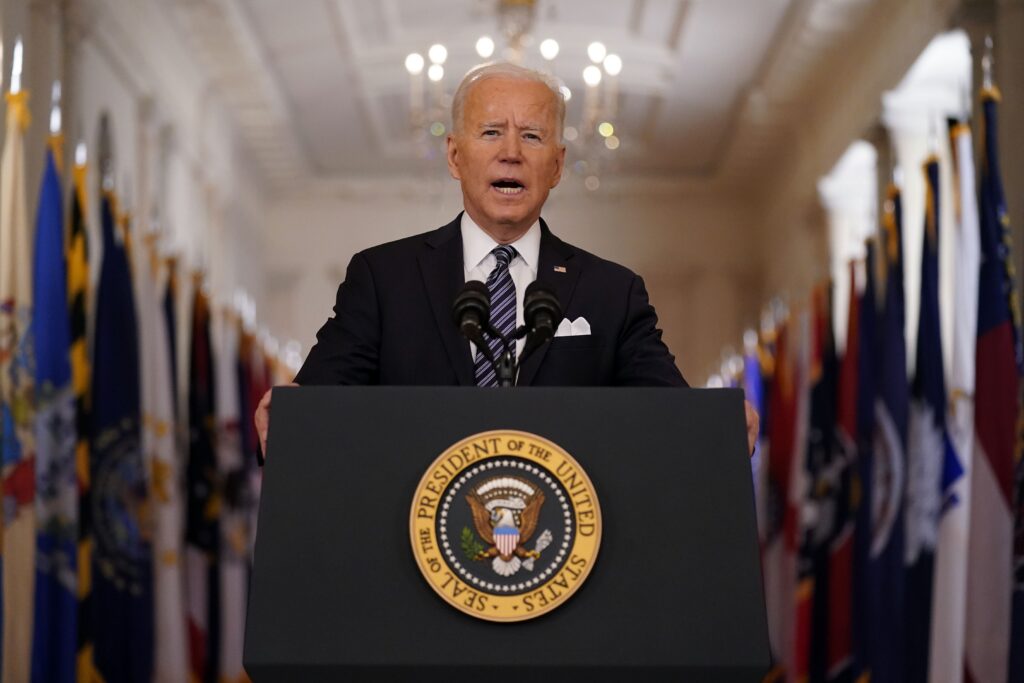
The Department of Justice has quietly closed an investigation into former President Joe Biden’s use of an autopen to sign official documents, according to a source familiar with the matter. DOJ pardon attorney Ed Martin, the former “weaponization” czar, opened...

Colorado legislators eye changes to credit card ‘swipe fees’
Marianne Goodland
marianne.goodland@coloradopolitics.com
Updated 7 hours ago
Colorado legislators are proposing to eliminate “swipe fees” on sales taxes, a move that proponents say would save businesses tens of thousands of dollars a year but which will likely revive counter-arguments that those fees help create a stable and...