

YESTERYEAR: Webb wins Denver auditor, has ‘no ambitions for mayor’
Thirty Years Ago This Week in The Colorado Statesman: A former state legislator from Denver and cabinet member for Gov. Richard Lamm reigned supreme in a key race in the city and county of Denver. Wellington Webb defeated his opponent, Bill Schroeder, in the Denver auditor’s race.
“I was always optimistic that I had a great opportunity to win, because I felt the people of Denver were looking for a new direction in the auditor’s office,” Webb told The Statesman. He added that his considerable experience in management and politics “fitted the bill.”
“People were looking for a new program. The auditor shouldn’t be a captive to the mayor or the city council. We need an agenda for cooperation. The margin of victory was a mandate that the voters of Denver agreed with the program that I outlined in my campaign.”
It was an economical campaign, Webb was quick to point out.
“We had a budget of $104,000, and we spent a little more than that. But our bills are all paid. We’re in the black.”
Webb received a great deal of support from the Democratic Party in the race. The Denver Democratic Central Committee had even stepped out and endorsed him, contributing $2,500 to his campaign.
“It is interesting to note, though, that from early December on, I had considerable support from party figures like Congresswoman Pat Schroeder and former Governor Dick Lamm. But I also had some support from people in the Republican Party, too, like Bill Daniels and Bob Lee.”
Webb acknowledged that his presence on the ballot might have helped newly elected Denver mayor Frederico Peña’s cause by bringing out the minority vote in Northeast Denver.
“That’s where I live, that’s where I was raised, that’s the area I represented in the Legislature. It’s the area my wife represents now, and she’s been in office longer than I was in the Legislature. By virtue of the Webb name being on the ballot, it increased voter turnout, and increased interest in the mayoral election as well as the auditor’s election.”
Webb also insisted that he did not, at the time, harbor any ambitions for the mayor’s office.
“I did in 1983,” he admitted. “I’m just concerned with getting sworn into the auditor’s office. I have attempted to serve the people of Denver and I’m very pleased they have selected me for this job. My only ambition is to be the best city auditor that Denver’s ever seen.”
Ten Years Ago: Filmmaker Michael Moore was promoting his new health care documentary, “Sicko,” in the Mile High City on the steps of the state Capitol.
His provocative documentary underscored what Moore believed to be the root problem of the health care crisis: money.
“The pharmaceutical companies and the health insurance companies have a vested interest in keeping us sick. That’s the only way they can make any money, is to not provide any real care to us when we are ill.”
Moore shamed the U.S. by pointing out that even Ghana had recently joined the ranks of countries like France, Britain, Ireland, Sweden, Greece, Poland, the Czech Republic, Brazil and El Salvador in enacting universal health care.
… In other news, Aurora City Councilman Ryan Frazier filed the first right-to-work ballot initiative in over 50 years with the Colorado Legislative Council for the 2008 ballot. If passed, Colorado would have joined the ranks of 22 other right-to-work states. The initiative would have meant that any worker in a unionized shop would no longer be required to pay the union restitution, or “agency fees,” for legal representation.
“The basic aim is to say that a worker does not have to join or belong to a labor union in order to hold a job,” said Denver-based attorney John Berry, who filed the initiative on behalf of Frazier and Golden resident Julian Jay Cole.
The right-to-work initiative faced severe opposition from a number of state legislators. But Berry said his proposal had precedence nationally, having been modeled after a similar bill in Oklahoma. That bill had passed in 2001. Berry stated that the intervening years had shown that the Oklahoma law worked as both a salary enhancement and stimulating the economy.
Colorado AFL-CIO Political Director Carolyn Siegel strongly disagreed.
“What research shows is that workers earn more in free bargaining states, more workers have insurance and pensions, and there are fewer accidents on the job,” Siegel said.
State Sen. Ted Harvey, R-Highlands Ranch, countered that another concern was attracting new businesses to Colorado. He said the top two questions he heard from businesses looking to relocate were: does Colorado have a business property tax and is Colorado a right-to-work state?
“We’re wrong on those two major issues when businesses are determining whether they’re going to relocate here,” Harvey said. “All the states around us except New Mexico are right-to-work states, so we automatically lose out to Western states around us that are right-to-work. It’s certainly bringing in new companies, new jobs and new taxpayers.”


The Latest: US military launches strikes against Iran in response to downing of American helicopter
The Associated Press
the-associated-press@coloradopolitics.com
Updated 9 hours ago
The U.S. military announced that it has begun strikes against Iran following the crash of a U.S. Army Apache helicopter off the coast of Oman. In a statement posted to social media, U.S. Central Command said the strikes would be...

Colorado governor signs bill requiring pollution controls, cost reporting for extended coal operations
Scott Weiser
scott.weiser@gazette.com
Updated 9 hours ago
Gov. Jared Polis signed into law a bill in reaction to orders from the U.S. Department of Energy to keep older coal units online. The federal government’s instructions applied to Craig Unit 1 in Colorado, one of five coal units...

Mental Health Colorado names 2026 legislators of the year
Marissa Ventrelli
marissa.ventrelli@coloradopolitics.com
Updated 8 hours ago
Six state lawmakers have received recognition from the advocacy organization Mental Health Colorado for their work during the 2026 legislative session. “Mental Health Colorado’s work to pass laws, change practices, and build a movement depends on courageous advocates and bipartisan...
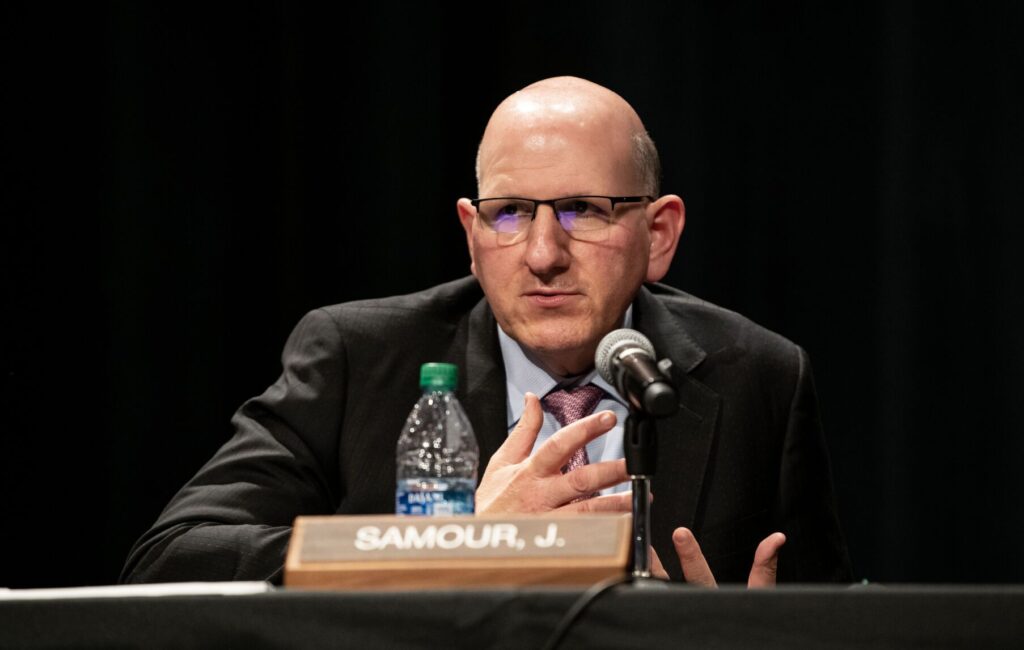
Colorado justices say judges can nearly eliminate parenting time without it being a ‘restriction’
Michael Karlik
michael.karlik@coloradopolitics.com
Updated 8 hours ago
The Colorado Supreme Court concluded last month that judges can reduce the number of days a parent spends with their child post-divorce to just above zero without it rising to the level of a “restriction” that requires more rigorous justification...

Geo Group sues Colorado over new immigration detention facility inspection law
Marissa Ventrelli
marissa.ventrelli@coloradopolitics.com
Updated 8 hours ago
The private prison company that operates the U.S. Immigration and Customs Enforcement center in Aurora has filed a lawsuit against Colorado to stop the enforcement of a new law requiring additional health and safety inspections of immigration detention facilities. The...

Trump will get another pick on influential federal appeals court
Jack Birle, Washington Examiner
jack.birle.washington.examiner@gazetteedit.wpenginepowered.com
Updated 10 hours ago
President Donald Trump will have the opportunity to nominate another judge to a key federal appeals court after one of the judges announced this week that he would take senior status. Circuit Judge Kurt Engelhardt, who was nominated to the...
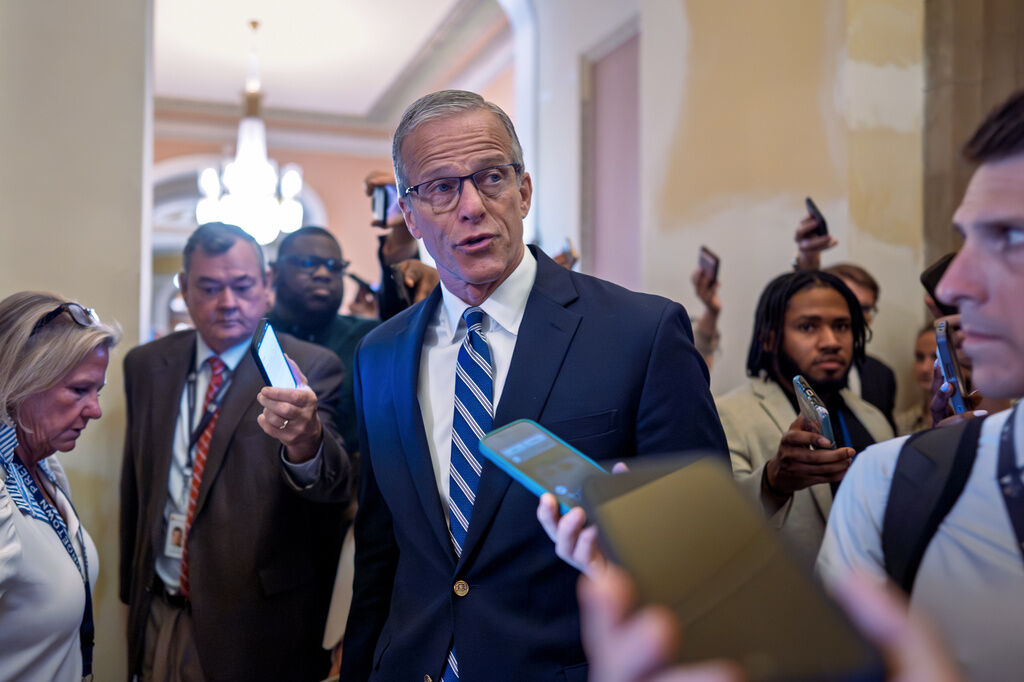
Senate GOP cool to House push for third party-line budget bill: ‘Really not an option’
Ramsey Touchberry, Washington Examiner
ramsey.touchberry.washington.examiner@gazetteedit.wpenginepowered.com
Updated 10 hours ago
Senate Republicans are unlikely to take up a third budget reconciliation bill to advance more of President Donald Trump’s agenda. The development is sure to be unwelcome news for their counterparts in the House, who have advocated a third bill....
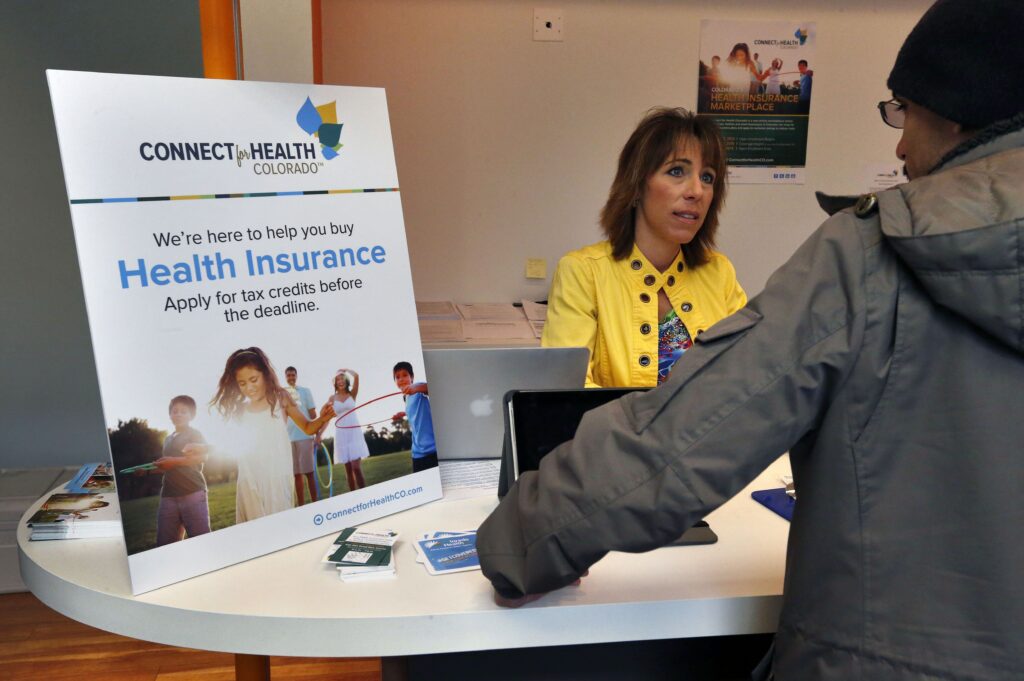
Cigna to pull out of individual health market, affecting thousands in Colorado
Marianne Goodland
marianne.goodland@coloradopolitics.com
Updated 12 hours ago
Another firm is withdrawing from the individual health insurance market, including for Colorado, effective Jan. 1, 2027. The move by Cigna Healthcare is part of the company’s overall plan to withdraw entirely from the Affordable Care Act market. It will...

Trump vows US response after confirming Iran shot down Apache helicopter
Christian Datoc, Washington Examiner
christian.datoc.washington.examiner@gazetteedit.wpenginepowered.com
Updated 11 hours ago
President Donald Trump said Tuesday that Iran shot down an American Apache attack helicopter near the Strait of Hormuz Monday night, and that the United States would respond to the attack. Trump has fought to hold together a fragile ceasefire...

Colorado Springs may be sued for faulty intersection, state Supreme Court rules
Michael Karlik
michael.karlik@coloradopolitics.com
Updated 12 hours ago
The Colorado Supreme Court decided last month that Colorado Springs can be sued over a collision that occurred as a result of traffic lights that were functioning normally in one direction, but were inoperative in the perpendicular direction. The question...