

Assisted suicide gets a ‘no’ — and then a ‘heck no’ — from the church

Terminally ill patients who invoke Colorado’s new law permitting physician-assisted suicide will, of course, need a place to carry out the act. And their loved ones likely will want a funeral.
To which the Catholic Church responds: Don’t expect much help from us.
Not only have two of the state’s largest hospital systems, both Catholic-affiliated, opted out of the aid-in-dying law, but as Denverite’s Erica Meltzer reported last week, the Archdiocese of Denver now has declared its intention not to perform funeral masses for those who use the law. The archdiocese only will allow Christian burial for church members who take their lives under the law.
Both positions – based on church doctrine that holds suicide under almost any circumstances is a mortal sin – have considerable practical consequences. The two Catholic hospital groups – Centura Health and SCL Health – along with the secular HealthOne Colorado, which also has declined to facilitate the new law, account for about a third of the state’s hospitals.
They cite a clause in the law, passed by voters last fall, that allows doctors and providers to opt-out of writing a prescription for life-ending medication. It means patients won’t be allowed to administer life-ending drugs, and presumably their providers won’t be able to prescribe them, at those hospitals. And that’s not counting however many physicians might invoke the law’s “conscience clause” on their own. So, for better or worse – depending on your view of the law – it limits patients’ options.
The ban on church funeral masses could be instrumental in dissuading members of Colorado’s substantial Catholic population- BeliefNet.com pegs it at 23 percent – from using the law.
Meltzer writes:
The Archdiocese laid out its position as part of an FAQ on physician-assisted suicide and the sacraments posted this week to the Denver Catholic website. The concern is that people might not realize the depth of the Church’s opposition if people who take their own lives are accorded a funeral Mass.
“Due to the significant risk of a funeral Mass leading people to think the Church accepts PAS (physician-assisted suicide), the bishops of Colorado have decided to only allow Christian burial for those who have committed PAS,” the FAQ states. “Funeral Masses, liturgies of the word and paraliturgies are not permitted. Some days after the burial, loved ones are encouraged to have Masses said for the repose of the soul of the deceased.”
As you might anticipate, none of this is crystal-clear. Meltzer notes the church’s stance isn’t necessarily absolute; its position on suicide has become more nuanced over time. As for the hospital systems that are refusing to participate, additional legal interpretations as well as legislation clarifying the matter may lie ahead. The advocates of the new law dispute the hospitals’ reading of their ability opt out.
What does seem clear at this point is that implementation of yet another statewide ballot initiative is turning out to be complicated. Certainly, more so than might have been anticipated by the nearly two-thirds of voters who endorsed the measure.

Colorado lawmakers move to curb eminent domain powers after Xcel dispute
Marissa Ventrelli
marissa.ventrelli@coloradopolitics.com
Updated 53 minutes ago
After months of backlash over Xcel Energy’s use of eminent domain in eastern Colorado, lawmakers representing Elbert and El Paso counties are advancing legislation that would bar utilities from initiating property takings until they’ve secured state approval and all required...

Colorado bill aims to regulate AI chatbots to protect minors from self-harm, sexually explicit content
Marissa Ventrelli
marissa.ventrelli@coloradopolitics.com
Updated 1 hour ago
Juliana Peralta of Thornton was a vibrant, happy kid, said her mom, Cynthia Montoya. However, in the final months of 2023, Cynthia began to notice a change in her 13-year-old daughter. Juliana had become more withdrawn and was on her...

Trump to attend dignified transfer of six US service members killed by Iran
Christian Datoc, Washington Examiner
christian.datoc.washington.examiner@gazetteedit.wpenginepowered.com
Updated 1 hour ago
President Donald Trump will attend the soon-to-be-held dignified transfer of six American service members killed so far by Iran in Operation Epic Fury. White House press secretary Karoline Leavitt made the announcement during her Wednesday press briefing. “These heroes represent...

Judge declines to block potential Boebert challenger from going through assembly process in Colorado’s 4th CD
Ernest Luning
ernest.luning@coloradopolitics.com
Updated 2 hours ago
Congressional candidate Eileen Laubacher, one of the Democrats seeking to challenge Republican U.S. Rep. Lauren Boebert, can participate in the party’s caucuses and assemblies pending a court hearing later this month, a Denver judge ruled Tuesday in response to a...
Sanctuary cities declined 17,864 requests to hold illegal immigrants for ICE in 2025: Noem
Anna Giaritelli Washington Examiner
anna-giaritelli-washington-examiner@coloradopolitics.com
Updated 2 hours ago
Sanctuary cities and counties declined to turn over 17,864 illegal immigrants in police custody to Immigration and Customs Enforcement in 2025, according to the Department of Homeland Security. Homeland Security Secretary Kristi Noem testified before the House Judiciary Committee on...

Federal judge dismisses malicious prosecution claim against former Denver prosecutor
Michael Karlik
michael.karlik@coloradopolitics.com
Updated 3 hours ago
A federal judge concluded on Monday that a former Denver prosecutor could not be sued for allegedly causing the arrests of two plaintiffs after they failed to appear for trial on the scheduled date, even though the trial had been...
Judicial discipline commission reports increased transparency, increased submissions
Michael Karlik
michael.karlik@coloradopolitics.com
Updated 4 hours ago
The Colorado Commission on Judicial Discipline received 473 misconduct complaints about judges in 2025, which was nearly 29% higher than in 2024 and substantially greater than any time in the past decade. However, only 31 complaints were referred to the commission...
Colorado Gov. Jared Polis ignites fierce debate after raising clemency questions in Tina Peters case
Marianne Goodland
marianne.goodland@coloradopolitics.com
Updated 2 hours ago
Gov. Jared Polis ignited a political firestorm Tuesday night after weighing in on the prison sentences of two former Colorado officials convicted of attempting to influence a public servant. The comments quickly fueled speculation about possible clemency for former Mesa...
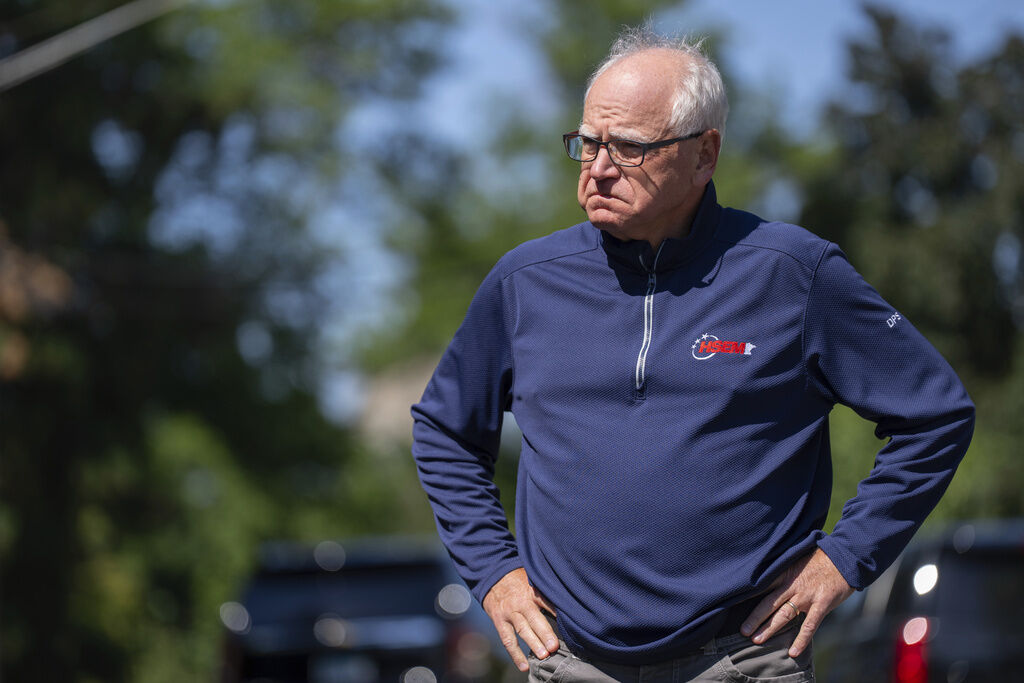
Gov. Tim Walz tells a House panel the Trump immigration crackdown hampered Minnesota’s fraud fight
Scott Bauer
scott.bauer@associatedpress.com
Updated 4 hours ago
Minnesota’s governor and attorney general on Wednesday defended their efforts to combat fraud and told a U.S. House committee that their efforts have been hampered by President Donald Trump’s immigration crackdown in the state. Republicans on the House Oversight Committee...

The public health hazards in sports betting | PODIUM
Colorado Politics
colorado-politics@coloradopolitics.com
Updated 16 hours ago
By Brandon Zelasko As Colorado lawmakers revisit sports betting policy this session, the state has an opportunity to widen the lens. Beyond revenue projections and regulatory frameworks lies a critical question: Are we fully reckoning with the human effect of...